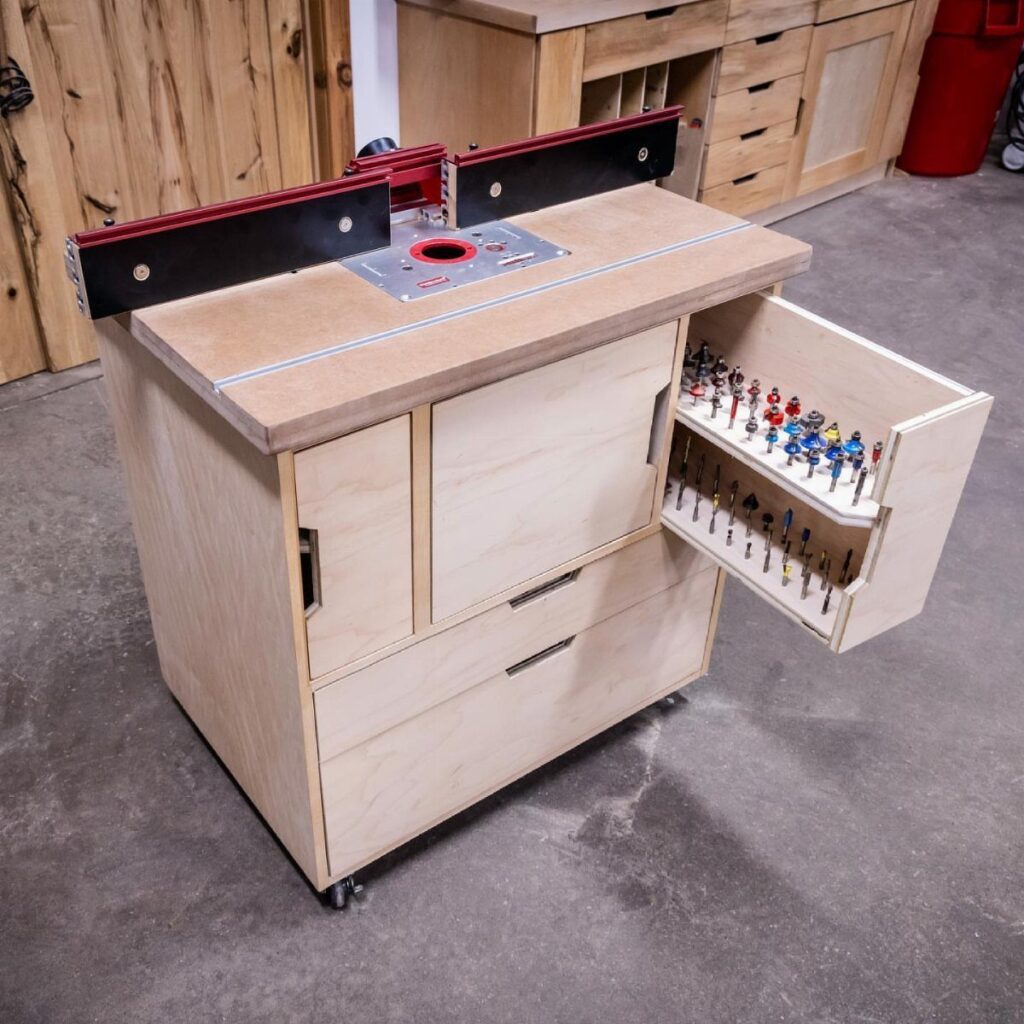
Shop space decides which of these tables is yours: the bench-top router table machine suits a small garage because you can tuck it away, while the workbench with a built-in router table gives you one big surface but can’t be moved once the opening is cut.
The ideas range from push paddles that keep your hands clear of the bit to a bench-top machine, a workbench with the router built in, a T-track fence, an MDF top with grid holes, and an under-mounted setup.
Bit speed matters too: routers spin at up to 24,000 rpm, and at that speed a wobbly table or a loose clamp is a hazard, so choose the build you can hold steady.
1. Using Push Paddles with Router Tables
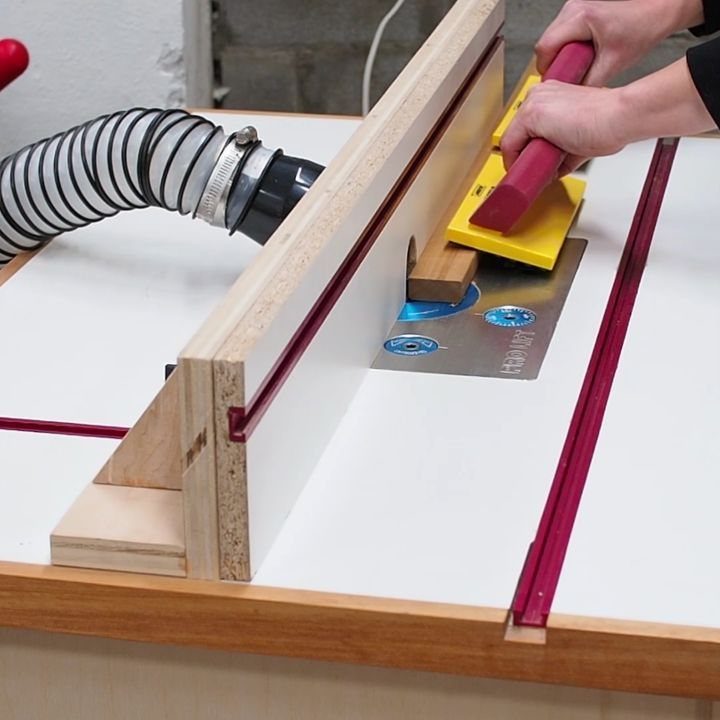
A push paddle keeps your hand off the wood and well away from the bit, and I would use one on every pass.
The hooked heel grips the trailing edge of the workpiece, so you push it along the fence instead of pinching it with your fingers.
Keep the paddle flat on the table and the board tight to the fence. With the dust hose attached, chips stay clear of your line of sight, which helps on narrow stock.
2. Bench-top Router Table Machine
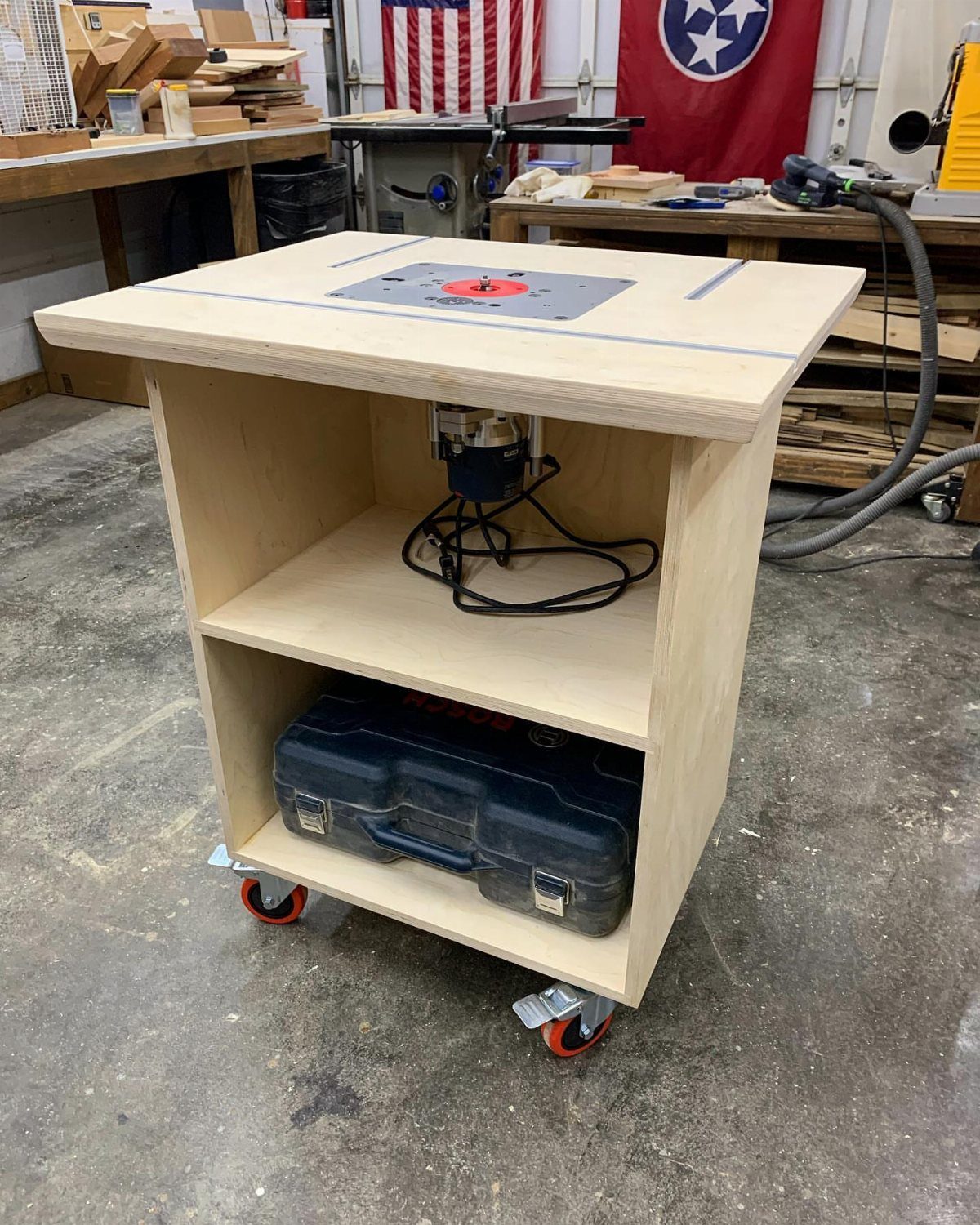
Space is the real constraint in a small shop, and a router table on casters answers it. The router hangs under the top, and the whole unit rolls out for a job, then slides back against a wall.
The router mounts to a removable insert plate, so you can lift the whole assembly out of the tabletop to change bits without crawling underneath.
Build the plywood stand low and wide, and lock the casters before you cut. A rolling table that drifts mid-pass is worse than none.
Router tables are a mainstay in any serious shop, and sooner or later in your woodworking journey, you’ll need a way to mount a router in a table.
3. Workbench with Built-in Router Table
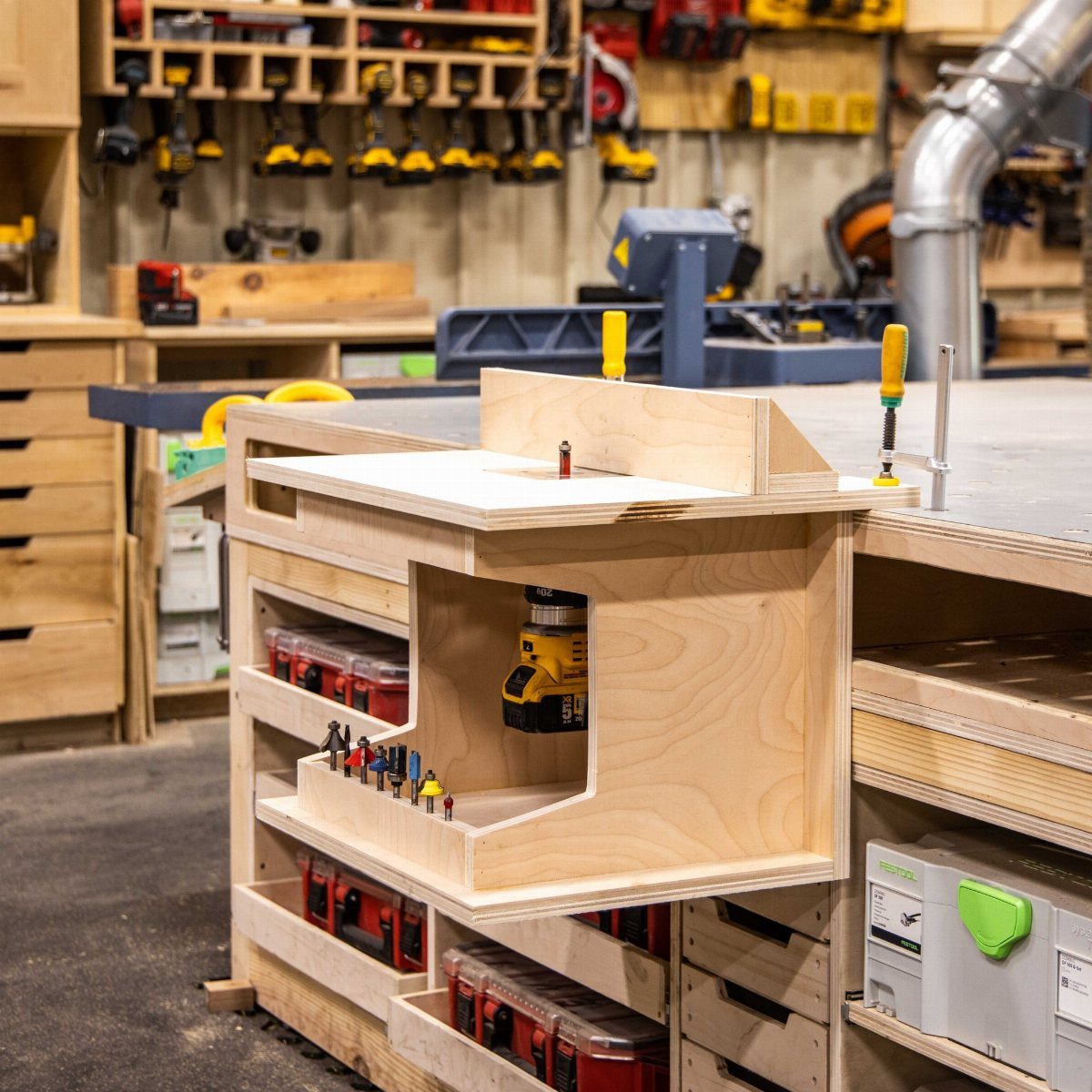
Building the router table into the workbench gives you one big surface instead of another piece of furniture.
Plywood works well for the top, and the shelves underneath hold bits, wrenches and the drill, which can sit in its own cut slot.
I like this for a shop where the bench is already the center of everything. The cost is permanence: you give up the option to move the table, so plan its spot before you cut the opening.
4. Router Table with T-track Fence
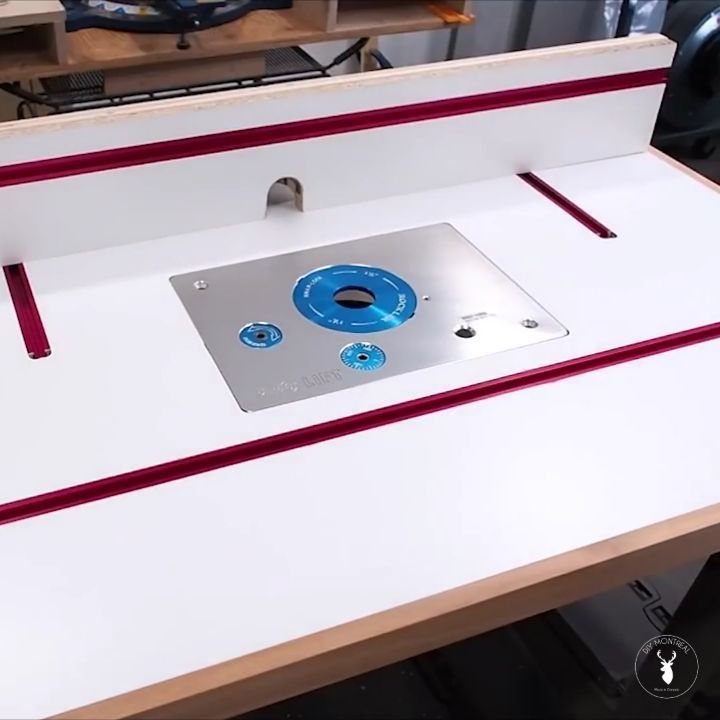
Red aluminum T-tracks set into a white top make the fence far easier to adjust than a clamp-down board. A track lets you slide a backstop to the exact spot you need and lock it.
Cut the grooves, or buy a top that has them, so the tracks sit flush with the surface.
Check that the metal insert plate is level with the top too, since a high edge catches the wood and ruins the cut.
5. MDF Top with Grid Holes
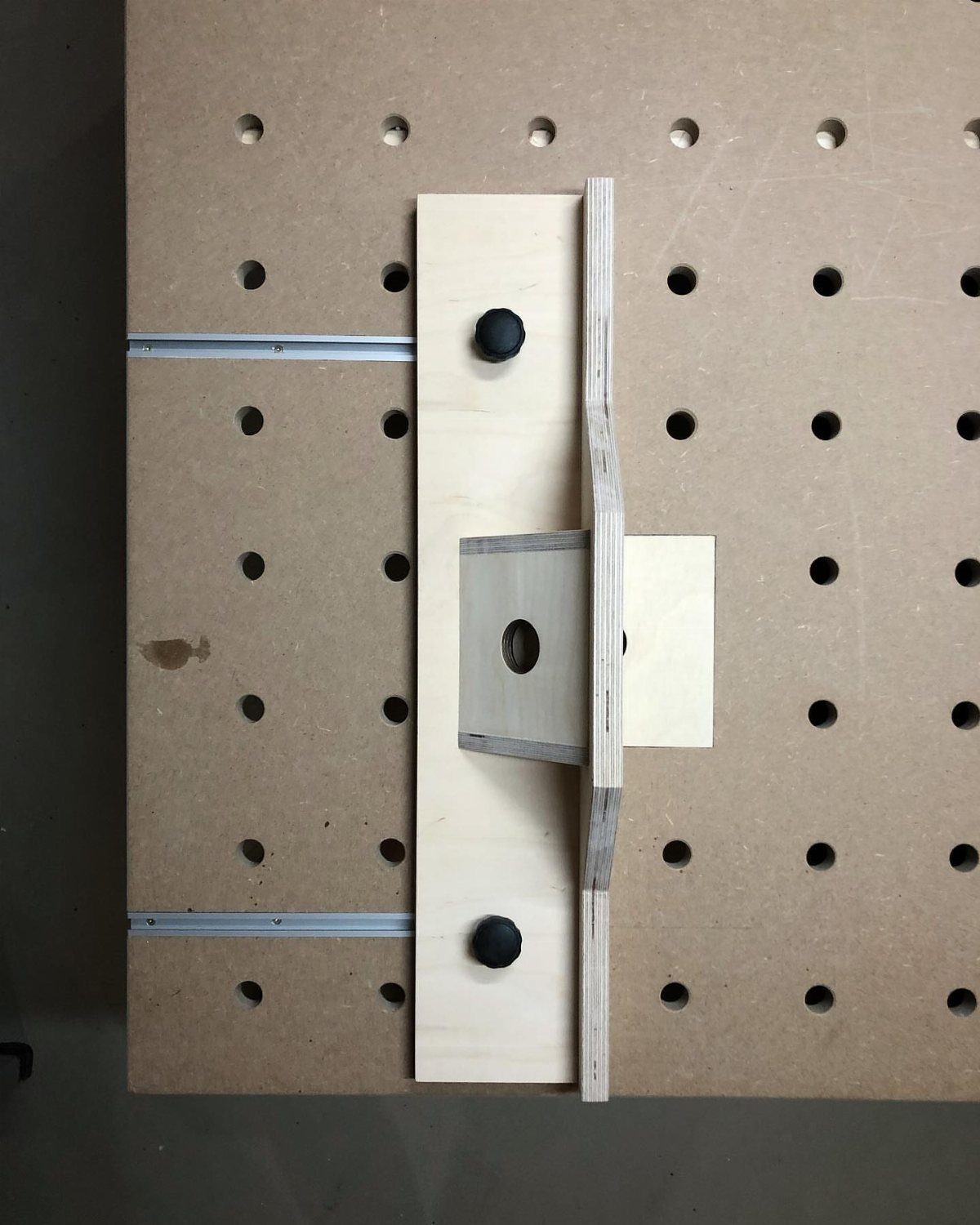
MDF makes a flat, affordable router table top, and a grid of holes across it adds clamping options. A wooden fence held by 2 star knobs slides along metal T-tracks, so you can reposition it quickly.
The holes take dog pegs or clamps, which hold stops and workpieces where you want them. MDF does swell if it gets damp, so seal the top and edges with a finish before you start.
6. Under-mounted Router Setup
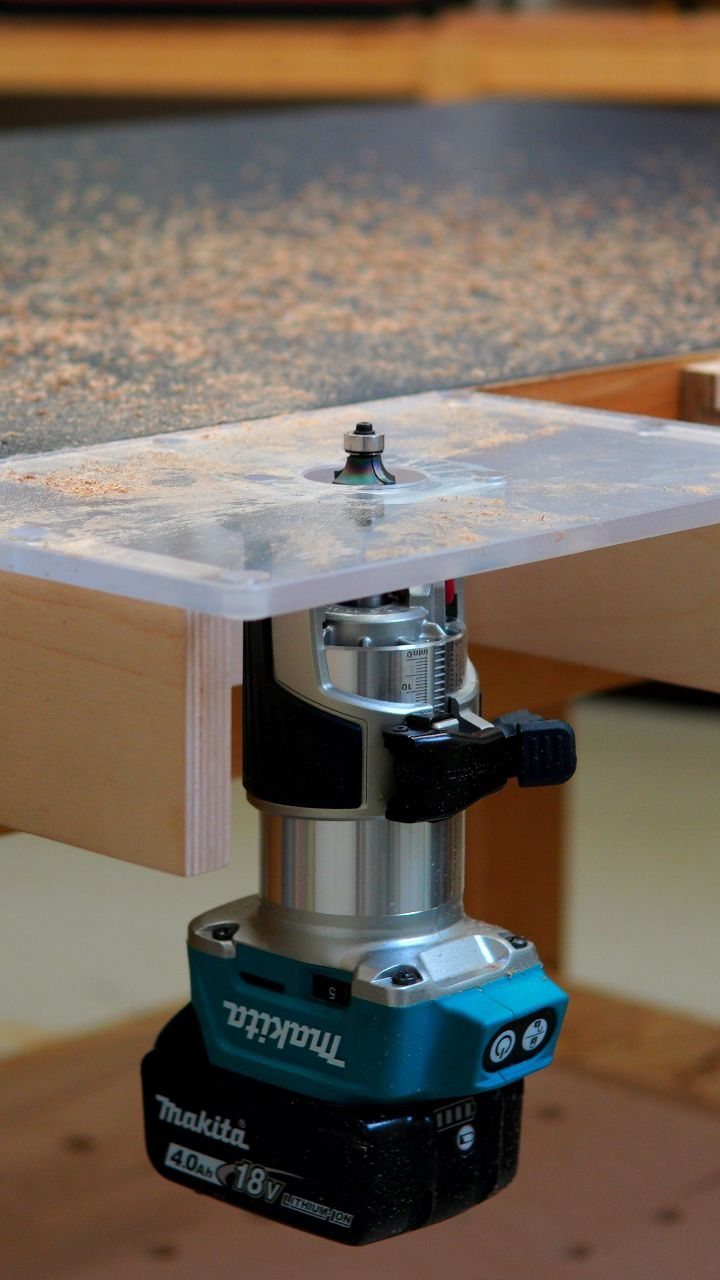
A cordless router mounted upside down under a clear plastic plate frees you from the cord and lets you see the bit work.
A clear insert plate lets you watch the bit at the cut, and the chips land on the tabletop where a quick sweep clears them.
This suits a light-duty setup on a plain wooden table. Make sure the router is fastened firmly to the plate, and remove the battery before changing bits.
Router Table Features
On a router table the bit stays put and the board moves, so you feed the stock along the fence and past the spinning cutter rather than guiding a handheld tool across it.
That one change makes small, awkward and repeated cuts much easier to control.
A basic table can be as plain as a bench with a hole cut through the top and the router bolted to the underside of the plate.
Everything beyond that is an add-on, and I would add them in order of how much they improve your cuts:
- Fence: a vertical guide the wood rides against. The fence controls how far the bit cuts into the edge of the board, so pick one that slides and locks in place.
- T-track: a slot for stops, featherboards and clamps.
- Dust collection: a port that pulls chips away from the bit.
- Router lift: raises and lowers the bit from above the table.
- Safety pins and a stop/start switch: a switch within reach lets you shut the machine off fast.
- Bit storage: keeps your bits in one place.
Routers can spin as fast as 24,000 rpm, so treat every setup as a machine that can hurt you.
Frequently Asked Questions
Is it worth buying a router table?
For most woodworkers, yes. A router table lets you feed the board past a fixed bit, which makes small, awkward and repeated cuts easier to control than guiding a handheld router.
Once the fence and bit height are set, you can run the same profile again and again without resetting anything, and the cuts match.
Do you need a special table for a router?
No. Even a scrap-wood bench works: cut an opening in the top, then mount the router upside down beneath it on a plate.
Special features such as a lift, fence, T-track and dust port make it easier and safer to use, but none of them is required to start.
Are router tables dangerous?
They can be. With the bit spinning at up to 24,000 rpm and mostly uncovered, I treat every pass as a real risk to my fingers.
A push paddle keeps my hand clear of the cutter, firm pressure against the fence keeps the board from wandering, and a switch within quick reach lets me kill the power fast.