The pieces here run from a wall shelf you could hang in an afternoon to a walnut dining table that takes far longer, so the one fact that picks your project is how much time and floor space you can give it.
Small-scale builds like the asymmetric shelf with its 3 staggered levels suit a weekend, while a freeform top asks for practice cuts on scrap first. If your tools are basic, start on the wall and save the sculpted curves for later.
1. Root-base Live-edge Console
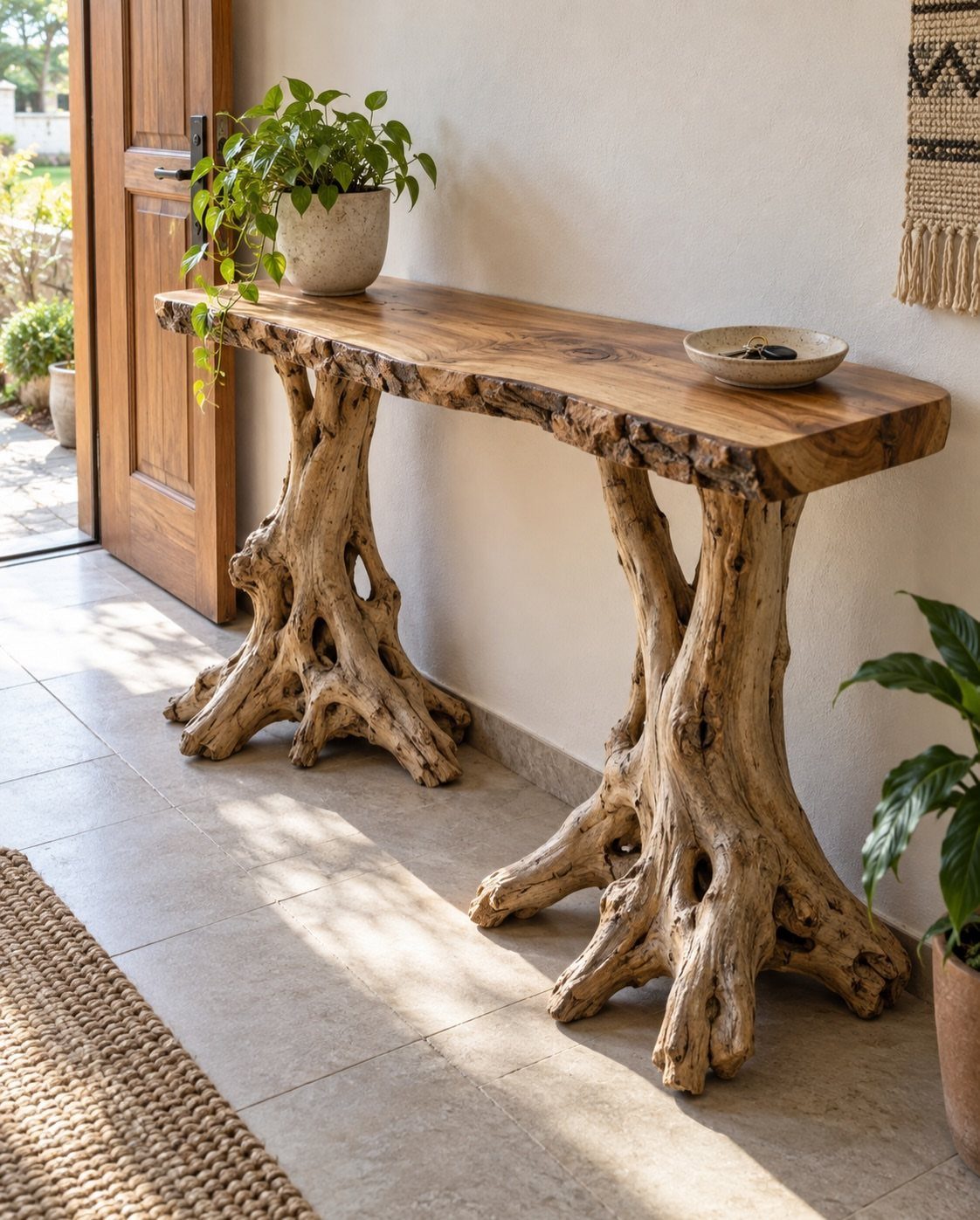
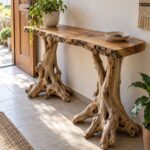
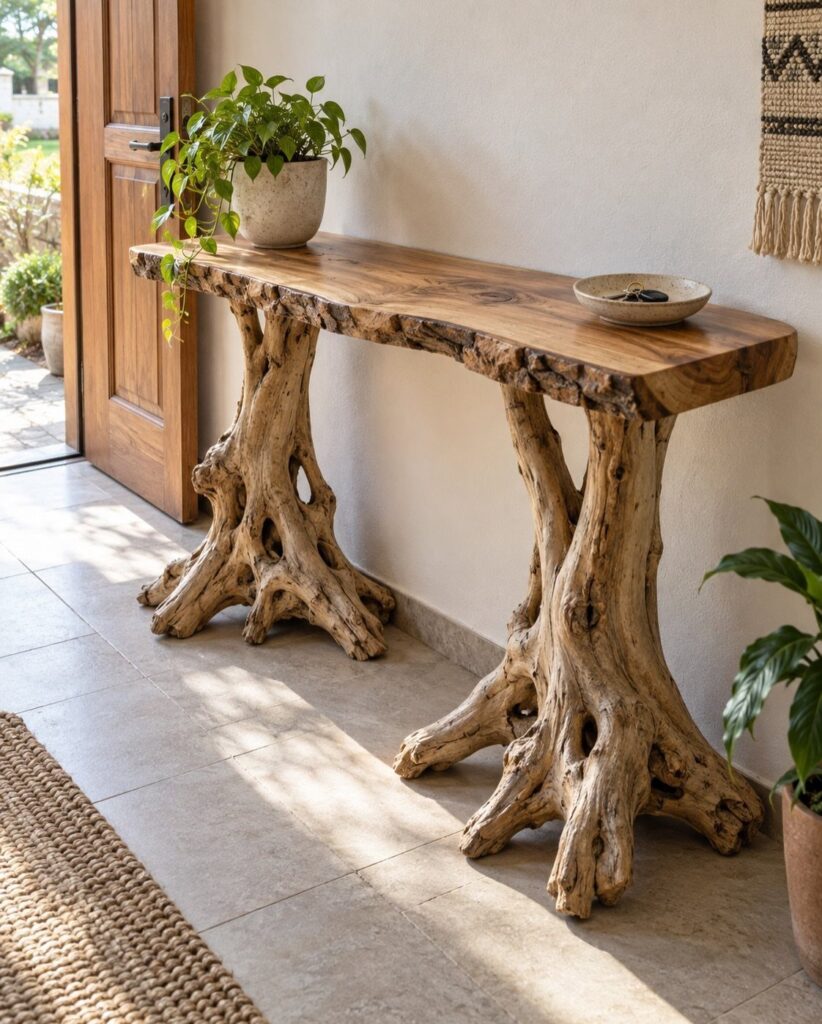
A thick live-edge slab on root-style legs works as an entry console because the top’s natural curve softens a hallway wall.
Slab and base should share the same tone, so the piece reads as one grown form rather than two parts joined.
Keep the top mostly clear. A plant and one bowl are enough, since the wood grain is already the decoration.
2. Timber and Bundled Reed Bench

Light timber framing paired with thick bundled reeds makes a low bench that feels more like sculpture than seating.
The pale wood and the reed bundles pick up the same soft color, so the 2 materials sit together without a fight.
A bench like this suits a mudroom, porch or garden edge. Make the bundles tight and even, because loose reeds will give the whole piece away.
3. Driftwood Branch Slab Shelving
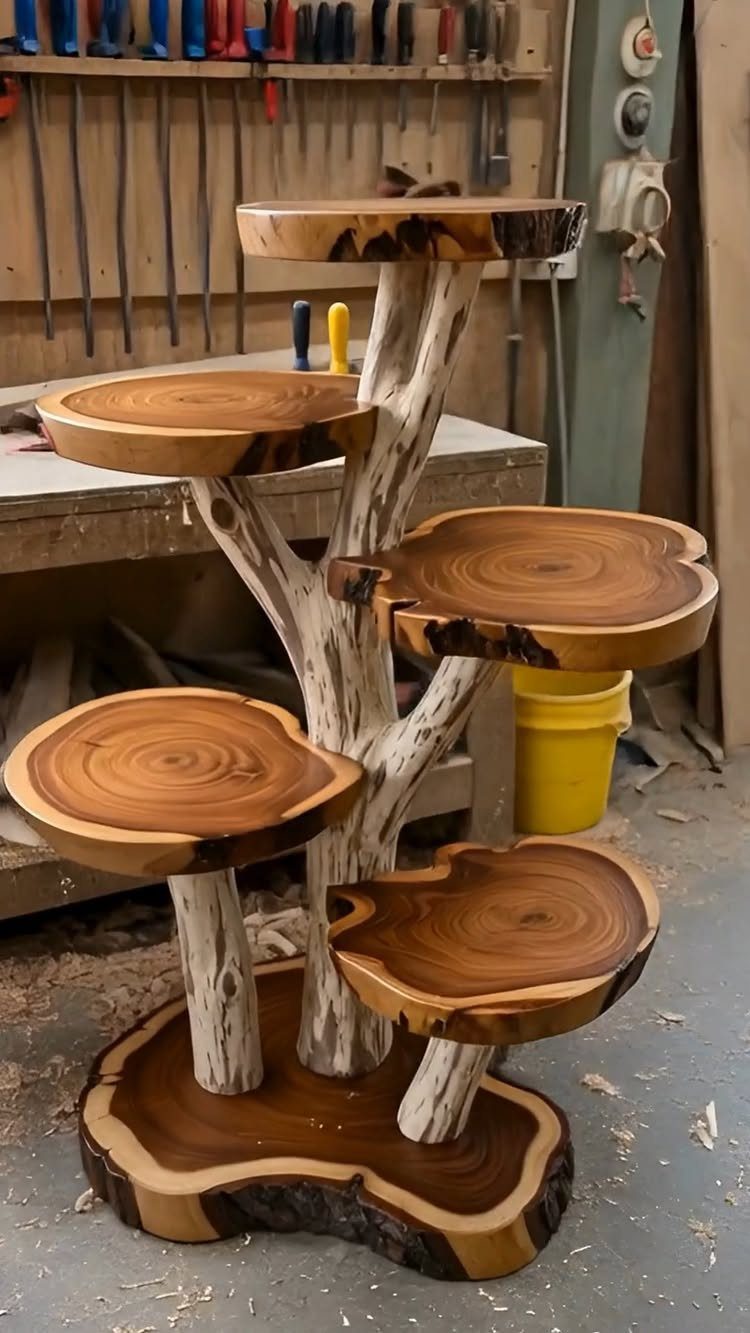
Pale driftwood branches holding up dark live-edge slabs gives a shelving unit its contrast: light, twisty supports against heavy, straight-grained shelves. Pick branches of similar thickness for the uprights, then level each slab before you load anything on it.
A tiered build like this suits books, pottery and trailing plants. Expect to hunt for the right branches; matching them takes more time than the cutting does.
4. Organic Shaped Walnut Dining Table
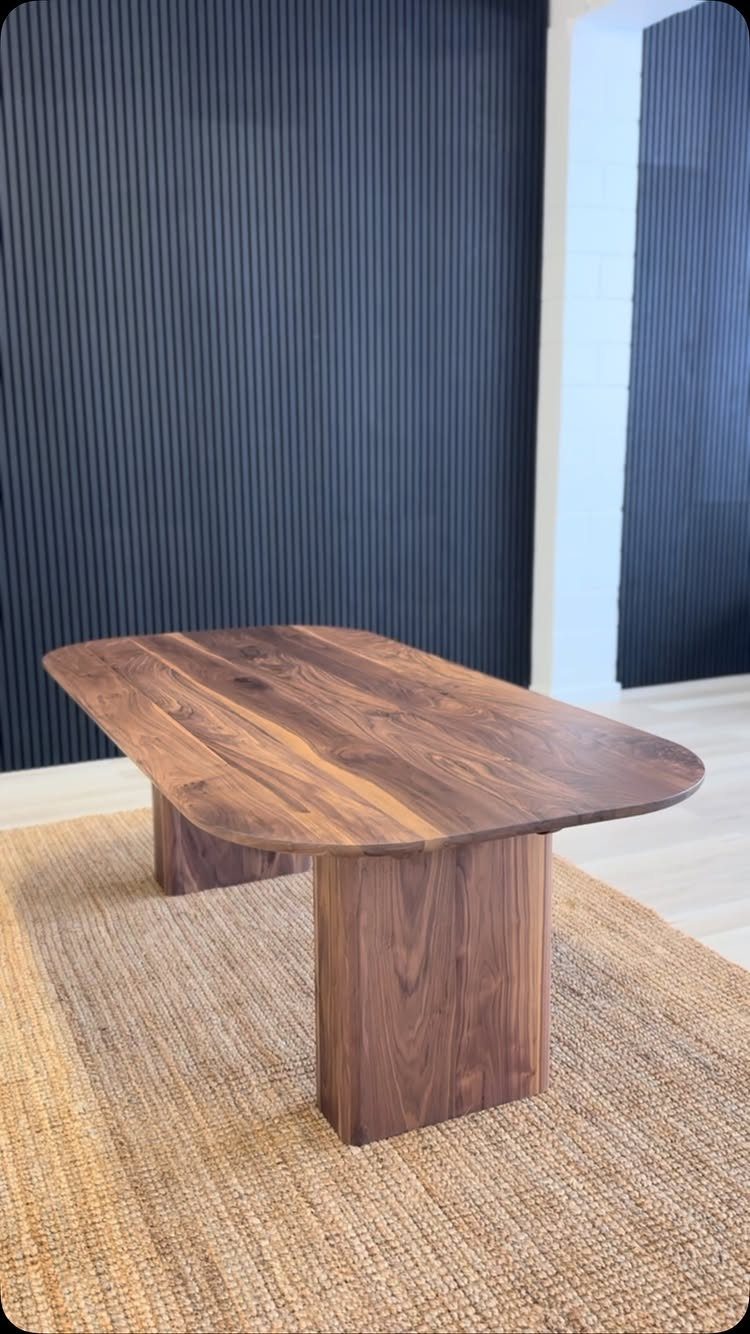
Dark walnut and a freeform top is a bold pairing, and thick block legs keep the curves from feeling fussy. Round over the edges and smooth them by hand so the shape reads as sculpted, not just cut.
A jute rug under the table balances all that polished wood with some texture. This is a larger project than an afternoon, so I would practice the curved cut on scrap first.
5. Asymmetric Geometric Wall Shelf
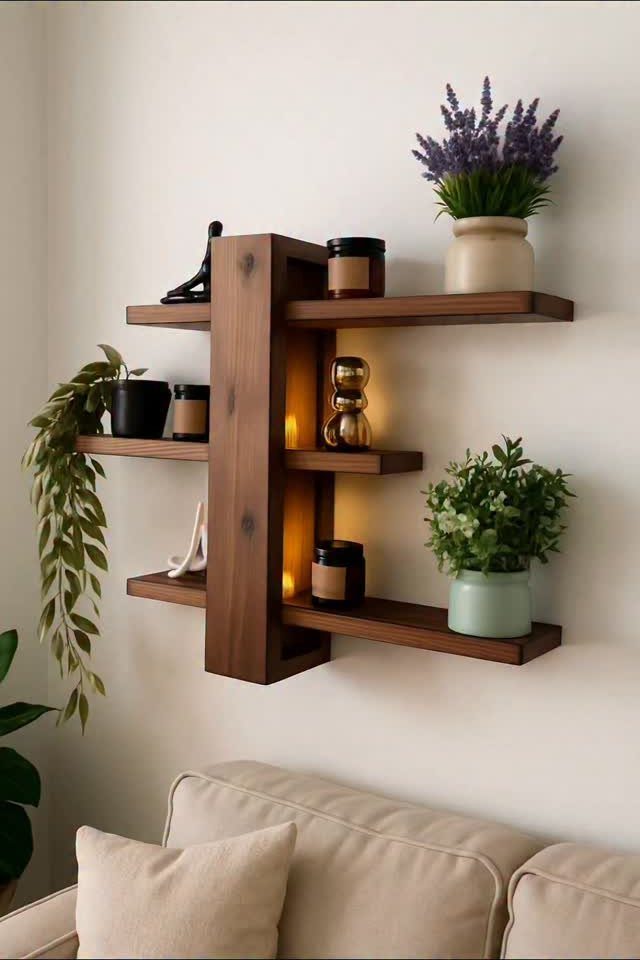
3 staggered levels turn a wall shelf into a piece of geometry, and dark wood keeps the lines crisp against a white wall. Plants and candles fit well, since each compartment frames its own small display.
Mount it into studs or use proper anchors, because an uneven layout can load one side more than the other. Hang it above a sofa with enough clearance for heads and elbows.
Craftsmanship and Techniques
Joinery is what separates a piece that lasts from one that loosens within a few years.
A mortise and tenon joint, where a shaped tongue fits snugly into a cut socket, holds without relying on glue or staples alone. Pegs or dowels driven through the joint lock it further.
Material matters just as much.
Solid, air-dried furniture-grade wood moves and ages more gracefully than plywood, laminate, veneer or particle board, which tend to chip, peel or swell once they are stressed. Skip anything described only as "mystery wood."
Finish deserves the same care. A hand-rubbed finish works into the wood, while a sprayed coat sits on top and wears through.
For a first mortise and tenon, I would cut a few practice joints in scrap until the tenon slides in with light hand pressure and no wobble.
Frequently Asked Questions
Who makes furniture from wood?
Artisan craftsmen and manufacturers that specialize in solid wood furniture make it.
Handmade pieces tend to use air-dried, furniture-grade solid wood and joinery like mortise and tenon, which is what lets them hold up for years. If you build your own, that same joinery is the skill worth practicing first.
Is art furniture high end?
It often is, because the craftsmanship is skilled and each piece is one of a kind.
Solid, air-dried wood, hand-rubbed finishes and joints like mortise and tenon take time to do well, and that effort shows in the price. You can still build the look yourself, starting with smaller pieces like a wall shelf.
What are the different styles of wood furniture?
Common styles include Shaker, Mission, Mid-Century and ornate designs.
Shaker and Mission lean plain and structural, while ornate pieces are often built from veneer or engineered wood. Artistic wood furniture adds other directions, such as live-edge slabs, freeform walnut tops and sculptural pieces made with driftwood or reeds.
How can you tell if wood furniture is well made?
Check the material first: solid, air-dried furniture-grade wood outlasts plywood, laminate, veneer or particle board, which chip, peel or swell under stress.
Next, look at the joints. Pegged or doweled mortise and tenon joints grip far tighter than glue or staples can on their own.