Cherry projects run from a bowl you can turn in an afternoon to a side table that takes a full weekend, so the time you have free decides which one to build.
Short on hours, pick a spoon, a charcuterie board or a set of game pieces cut from scraps.
A free weekend is enough for the Glass Top Cherry Display Box or the Cherry Wood Side Table, and either one gives a good board of cherry something worth showing off.
Whichever project you pick, skip the stain: cherry darkens on its own over weeks to months, and the pale wood you see on day one won’t stay that way (the Cherry Wood Characteristics and Finishing Tips sections cover this in more detail).
1. Cherry Wood Turned Bowls
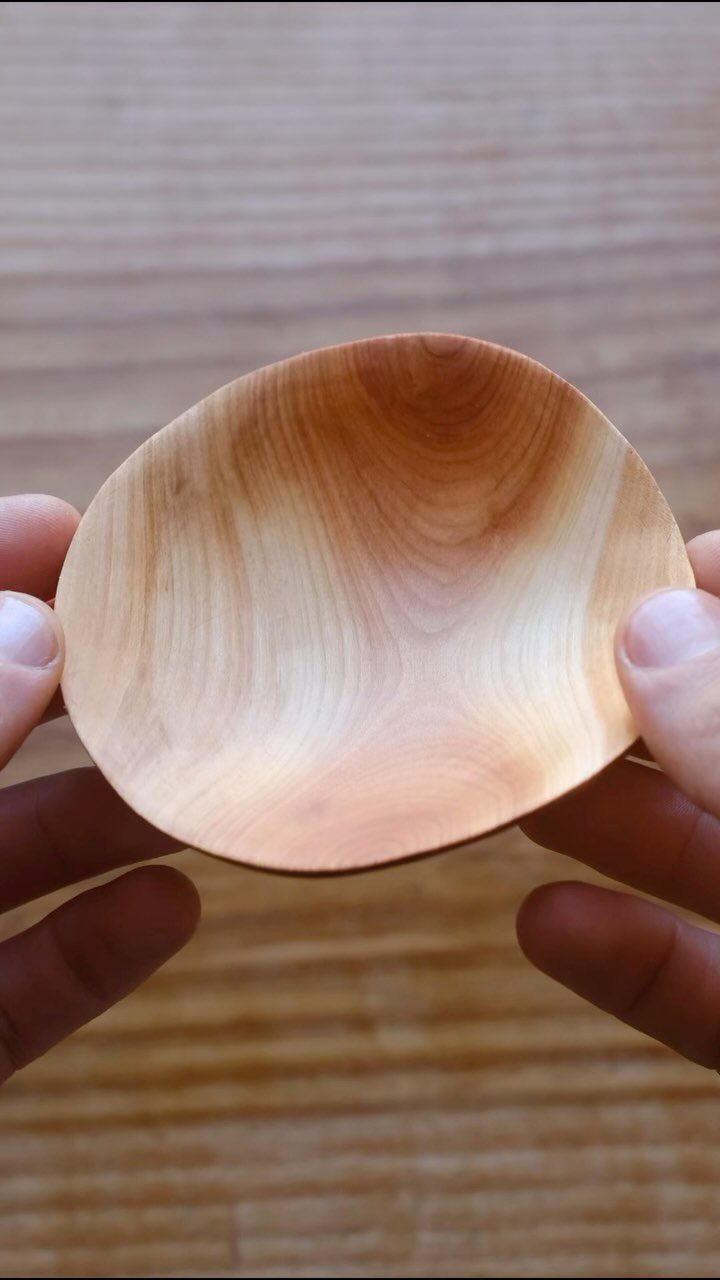
A small bowl is a smart first project on the lathe, because a single blank gives you a finished piece in an afternoon. Cherry turns cleanly, and a bowl this size shows off the grain without needing much wood.
Keep the walls even and sand through the grits before you finish. A glassy finish on a cherry bowl comes from patient sanding, working up through the grits to 320 or higher, and not from piling on extra coats.
2. Cherry Wood Game Pieces
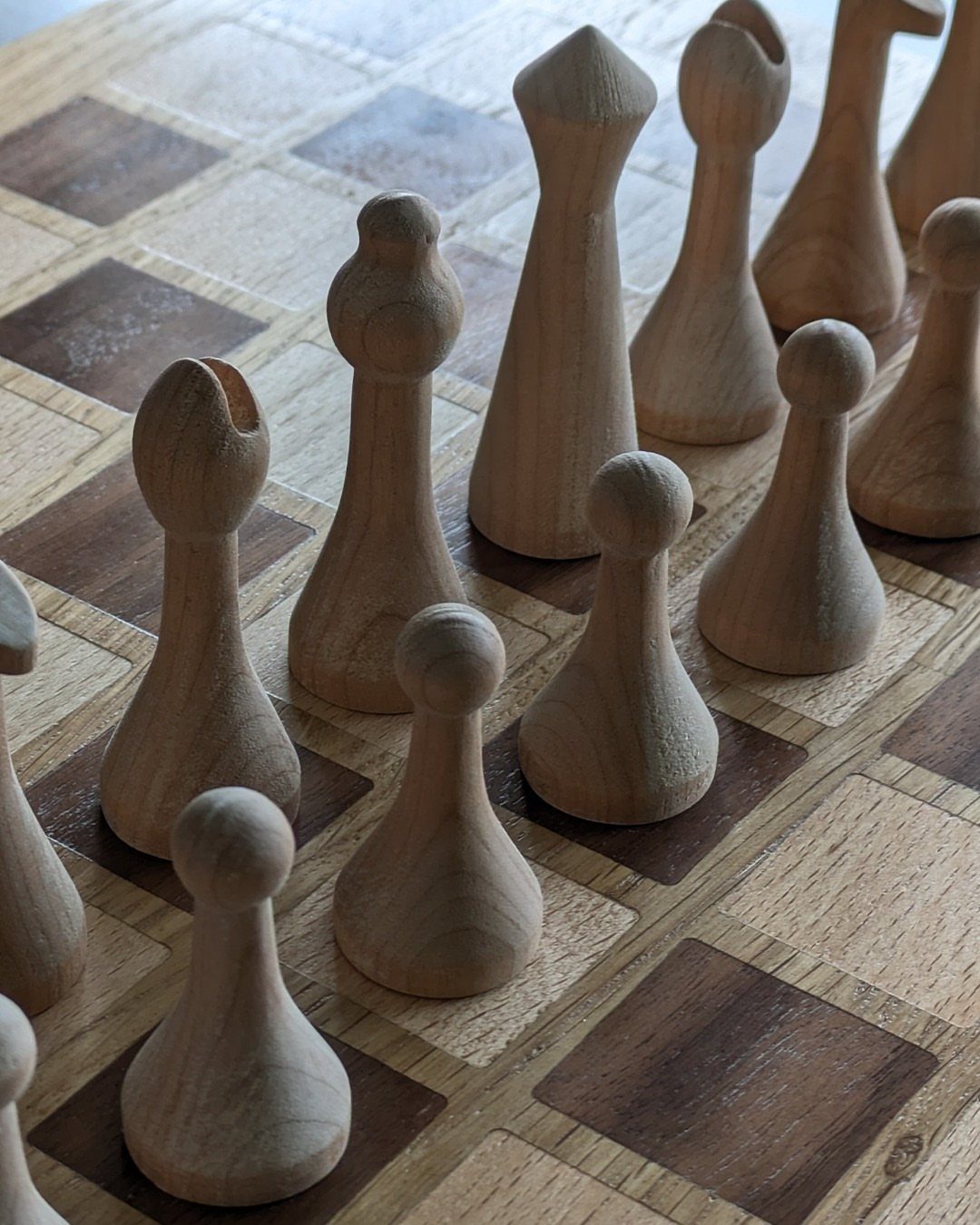
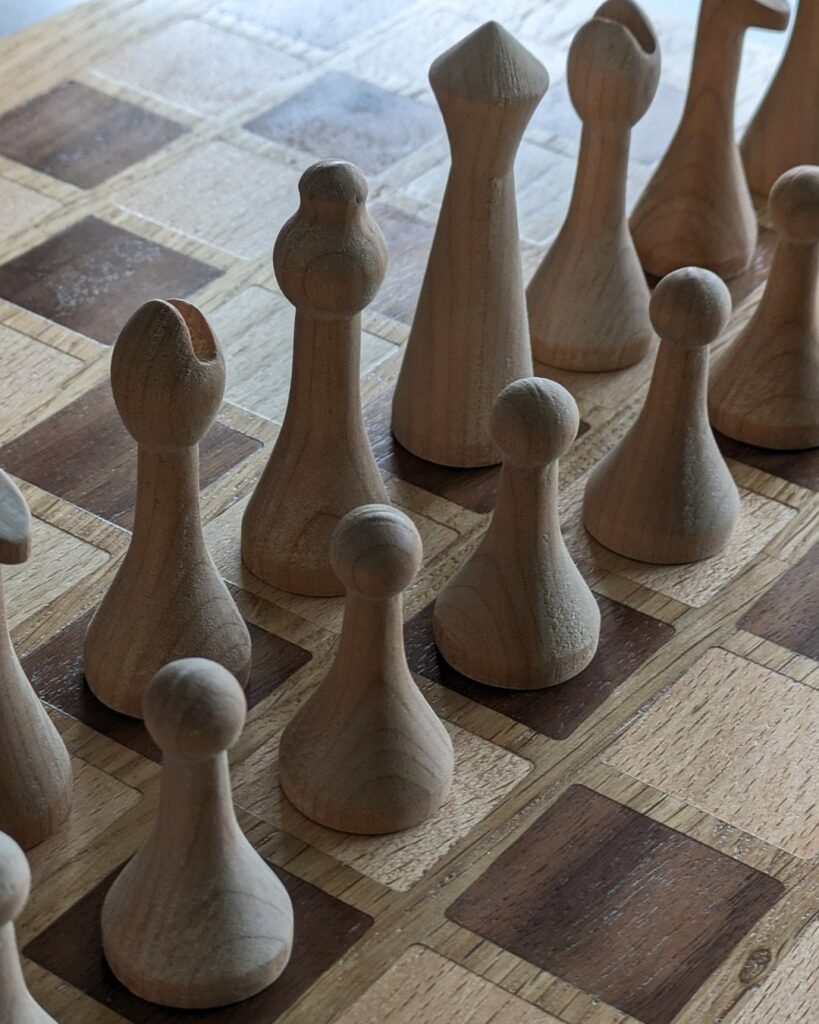
Chess-style pieces, checkers and small tokens all suit cherry, since the pale wood reads well against a darker checkered board. Carving each shape by hand means no 2 sets match, which I count as a plus.
Pick one silhouette per piece type and keep the bases the same width so they sit steadily on the squares. Offcuts from bigger projects work fine here.
3. Wall Art
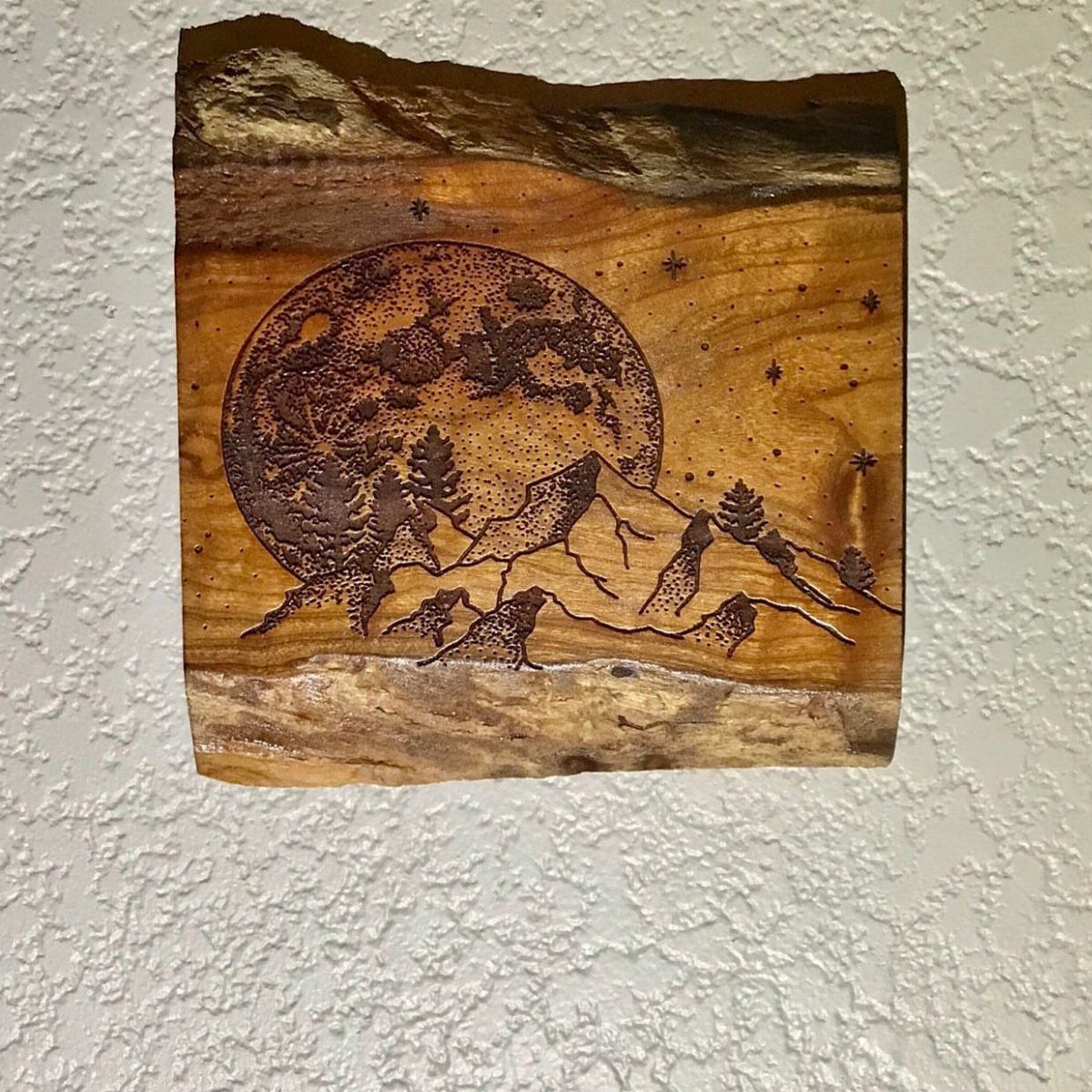
Wood burning turns a cherry slab into wall art, and a live edge gives the piece a natural frame before you touch the pen.
A moon, mountains and pines make a good scene because the large shapes burn in bold, simple lines.
Sketch lightly in pencil first, then burn the outlines before filling in shadows. Wall art is a forgiving project for the pen, since a hanging piece is seen from a few feet away.
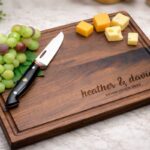
4. Charcuterie Boards
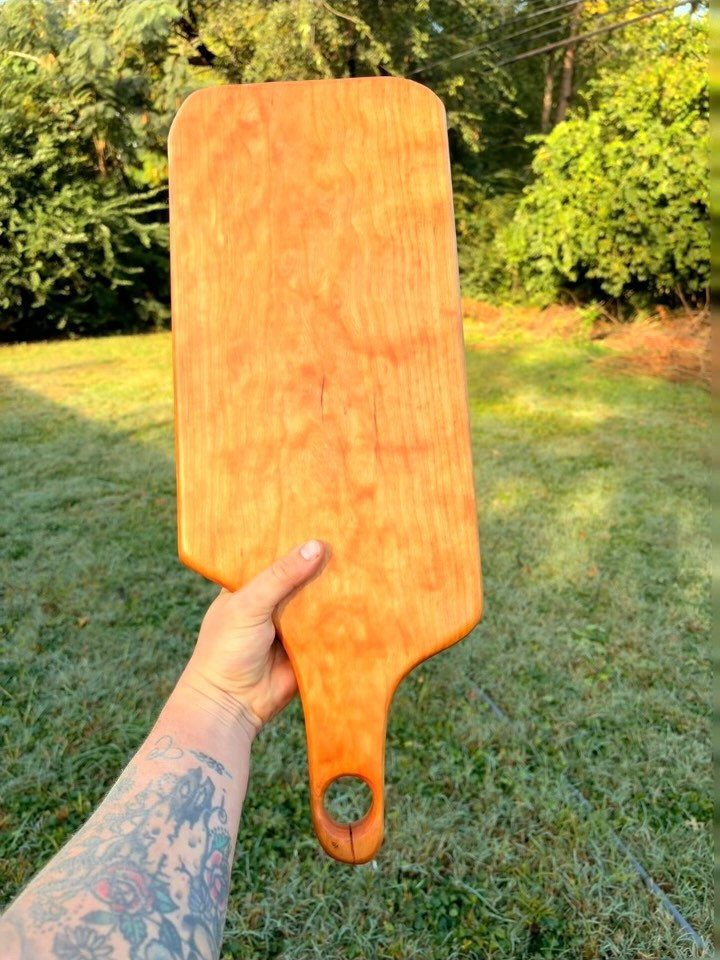
A charcuterie board is about as simple as a cherry project gets: a flat rectangle, eased edges and a handle hole for hanging or carrying. Cherry’s warm color makes cheese and fruit look good on it.
I’d drill the handle hole first, then sand it smooth so nothing catches a hand.
A board that touches food needs a food-safe oil, such as mineral oil or a mineral oil and beeswax blend, rubbed in until the wood stops drinking it.
5. Cherry Wood Spoons
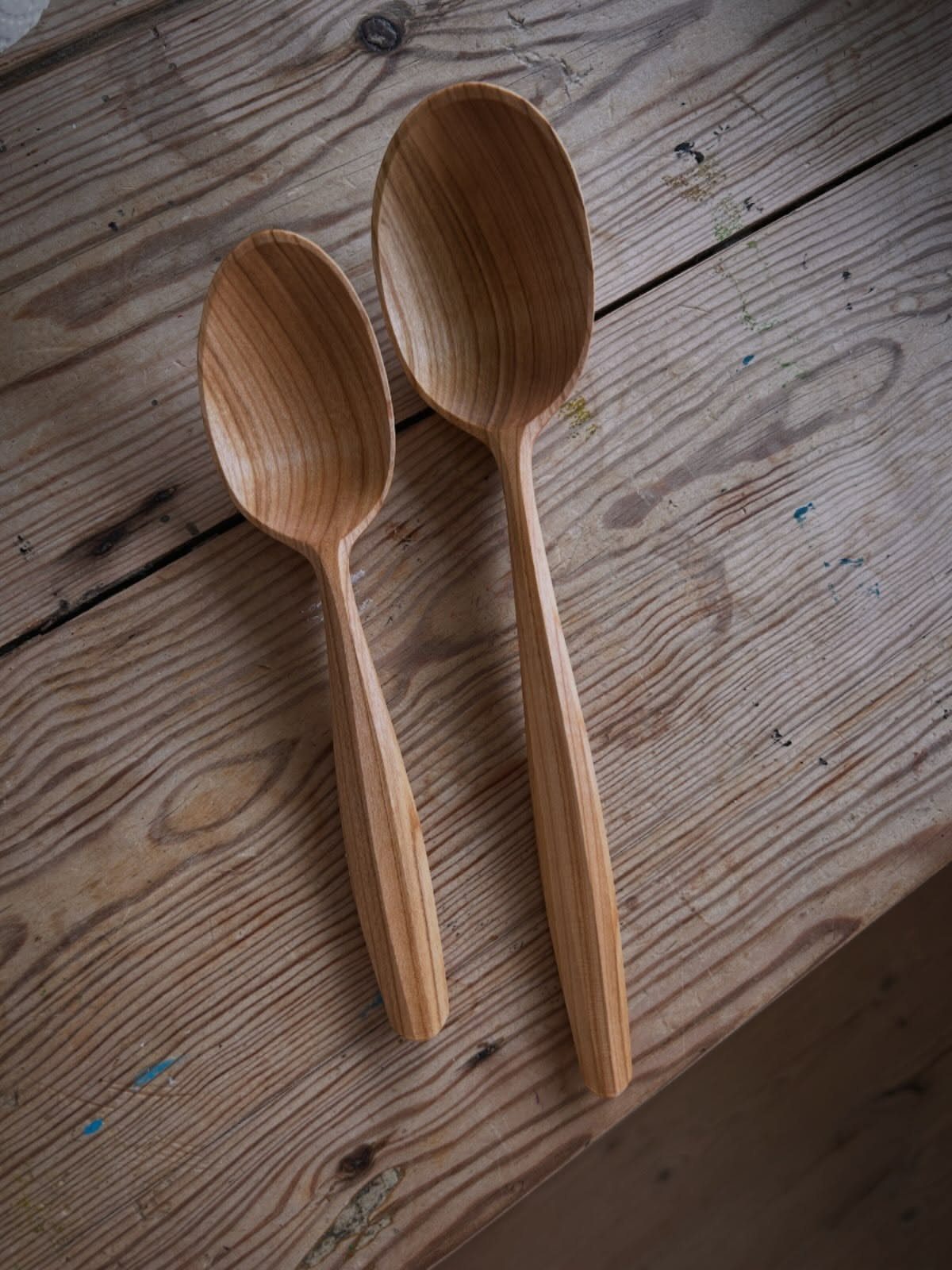
Spoons are the best use for a small scrap of cherry. Two sizes, one for stirring and one for serving, make a useful pair, and carving them takes only basic knives and patience.
Work with the grain along the handle so it stays strong, then sand the bowl until it feels smooth against your lip.
Rub in a coat of mineral oil or walnut oil and let it cure before the spoon goes anywhere near a pot.
6. Cherry Wood Walking Sticks with Celtic Knots
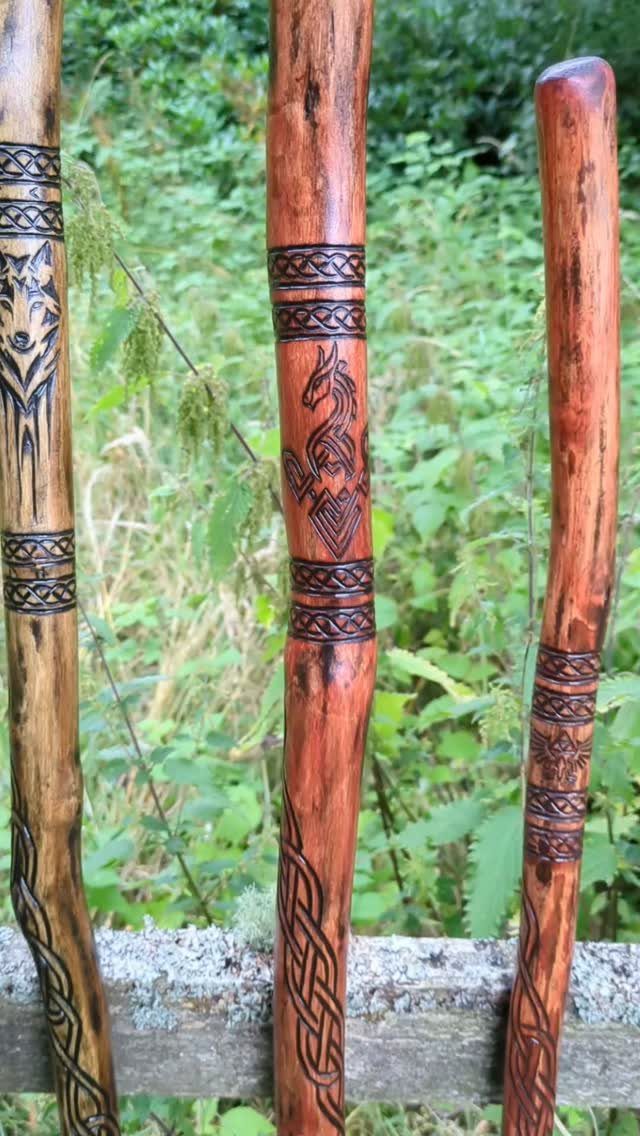
A walking stick gives you a long, narrow canvas for carving, and Celtic knots suit it because the pattern wraps around the shaft.
A carved animal figure on top gives a walking stick a focal point, and the knotwork below it keeps the shaft from looking plain.
Mark the knot’s path with pencil first, since the over-and-under crossings are where mistakes show. Start with one stick before committing to a set, and expect the carving to take longer than the shaping.
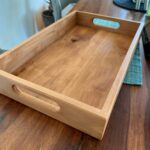
7. Tiered Wooden Desk Organizer
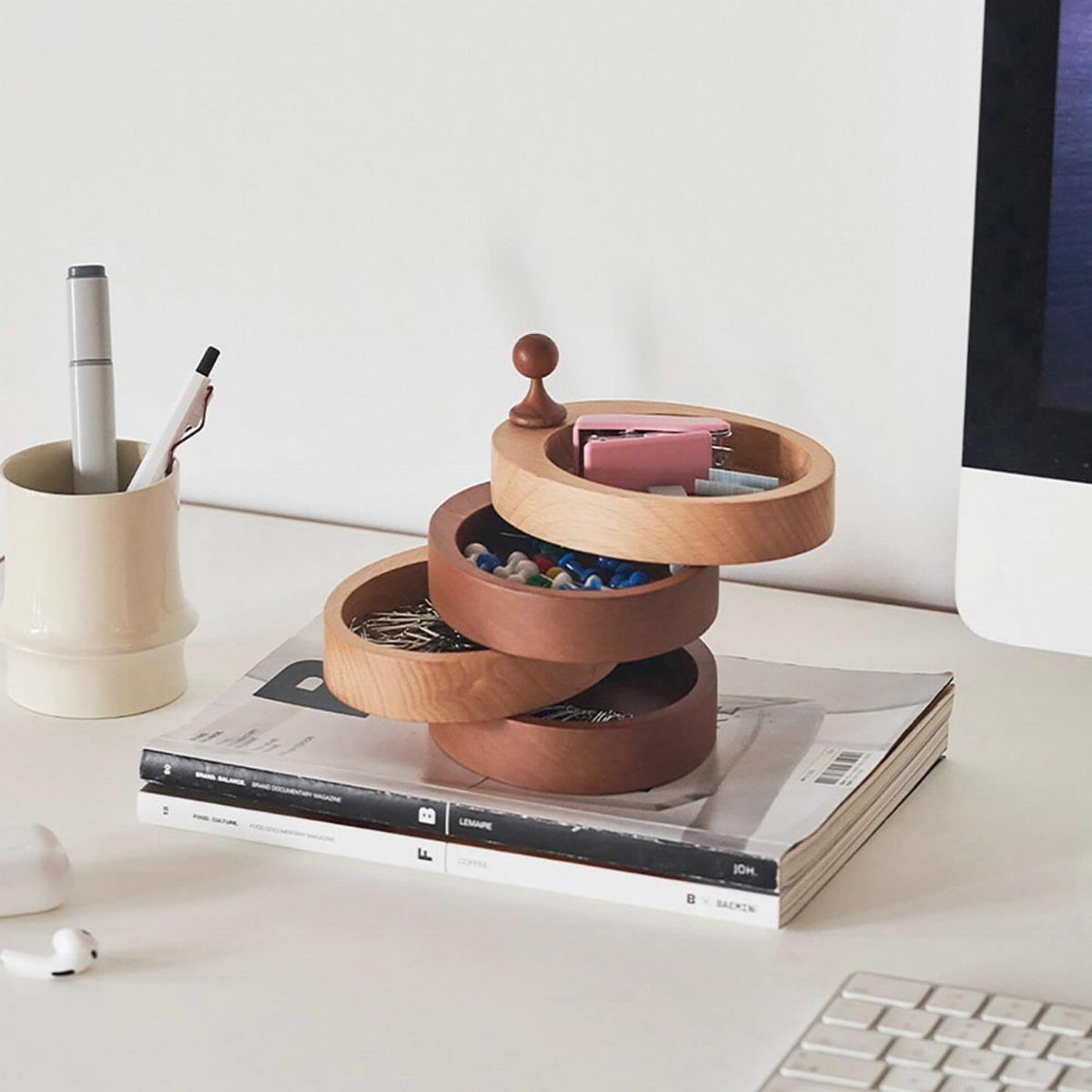
Round trays stacked in tiers keep clips, pins and other small supplies within reach and off the desktop. Cutting the trays as circles is the fun part, and a hole saw or a scroll saw handles it with basic tools.
Make each tray a different diameter so every level stays open, and sand the rims well so nothing snags. Cherry’s warm color also looks good beside a monitor.
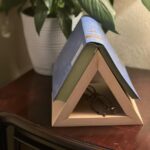
8. Glass Top Cherry Display Box
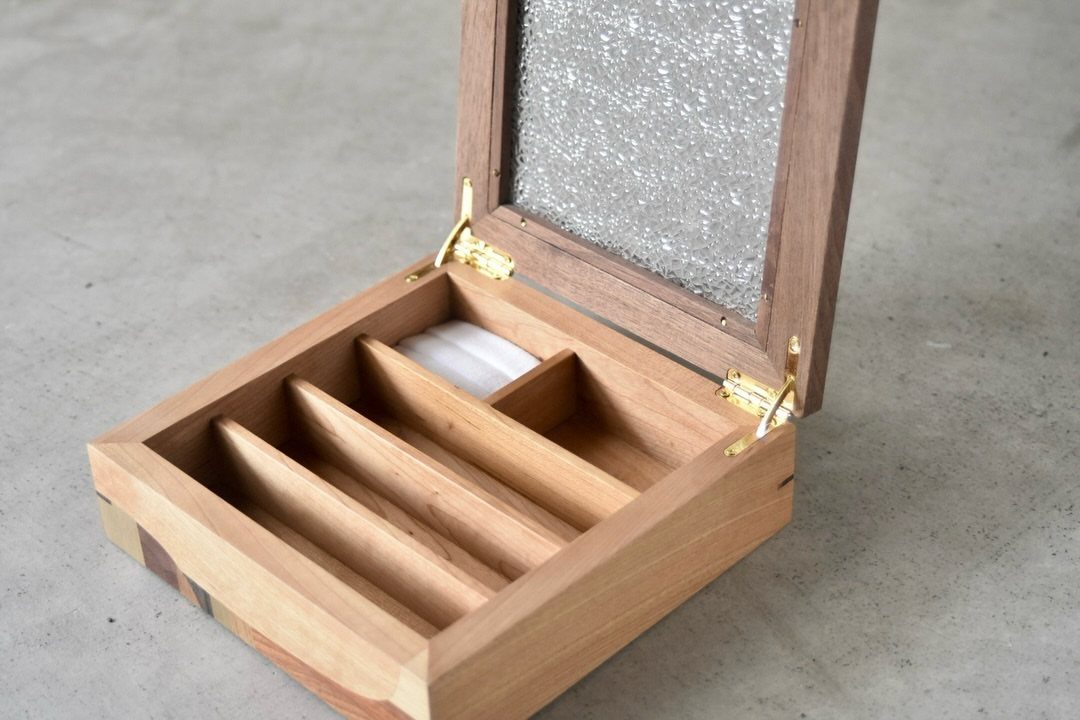
Brass hinges and a glass lid turn a plain cherry box into something you can display and still use. Dividers inside keep small treasures sorted, and the lid lets you see them without opening anything.
Mortising the hinges flush is the step I’d slow down for, because a hinge sitting proud leaves the lid crooked. Cut the dividers from thin stock so the compartments stay roomy.
Have the glass cut to size before you finish the frame, so the fit is certain.
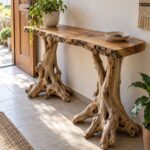
9. Cherry Wood Side Table
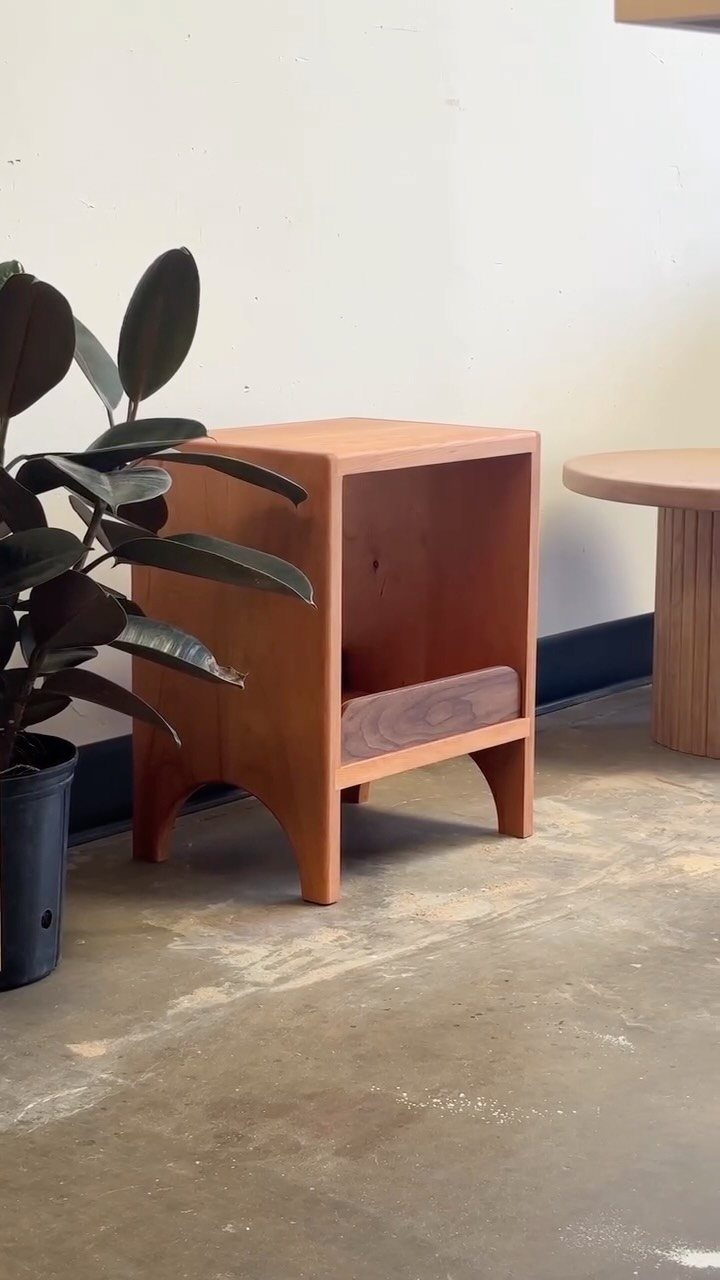
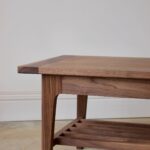
Arched legs and an open shelf give a cherry side table a light look, and the reddish-brown tone suits a spot beside a plant or a chair.
This is the biggest build on the list, so it asks the most from your skills.
Cut the arches from one template so every leg matches, and smooth the curves with a spindle sander or a sanding block. Check that the shelf joins sit square before glue-up.
Plan on a full weekend rather than an afternoon.
Cherry Wood Characteristics
Cherry’s color is the reason most people pick it.
The wood starts out a lighter reddish tone and deepens to a richer, ruddier shade as it ages, so a piece looks better a year from now than the day you finish it.
Cherry has a tight, fine grain and a smooth surface that sands out easily. Cherry wood is also easy to find, since anywhere that sells domestic American hardwoods, including big box stores, usually carries it.
Price is the main drawback. Plain flat sawn boards are not excessively expensive, but boards with figure can get costly fast.
Cherry is also softer than many hardwoods, and hard maple is noticeably harder than it. It dents and scratches more easily than oak or maple, so expect a few marks to build up over the years.
Finishing Tips
Skip the stain. Cherry has a fine grain that resists pigment, and stained boards often turn out blotchy.
My advice is a clear finish, which cherry takes as well as any wood. Wipe on the first coat and you’ll see the grain come alive right away.
Then let time do the coloring. The natural darkening takes weeks to months, and it gives a deeper, more even tone than any stain I’d trust on this wood.
Keep that in mind when you judge a fresh piece: the pale color you see on day one won’t last.
If you want a darker look, wait before deciding. Give the wood a few weeks in ordinary room light first.
Workability
Cherry is rated the most workable of the common North American hardwoods, and the reason is its moderate hardness.
Cherry cuts a clean saw kerf and holds a sharp marked line, but it isn’t so dense that it chews through blades, so tools stay sharp longer than they do in harder woods.
That makes it a pleasure with hand tools, and it runs well through machines too. Sharp edges matter more than force, so let the tool cut.
Take extra care with figured boards, where the grain changes direction. Go slowly there and check the surface as you work, since irregular grain is where tearout is most likely.
Frequently Asked Questions
What are the disadvantages of cherry wood?
Dents are the main complaint I hear about cherry: it sits well below hard maple on the Janka scale, so a dropped tool or a fingernail leaves a mark sooner than it would on oak or maple.
It also blotches when stained, so a clear finish is the better route.
Is cherry wood worth anything?
Cherry is a premium American hardwood, and in most lumberyards the price per board foot runs above the other domestic species. The color is what you’re paying for, since it deepens to a richer reddish brown as the wood ages.
Is cherry wood coming back in style?
Cherry never really left.
Woodworkers still treat it as a premium hardwood and reach for it for furniture, cabinets, boxes and small projects. It’s easy to work, sands smooth and darkens beautifully with age, which keeps it popular.