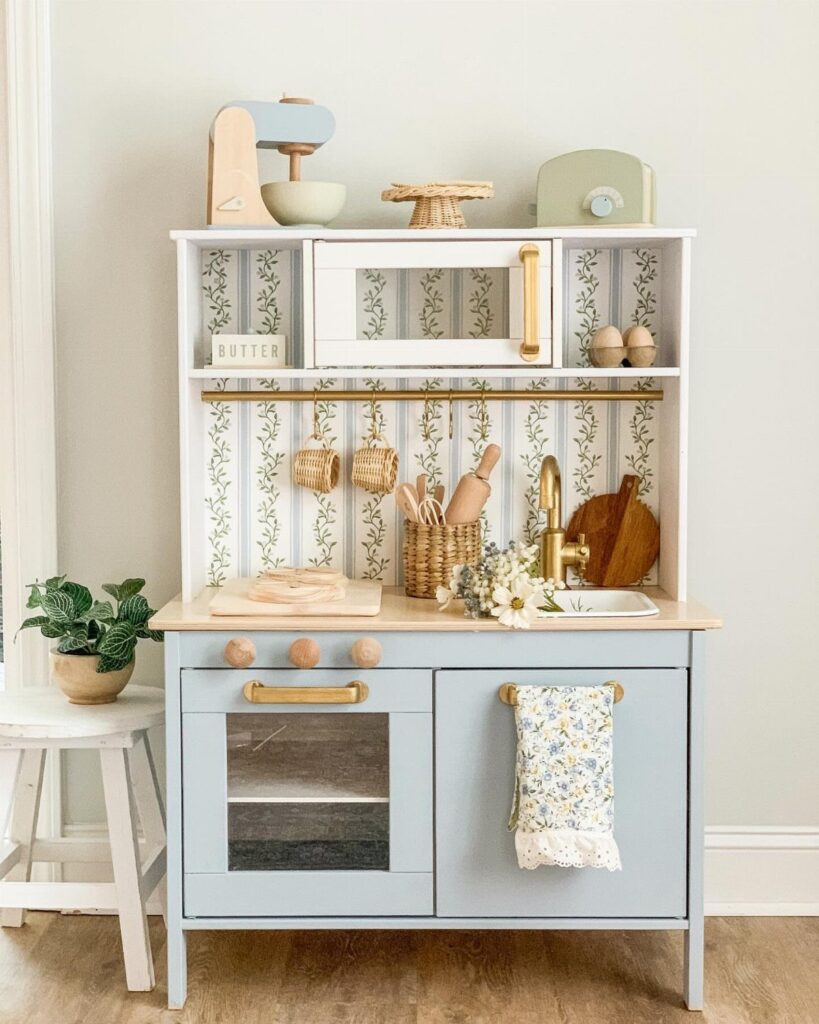
Your starting piece usually decides the flip: a dresser or nightstand takes paint and fresh hardware, a worn side table takes tile or decoupage, and an odd find like a piano or an engine block earns a desk or coffee table conversion.
The range here runs from a painted sage green cabinet to a Monopoly board sealed into a tabletop, and from a simple painted chair to a car engine block turned coffee table.
1. Vintage Buffet Upcycle
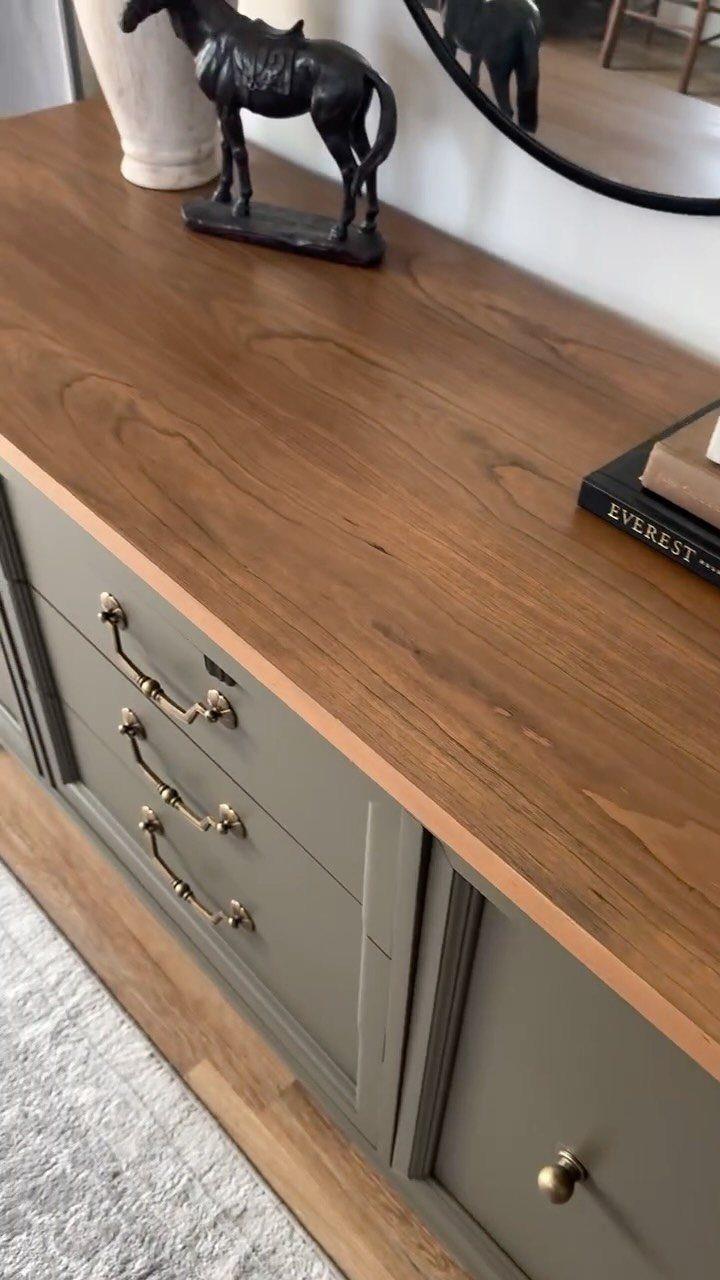
Painting only the base sage green and leaving the wood top bare is about as little work as a buffet flip gets, and the bare top hides daily wear better than paint would.
The original top, with its grain and age, stays the star, and the paint only has to frame it.
If your hardware is tired, swapping it is a quick afternoon job. Tape the edge where paint meets wood so the line stays crisp.
2. Painted Thrifted Chair
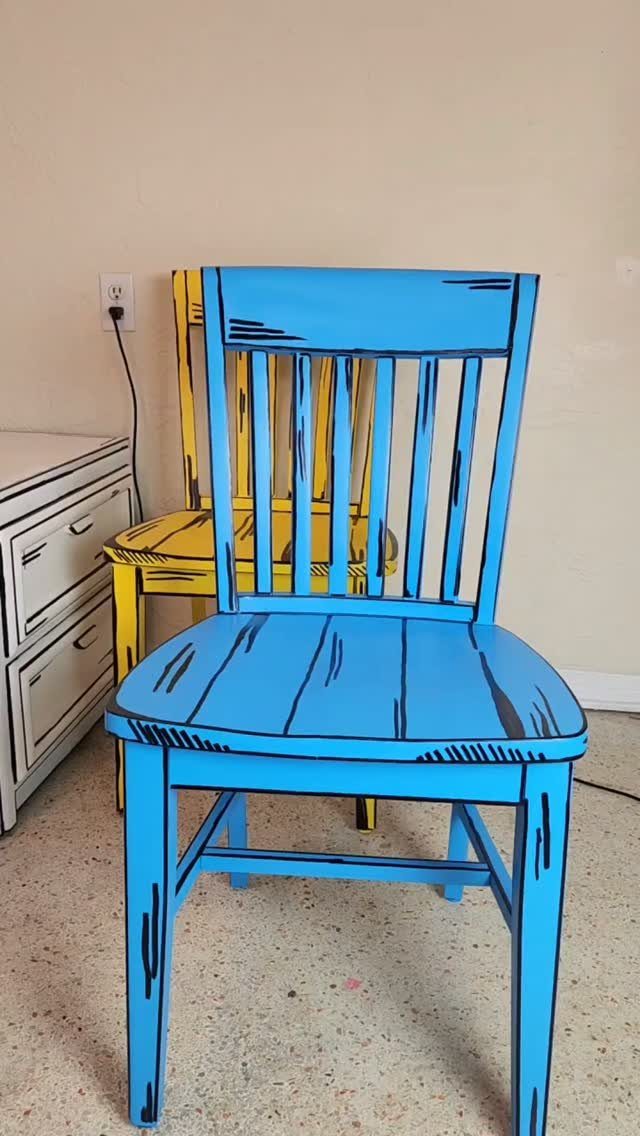
A chair from a thrift store is a small, forgiving canvas, and a comic book finish suits it.
Black outlines around flat blocks of blue or yellow give a chair a graphic, 2D look. A fine-tip paint pen over dry paint keeps the lines steadier than a brush.
Paint the base color first and let it dry fully before touching a marker or brush for the lines.
Pairing 2 chairs in different colors, as here, makes a set out of pieces that never matched. Start with a chair you wouldn’t mind experimenting on.
3. Bureau Drinks Cabinet
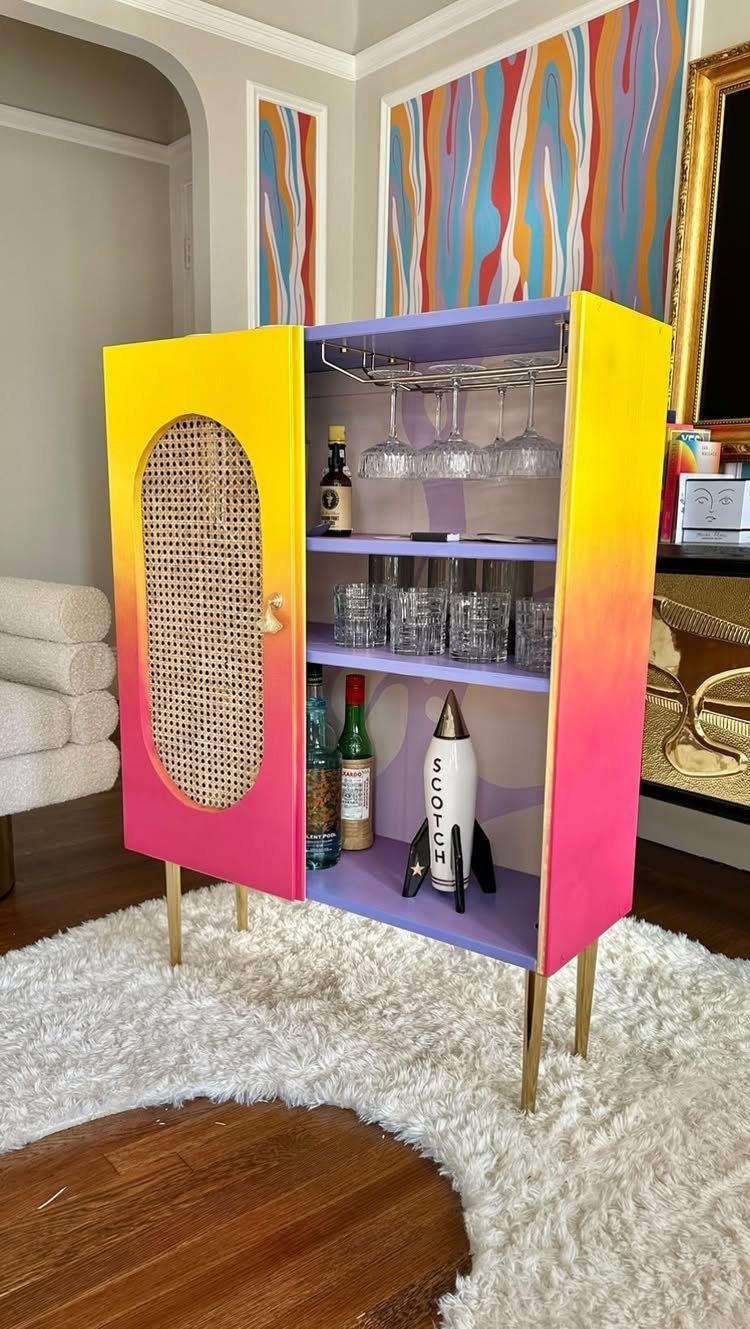
A gradient paint finish, a caned door panel and gold-tipped legs turn an old bureau into a drinks cabinet with real personality. Blending colors takes patience, so work in small sections while the paint is still wet.
I like keeping the glassware and bottles in a tight group, since the paint is already doing plenty of talking. Gold legs are an easy add-on if your bureau’s feet look plain.
4. Tiled Side Table Makeover
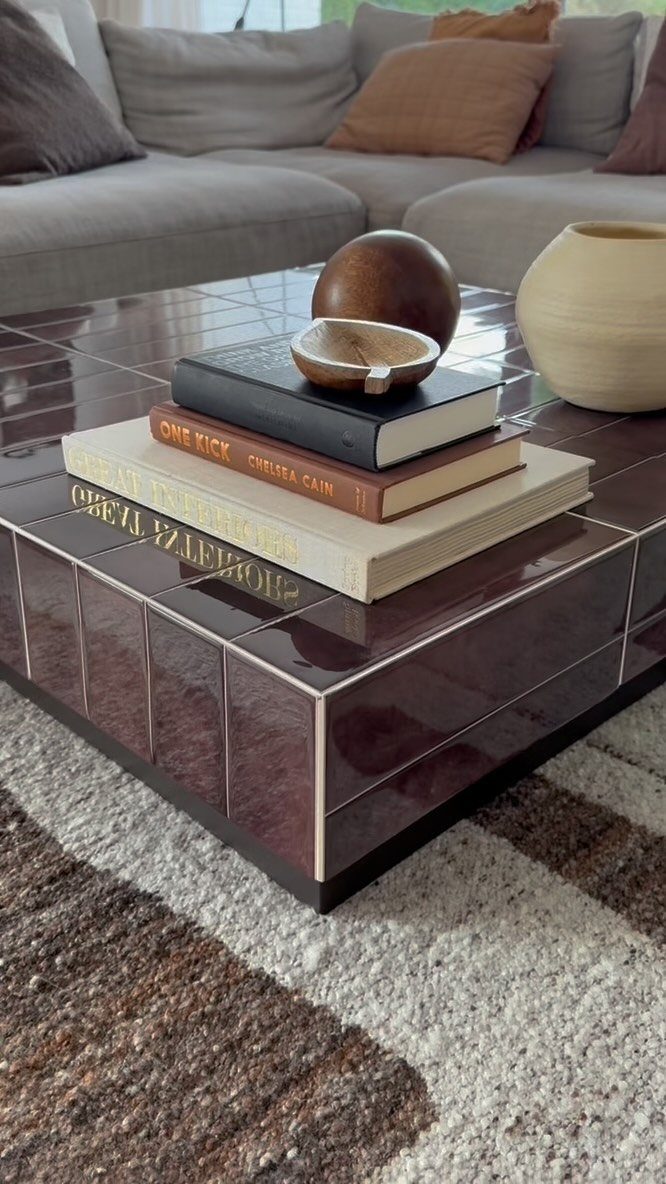
Tile is the quickest way to hide a worn tabletop, and a glossy dark purple one reads as bold without being fussy. Pick a color you’d happily live with, because tile is harder to undo than paint.
Set the tiles out dry first to check the layout before any adhesive goes down. Then grout, wipe the haze, and you have a surface that shrugs off wet glasses.
5. Decoupage Side Table
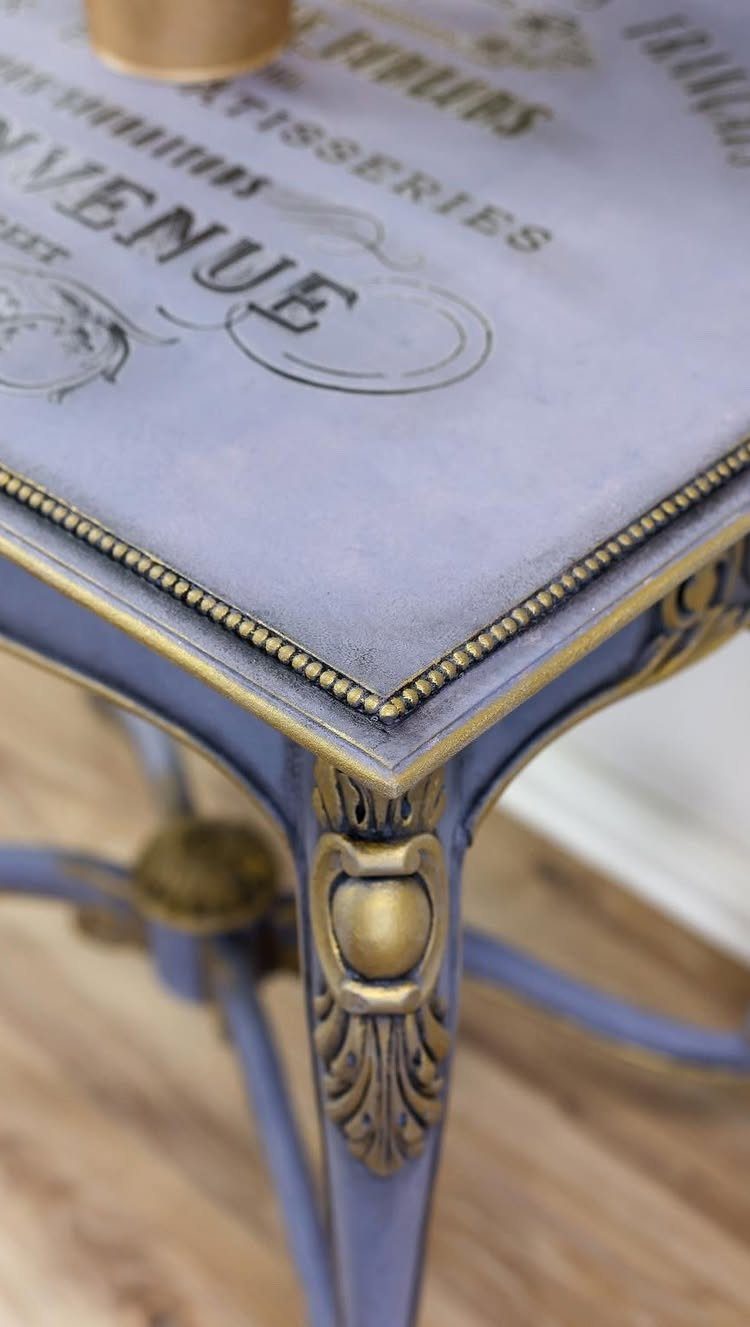
Paper with French shop words like "PATISSERIES" and "VENUE" gives a tabletop instant vintage character. Decoupage needs only glue, a brush and paper, so it fits a tight budget.
Smooth each sheet from the center outward to push out bubbles.
Purple paint with gold trim around the edge frames the lettering nicely. Seal the top with a few thin coats of finish, since a thick coat tends to pool and cloud.
6. Play Kitchen from Nightstand
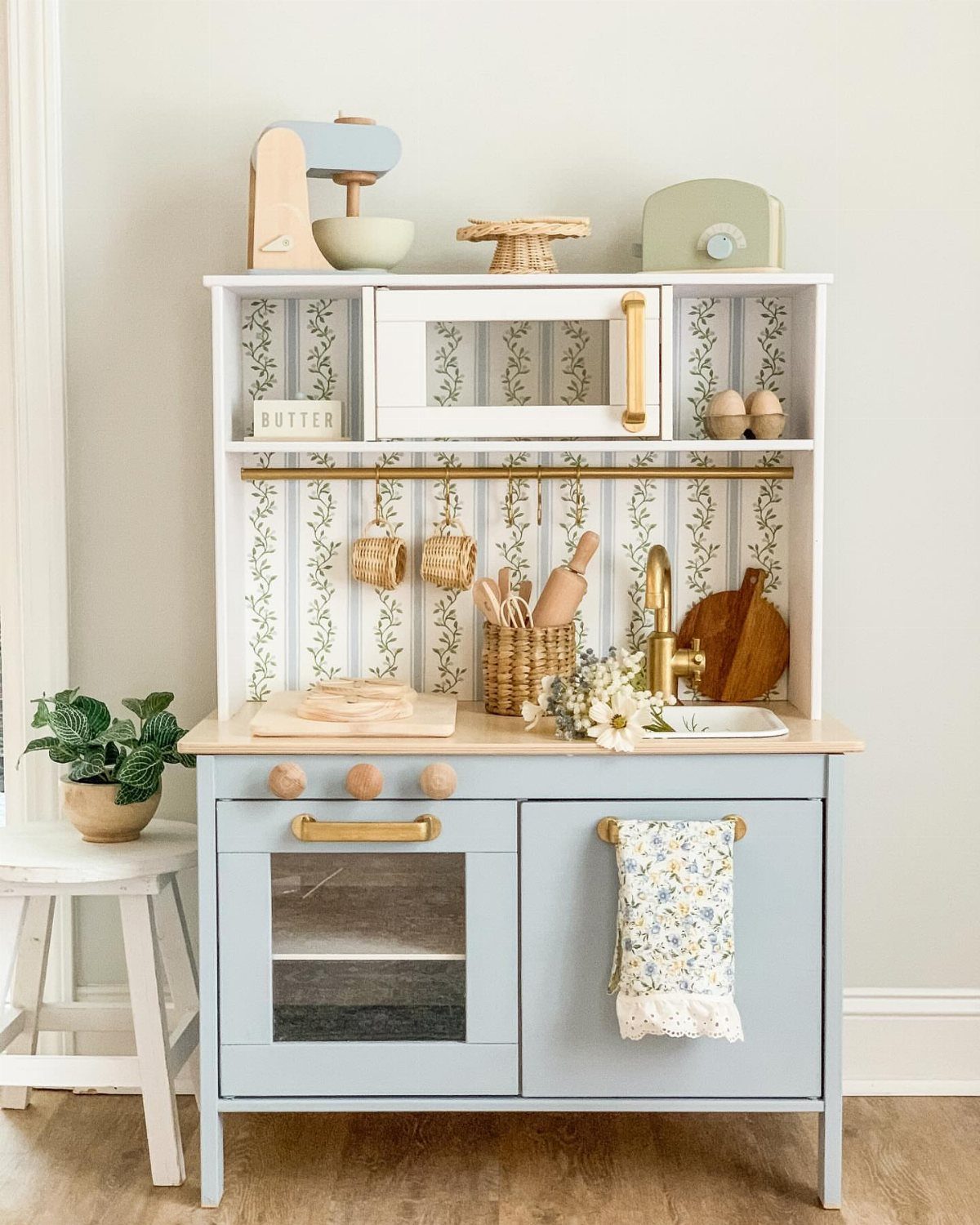
A nightstand already has the right height and size for a child, which makes it a natural play kitchen. Cut an opening for a sink, add an oven door, and you’re most of the way there.
Sand and prime first, and keep the finish smooth, since small hands will test every edge. Knobs make good stove dials.
7. Monopoly Board Table
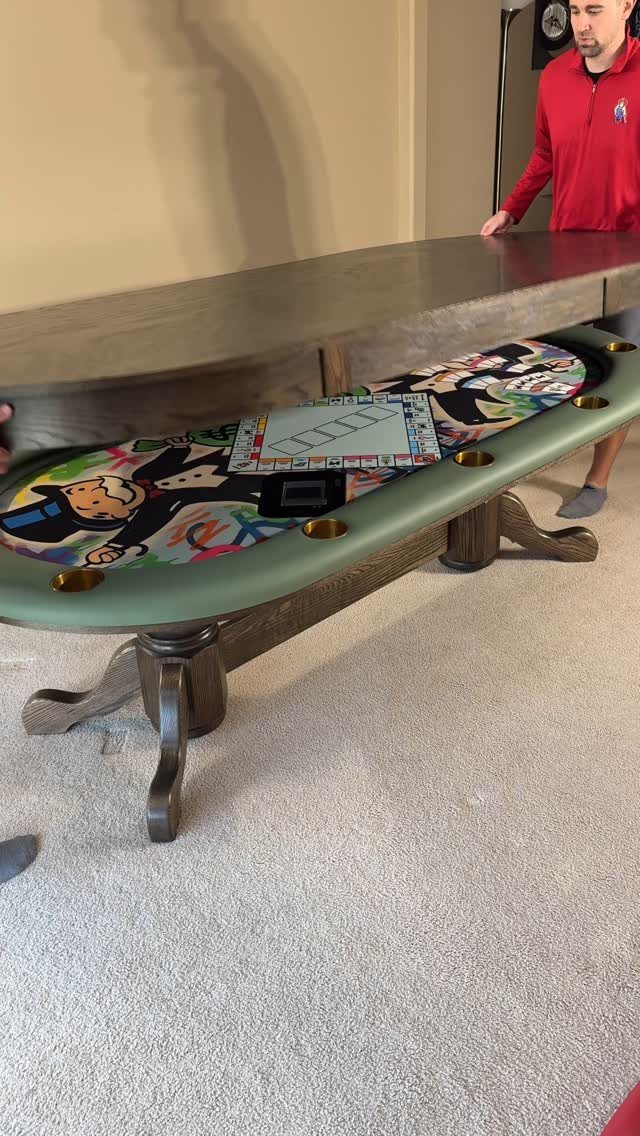
A game board makes a table surface that starts conversations, and Monopoly works well because everyone already knows the layout. The maker’s line, "pass GO and collect $200," says it better than I could.
Set the board under a clear, hard-wearing top so it stays flat and wipes clean.
Cup holders keep drinks off the squares. Pick a frame sturdy enough that the board never flexes.
8. Faux Marble Drinks Trolley
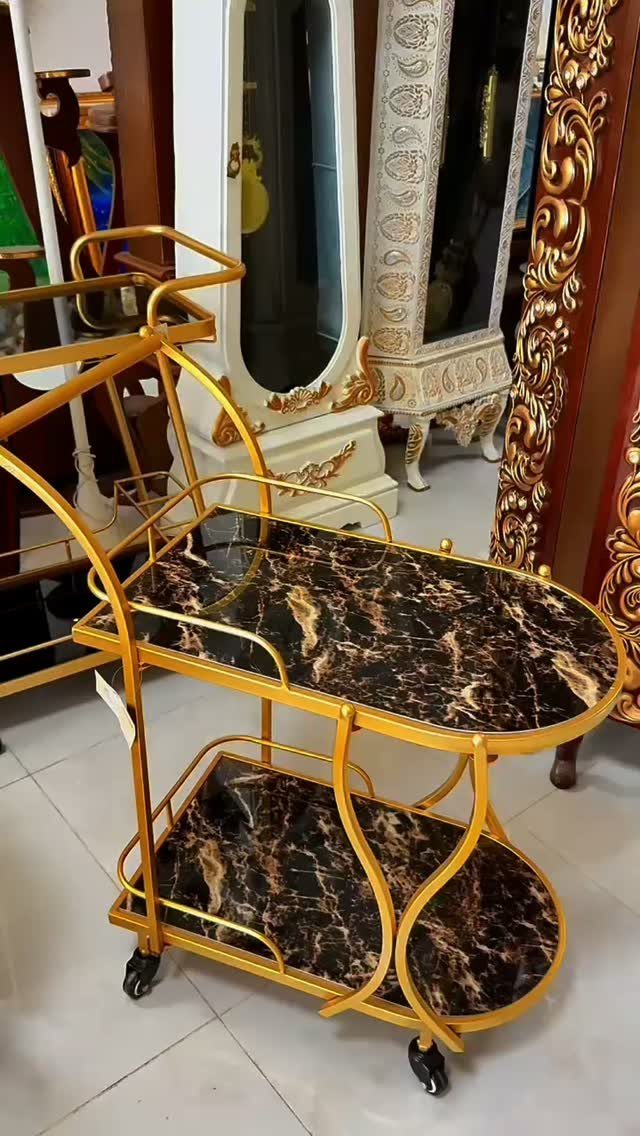
Faux marble is a painted effect, so work with a feather or thin brush and keep the veins uneven.
Mix in a few shades rather than one, and blend while the paint is wet. A trolley with flat shelves is the easiest place to practice the technique.
9. Repurposed Hutch Coffee Station
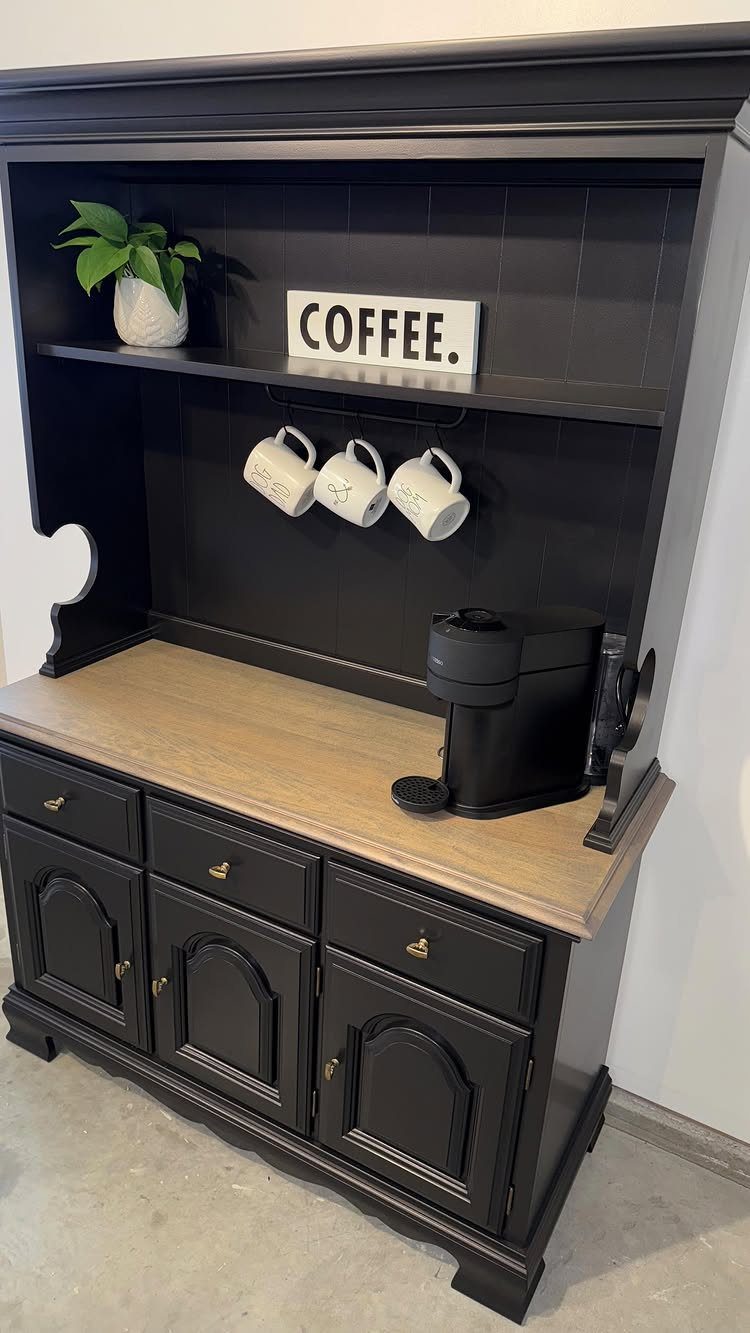
A hutch already has the shelves and counter space a coffee bar needs. Black paint on the body with a light wood countertop keeps the look crisp, and the bare wood handles a stray drip better than paint would.
Screw hooks under a shelf to hang mugs, and leave the counter for the coffee maker.
A plant and a small "COFFEE" sign finish it. Check that the outlet reaches before you settle on a spot.
10. Piano Converted Into Desk
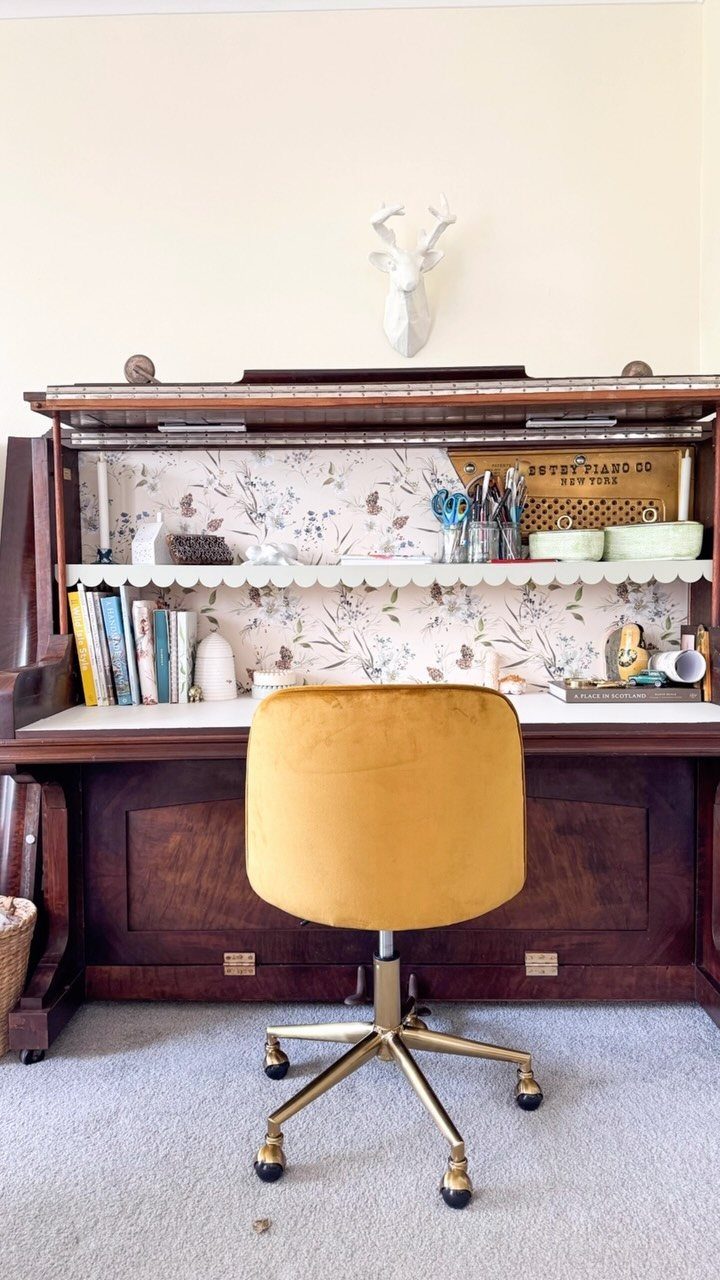
An old upright piano makes a striking desk once the insides come out, and the cabinet’s age is the whole appeal. Lining the hollow with floral wallpaper, as here, adds color without much cost.
Keep the maker’s name plate visible, since it gives the piece its history. Pianos are heavy, so plan the final spot before you start.
11. Painted Navy Dresser Makeover
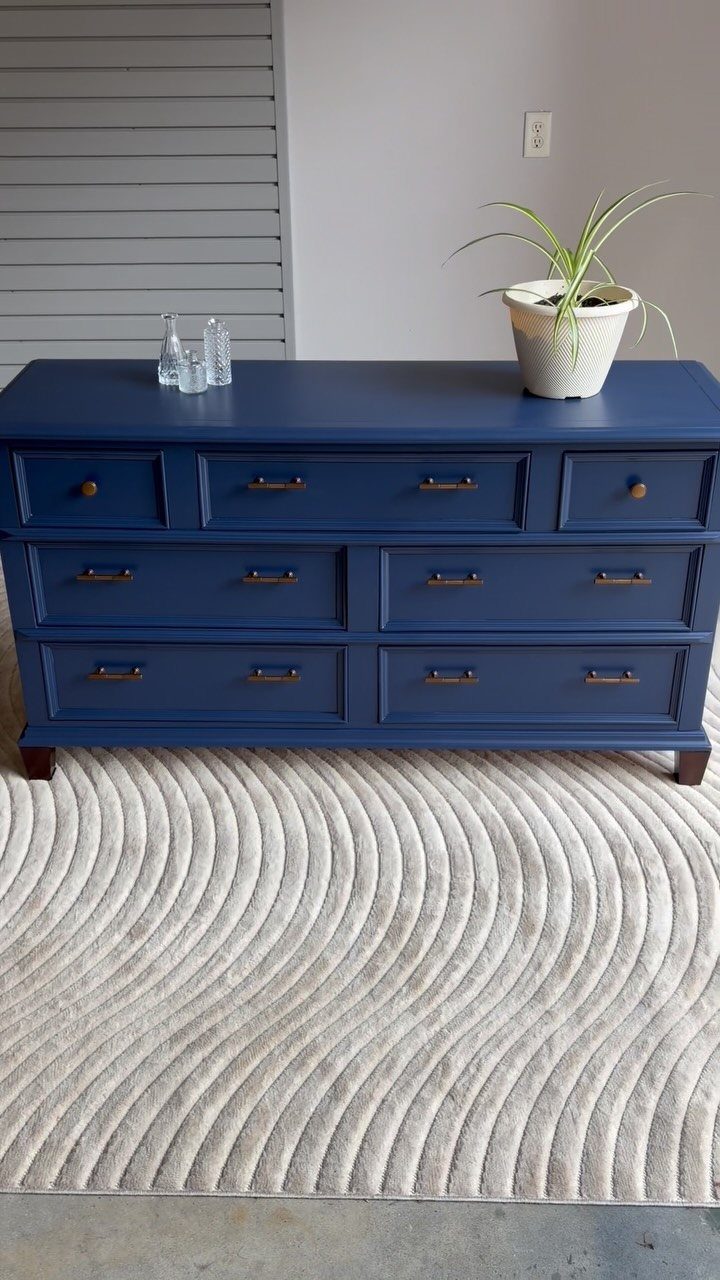
Deep navy paint with brushed gold pulls is a classic dresser combination, and I’d pick it over almost any other for a bedroom. The dark color makes gold hardware stand out.
Sand lightly, prime, then use two thin coats rather than one thick one, since dark paint shows brush marks.
Swapping the pulls takes minutes and changes the whole piece. Measure the hole spacing before you buy new ones.
12. Car Engine Block Coffee Table
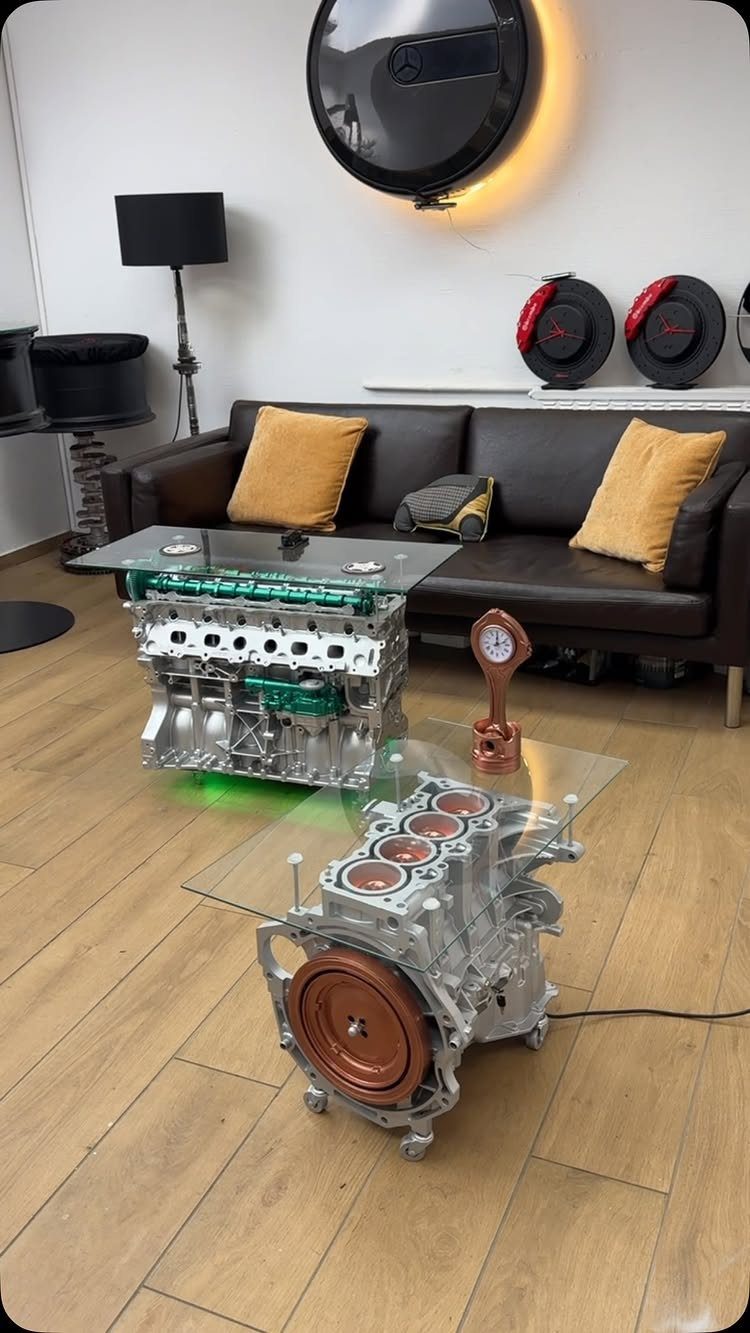
An engine block with a thick pane of glass on top makes a coffee table with real weight and plenty of conversation. The cylinder openings show through the glass, so clean them well first.
Degrease the block thoroughly before bringing it indoors. Glass should sit on soft pads so it never slides or scratches the metal.
Make sure the block sits level. It suits a garage-style room best, with leather and dark wood nearby.
13. Sage Green Ornate Cabinet
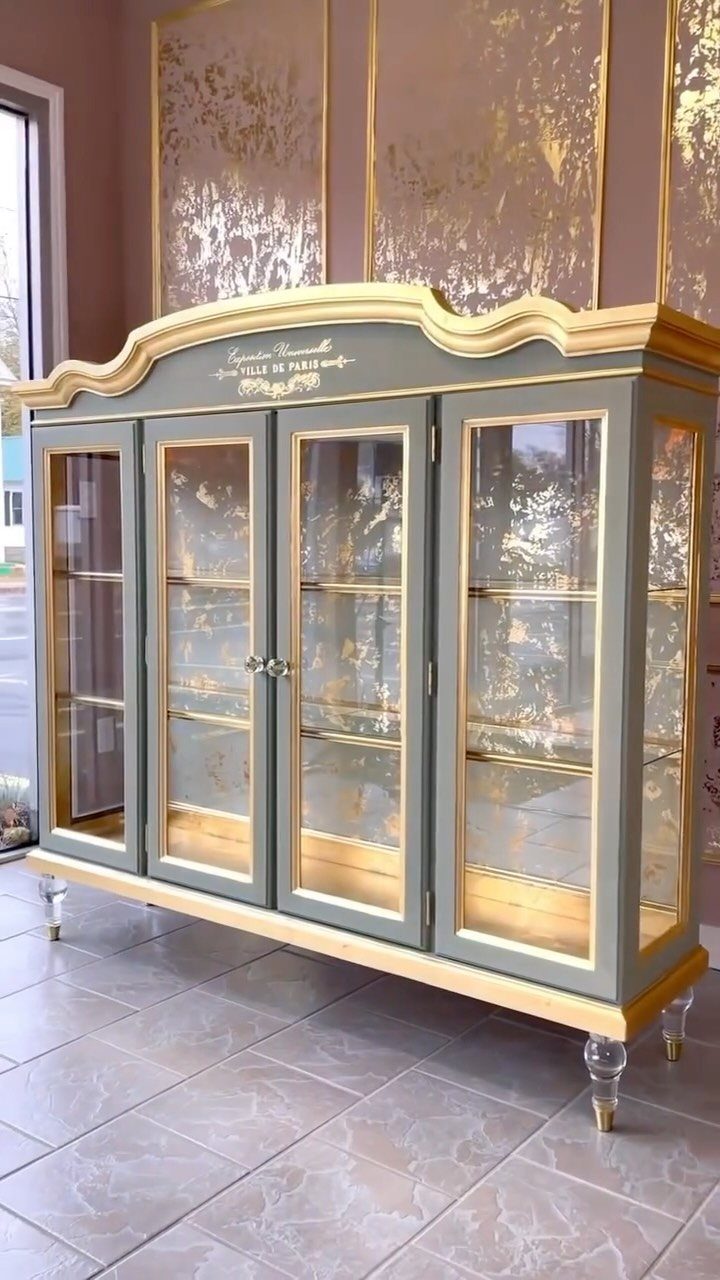
Sage green over a glass-front cabinet softens an ornate piece without hiding its carving, and gold trim picks out the details worth noticing. Tape off the glass and mask the "VILLE DE PARIS" lettering before painting so nothing smudges.
Use a small brush for the gold and keep it to raised edges. A little goes a long way.
14. Two-Tone Geometric Dresser
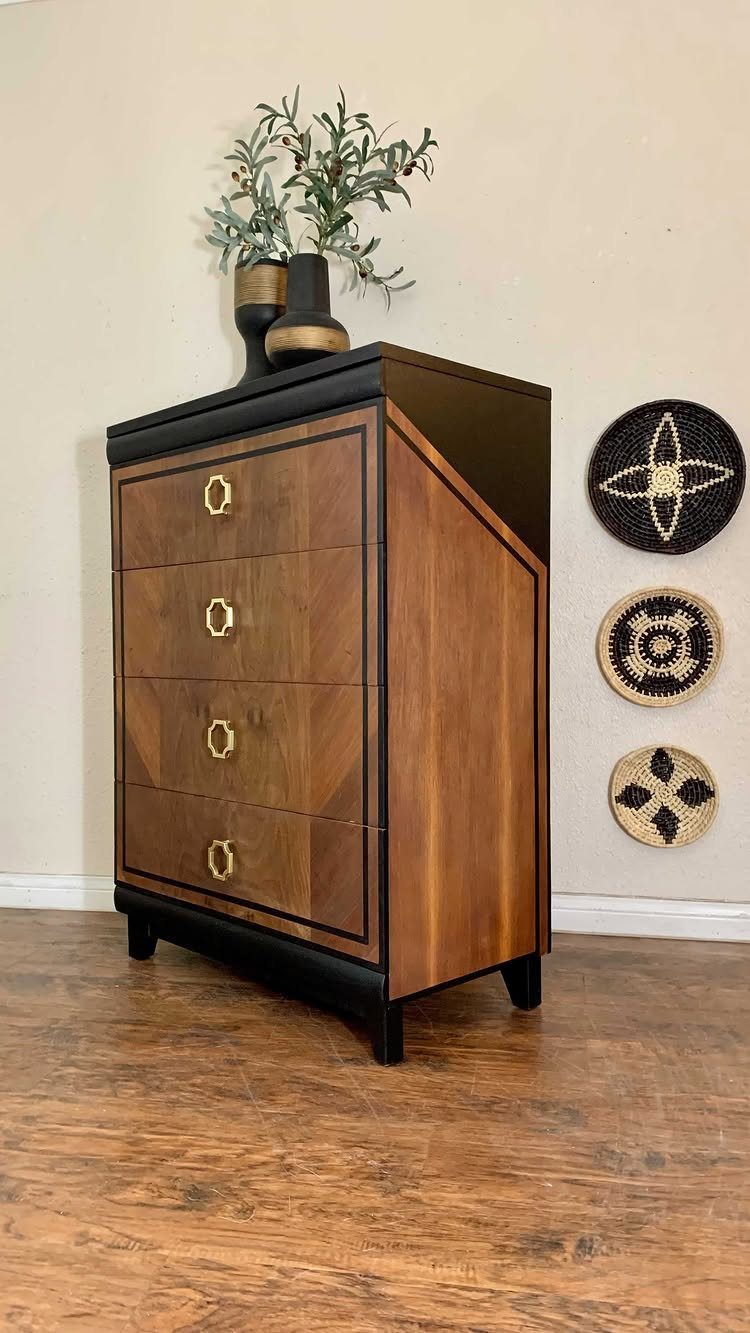
Black painted borders around natural wood give a plain dresser a crisp, graphic frame, and I’d pick that over painting the whole piece. The wood stays warm while the black sharpens every edge.
Tape the border lines carefully and press the tape down firmly so paint can’t creep under it.
Hexagonal gold knobs finish the look. Measure the hole spacing before buying.
15. Light Blue Painted Dresser
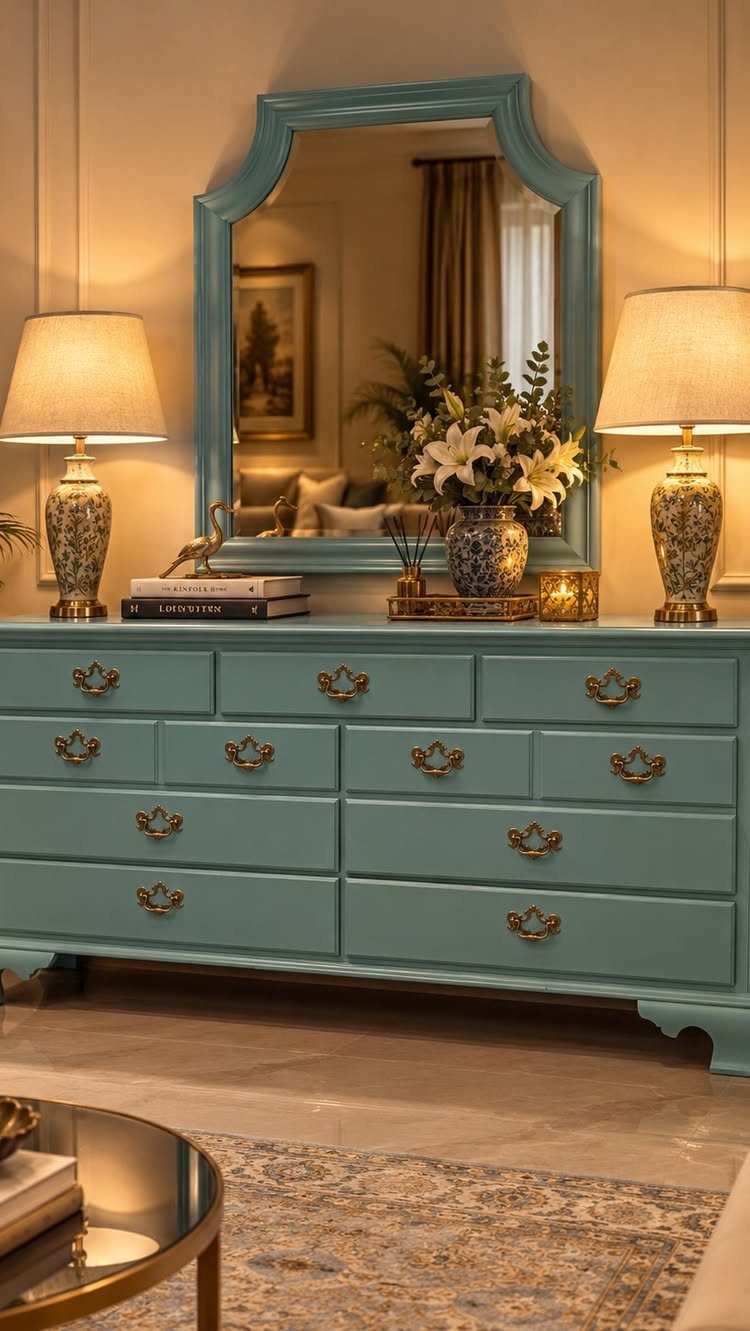
Powder blue on a dresser and mirror frame, painted as a matched pair, looks like a set that was always meant to go together. Brass hardware adds warmth against the cool color.
Sand lightly, prime, and brush on thin coats.
Paint the mirror frame in the same batch so the shades match exactly. Cover the glass with paper and tape first.
16. Dark Teal Painted Dresser
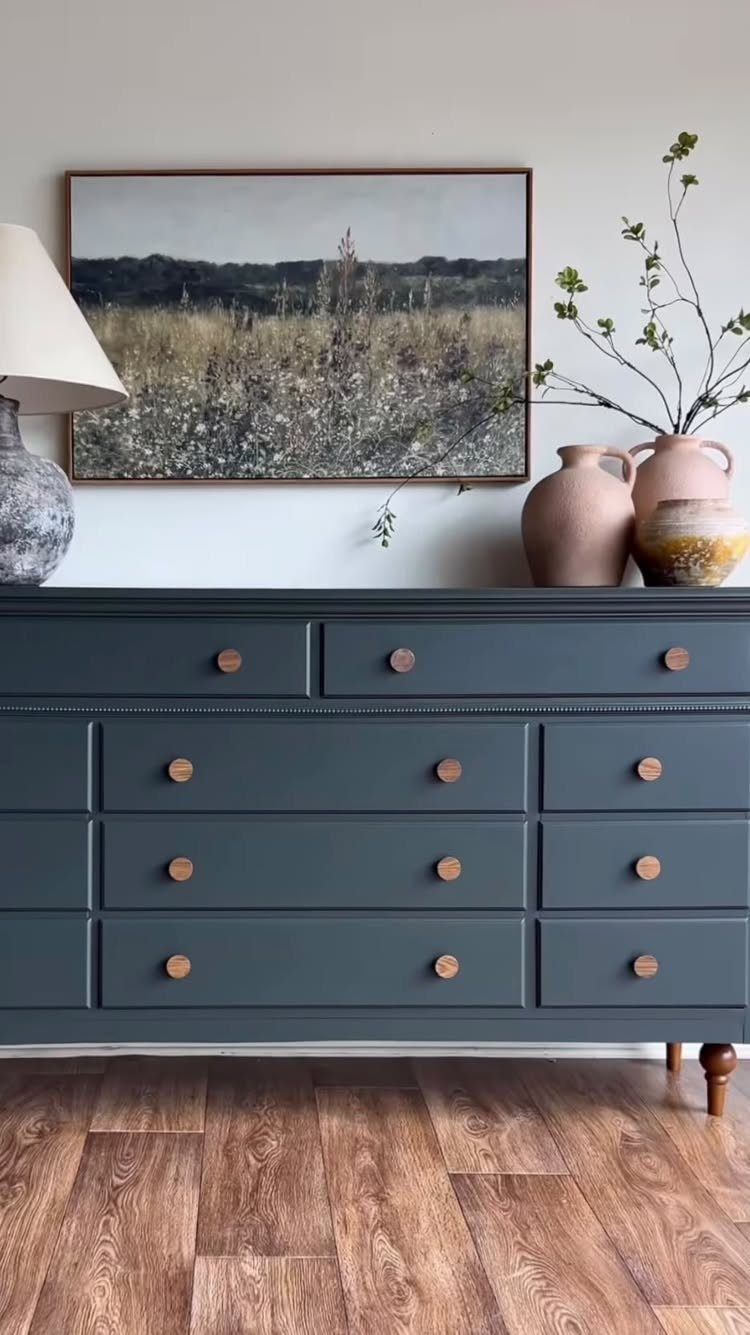
Deep teal on a wide dresser gives a room a rich anchor, and natural wood knobs tie the color back to the wood tones around it. I like that pairing more than metal here.
A wide top means long brush strokes, so keep a wet edge and work in the same direction as the grain. Two thin coats beat one heavy coat on a dark color.
17. Two-Tone Painted Storage Chest
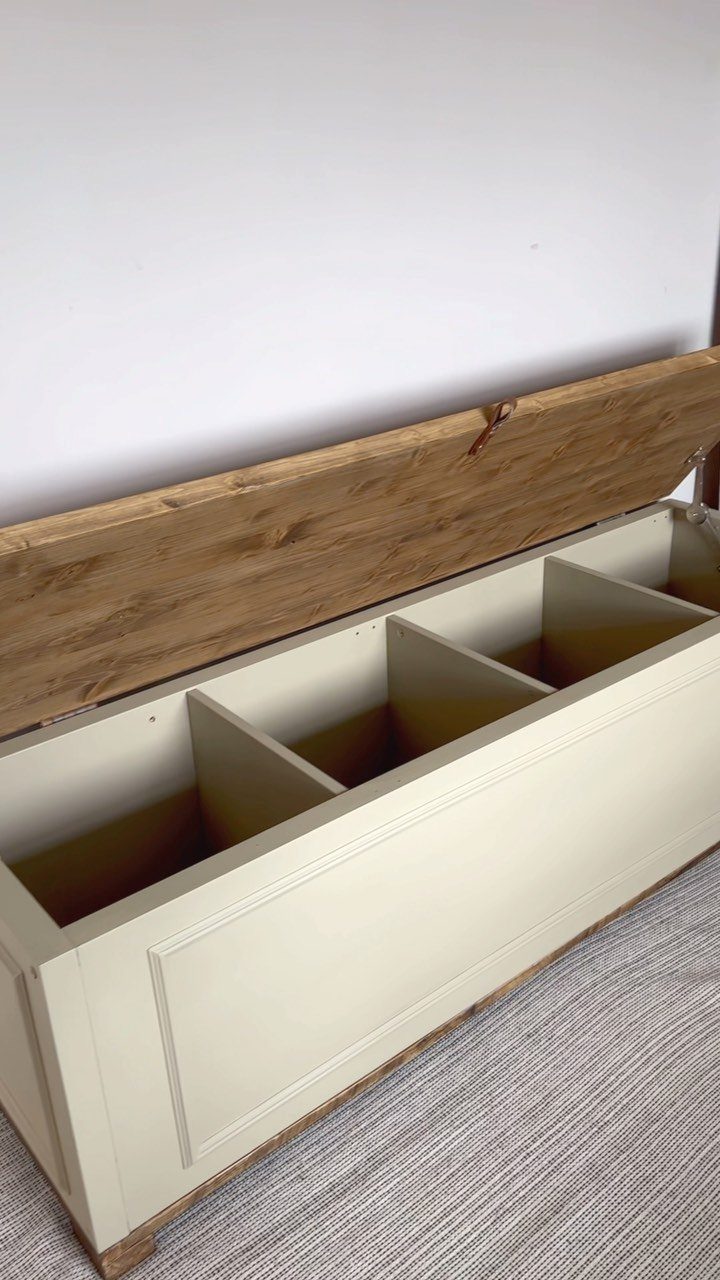
Leaving the lid bare wood while the base goes white makes a storage chest look finished and lighter on its feet. The lid is the part hands touch most, and wood hides that wear better than paint.
Mask the line where the white stops, and prime the base before painting. A flip-top with dividers inside suits blankets, toys or craft supplies.
18. Painted Grey Nightstands
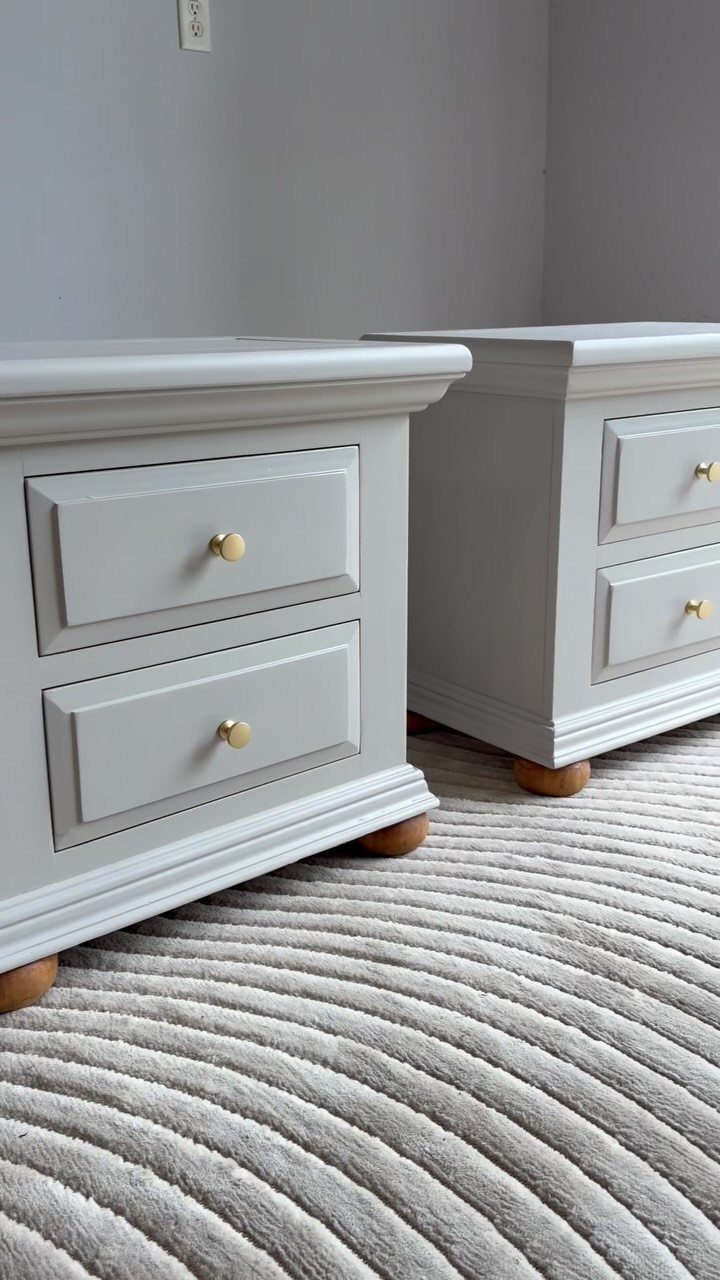
Soft light grey on matching nightstands is a calm, low-risk finish, and gold round knobs add just enough shine. Painting both in one session keeps the shade identical.
Scuff the surface, brush on a coat of primer, then finish with 2 light coats of paint instead of one heavy one.
Mix enough paint for both pieces, since a second batch can drift slightly in color. Set the knobs at the same height on each nightstand.
Where to Find Furniture
For a first hunt, I’d start with Facebook Marketplace, Craigslist and the thrift stores near you, since all three are easy to check often.
Yard sales and curbside piles work too, and some pieces are free if you ask or watch listings.
A finished flip is only as good as the piece you begin with, so check the base first. Dents and chips can be filled and sanded, but a poorly made piece stays poorly made under any paint.
Solid wood wins over veneer and particleboard every time, because it sands, stains and repairs in ways the cheaper stuff can’t. I’d pass on MDF and other cheaply made furniture, since it doesn’t clean up as well.
Instead of spending a fortune on new items that everyone and their mother owns, give a secondhand item a new life. These easy (and stylish!) flea market flips are proof that you don’t need to spend a lot of money for a unique home.
Selling Flipped Furniture
Before you set a price, decide who you’re selling to. A buyer after a good deal and a buyer with a big budget shop in different places.
If a profit of a few hundred dollars is the aim, Facebook Marketplace does the job well. A buyer with a bigger budget is better served by a higher-end marketplace, so list the piece there.
Whichever site you pick, search it first for similar pieces and see what they actually sold for.
A price a little above the going rate leaves room to bargain, though set it too high and buyers will scroll right past. Price it too low, and you hand your own hours of work away for free.
I look for roughly a 200% markup on a good flip; if the math falls well short of that, the piece may not be worth an afternoon of your time.
Tools Needed for Flipping
Cleaning supplies come first: a microfiber cloth and warm soapy water. Dirt left on the surface keeps primer from gripping.
Add a protective mask and a paint scraper. Sanding sponges handle most pieces, though an electric sander saves time on big flat surfaces.
Wood needs primer before paint, and so do most metal and plastic pieces.
Finish with a sealant or polish to protect the surface.
Frequently Asked Questions
How much can you make from flipping furniture?
On Facebook Marketplace, expect a few hundred dollars per piece; a higher-end marketplace with bigger-budget buyers can bring in more.
My rule for a good flip is a markup near 200%, and when the numbers land well under that, the piece won’t repay an afternoon of work. Check what similar pieces actually sold for before you price yours.
How do I start flipping furniture?
Begin with a solid-wood piece from Facebook Marketplace, Craigslist, a thrift store, a yard sale or the curb. Primer can’t grip a grimy surface, so the cleaning step stays.
What are some ways to repurpose furniture?
A nightstand can become a child’s play kitchen, a hutch a coffee station, and an old upright piano a desk once the insides come out.
A game board under a hard top makes a conversation-starting table, and an engine block under thick glass makes a coffee table. Tile or decoupaged paper can also cover a worn tabletop.