The lamps here run from a plain plug-in table lamp to a live-edge slab set flush into a ceiling, and the room decides which one fits.
A low bedside corner suits a small glow like the Candil Lamp, a reading chair wants a floor lamp like the Claire or an Articulated Wooden Lamp, and a bare ceiling calls for a pendant like the Squiggle or the Live-Edge Ceiling Light Fixture.
Warm bulbs matter more than most people expect: a 2700K bulb brings out golden tones in the grain, while cool white leaves the same wood looking flat and gray.
1. Natural Oak Table Lamp. Modern Wooden Sculptural Light
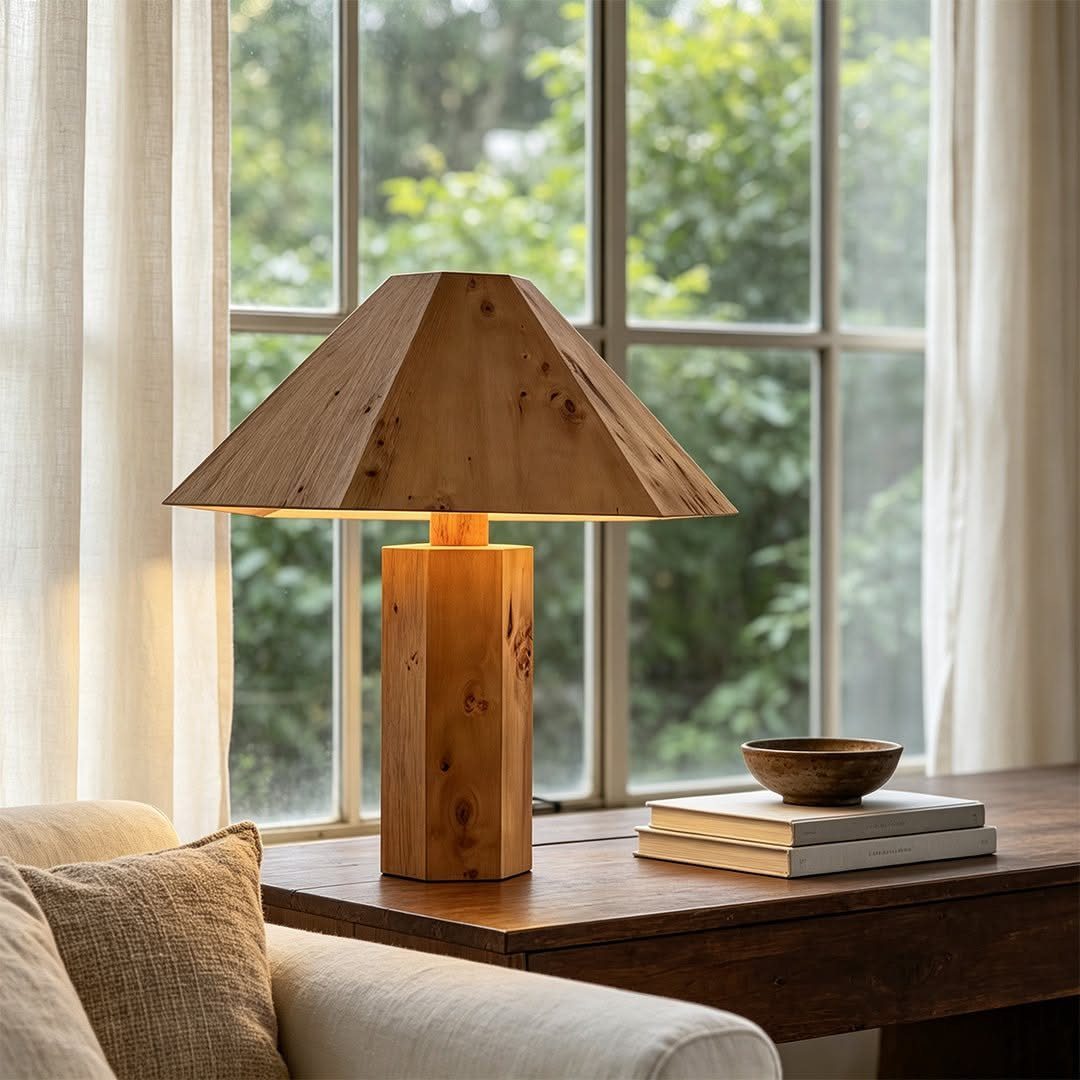
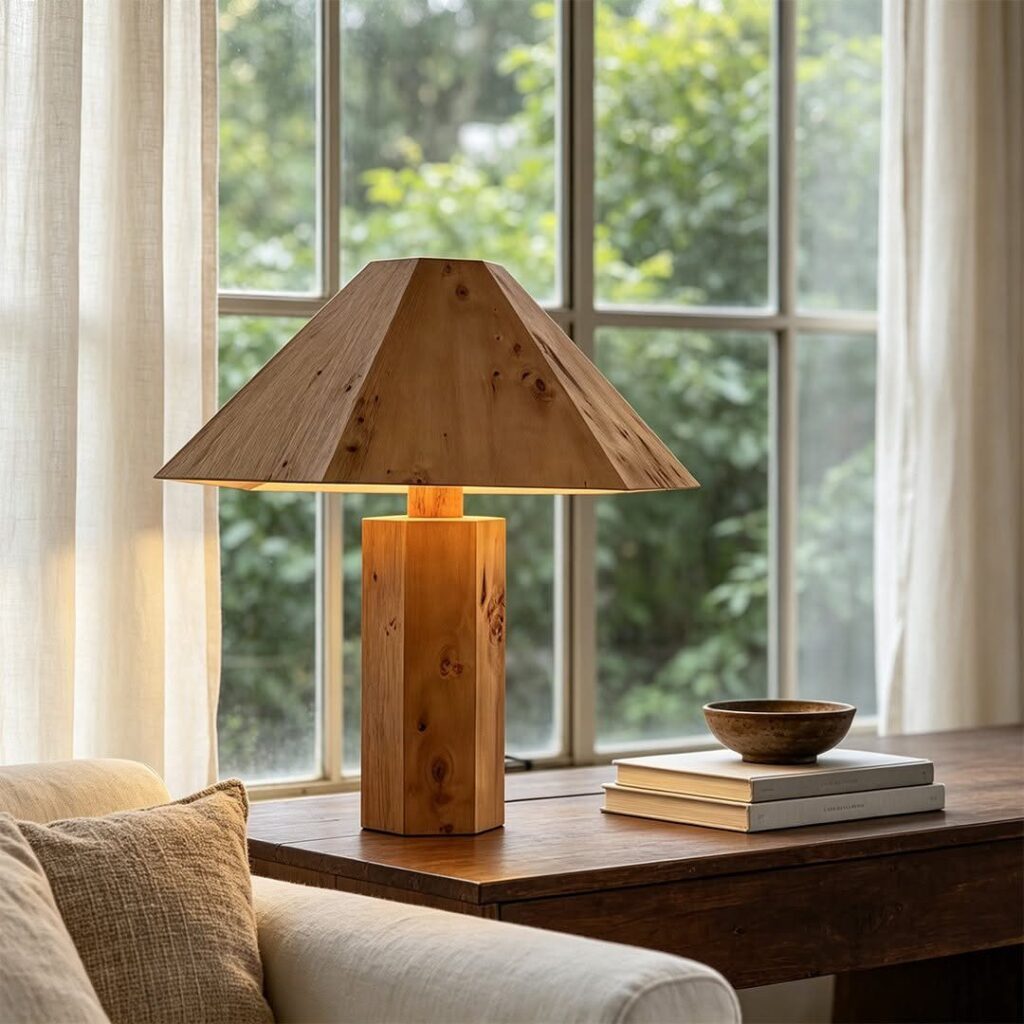
A pyramid shade on a chunky block base makes this oak lamp read as sculpture first and light second.
Oak’s visible grain does the decorating, so I’d keep the finish clear or lightly oiled and let the wood carry the look.
The geometry also suits a dark table, where the pale shade stands out against the surface. Pair it with a warm bulb, since a cool one flattens the grain.
2. Candil Lamp
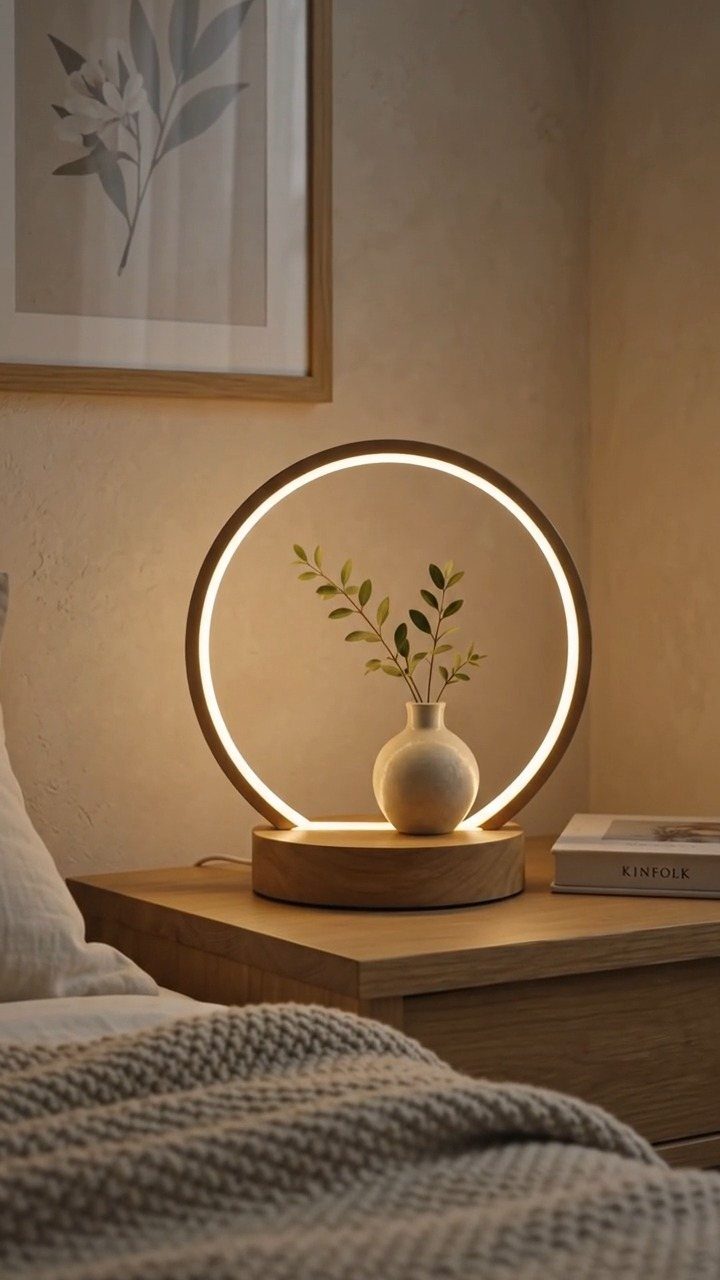
Candil is a ring of wood with the light tucked inside, and that makes it a small, soft bedside glow instead of a bright reading lamp. Greenery or a stack of books beside it suits the boho mood.
For a DIY version, an LED ring is the easy route, because it stays slim and fits a circular frame.
Choose warm white. Cool white would fight the wood.
3. Squiggle Pendant Light
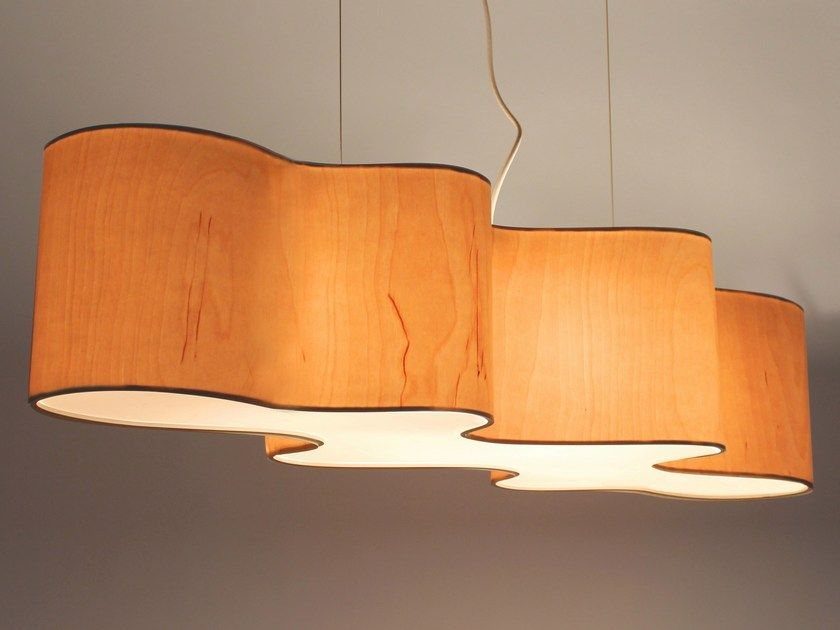
A wavy, cloud-like outline is what makes this pendant work: the curves look hand shaped, and the glow spreads evenly from within. It’s a good fit over a reading corner or a small entry, where the shape gets noticed.
Sculpting is the slow part. Expect to spend your time sanding the curves smooth, because any rough spot shows once the light is on.
4. Claire Floor Lamp
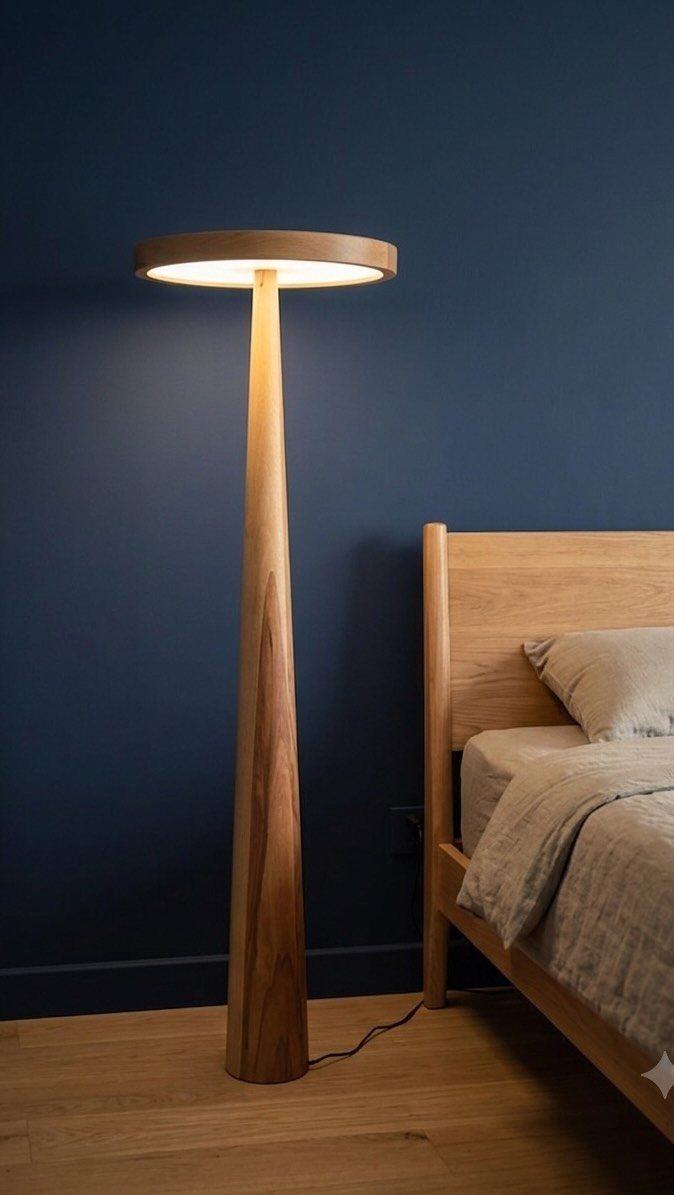
Tapered legs and a flat circular top give this poplar floor lamp a quiet, minimalist profile. Poplar is a plain, light wood, so it sits well against a deep wall color like the dark blue behind it.
A floor lamp like this tucks beside a bed without crowding it. The glowing disc on top throws soft light upward, which I prefer to a harsh bedside spot.
5. Rustic Tree Branch Floor Lamp
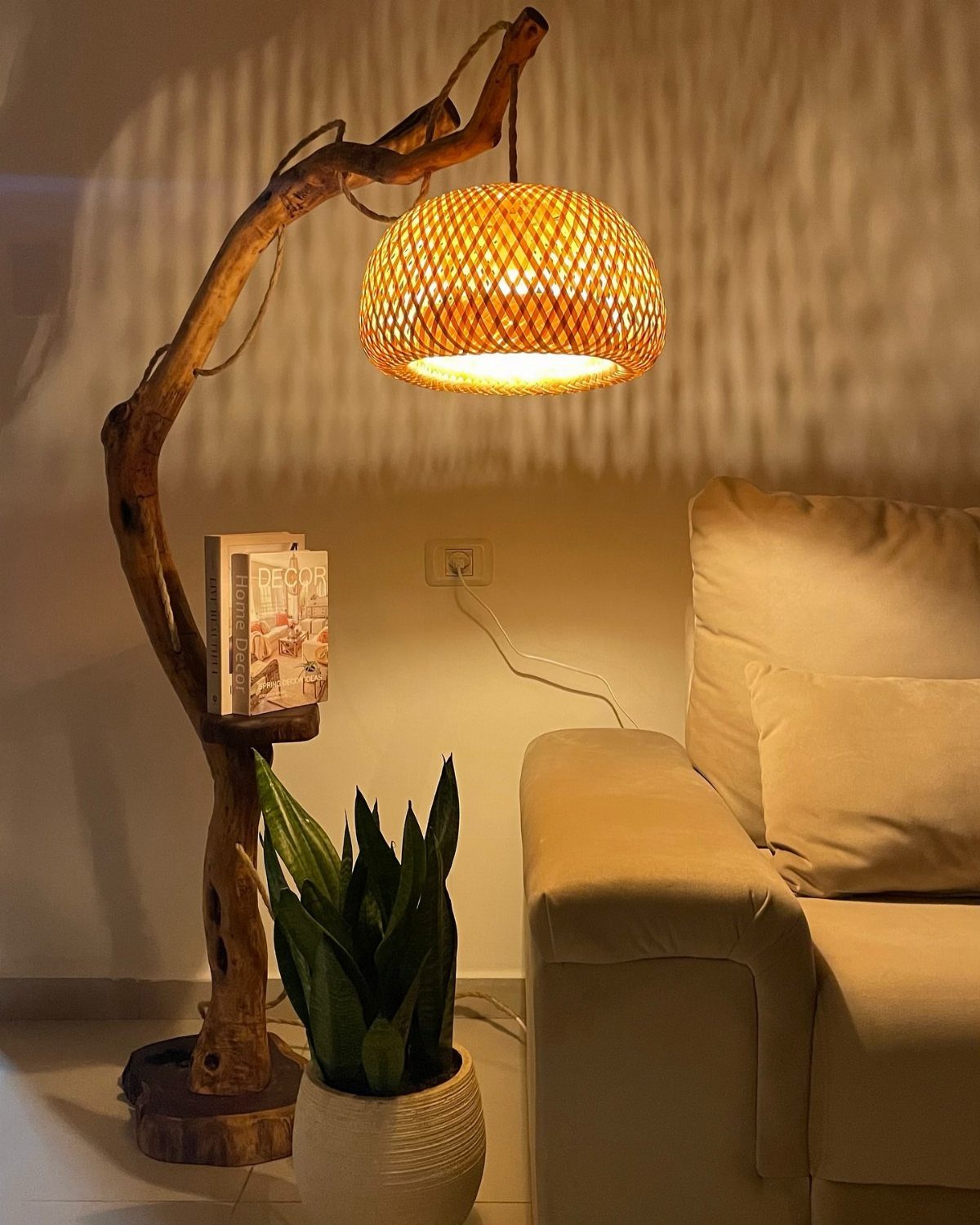
A curved branch holding up a woven wicker shade gives a floor lamp its relaxed, organic feel. It looks best beside a sofa, where the bend of the wood echoes the cushions and plants nearby.
If you build one, pick a branch with a gentle arc and strip any loose bark before finishing. Match the shade to the wood tone for a calm look.
6. Articulated Wooden Lamp
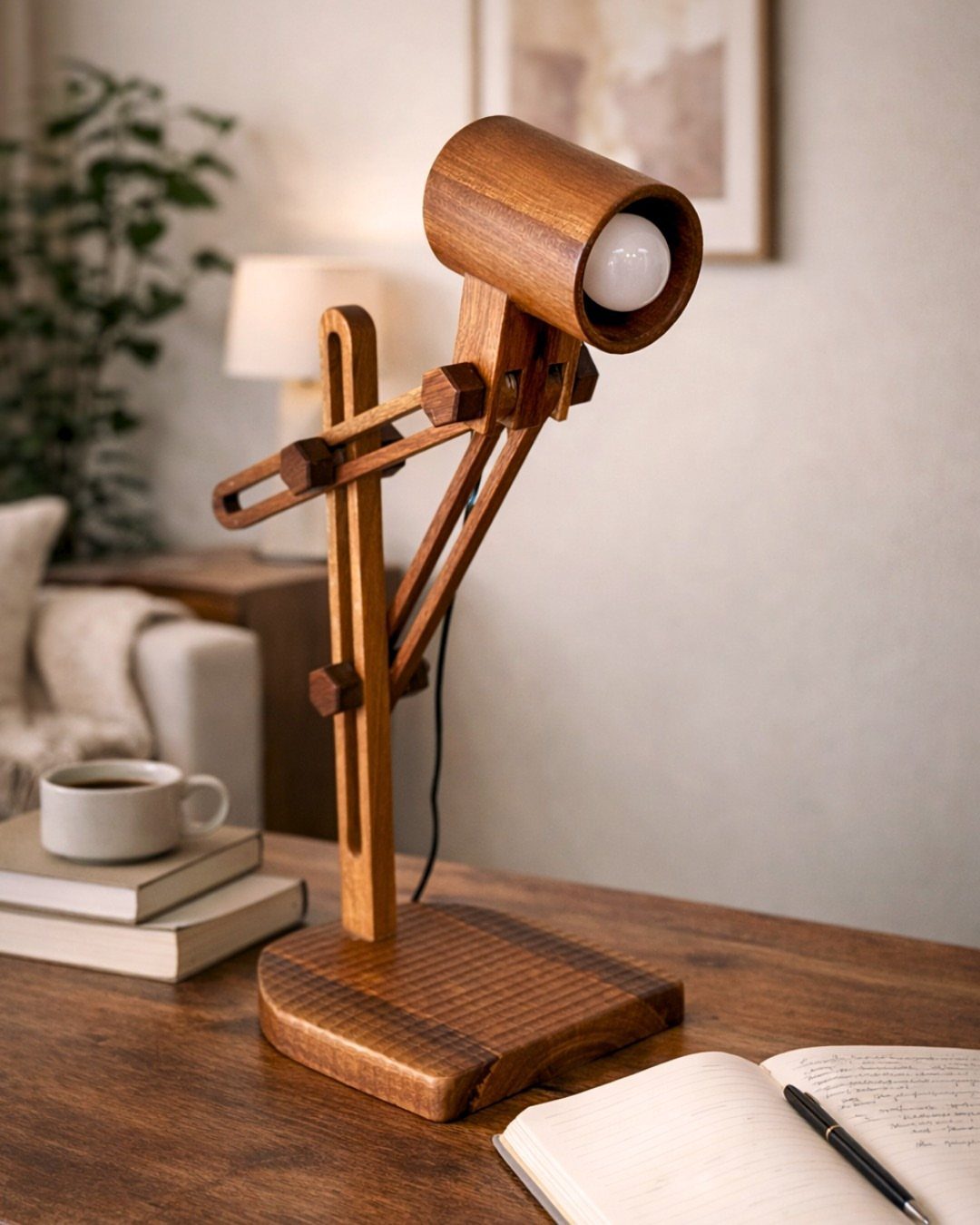
An articulated wooden lamp lives or dies by its joints: the arm moves, so the light follows your notebook instead of the other way around. A cylindrical head keeps the look tidy on a desk.
For a desk lamp, I’d put the effort into the pivots. They need to hold tight enough that the arm stays put, and wood-on-wood joints can loosen over time.
7. Edison Bulb Lamp
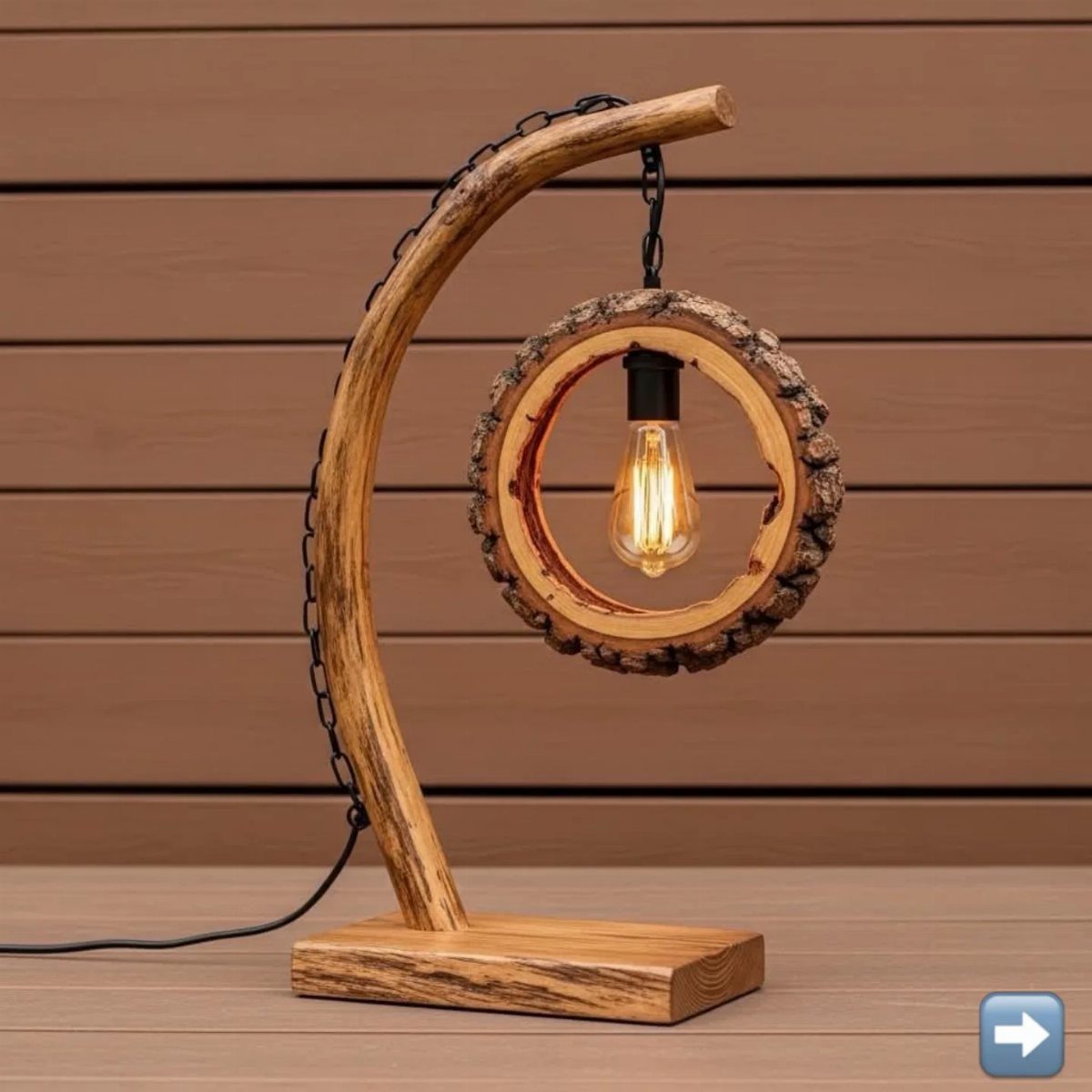
A glowing Edison bulb is what gives this lamp its vintage look. The filament shows up best when nothing hides it, so the bare bulb inside a wood slice ring and a curved branch arm works well.
Against the slatted brown wall, the amber light and the wood tones read as one warm family.
If you copy it, keep the bulb exposed and skip any shade. A shade would hide the very thing that sells the style.
8. DIY Modern Walnut Lamp
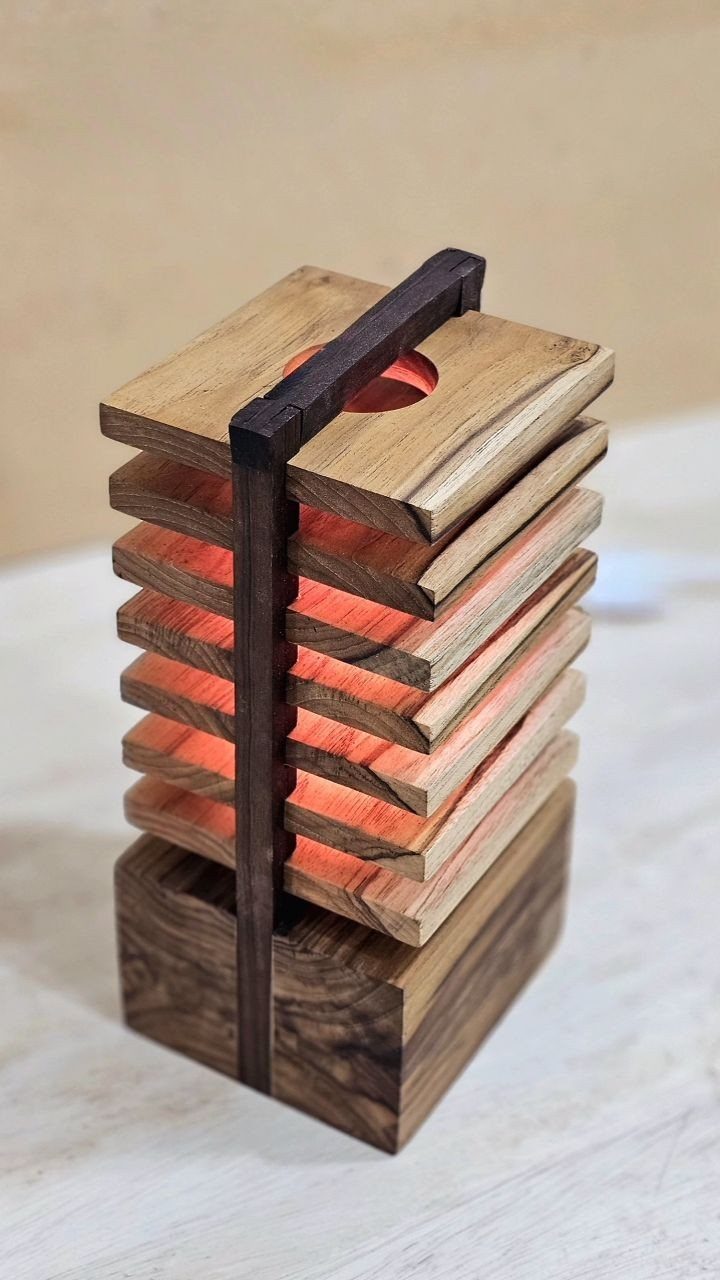
Stacked slats are what make this walnut lamp work: light wood layers sit on a dark walnut base, and the gaps between them let a warm orange glow slip through in stripes.
The contrast between pale and dark does the styling, so I’d skip any paint.
A light table or shelf suits it best, since the dark base then anchors the whole piece. Sand each slat before stacking, because rough edges show up once the light is on.
9. Curved Branch Table Lamp
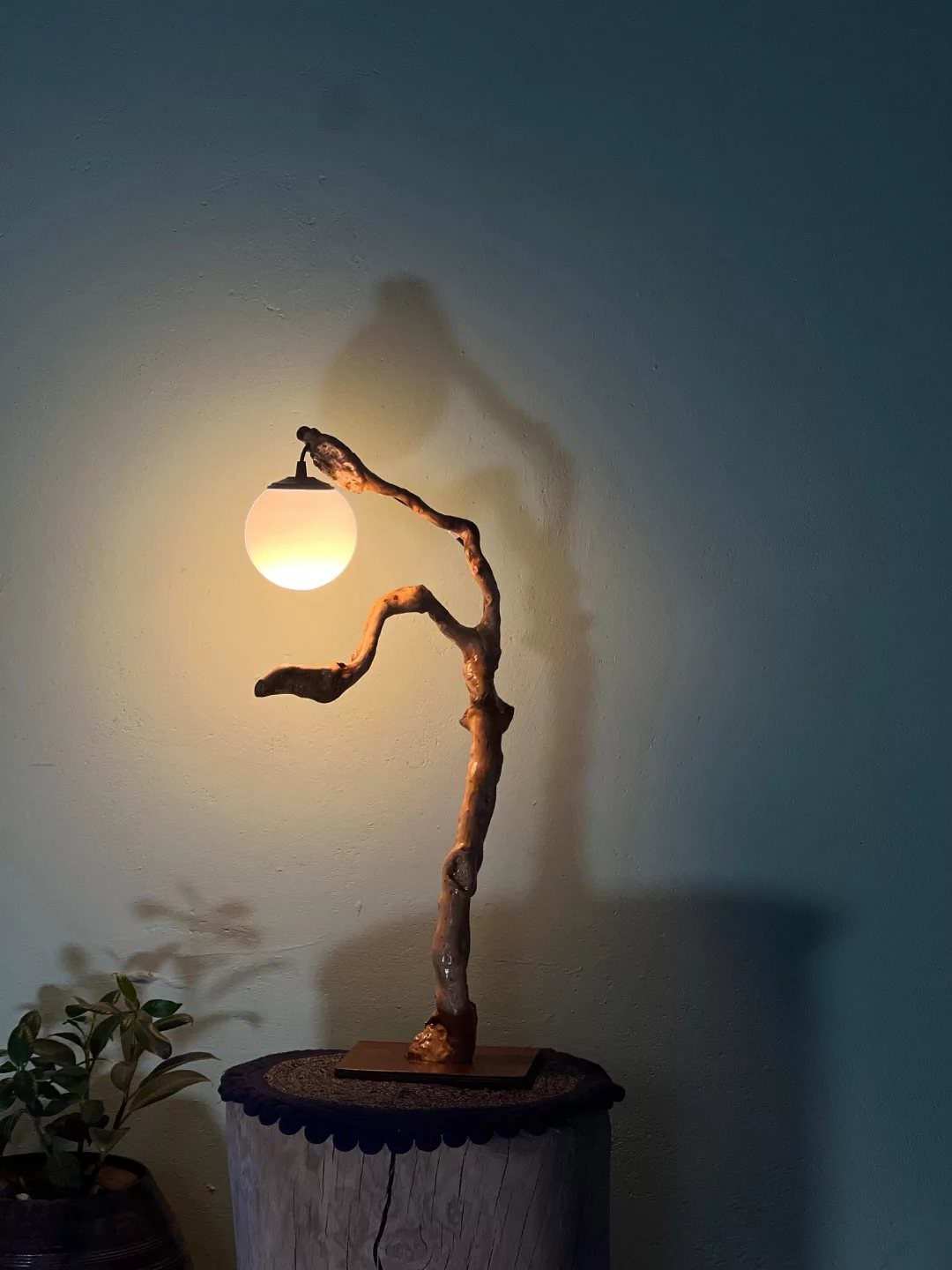
A natural curved branch carries a round white bulb here, and the bend does all the design work.
The branch rises from a wooden base set on a tree stump, so the lamp has a grounded, woodland feel without any extra decoration.
Choose a branch whose curve you like before anything else, since it sets the whole silhouette. A plain wall behind it keeps the shape clear.
10. Linear Wooden Pendant Light
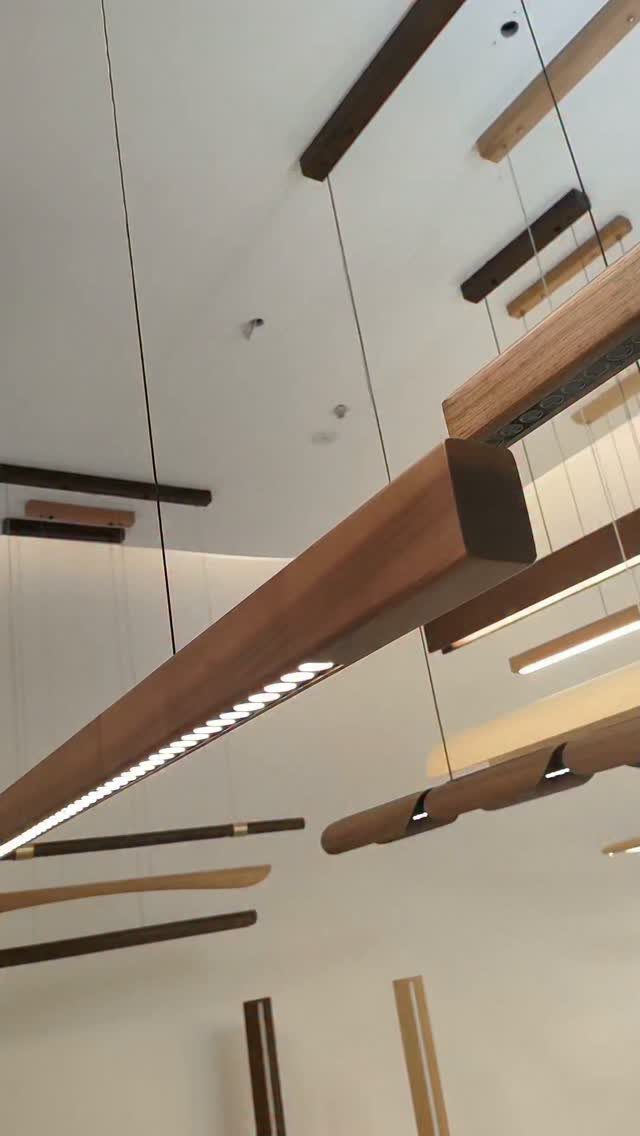
Several slim wooden bars hang at different lengths and tones, each lit by a warm LED strip facing downward. Varied lengths give the cluster rhythm, and thin cables keep the wood looking like it floats below a white ceiling.
I like this one over a table or counter, where the downward light lands where you need it. Keep the LED warm, since a cool strip would turn the wood tones gray.
11. Driftwood Branch Hanging Fixture
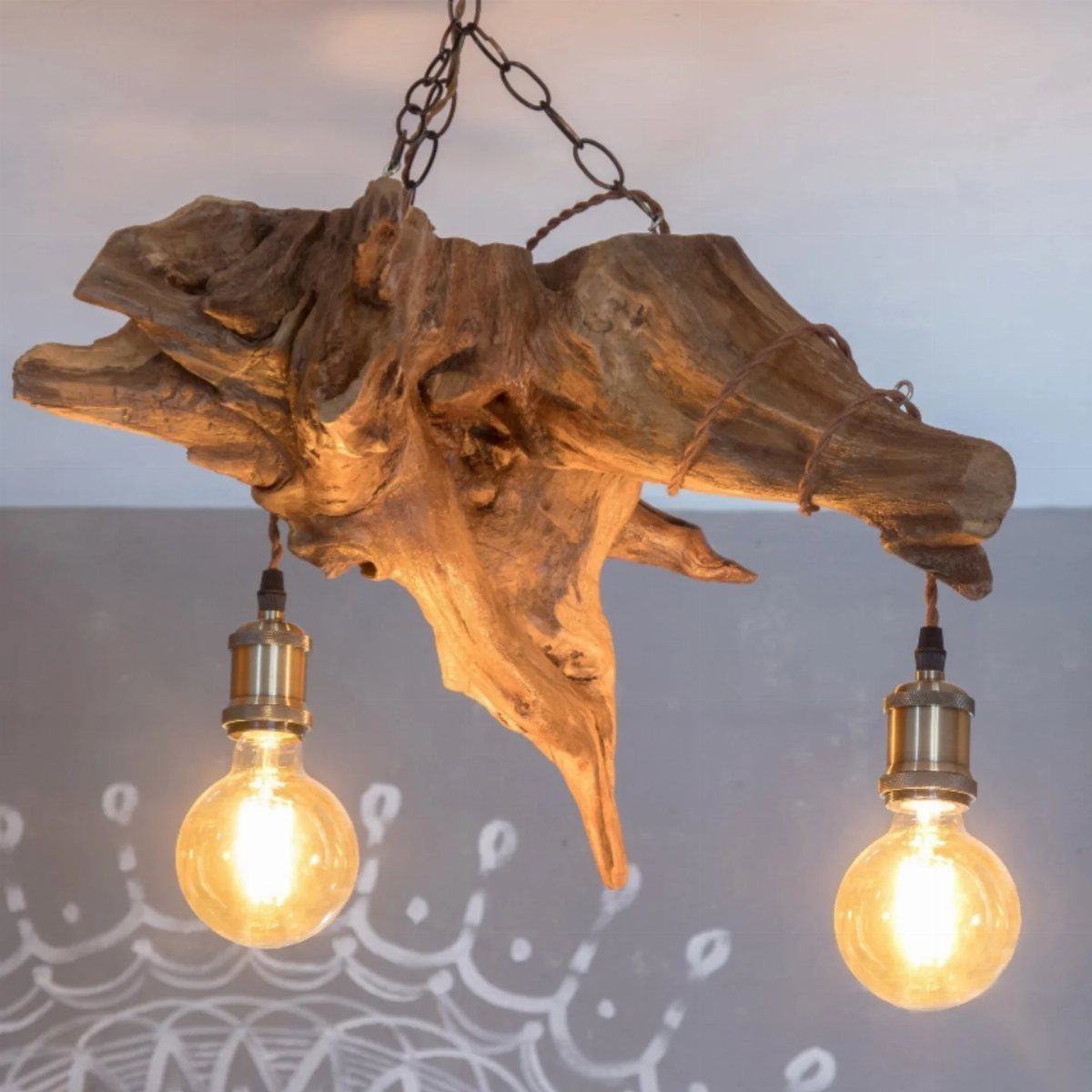
A weathered driftwood branch hangs from chains with 2 Edison bulbs dangling beneath it, and the gray, worn surface of the wood is the whole appeal.
Leave it as raw as you can; a heavy finish would hide that aged look.
Exposed bulbs suit the rough texture, and the chain keeps the industrial edge. Against a gray wall, the pale driftwood stands out well.
12. Wooden Tripod Floor Lamp
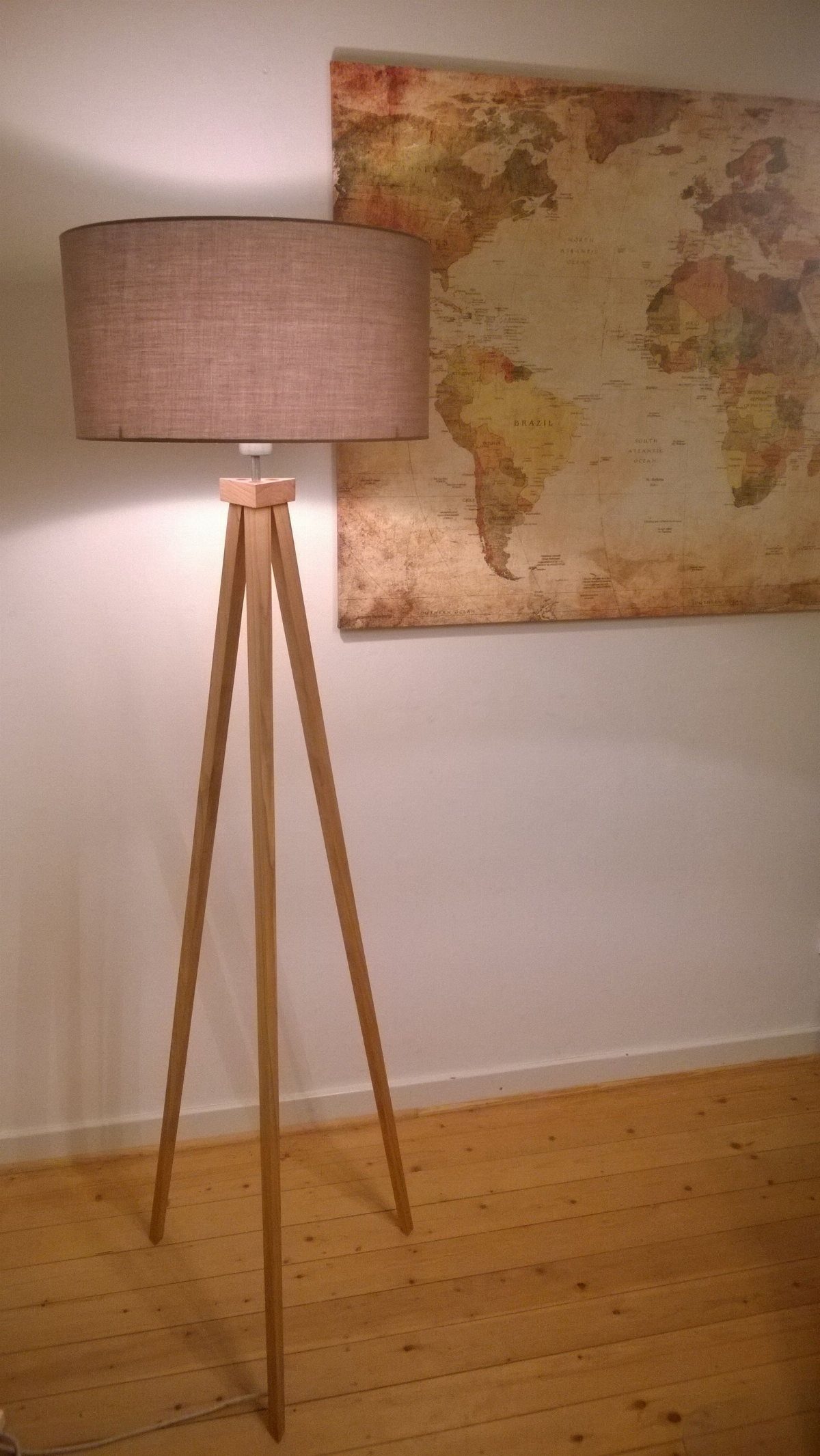
Tapered wooden legs and a neutral drum shade make this tripod floor lamp one of the easiest styles to place. The wood stays light and calm, so it sits well on a pale wood floor beside a white wall.
I’d choose a beige fabric shade like this one for soft, diffused light. It fits nearly any corner, including beside a sofa or a reading chair, without drawing attention away from the room.
13. Live-Edge Ceiling Light Fixture
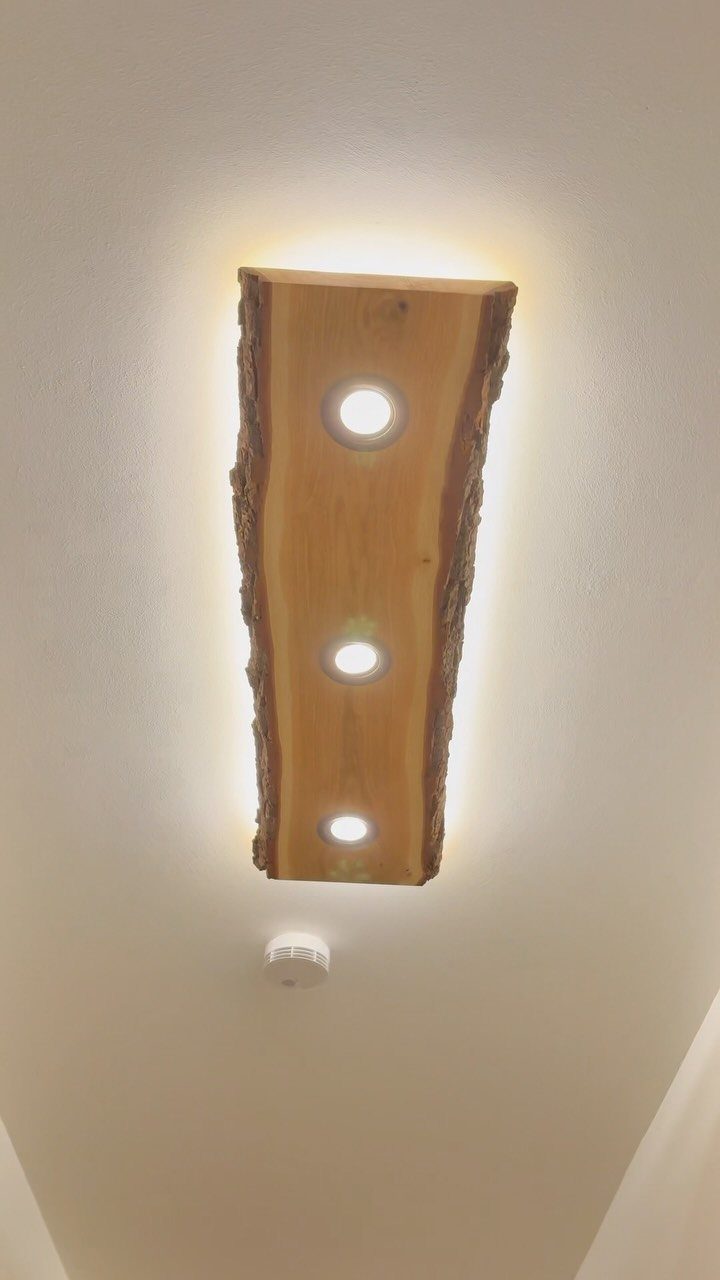
A live-edge slab set flush to the ceiling turns one piece of wood into the fixture itself. The uneven natural edge is the detail to protect, so keep the bark line intact and sand only the face.
Recessed downlights give the working light, and the backlighting around the perimeter makes the slab look like it hovers. Warm bulbs, around 2700K, keep the grain looking golden; a cool white flattens the wood to gray.
Mind the placement: a smoke detector sitting right below the slab is easy to overlook, so plan the layout around it before cutting any openings.
14. Rectangular Open-Frame Floor Lamp
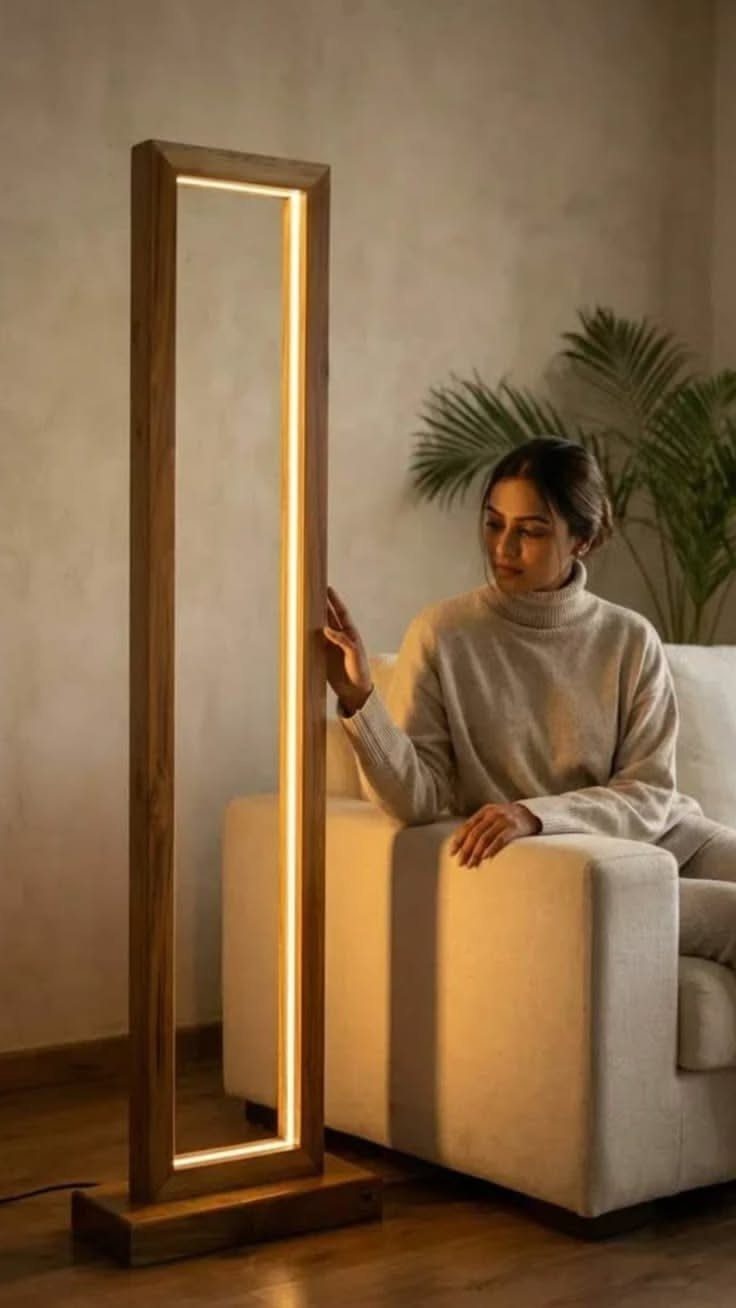
Tall and open, a rectangular wooden frame lined with interior light gives a living room a floor lamp that reads as a glowing outline.
With an open frame, the wood itself defines the shape, and the light stays soft instead of glaring.
It suits a spot beside a sofa, where it sits at seated height and lights a book without a glare. I’d keep the wood plain and the lighting warm, so the frame glows instead of dazzling.
For a DIY build, cut every side square and sand the inner faces well, since the light shows each rough patch.
Wood Lamp Design Styles
Minimalist and Scandinavian designs rely on clean lines and simple shapes, so they suit a space that is already uncluttered. Boho Chic is looser and more relaxed, and it forgives a handmade look.
Wood also gives a lamp a warmth that metal or plastic rarely does, which is why it fits so many different rooms. The same basic form can lean modern or rustic depending on the finish and the shade you choose.
If you can’t decide, sketch two versions of one lamp, one plain and one textured. The room will usually answer the question for you.
Materials Used in Wooden Lamps
Oak, walnut, plywood and plain natural wood cover most wooden lamps, and each behaves differently.
Oak and walnut have strong grain and look finished with little work. Plywood costs less and is easy to cut, but its layered edges show, so plan to hide them or leave them as a feature.
Brass, fabric and LED lighting are the usual partners for the wood. Brass adds a small bright accent at the socket or joints.
A fabric shade diffuses the glow into something warmer, and a small LED strip or puck light tucks into a carved, stacked or hollowed-out block where a standard bulb could never fit.
Pick the wood first, then choose the extras to support it rather than compete with it.
DIY Lamp Projects
A handmade lamp lets you choose the wood, the shape and the light, so the result fits your room instead of a catalog photo. That personal fit is the real reason to build one.
Start with a form you can finish in an afternoon: a block, a frame or a stack of cut pieces with a light fitted inside.
Carving, jointing, stacking and hollowing are the main ways to house a bulb or LED in wood.
Use a pre-wired lamp kit or a plug-in LED strip rather than wiring from scratch, and keep bulbs a safe distance from the wood.
Check the wattage rating on the socket and stay under it. Heat and bare wood are a poor mix.