Some of these pieces are afternoon projects and some are not: a painted table needs a base coat and a small brush, while the bronze-toned figure legs are a purchase or a commission.
If paint is all you have on hand, Painted Wood Furniture and Folk Art Furniture fit your toolbox, and the Log Slice Glass Coffee Table suits anyone who wants no finishing at all.
1. Natural Wood Slab Art
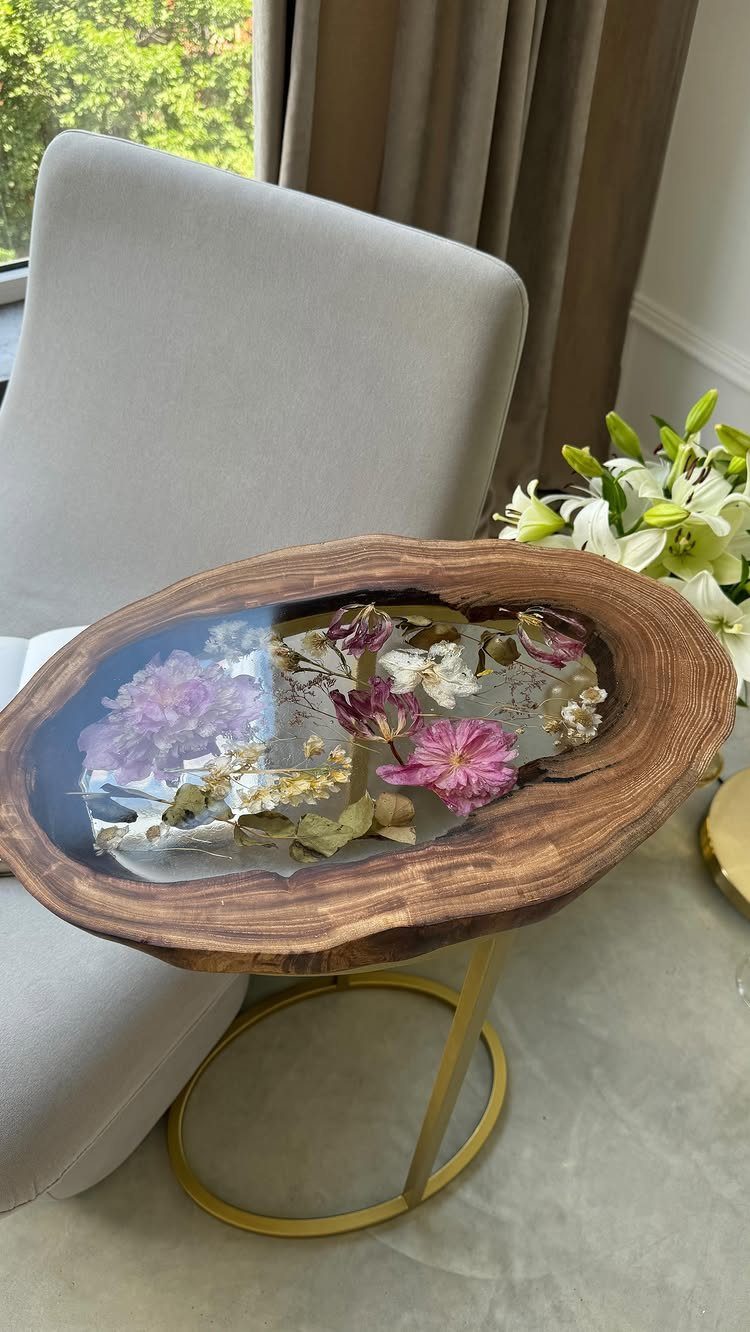
A slab with a resin-filled center turns a plain side table into something closer to a small sculpture. Dried flowers suspended in the clear pour keep the eye on the middle, while the wood grain frames them.
Pick a slab with a natural void or a soft curve where the resin can sit, and let the wood do the outlining.
A slim metal base keeps the top as the star. Dried blooms work better than fresh ones, since fresh ones hold moisture.
2. Carved Wooden Panels
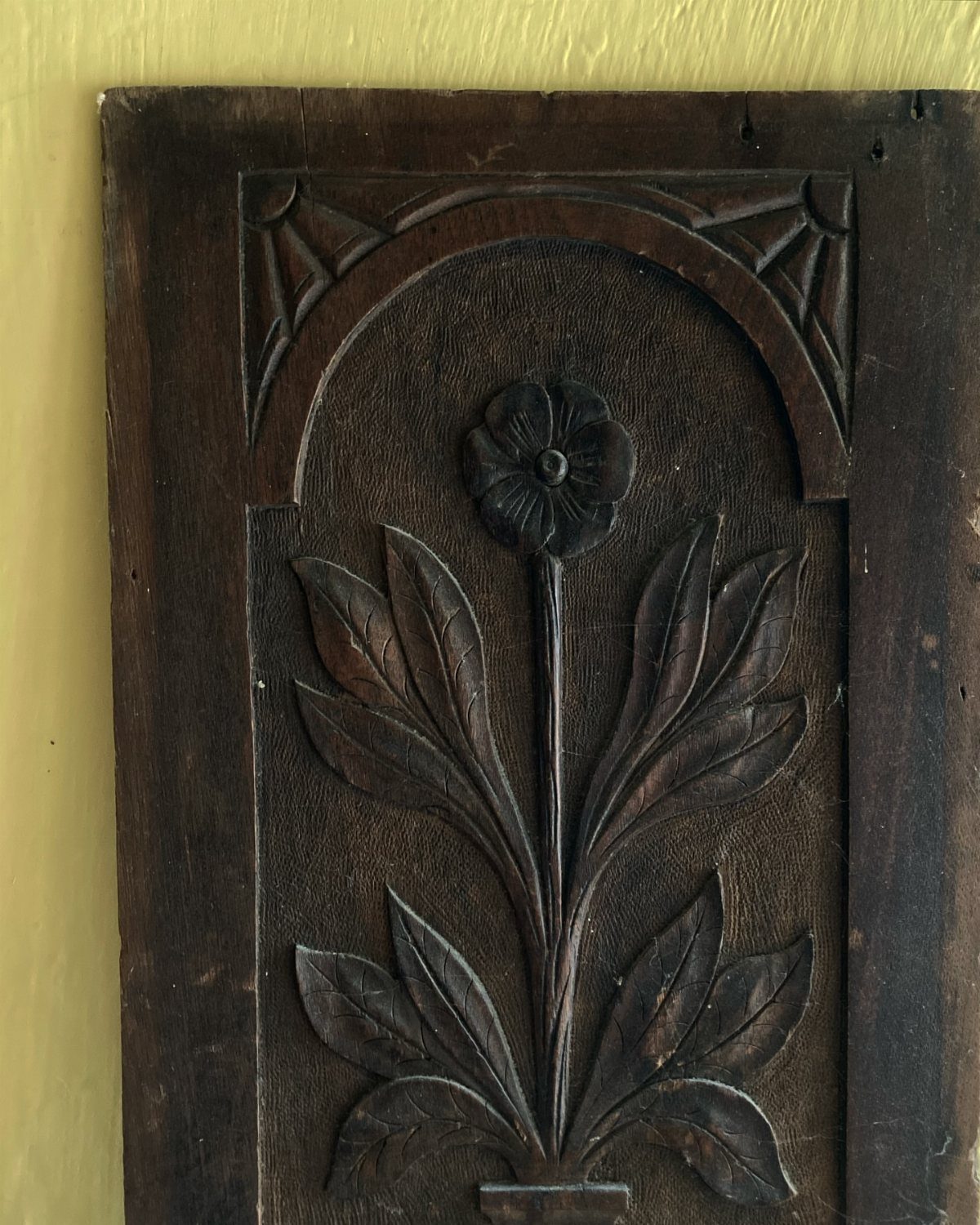
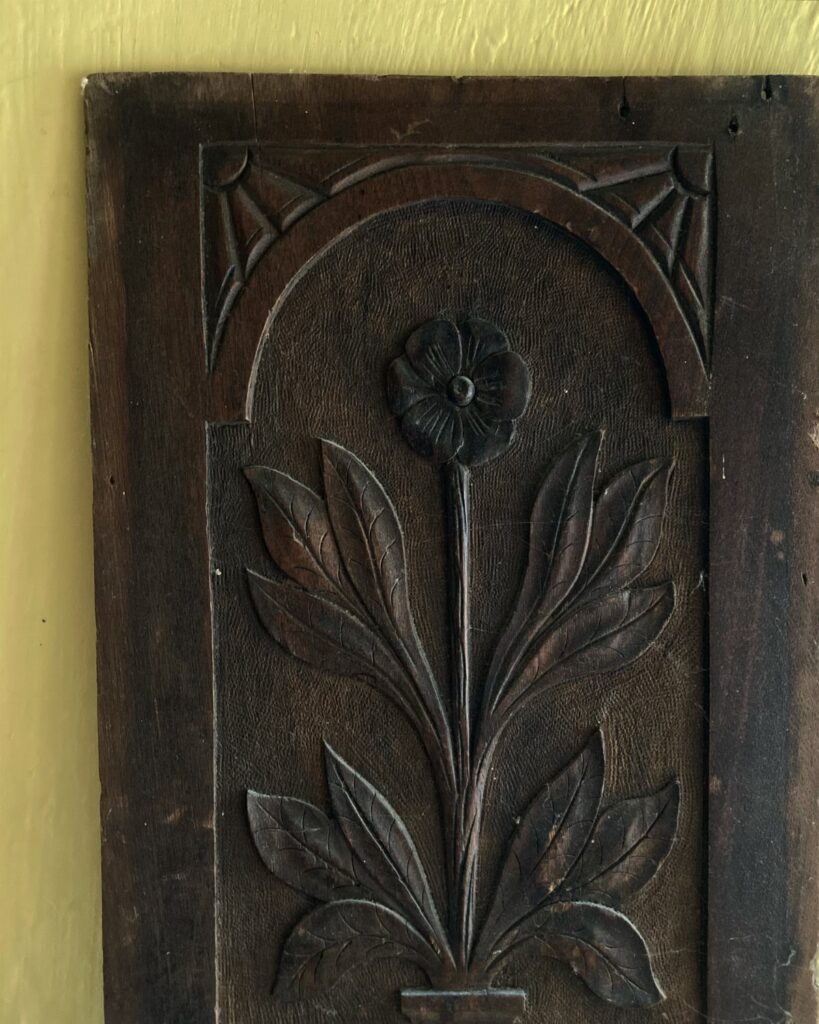
One flower, a few leaves, and an arched border: a carved panel stays quiet when the design is this restrained. Dark wood suits carving like this because the shallow cuts catch light and read clearly without any paint.
For a first panel, I’d carve a single motif rather than a full pattern.
Sketch the arch first, then the flower inside it. Mount it on a wall, or set it into a cabinet door or headboard.
3. Folk Art Furniture
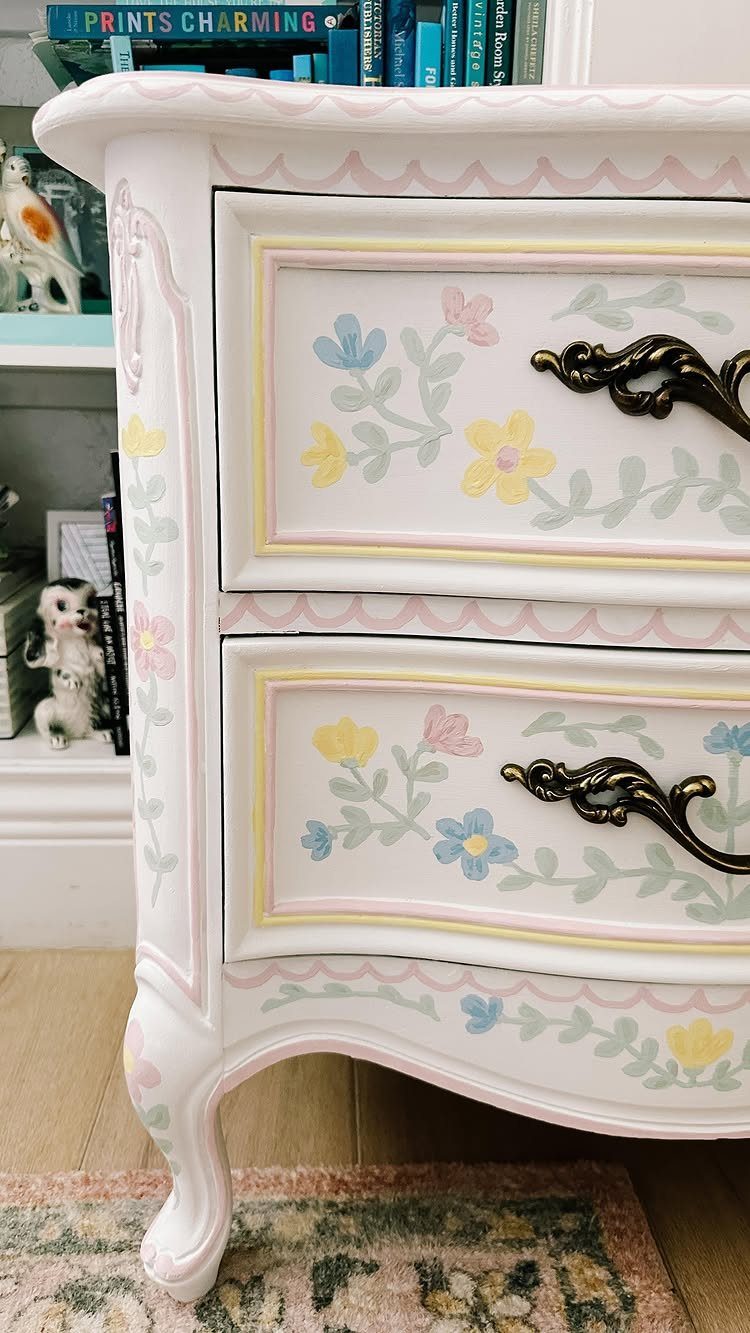
Hand-painted pastel flowers on a white dresser are folk art at its friendliest. White gives you a clean ground, so soft colors stay bright and each petal reads clearly.
Keep the blooms loose and slightly uneven; that looseness is the charm.
Paint a few flowers on a drawer front before committing to the whole piece. Bronze handles add a warm contrast to the pastels, and I’d keep them rather than swap in something plain.
4. Geometric Wood Cabinets and Dressers
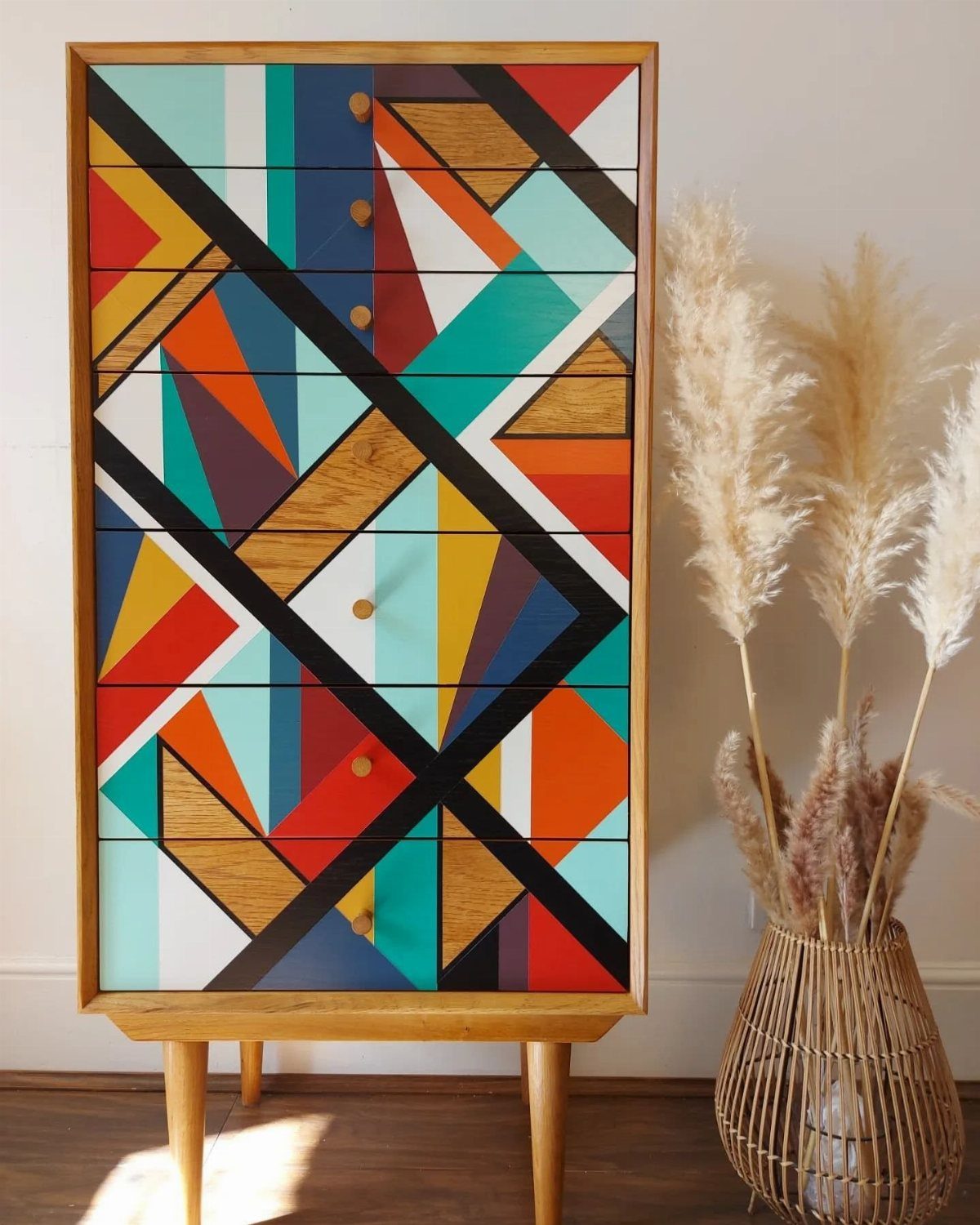
Tapered legs and a bold geometric pattern across the drawer fronts give a dresser a modern, graphic look. Because the pattern runs across the drawers, it only lines up when they’re closed.
Tape off your shapes with painter’s tape and keep the palette to a few colors.
Paint the drawers in place, or number them so they go back in order. Plain white walls and a neutral accent, like pampas grass, let the color do the talking.
5. Painted Wood Furniture
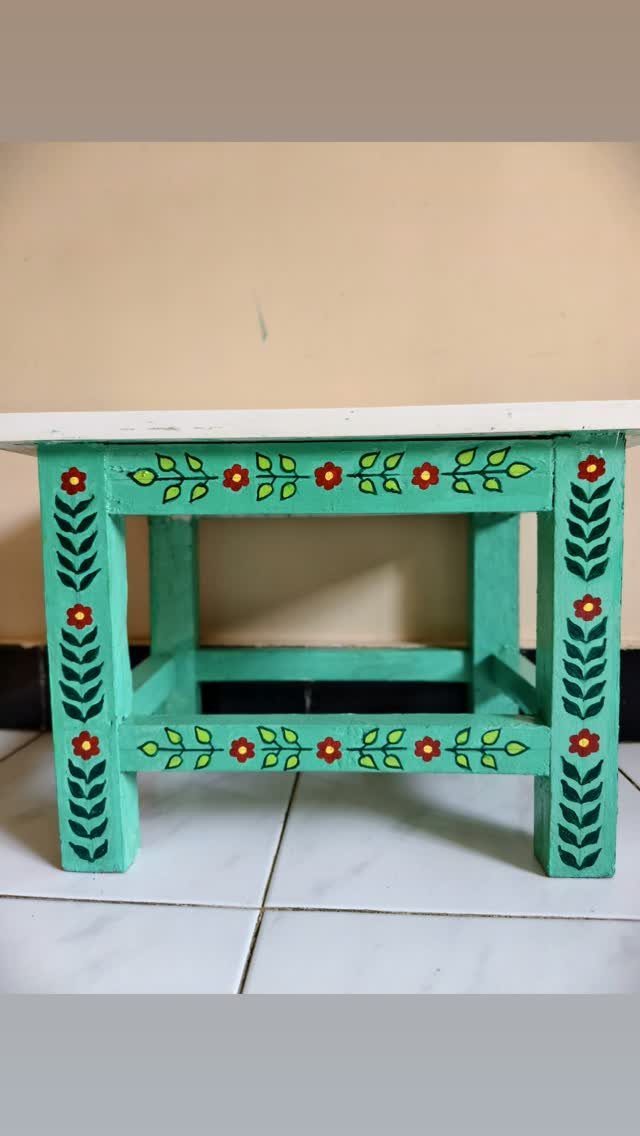
Paint alone can carry a small table: start with a solid base coat like teal, then add hand-painted flowers in red and yellow along the legs and rails, where the narrow surfaces suit a small brush.
Turquoise makes red and yellow pop, and painting the rails as well as the legs makes the whole frame feel decorated.
Paint the base color first and let it dry fully before adding the flowers. Simple petal shapes in 2 colors are easy to repeat down each leg.
6. Live Edge Furniture
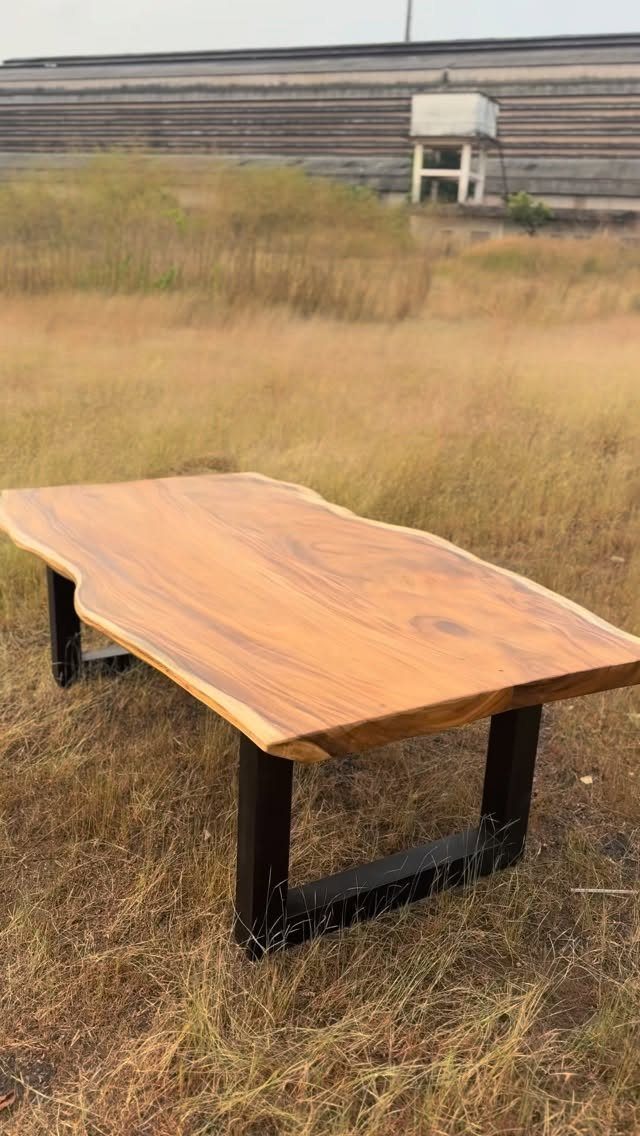
Leaving the bark-side edge of the board untouched is what makes live edge furniture.
The outline follows the tree rather than a straight saw line, so no 2 tables match. The maker of this one notes it is made from solid wood.
Black metal legs keep the look light and let the wood’s shape stand out.
I like pairing a wavy edge with straight, simple legs; 2 busy elements compete. Expect to sand the edge smooth but not square it off.
7. Geometric Inlaid Wood Coffee Table
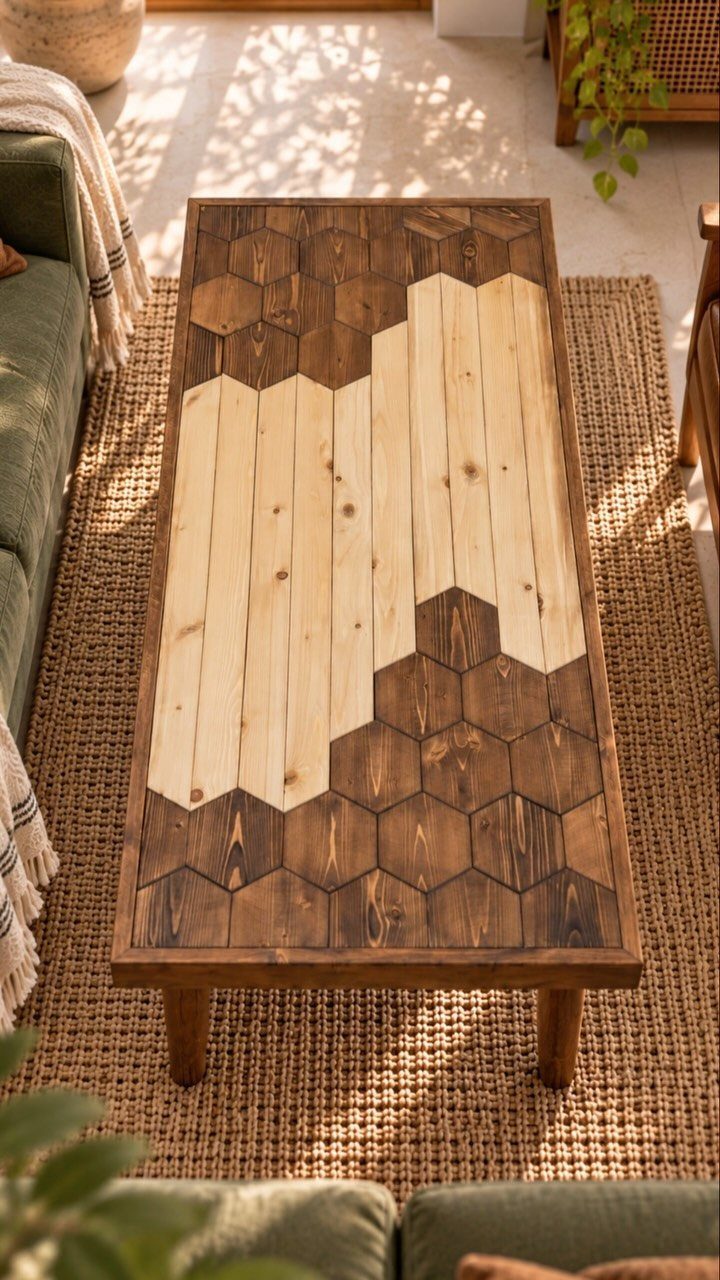
A honeycomb of light and dark wood across the top gives a plain rectangle a pattern that reads from across the room. The 2 tones do the work, so no paint or stain color is needed.
Keep the hexagons identical in size, since any drift shows up quickly in a repeating shape.
A template cut from cardboard helps. I’d choose 2 woods with clear contrast, because similar browns blur the pattern into mush.
A simple rectangular frame and plain legs suit it well; the top is already busy enough.
8. Sculptural Human Figure Table Legs
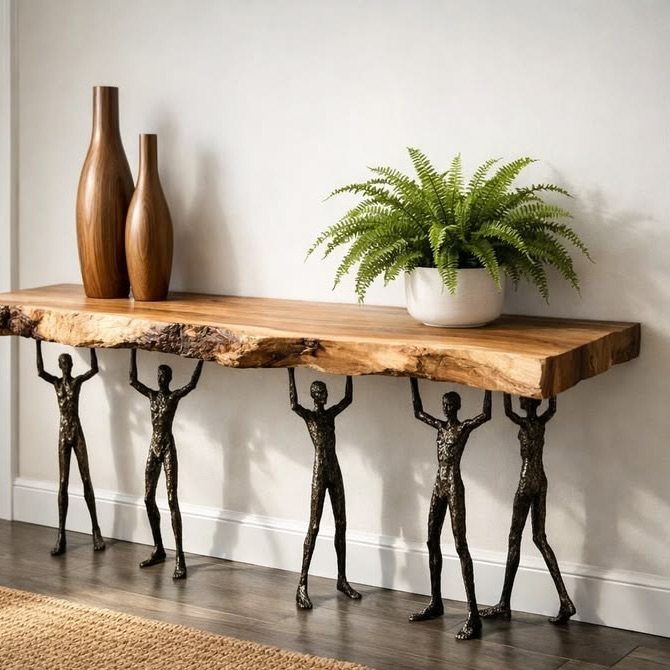
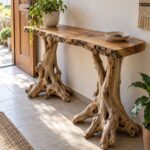
Bronze-toned human figures holding up a live-edge slab turn a console table into a small sculpture group. The wood’s uneven outline and the figures’ bodies both come from organic shapes, so they sit together easily.
Spacing matters more than anything.
Stagger the figures rather than lining them up evenly, which keeps the crowd feeling natural. I’d keep the top styling sparse, 2 vases and a fern at most, so the legs stay the main event.
Sculpted legs like these are a purchase or a commission, not an afternoon build.
9. Natural Branch Floor Lamp Table
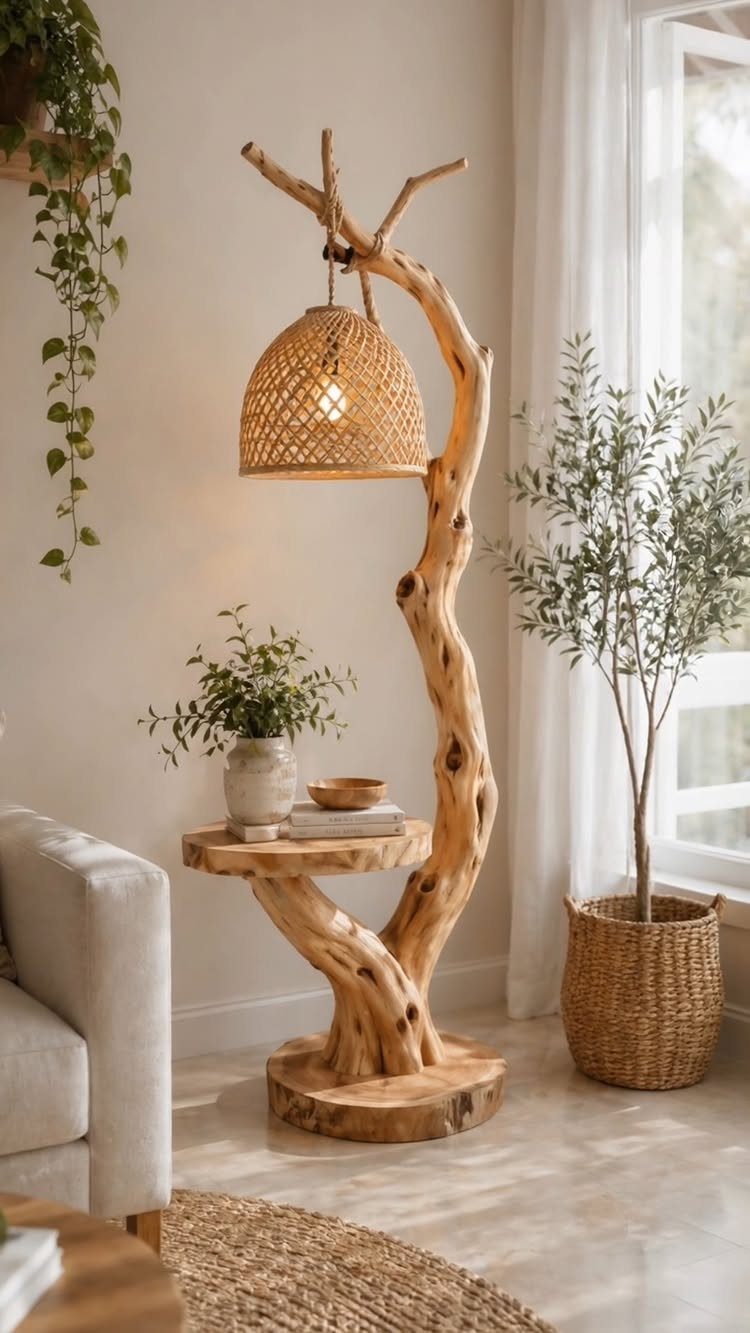
A curved branch that rises from the floor, carries a shelf, and ends in a woven shade makes a lamp and side table in one piece.
The branch’s own bend sets the shape, so choose the limb first and plan the rest around it.
A wide, gently curved branch is easiest to work with, because the shelf needs a spot that sits level.
Sand away loose bark and any rough spots, then seal the wood. A wicker shade softens the light and echoes the natural texture.
I like putting only a small item on the shelf, like a candle or a tiny plant.
10. Log Slice Glass Coffee Table
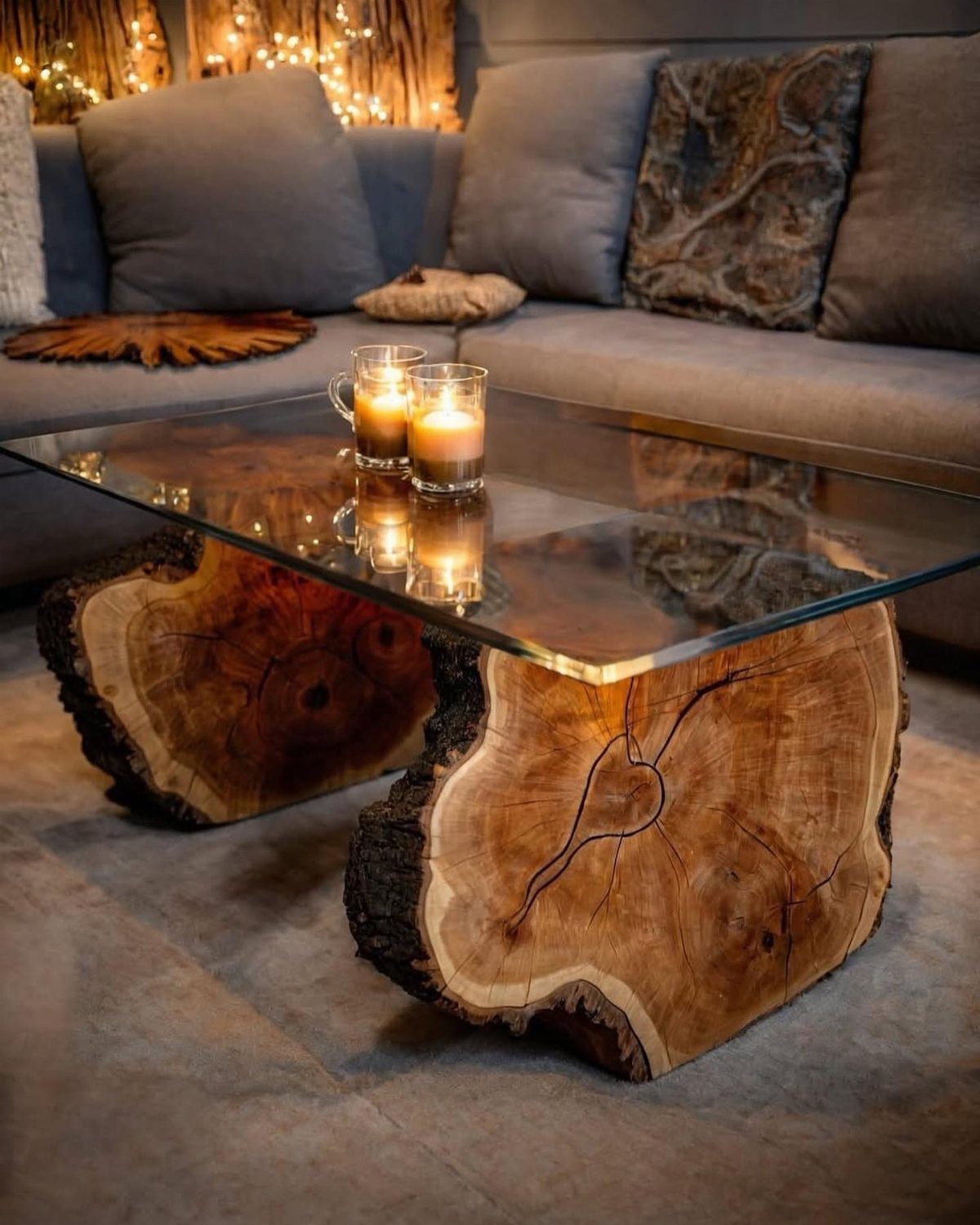
Thick log slices with the bark left on make unusual bases for a glass-topped coffee table. Clear glass lets the rings and rough bark edge show from every side, which a solid wood top would hide.
Use 2 slices of matching thickness so the glass sits level, and check with a level before setting the top down. I’d leave the bark intact for texture; it suits the glass nicely.
Rubber pads on top of each slice keep the glass from sliding. Two slices read cleaner than three or four.
Choosing Wood for Furniture Art
Hardwoods like oak, maple, walnut and cherry are the usual choice for furniture art, because they resist dents and hold up to daily use.
Their tight grain also takes fine detail better than softwoods, which can crush or tear under a chisel.
Softwoods such as pine cost less and cut easily, so they suit practice pieces and painted projects where the grain is covered anyway. Expect dents from a fingernail, though.
Match the wood to the job.
If you plan to leave the grain visible, buy the best-looking board you can afford. If you plan to paint, a smooth, stable board matters more than a handsome one.
Check boards for warping by sighting down the edge before you buy. A bowed board fights you at every step.
Techniques for Wood Art
Carving, wood burning and painting each ask for a different kind of patience, so pick one and get comfortable before mixing them.
Carving rewards sharp tools and shallow cuts. Work with the grain, and take off small amounts at a time.
Wood burning works best on pale, smooth wood like basswood or birch, where the lines show clearly. Practice on a scrap first, because a hot tip left in one spot leaves a dark mark you cannot undo.
Painting is the most forgiving of the three. Sand the surface smooth, prime if the wood is bare, and finish with a clear sealer so the design survives daily wear.
Once you have the basics down, burned outlines filled with thin paint are an easy way to combine 2 techniques.
Incorporating Furniture Art in Decor
A single artistic piece works harder than several. Give it room, and let the rest of the space stay quiet around it.
Pick the spot by how the piece gets used. A table needs clear surfaces and a chair needs space to pull out, so the art cannot get in the way of the function.
Repeat one color or material from the piece elsewhere in the room, such as a pillow, a frame or a lamp base. That ties it in without crowding it.
Light matters too. A nearby window or a small lamp aimed at the piece shows off its texture and color, and keeping it out of direct afternoon sun protects the finish from fading.
Frequently Asked Questions
What kind of paint for art on wood?
Acrylic paint or a paint made specifically for wood is the usual pick, since both hold up well and keep colors bright. Sand the surface smooth first and prime bare wood.
A coat of clear sealer over the finished paint keeps the design from scuffing, scratching or fading with everyday use. Let a solid base coat dry fully before adding hand-painted details on top.
What are things made by wood furniture?
Wood furniture covers pieces like side tables, coffee tables, console tables, dressers, cabinets, headboards and floor lamps.
Many of these can become art with the right treatment: a resin-filled slab top, a honeycomb inlay, hand-painted flowers, or a carved panel set into a cabinet door.
Tables and dressers are the easiest starting points because the flat surfaces take paint and pattern well.
What is artistic furniture called?
Artistic furniture is often called sculptural furniture or designer furniture. Sculptural describes pieces where the form itself is the point, like a console table held up by bronze-toned human figures.
Painted, carved or inlaid pieces fall under the same loose label, and many are made by commission rather than built in an afternoon.
What is the art of wood carving called?
It is called woodcarving. Carving goes best with a keen edge, light passes and cuts that follow the grain, so you remove only a little wood with each stroke.
Dense hardwoods such as oak, maple, walnut and cherry keep crisp detail, while soft pine and similar woods tend to dent or tear out under the chisel.