The room decides which of these pieces is yours: a tight corner or small wall calls for a floating desk or an LED corner desk that keeps the floor clear, while a dim bedroom or dining nook suits a mid-century nightstand or a ribbed pedestal table with no corners to bump.
The range runs from a cushion swap on a plain wooden chair to a corner desk with LED strips tucked under the shelves, and the closing sections cover structural integrity, form versus function and the mistakes that sink wooden furniture.
1. Wooden Chairs with Cushioned Seats
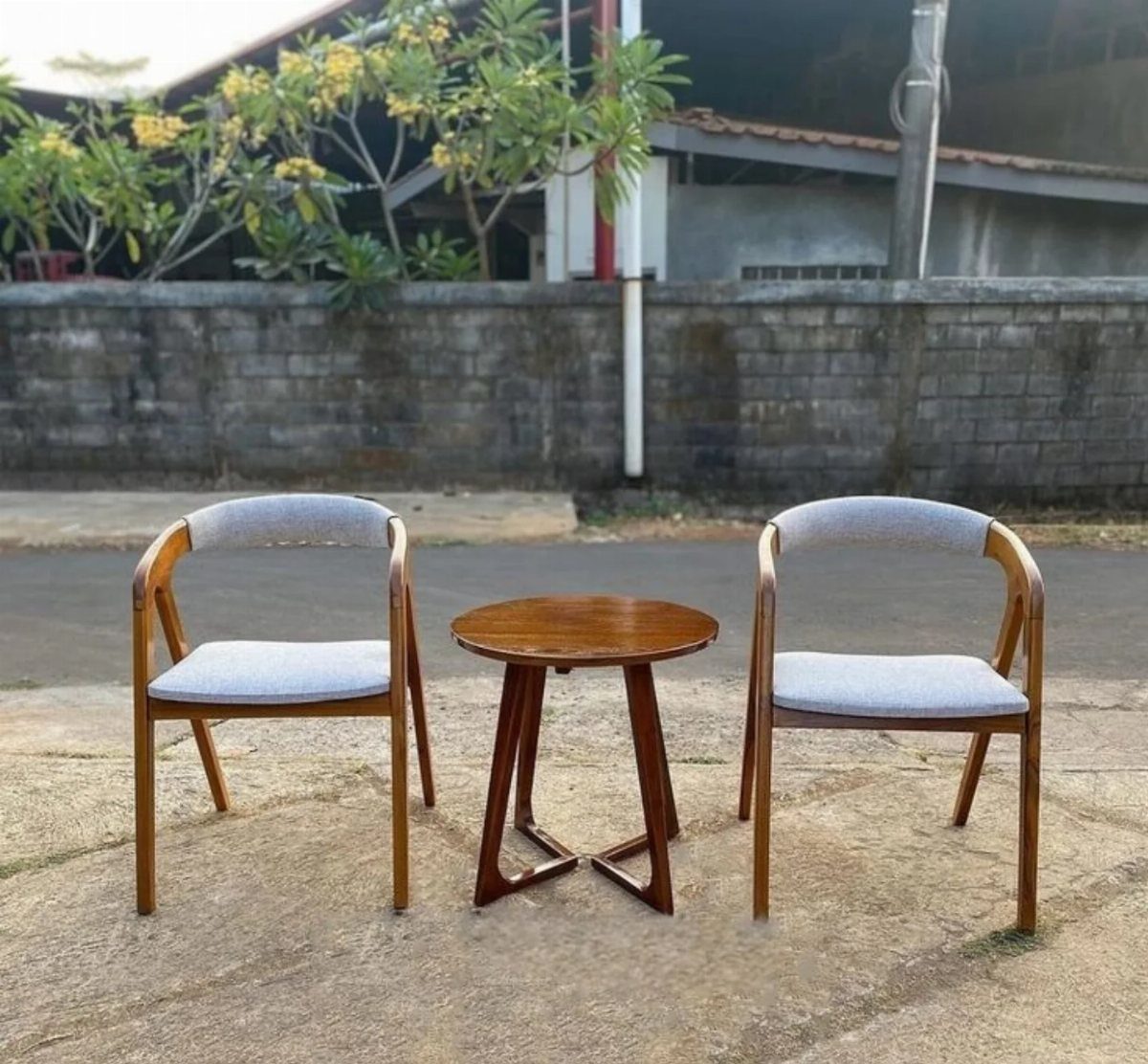
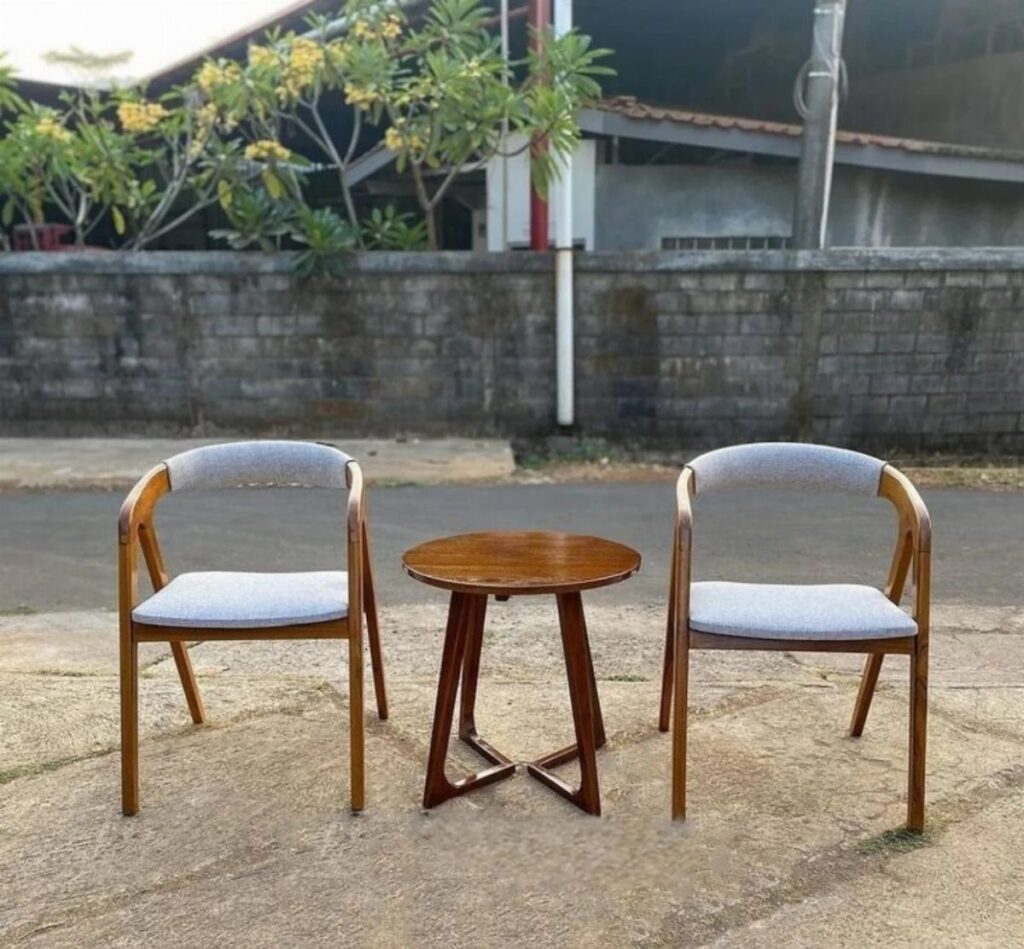
Grey seat cushions soften a plain wooden armchair, and they are the cheapest part of the setup to change. Pick a cushion with ties or a non-slip backing so it stays put on the seat.
Outdoors, on concrete like this, I would choose a removable cover you can wash and bring inside when rain shows up. A small round wooden table between the pair keeps drinks within reach without crowding a tight patio.
2. Floating Wooden Desk
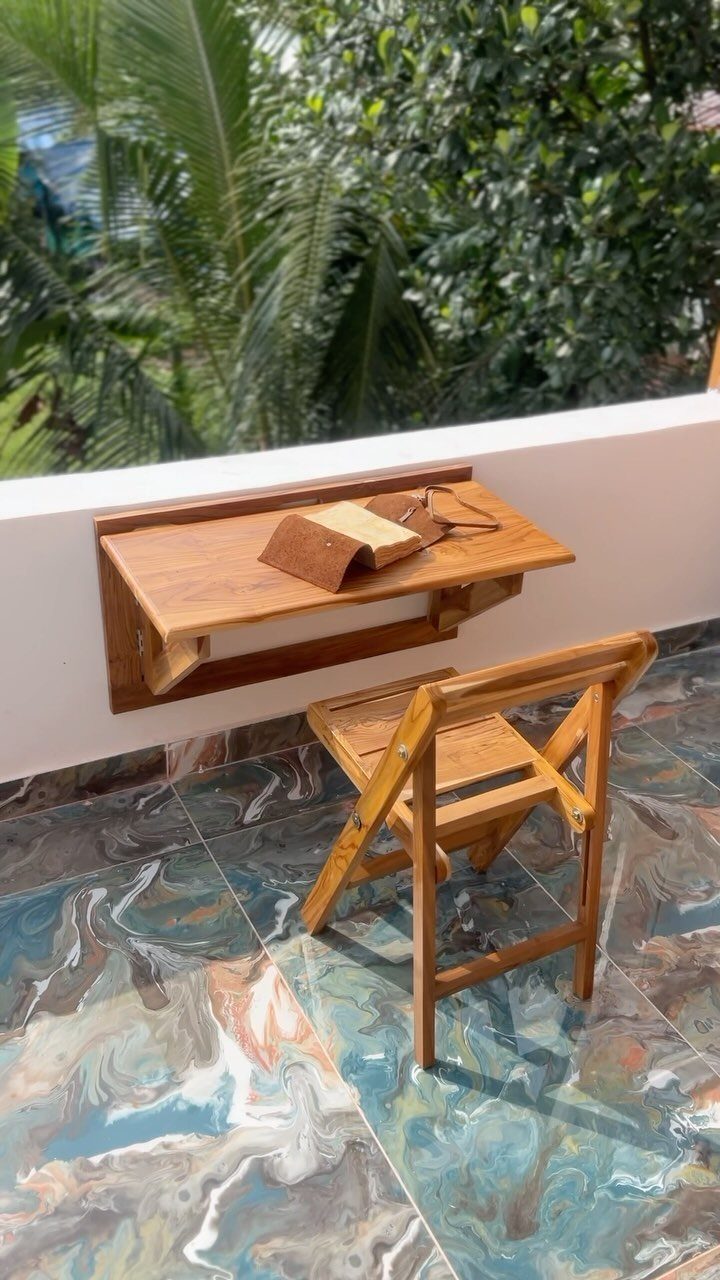
Because a wall-hung desk keeps its legs off the ground, the floor underneath stays clear, and that’s a real gain on a small balcony or in a tight living room corner.
Pair it with a folding chair and the whole office disappears when you fold the chair away.
Mount the board into wall studs or masonry anchors, not drywall alone, because a laptop and a notebook add up. A shallow top is enough for one person, and I would rather keep it narrow than lose walking room.
3. Slatted Wooden Bench
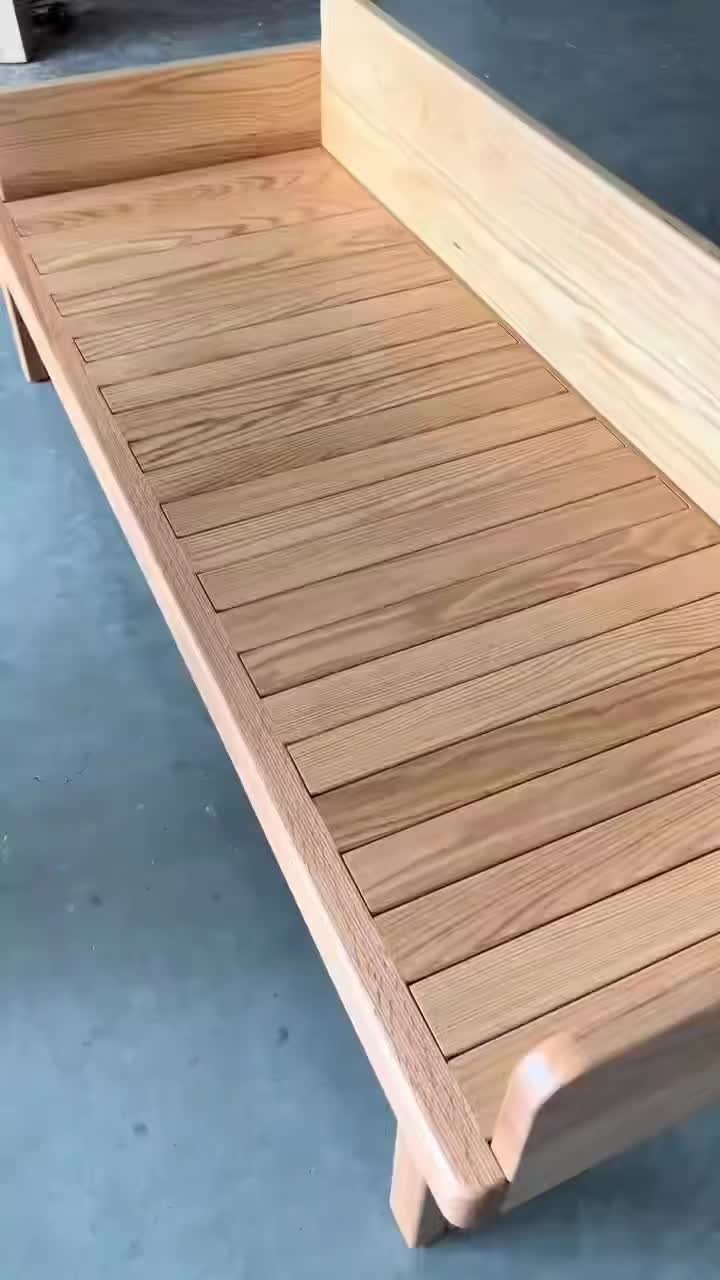
Gaps between the slats give this bench a lighter look than a solid plank seat, and a high backrest makes it feel like a real place to sit instead of a shelf.
In a hallway it works for pulling on shoes; as accent seating it fills an empty wall.
Sand every slat edge smooth, since the seat is where your legs rest. A clear finish keeps the pale wood tone showing.
4. Mid-Century Wooden Nightstand
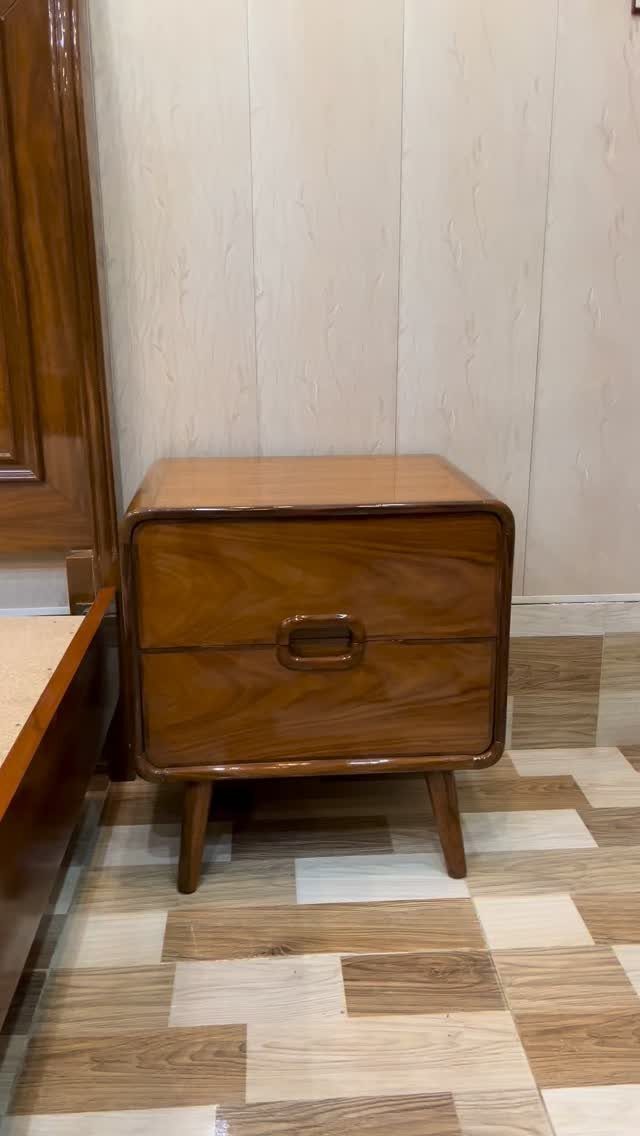
2 drawers and tapered legs are enough to give a nightstand its mid-century shape. The legs lift the body off the floor, so a small piece still looks airy in a tight bedroom.
For a build, I would taper the legs by planing or sanding on the 2 inner faces, then keep the drawer fronts plain.
A polished finish such as a satin clear coat shows off the grain, though it will show rings from glasses, so a coaster helps.
5. Tree Branch Display Shelf
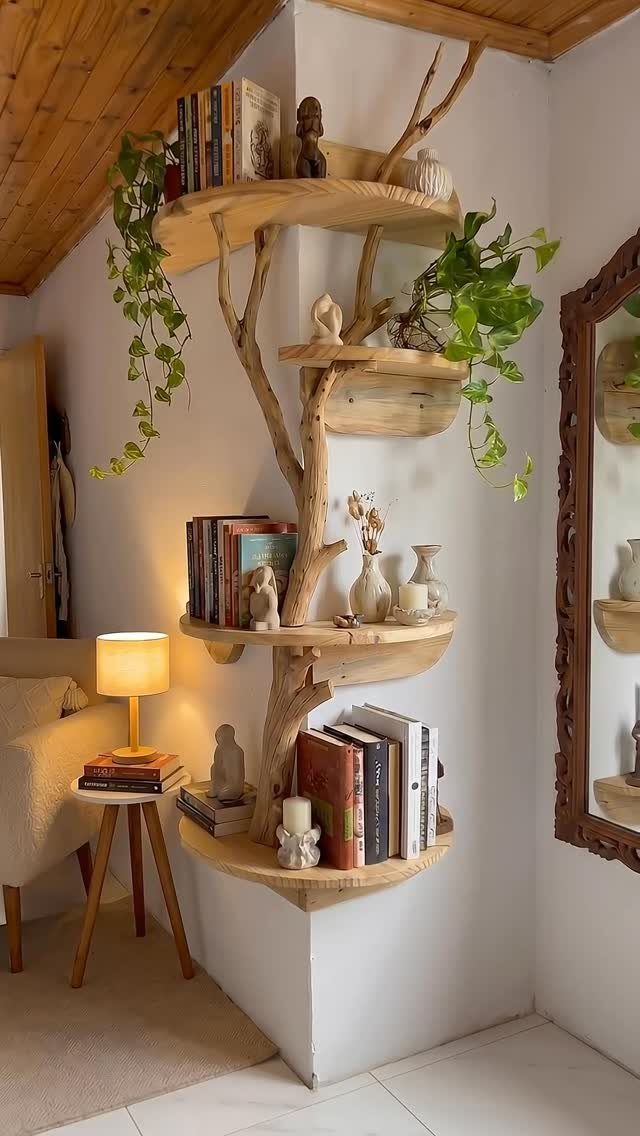
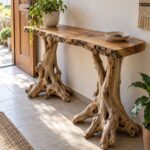
A real branch as the upright turns an ordinary shelf into a sculpture. Planks cross it at staggered levels, and the crooked curves of the wood give each shelf a hand-placed look.
Pick a branch that’s fully dry and solid, then peel off any loose bark first so it doesn’t flake onto your work later.
Notch or bolt each plank to the branch so it sits level, then check with a level before loading it with books and plants. The shape is rustic, so keep the plank wood simple.
6. Cane Webbing Coffee Table
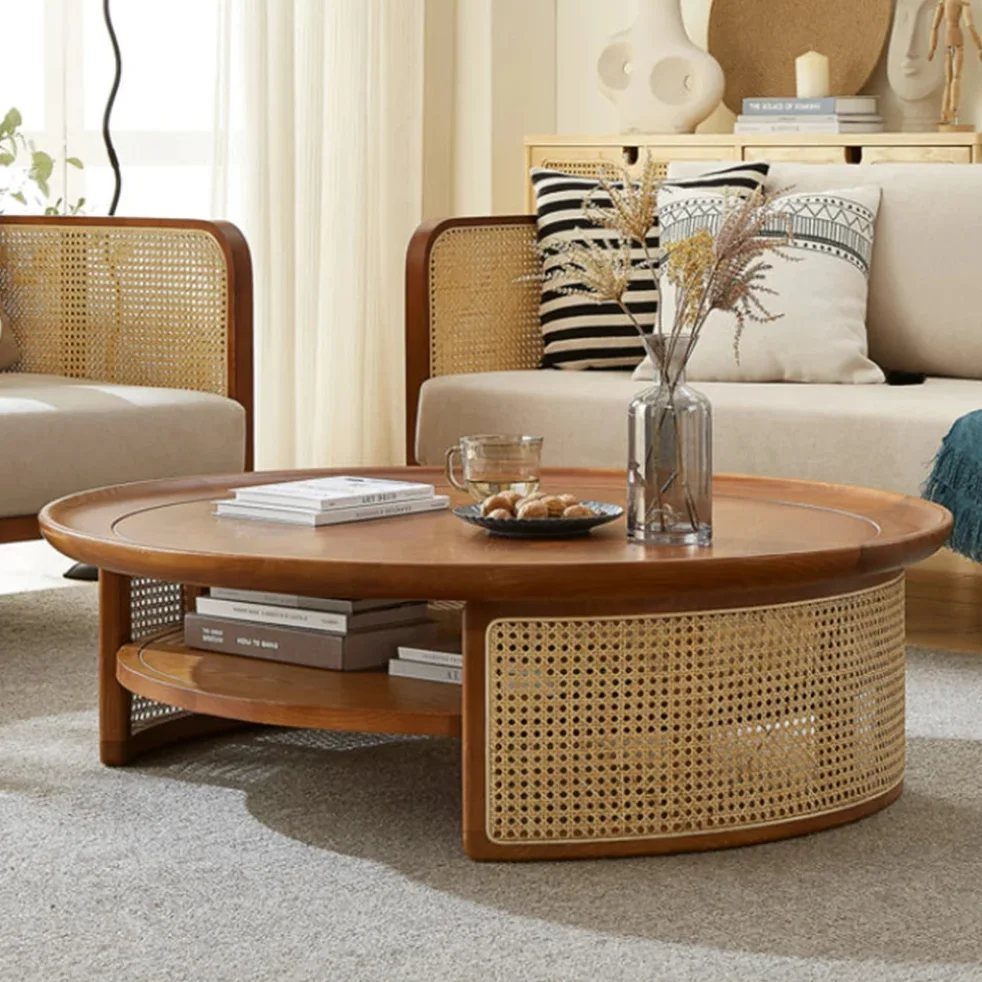
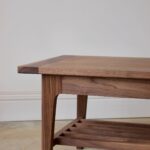
Woven cane on the lower shelf gives a round wooden coffee table texture without adding weight. It also gives you a place for books or a basket, so the tabletop stays clear for a vase of dried flowers.
If you want to make one, cane webbing is sold in sheets.
Soak it first so it bends, then fix it over the shelf frame and trim the edges. A wood strip pressed over the edge hides the cut.
7. Ribbed Pedestal Dining Table
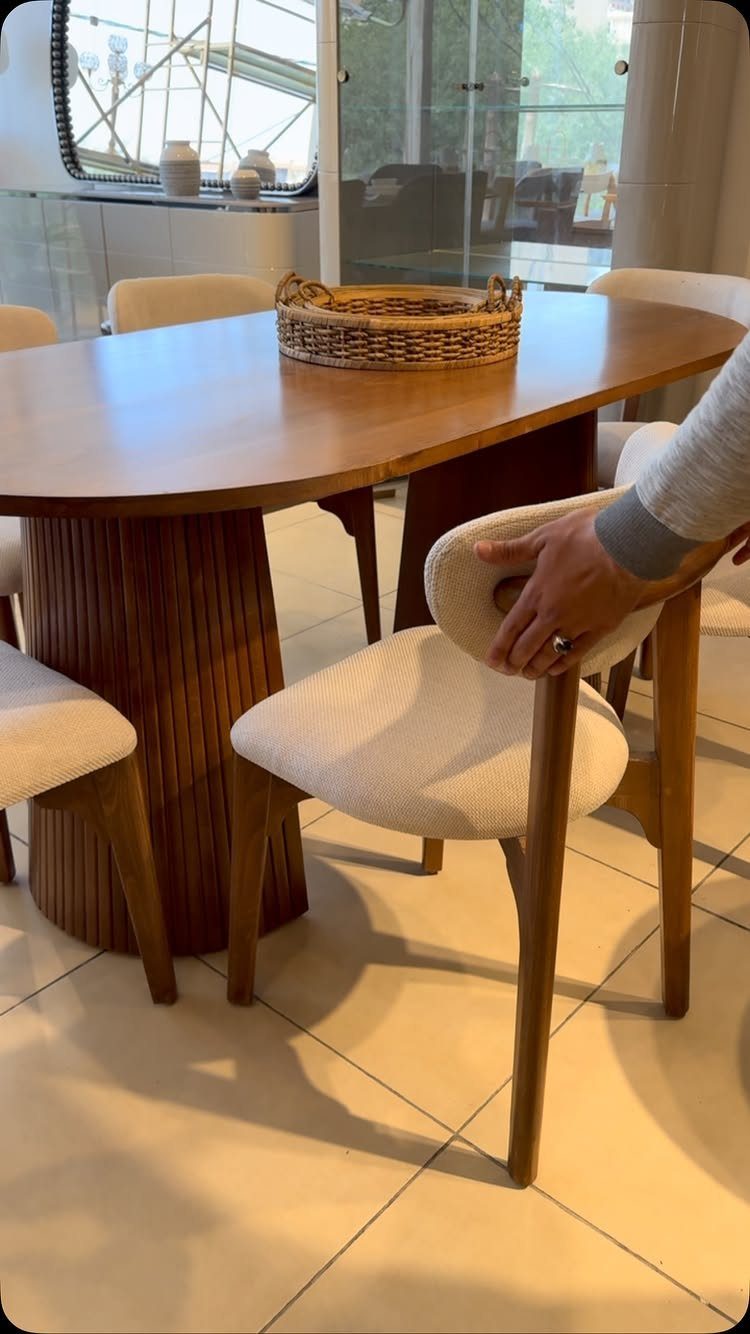
A fluted pedestal replaces the usual set of table legs with one ribbed cylinder, and that choice decides how the room feels.
With no corners to bump, chairs tuck in from any side, and an oval top keeps walkways easy to move through in a tight dining nook.
If you build one, a stack of vertical grooves cut into a round column gives the ribbed look.
Sand inside every groove, since that is where rough spots hide, and a clear finish keeps the wood grain showing against pale upholstery.
8. Integrated LED Corner Desk
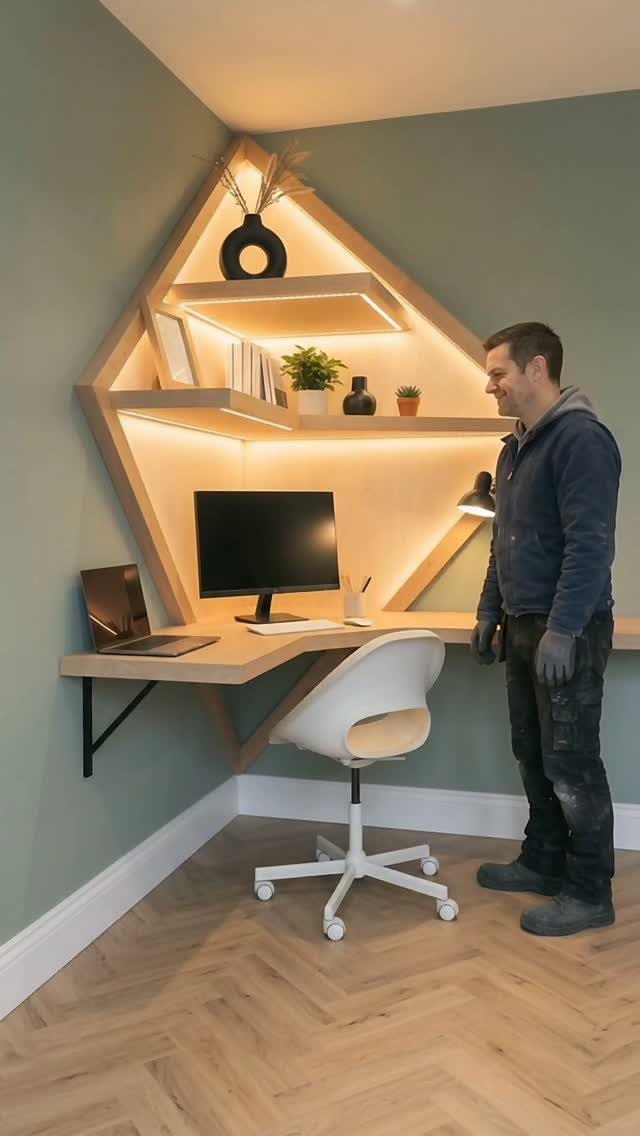
Warm LED strips tucked under the upper shelves light the work surface directly, so a corner desk needs no separate lamp. Light wood suits that glow better than a dark stain, which swallows it.
A corner layout gives you 2 work surfaces and wall space for shelving above, a good use of a small room.
Run the strip along the underside of each shelf front, and plan where the cord exits before you fasten anything. I would pick warm white over cool; it is kinder on the eyes in the evening.
9. Staggered Compartment Wall Shelf
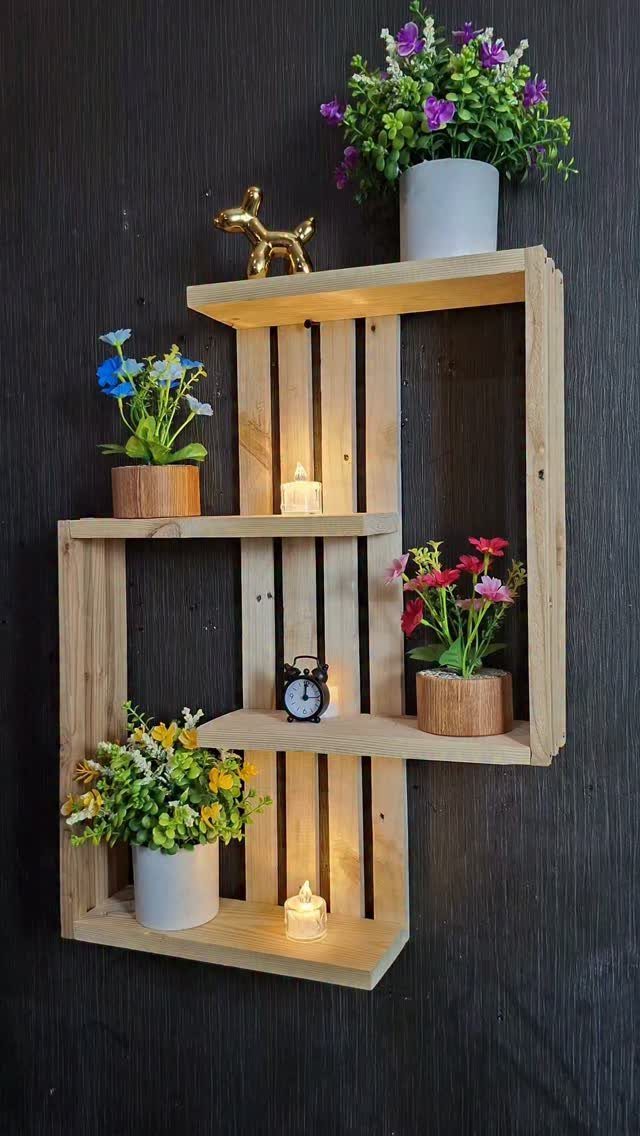
Offset rectangular boxes give a shelf a geometric look, and each cubby frames its own small display. Plants, candles and a clock can each get a compartment instead of crowding one long board.
To build it, cut the boxes from light wood, glue and clamp the joints, then smooth every rough corner with sandpaper. Stagger them so no two share the same height.
Mount the finished unit into wall studs, since a row of filled cubbies gets heavy. Against a dark wall, a pale finish stands out best.
Importance of Structural Integrity
A wobbly chair is a failed chair, however good it looks.
Before you build or buy, ask whether the piece suits the place it will live. Furniture made for a dry living room won’t last long on a damp porch.
Build to proven designs and standard joinery rather than improvising the parts that carry weight. If a joint or span worries you, change the design before cutting, not after the glue dries.
Check finished pieces on a regular schedule.
Push on legs and backs to feel for movement, look at joints for gaps or cracks, and tighten loose hardware. When something looks weak, fix that spot with a brace, a new fastener or a redesigned part.
Balancing Form and Function
Decide what the piece has to do first, then shape how it looks.
Function covers size, proportion, scale and comfort for the person using it. Form covers texture, pattern, shape and color.
Most designers work in that order, and I agree with it. Function stays the same for years while styles keep changing, so a piece that works well can be restyled with a new finish or fabric.
Designing around how a piece will be used also keeps you from paying for ornament that adds nothing. A plain, well-proportioned piece leaves a room less cluttered and easier to live in, and it can help a home’s resale appeal.
Common Mistakes in Wooden Furniture Design
3 habits cause most of the trouble: too many pieces, skipped upkeep and dark wood in a small room.
Stick to the essentials, since crowding makes a tight space feel cramped. Choose lighter tones so the room opens up.
Upkeep matters as much as design. Direct sun, dust and rain make wood swell, crack and rot faster, so keep pieces out of the weather.
Use coasters and placemats to prevent stains and discoloration, and keep sharp objects off the surface.
If you buy secondhand, inspect for carpenter ants, termites, powderpost beetles and fungus. Call pest control right away if you find any.
As tradition would have it, woodworking is an art, and to own a piece of design with a wooden body is to punctuate the domestic landscape with the echo of a saw and chisel.