Which of these creative wood designs suits you depends on how much wood and patience you can spare: a two-tone keepsake box comes out of scraps from the bin and finishes in an afternoon, while a chevron barn door asks for a whole floor to dry-fit boards on.
Most of the list sits between those two, with wood inlays, geometric carved cabinetry and a petal lamp whose petal count sets the pace.
Start with the project that fits the lumber already in your garage, and let the bigger builds like barn doors and live-edge tables wait for a larger stack.
1. Barn Doors
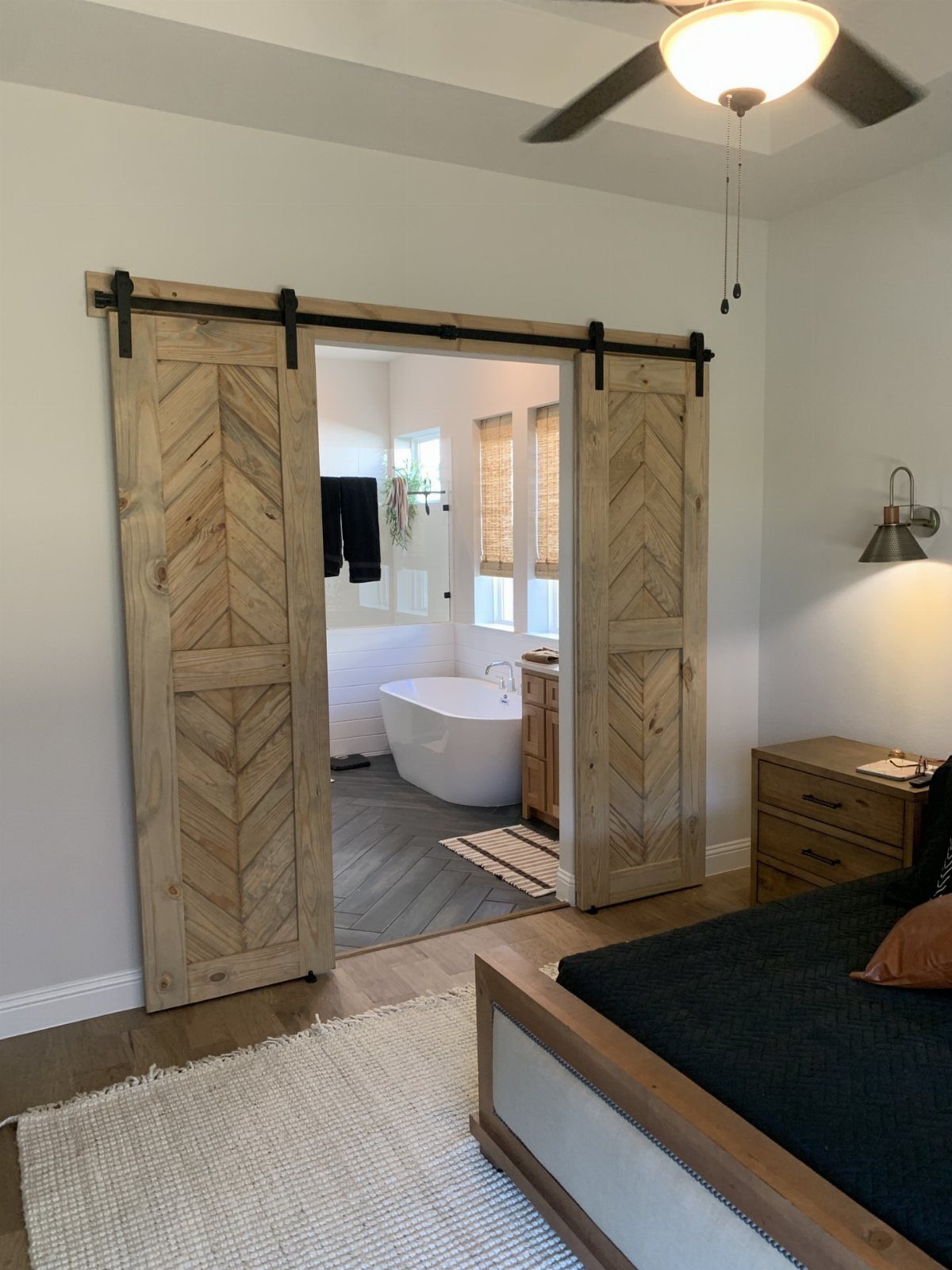
Chevron is the pattern that makes a barn door more than a slab on a track. Angled boards meet at a center seam, and on a pair of doors that seam lines up into a single V across the opening.
Cut every board at the same angle, dry-fit the whole door on the floor, and number the backs before gluing anything.
Different wood species work for the pattern too; mixing light and dark boards makes the chevron read from across the room.
2. Wood Inlays
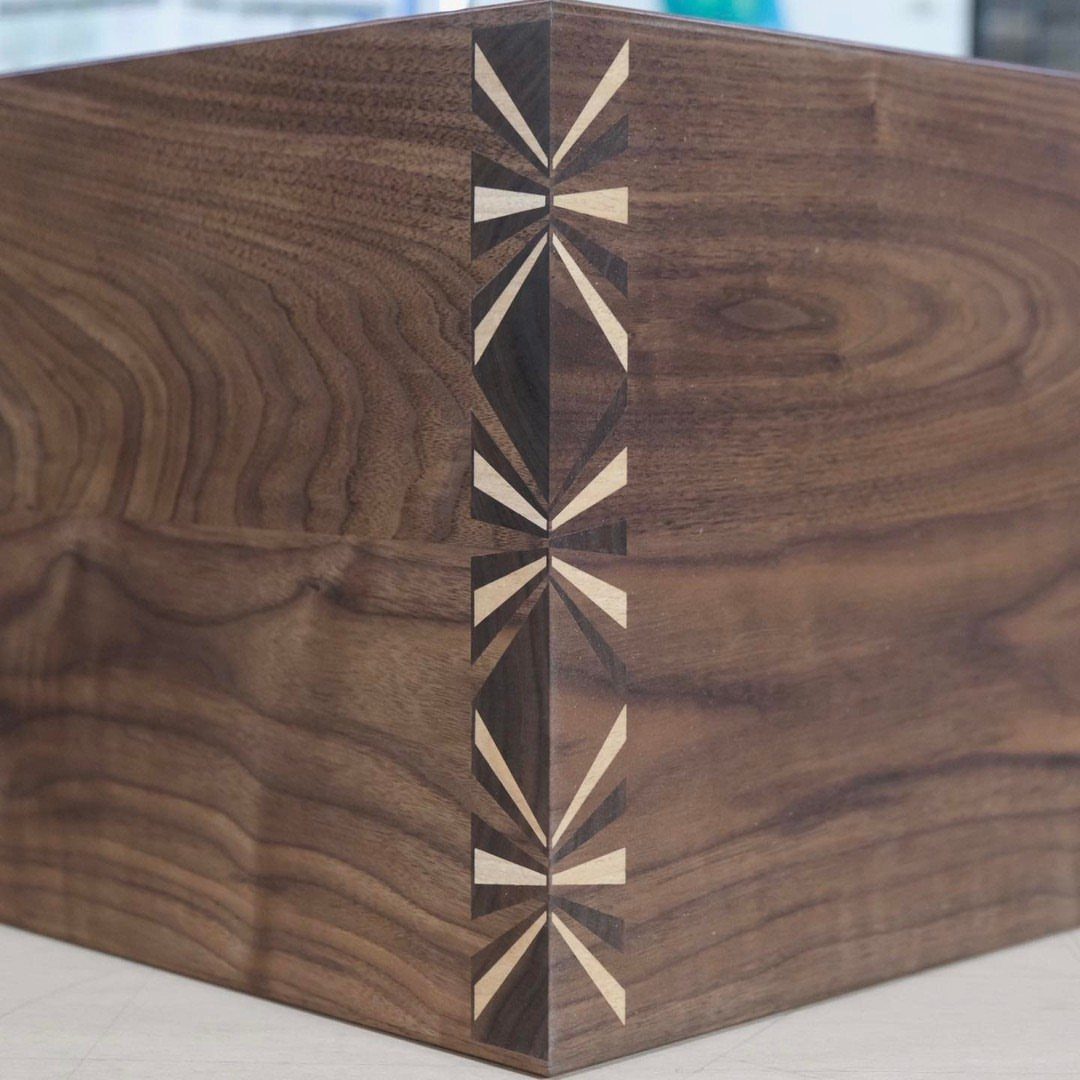
Contrast does all the work in an inlay. Light wood set into dark walnut shows every line of a geometric pattern, so I would pick species that sit far apart in color.
Small boxes are the best place to start, since a corner needs only a little material and a few straight cuts.
Cut the recess to fit the inlay piece snugly, because a gap shows up as a dark outline against pale wood.
A box corner gives you the look of fine furniture without a full project’s commitment.
3. Geometric Carved Cabinetry
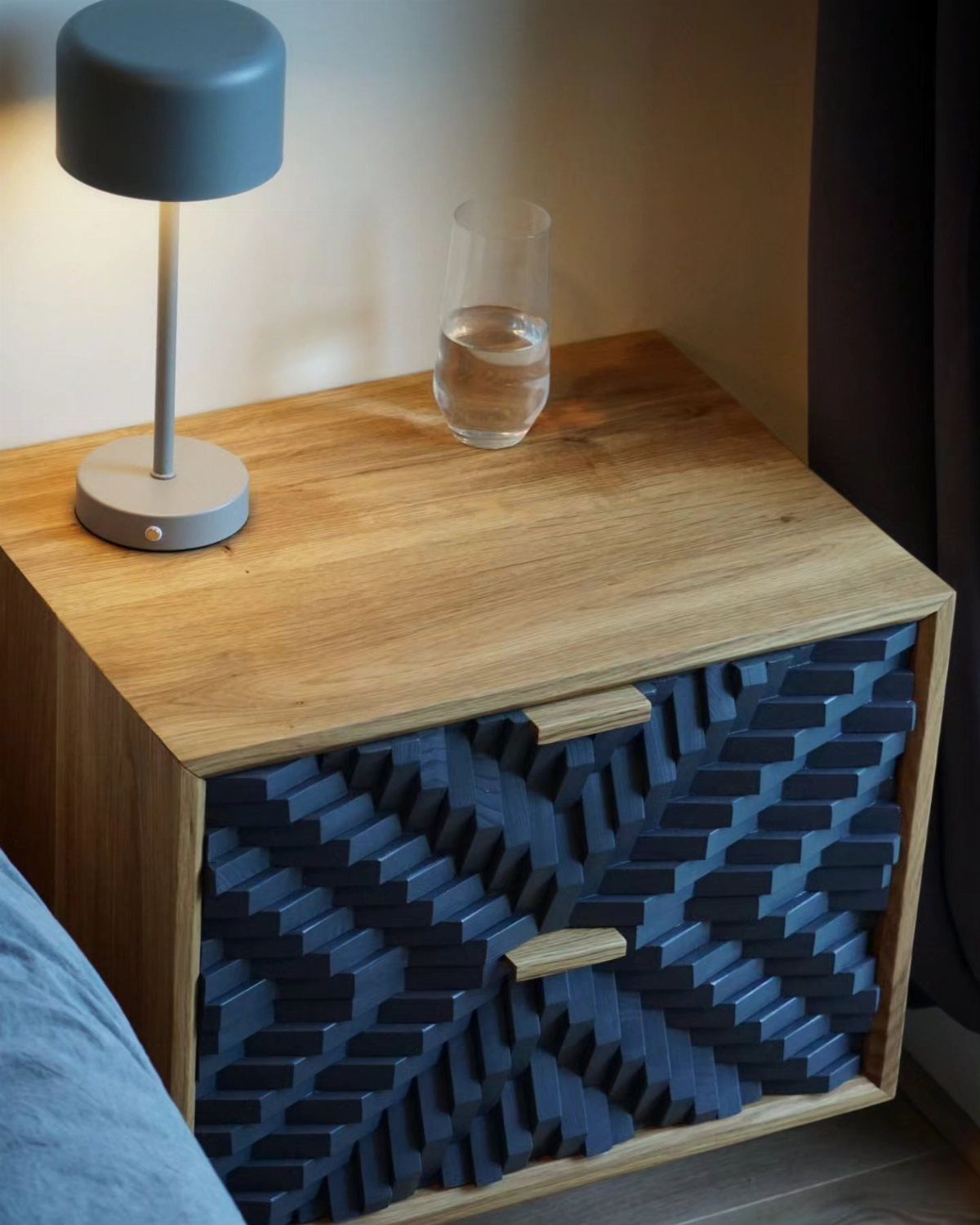
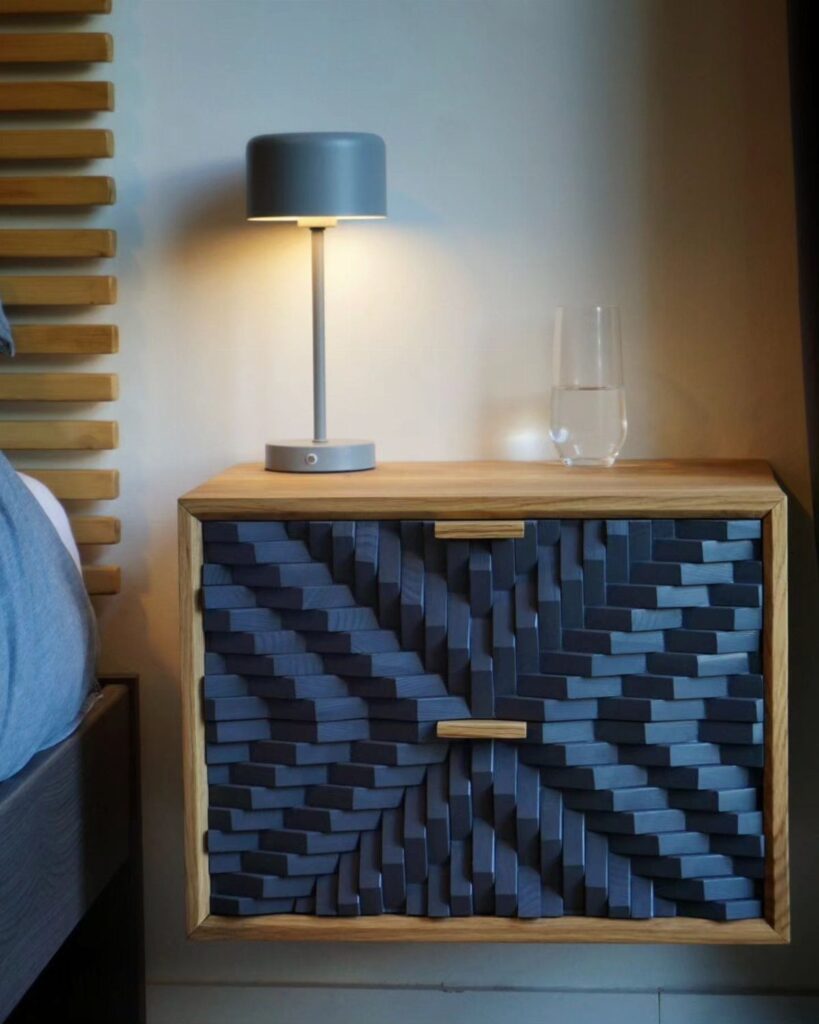
A flat drawer front becomes a small sculpture when the geometry is carved in relief. Facets catch light at different angles, so a single color, like the blue on this nightstand, still looks layered.
A bedside table is a smart size for the idea. The carved area is small enough to finish in manageable stages, and paint settles into the angled planes to emphasize the depth.
I would keep the rest of the piece plain. One carved facade is plenty for a bedroom.
4. Wood Petal Lamp
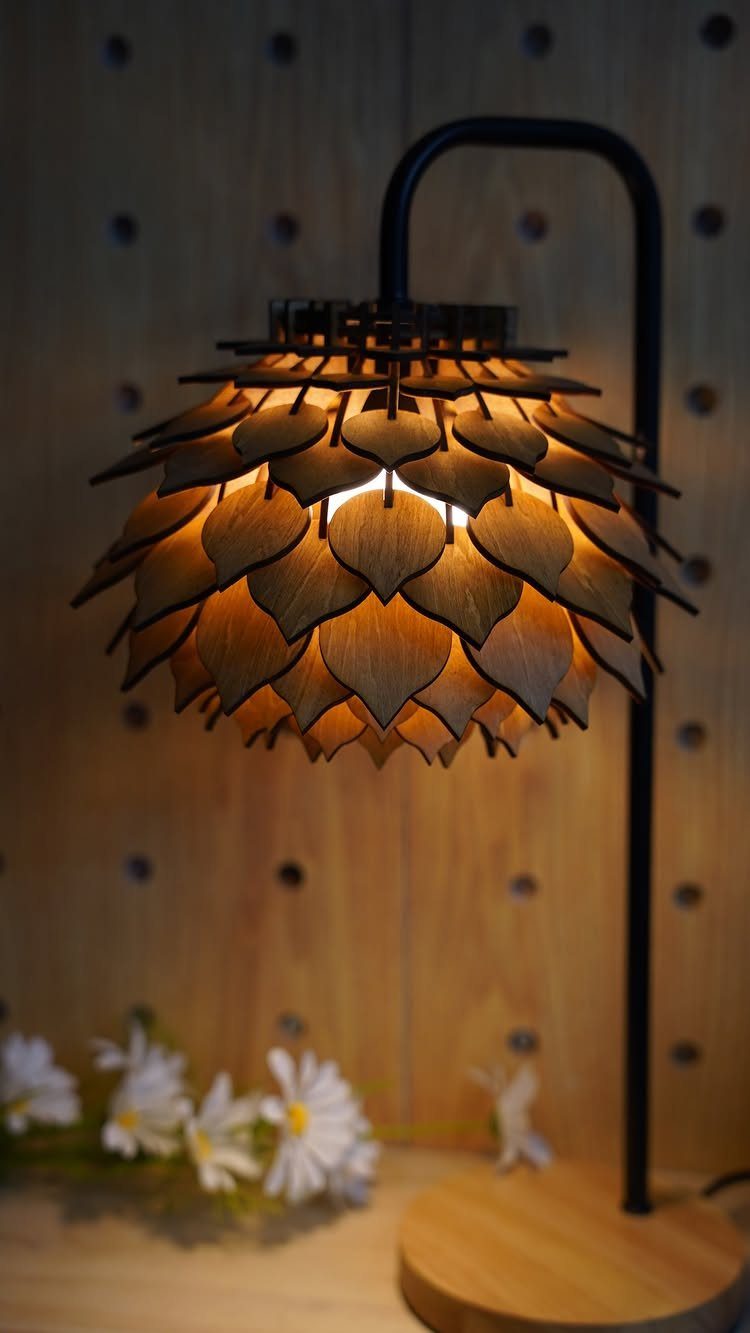
Shaping a lampshade from overlapping wooden petals gives a desk lamp the look of a bloom. Each petal is leaf-shaped, and the layers stack in rows like feathers or scales.
Cut all the petals from one template so they match, then sand the edges before assembly. A black metal arm and a wooden base keep the lamp looking tidy, and the wood tone ties it to a workshop wall.
Plan on patience: the petal count is what takes the time.
5. Intarsia Wood Wall Art
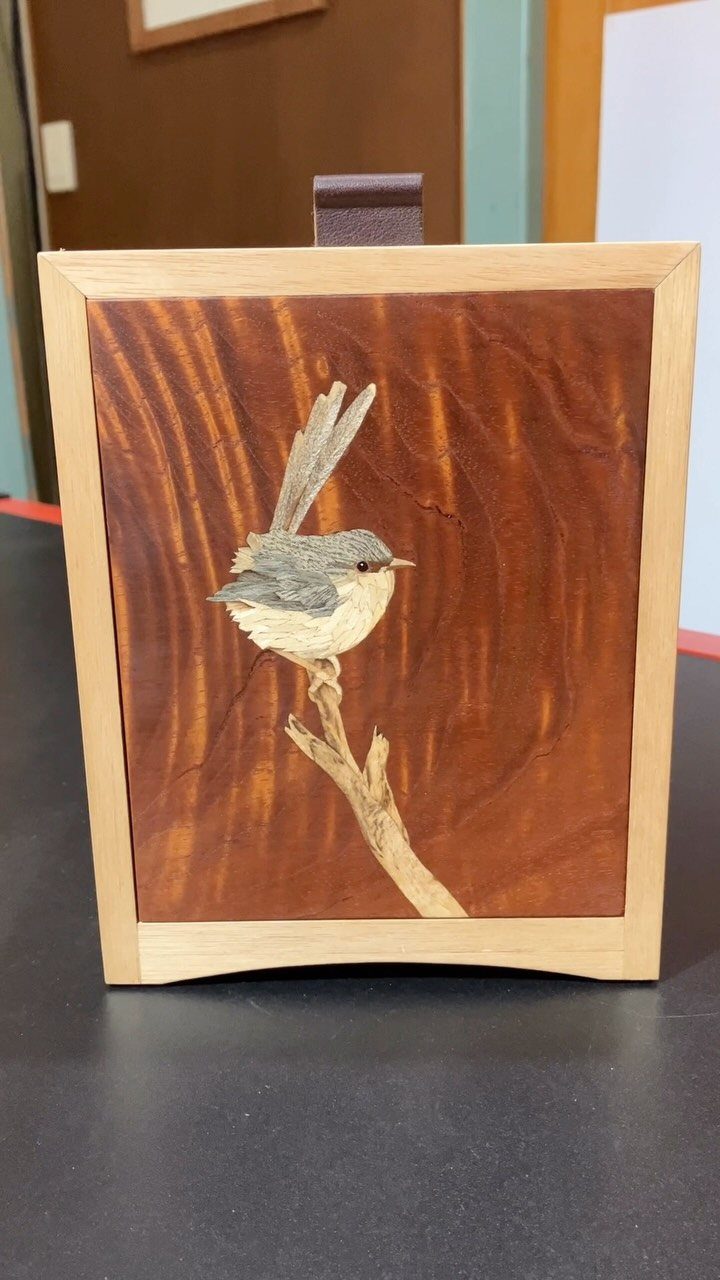
Intarsia is a puzzle made of wood. Each piece of the bird, from wing to branch, is cut from a different wood tone and fitted tight against its neighbors, so the picture comes from grain and color rather than paint.
Choose boards with clearly different shades; a reddish-brown background makes lighter pieces for the bird stand out. Trace the pattern, cut each piece separately, and sand the edges so the pieces sit flush before you set them in a frame.
A small bird on a branch is a good first subject.
6. Live-Edge Tables
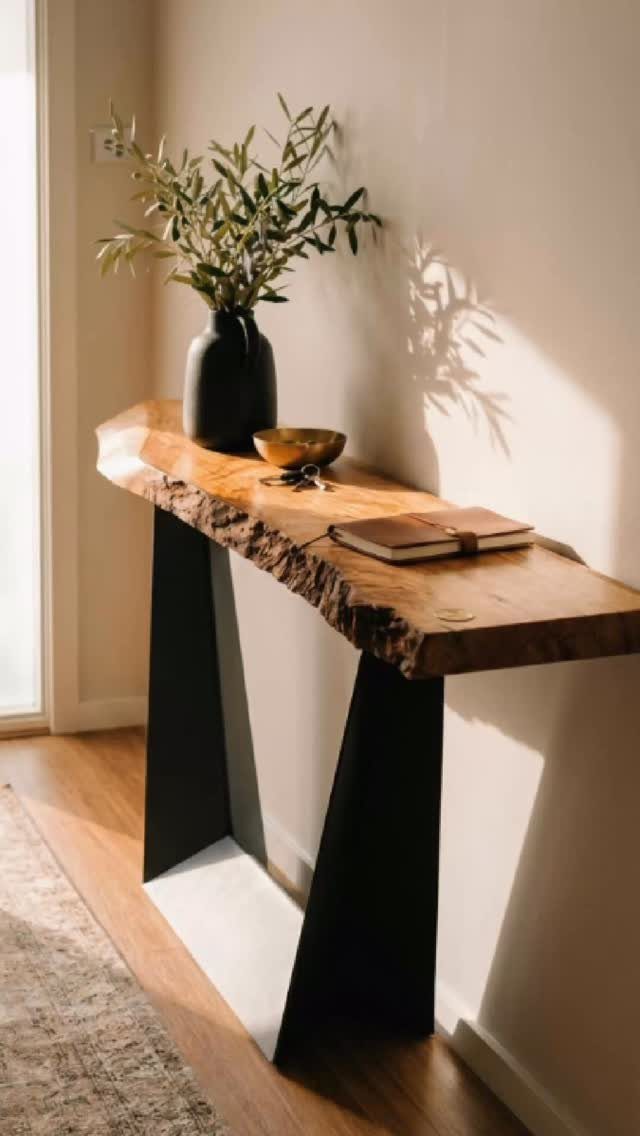
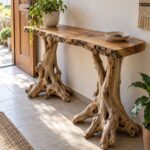
Black metal legs under a live-edge slab keep the focus on the wood’s natural, uncut outline. On a console table against a white wall, that irregular edge is the whole decoration.
I like a console for this idea because it asks for less wood than a dining table and still gives you a surface for a vase, a bowl and a notebook.
Leave the edge as the tree shaped it, sand the top smooth, and let the contrast between the rough outline and the straight metal do the styling.
7. Geometric Wooden Pendant Lights
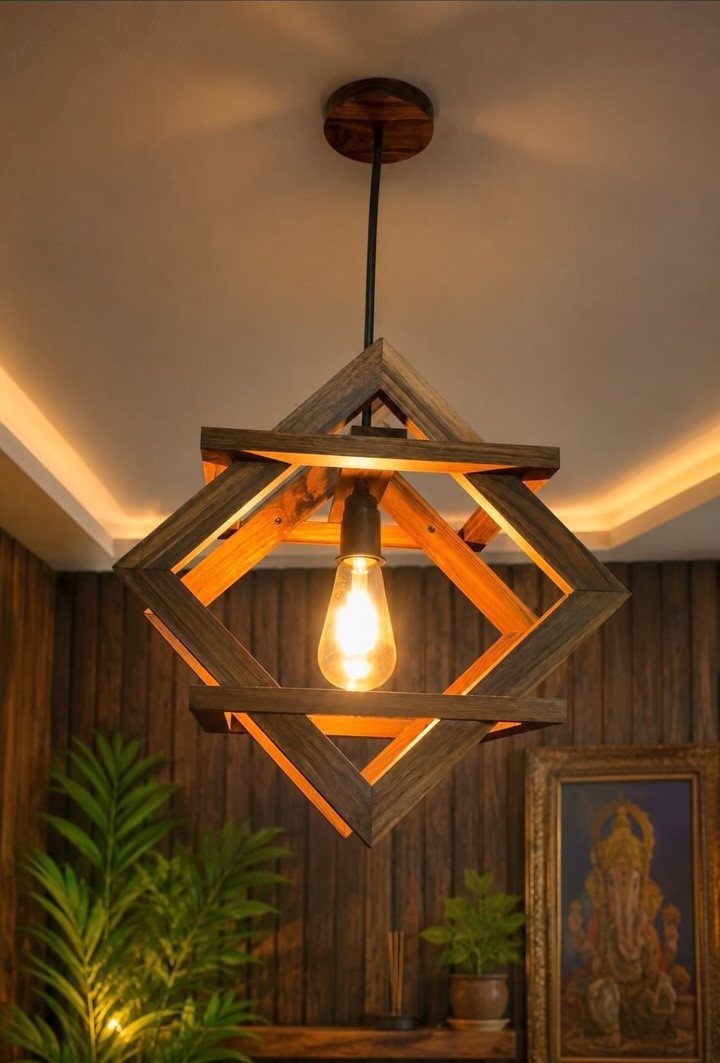
Interlocking diamond frames turn a bare Edison bulb into the centerpiece of the room. The wood does the shading, and the open geometry lets light spill through the gaps and throw a pattern on nearby walls.
Cut every frame piece to the same length and angle so the diamonds close without gaps. Dry-fit the whole shape before gluing.
Pair it with a dark wall like the one here, and the warm bulb stands out against it. Keep the bulb exposed; a shade would hide the framework.
8. Two-Tone Wooden Keepsake Boxes
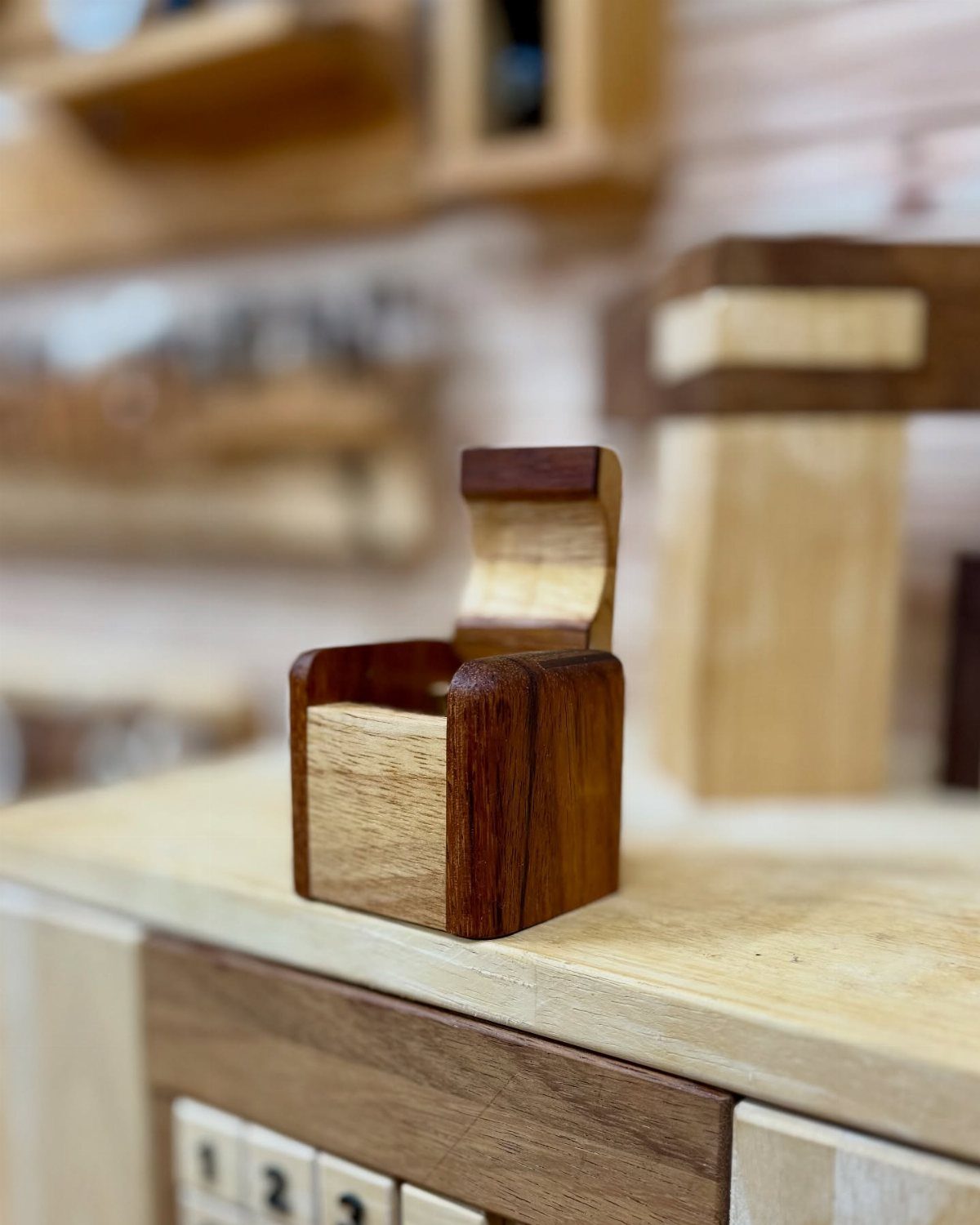
Light and dark wood on a small box give you contrast in a piece you can finish in an afternoon. Pick 2 species far apart in color, so the line between them reads clearly on the lid and sides.
Keep the box small. It uses scraps from the bin, and a mistake costs very little.
I would leave the finish simple and let the 2 woods carry the look. A box like this makes a good keepsake holder for jewelry or letters, and it sits well on any shelf.
Craftsmanship and Quality
Material quality shows up before design does. Choose boards that are flat, dry and free of loose knots, because a warped or damp board will fight every joint you cut, no matter how good the idea is.
Check the grain before you commit. Straight, even grain is easier to cut cleanly and sand smooth, while wild grain is better saved for a spot where you want it noticed.
Craftsmanship mostly means patience with small steps: measure twice, cut a test piece from scrap, and sand through the grits in order instead of skipping ahead. Skipped grits leave scratches that stain and finish will make obvious.
Fit matters more than decoration. Tight joints, flush edges and softened corners make a plain piece look custom, and rushed ones make an elaborate piece look homemade.
Finish last, and test it on an offcut first. A good finish protects the wood and brings out color, but it can’t hide sloppy work underneath.
Frequently Asked Questions
What types of wood designs can you make?
Plenty of them fit into an afternoon or a weekend: inlays set into small boxes, carved geometric nightstand fronts, petal-shaped lampshades, intarsia wall art, live-edge console tables, diamond-frame pendant lights and two-tone keepsake boxes.
Small boxes are the easiest place to start, since a mistake costs only scrap wood. A live-edge console with black metal legs is a good step up because it needs far less wood than a dining table.
What wood should I choose for a woodworking project?
Pick flat, dry boards without loose knots, and check the grain before you commit.
Straight, even grain cuts cleanly and sands smooth, so it suits most projects. Pair something pale like maple with something dark like walnut, and an inlay or intarsia piece reads from across the room.