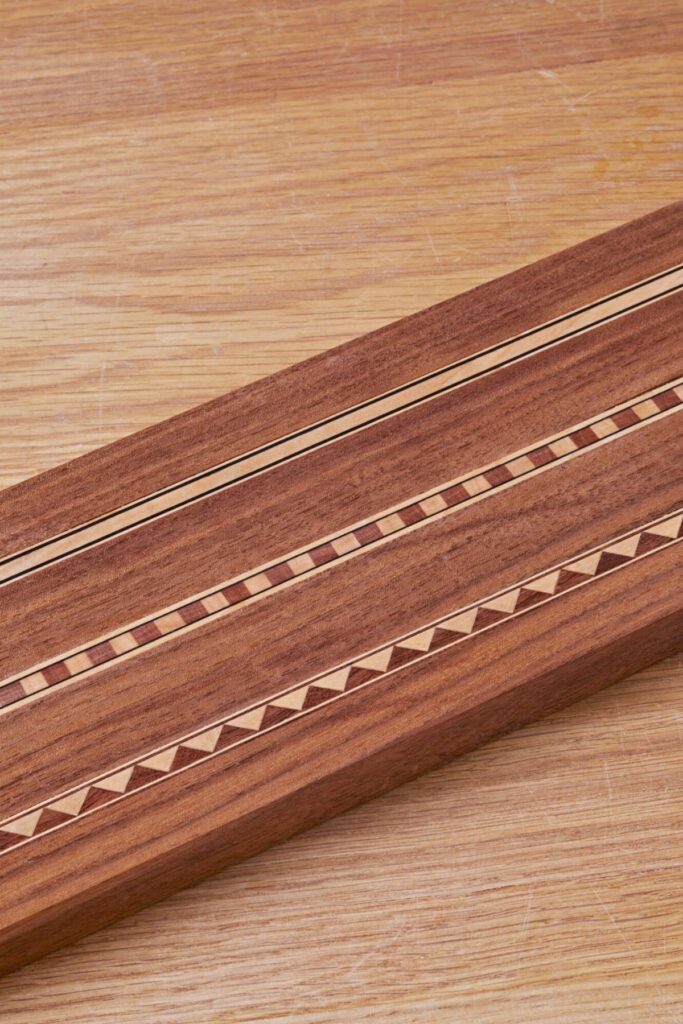
Straight edges forgive more than curves, so match the design to how steady your hands are: block lettering and geometric pieces suit a shaky first try, while florals and tree motifs with thin branches ask for more patience.
The materials in this list range from thin veneer and copper wire to deep blue resin, and each one follows the same basic steps: cut the piece, trace it, then rout or carve a recess to match.
1. Wood Veneers in Wood
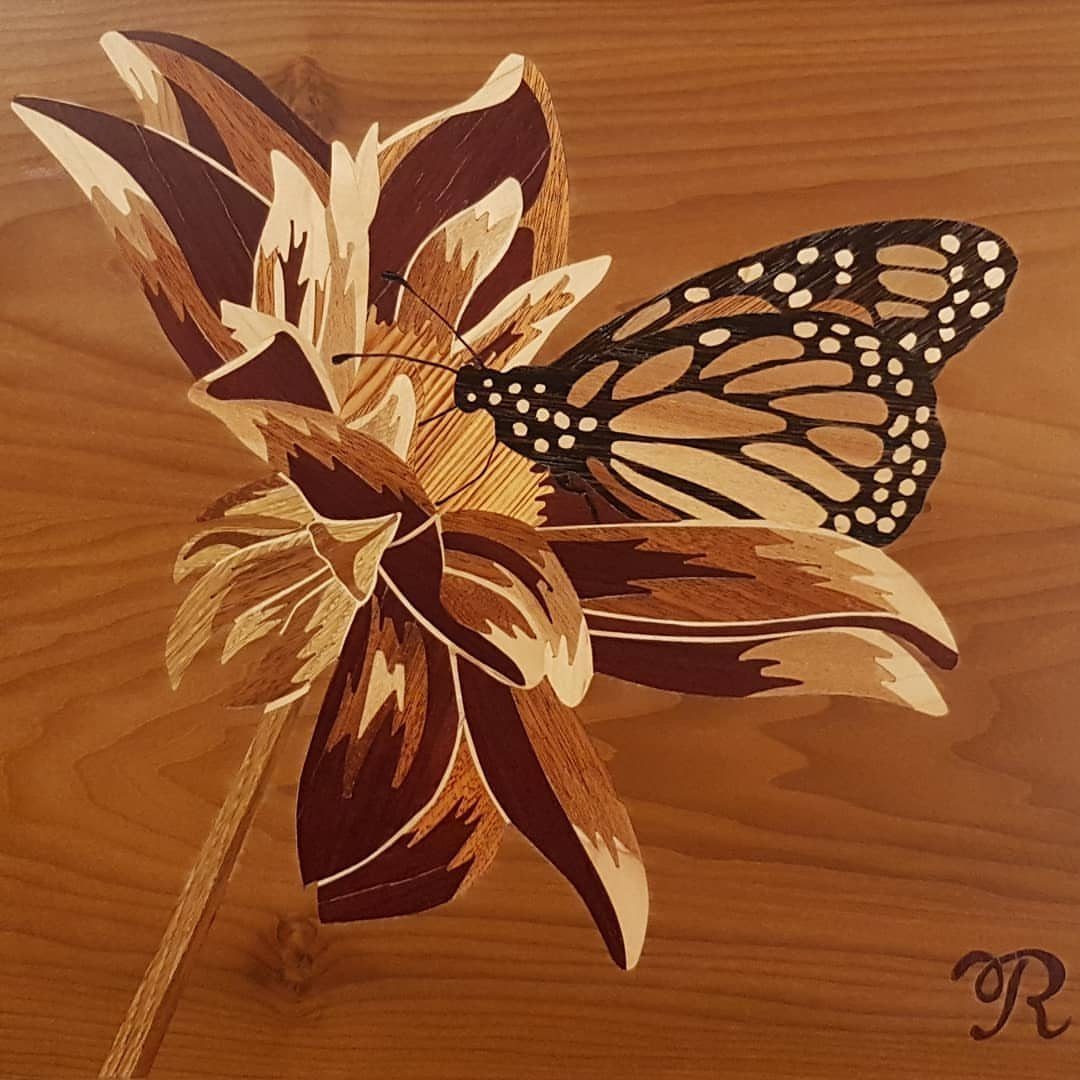
Veneer is the easiest way into marquetry at a kitchen-table scale. Thin sheets in different species let you "paint" a butterfly with grain and color alone, no stain needed.
For a monarch, pick a dark veneer for the veins and edges and a warm orange-toned one for the wings. A plain, quiet-grained background keeps the picture readable.
Cut every piece with a sharp blade and fresh edges, since a dull knife tears veneer along the grain. Start with a small design like this one, because each added piece is another seam to fit.
2. Resin Inlays
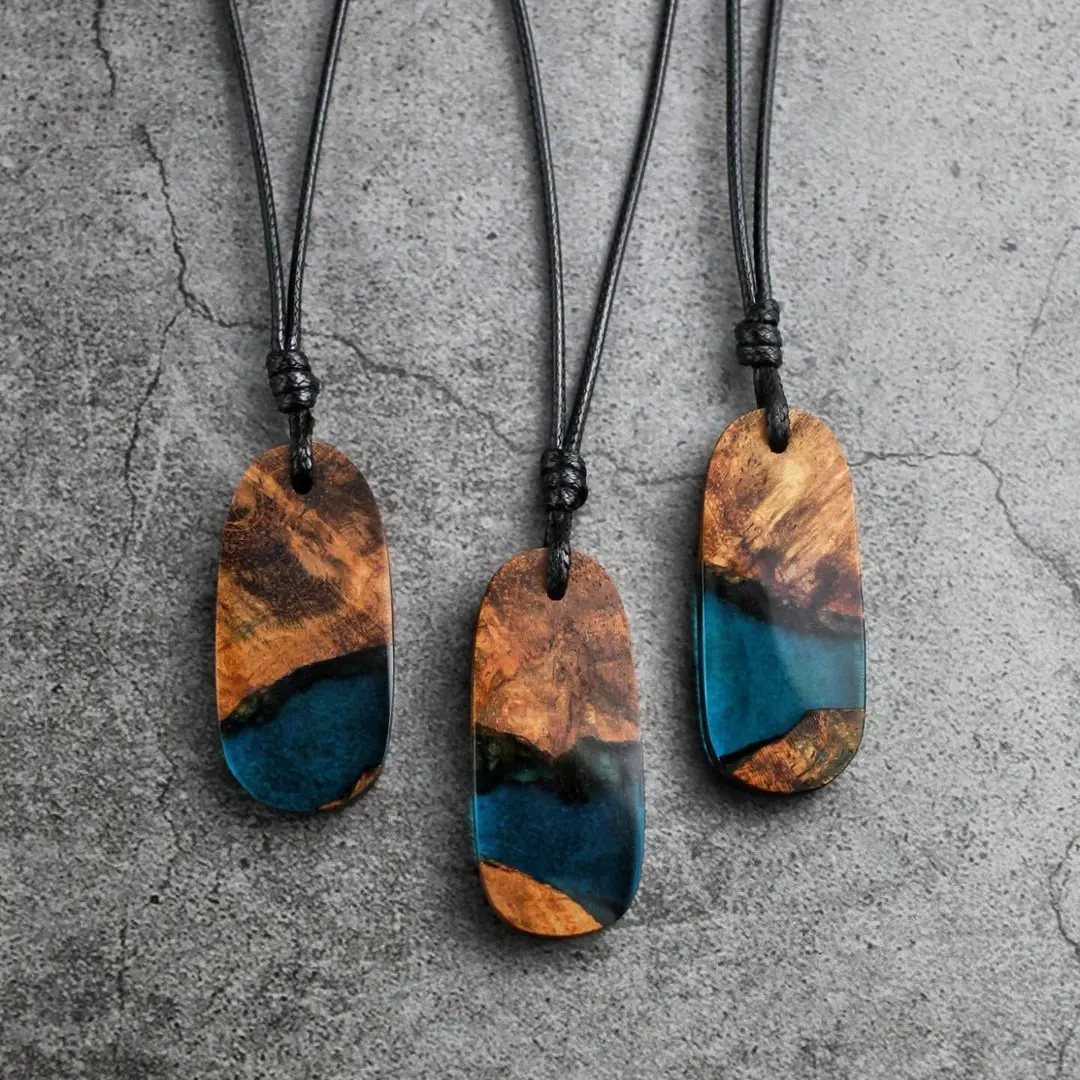
Deep blue resin turns a small wooden oval into something that looks like a pool of water set in the grain. Pendants are a good first project because a small pour needs very little resin.
Cut or carve a shallow recess in the wood, then fill it slowly so the resin doesn’t spill over the edge. Tint it with a pigment made for resin, and stir gently to keep bubbles down.
Once it cures, sand the surface flush with the wood. I’d make three at once, since you’ll want a spare to practice on.
3. Floral Patterns
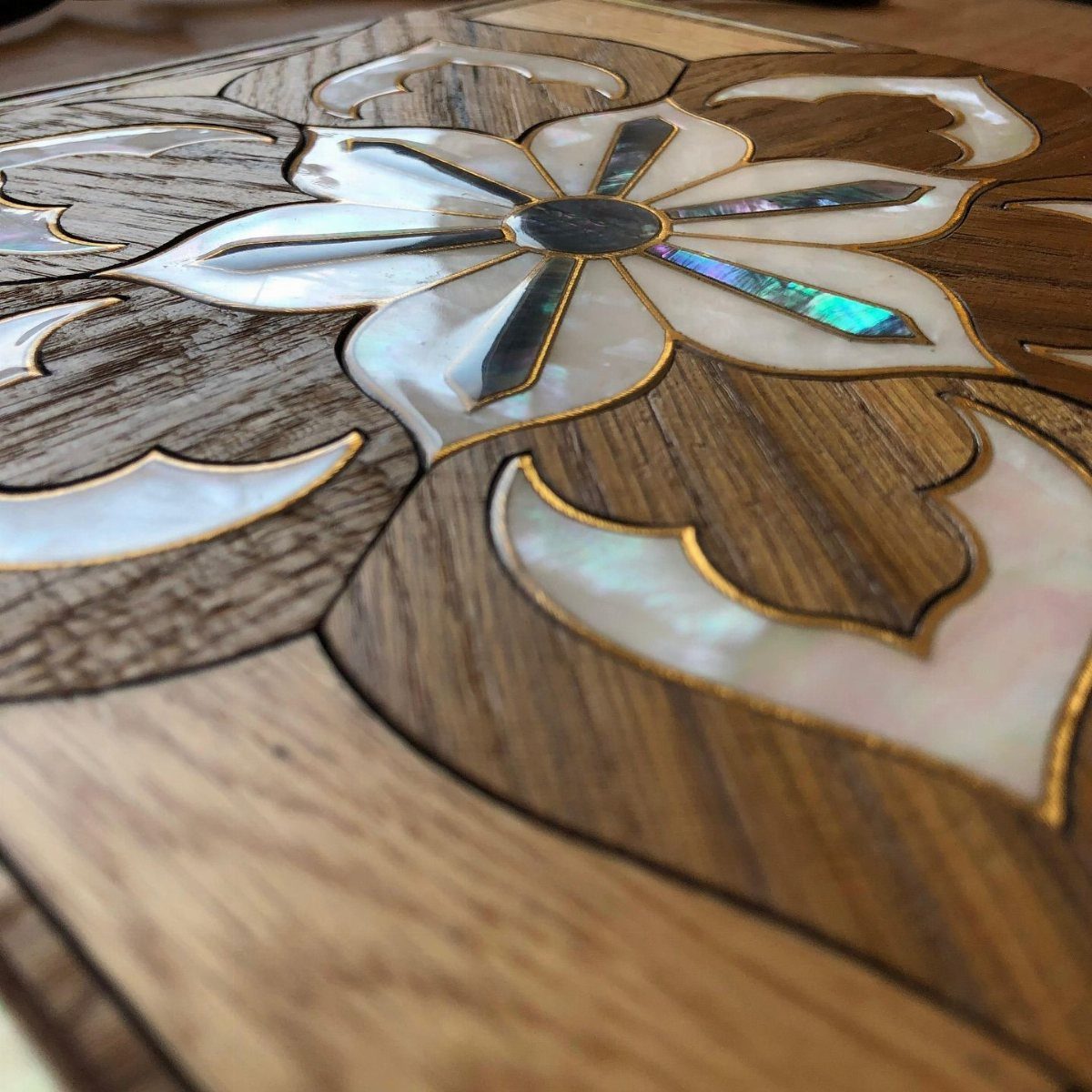
Mother-of-pearl against dark wood is the pairing I’d pick for flowers: the shell shifts color as you move, and the dark ground makes each petal stand out.
Trace the pattern onto the shell, cut the petals, and set them into recesses routed or carved to match. Thin gold wire can follow as stems or outlines, laid into narrow grooves.
Dark wood hides small gaps better than pale wood does, which forgives a beginner’s fit. Glue the pieces in, then sand level.
4. Geometric Patterns
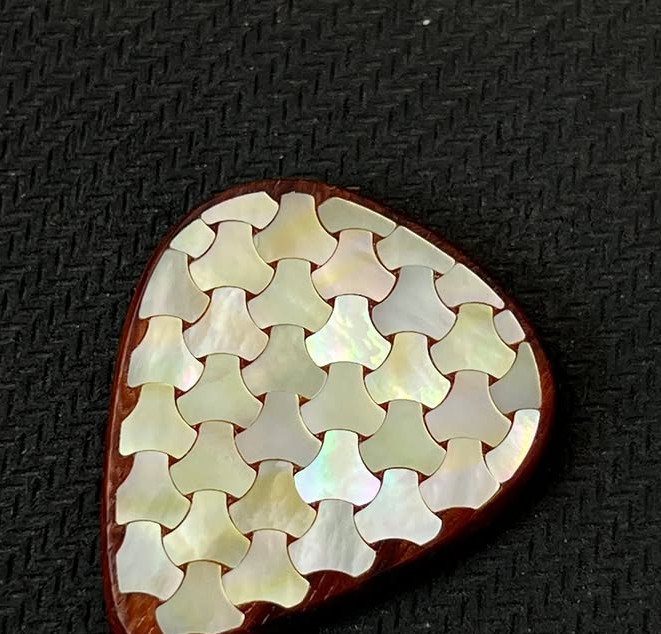
Straight lines forgive more than curves, so a geometric inlay is where I’d send anyone fussy about fit.
Interlocking shapes cut from white shell, like the ones on this guitar pick, repeat the same few angles, so once you cut one piece well, you can cut the rest the same way.
Make a template from card stock and trace every piece from it. Matching sizes matter more than fancy shapes.
Dark wood gives the iridescent shell the contrast it needs. Keep the pattern small on a surface this tiny.
5. Animal Shapes
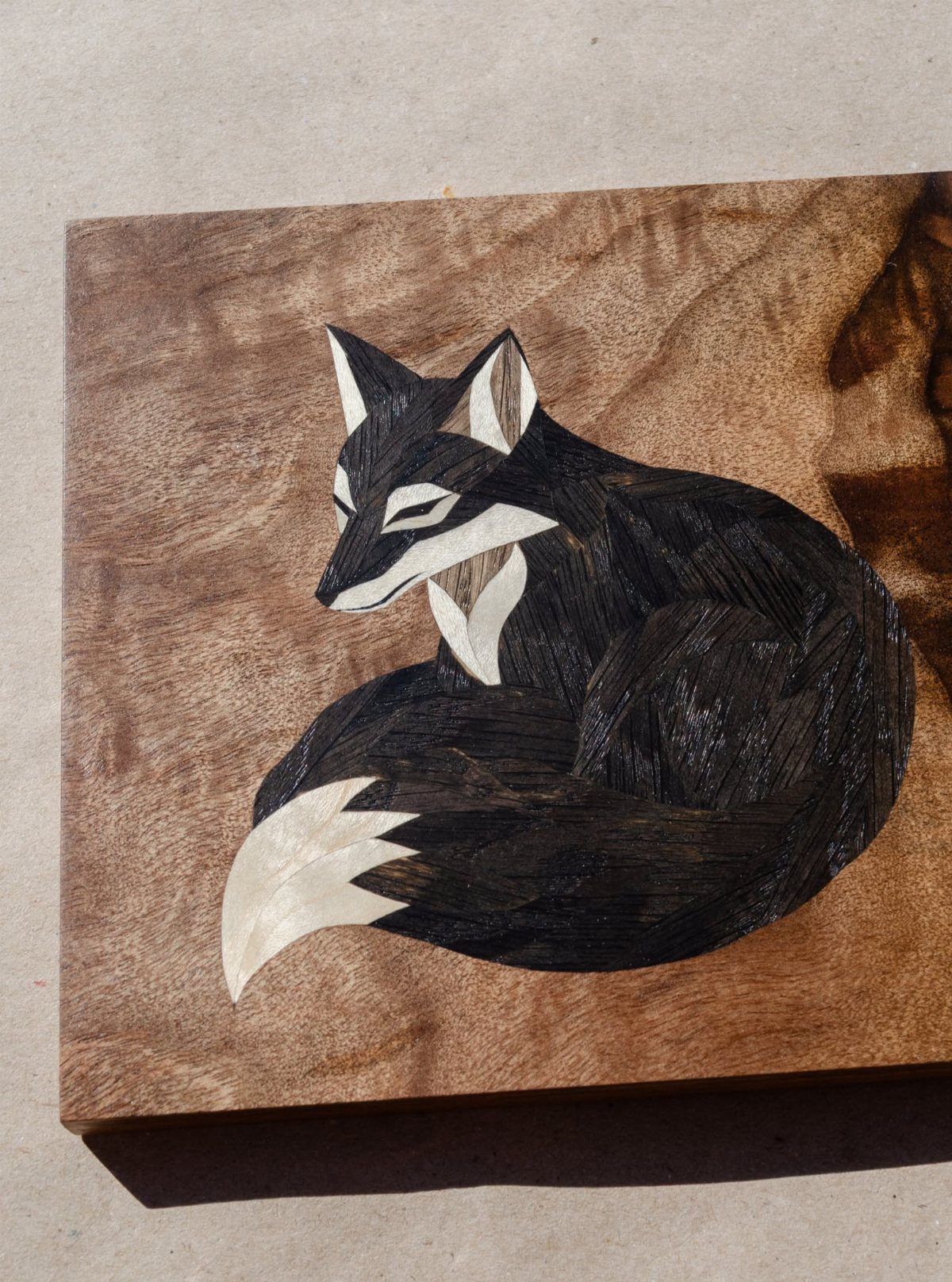
A curled-up fox works as an inlay because its outline is one simple, rounded mass. Light and dark woods do the shading, so you skip paint entirely.
Split the animal into a few big pieces, such as the body, tail and head, instead of dozens of tiny ones. Fewer joints means fewer gaps to fill.
Cut the recess to the pieces after you’ve cut them, not before; trace around each piece with a sharp pencil or knife. Pick woods with clear contrast, and use a plain background board so the animal shape stands out.
6. Metal Wire Inlay
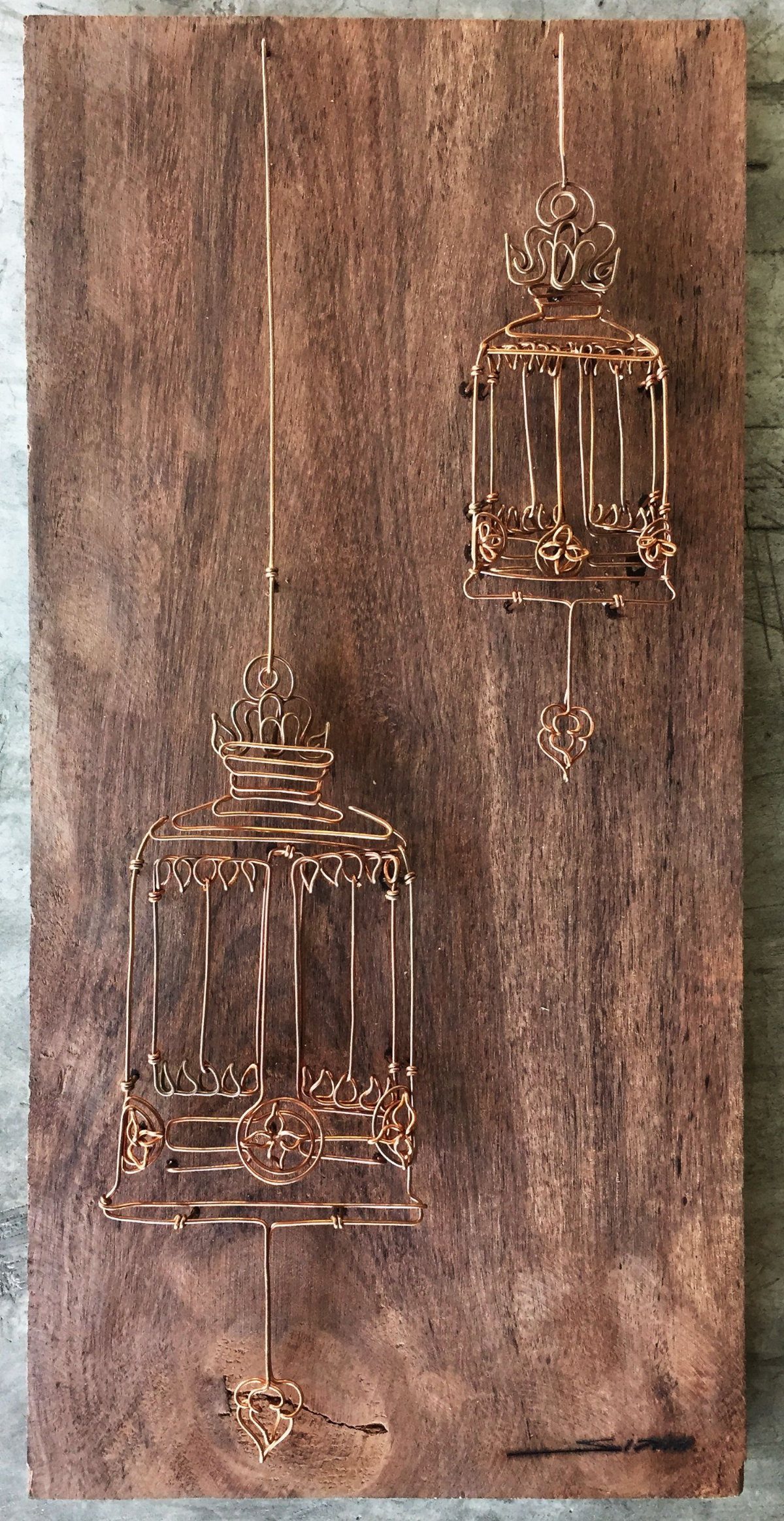
Wire inlay gives you crisp, thin lines that wood or shell can’t match, and copper has a warm color that sits well on brown wood. Birdcages like these suit it, since a cage is mostly lines.
Cut a narrow groove along each line of the design, then press the wire in and bend it as you go. Curves need gentle bending, so shape the wire before it goes in the groove.
If you want a pair, cut two sizes, one larger and one smaller, so the shapes read as a set instead of a copy. File and sand the ends flush when the wire is seated.
7. Tree Motif Inlays
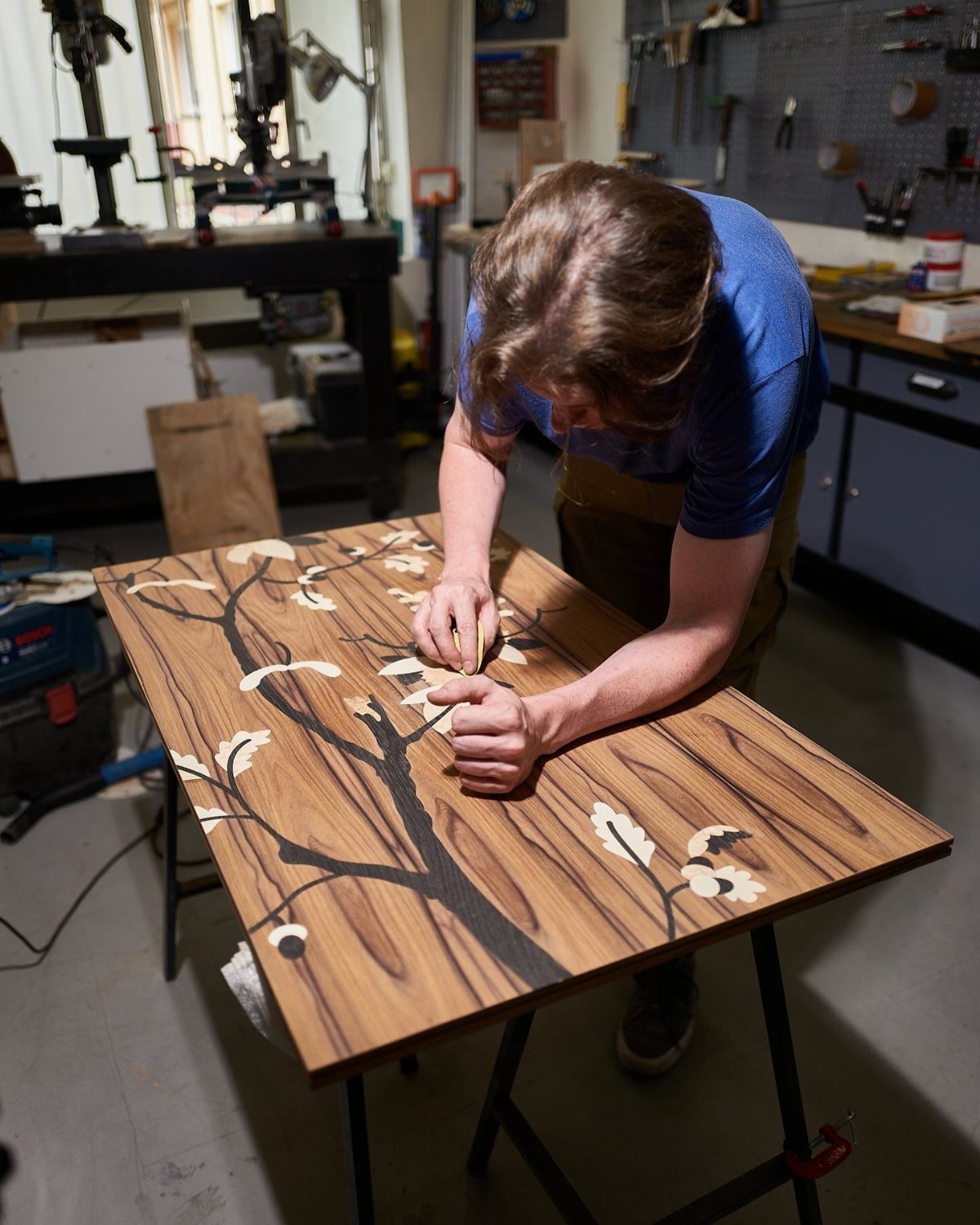
A tree inlay suits a tabletop because branches already look like grain, so the design reads as part of the wood. Light limbs set into a darker board give the contrast that carries a big, sprawling shape.
Cut the trunk and main limbs first, then the thinner branches.
Trace each piece into the board before routing or carving the recess. Thin twigs break easily, so I’d keep the finest branches a little thicker than feels natural.
Sand everything level once the glue dries.
If you want the interior to be smooth as well, make the background wood and inlay wood the same thickness.
8. Inlaid Wooden Lettering
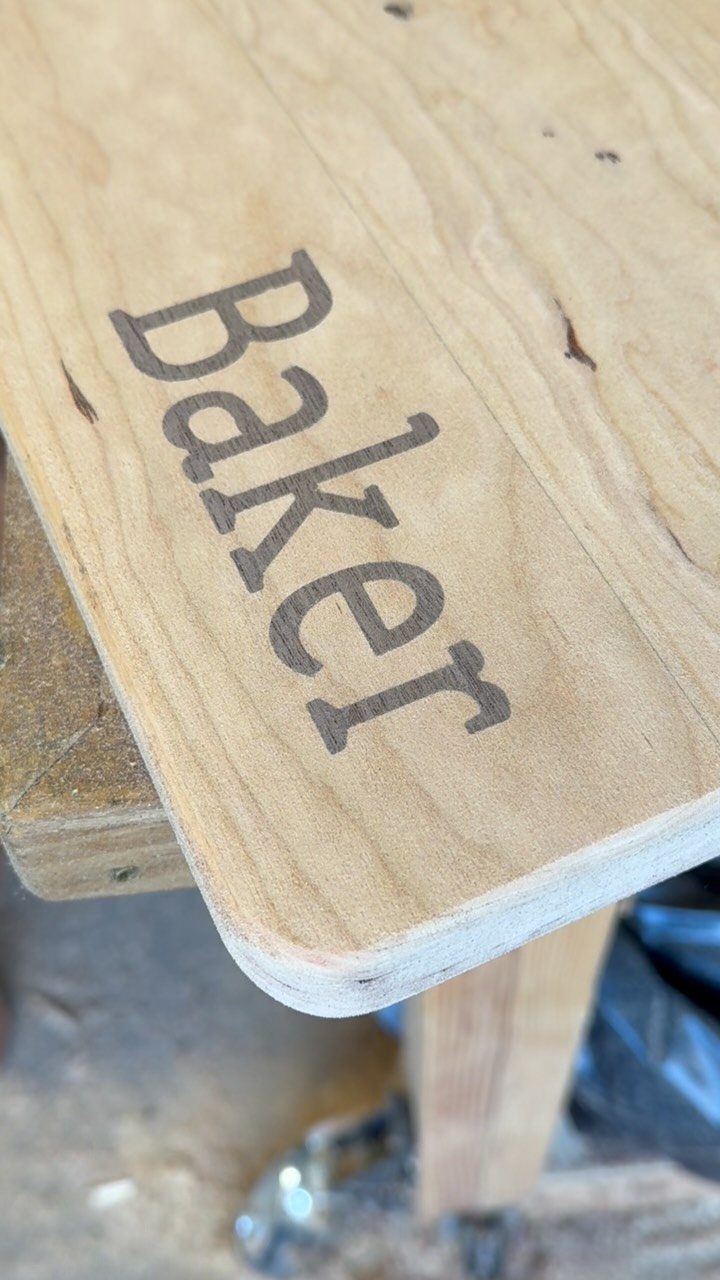
Block letters are the friendliest way to personalize a board, and dark wood in a light one reads from across the room.
A short name like "Baker" works well for inlay because the letters are easy to read at a glance and only 5 of them need to fit into the recess.
Print the word at full size, trace each letter onto the dark wood, and cut them out.
Then trace around every cut letter to mark its recess in the lighter board. Fit each one before gluing.
Choose a sturdy, simple typeface; curly script means thin, fragile strokes. Sand flush after the glue sets.
9. Star-shaped Crack Repair Inlays
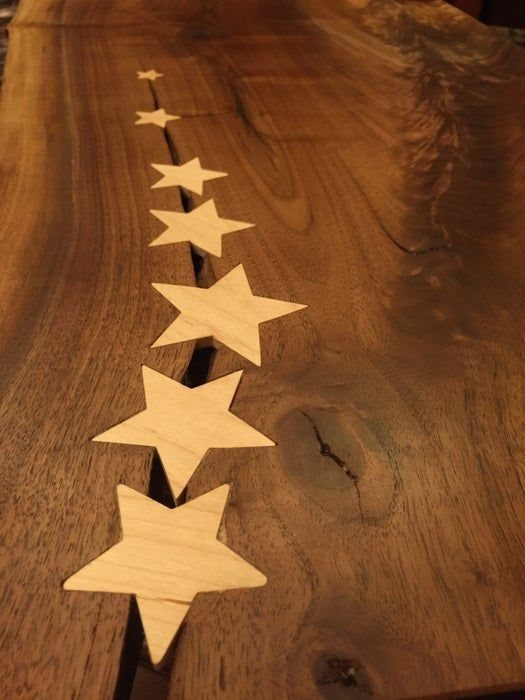
A split in a dark slab doesn’t have to be hidden. Light wooden stars set along the crack turn the flaw into a feature, and growing them in size gives the line a sense of movement.
Make a card stock template for a star, then scale it up for each step.
Trace each star over the crack, cut the recess, and fit the piece to it. Cutting the stars first and tracing them, as with any inlay, gives a tighter fit.
Pale wood against dark hides nothing, so take your time with the fit.
Frequently Asked Questions
What is marquetry in wood?
Marquetry is a decorative technique that builds a picture or pattern from thin wood veneers.
Each species brings its own grain and color, so a butterfly or a fox can be "painted" without any stain. A small first design keeps the seam count low, and fewer seams means fewer places for a gap to show.
Can you inlay metal into wood?
Yes, thin metal wire presses into narrow grooves cut along the lines of a design.
Copper looks especially good on brown wood, and it suits line-heavy shapes like birdcages. Shape the wire to the curves of the groove before you press it in, then file the ends level and sand them smooth after it sits.
What is another word for inlay?
Marquetry is the closest alternative term, and "embedding" also describes the idea of setting one material into another.
The two aren’t perfectly interchangeable: marquetry usually means pictures built from wood veneers, while inlay also covers shell, resin and metal set into recesses in a board.