Floor space decides which of these 4 benches is yours: the compact bench takes the least, the mobile one borrows the middle of the garage only when needed, and the built-in storage and table saw versions claim the most room but replace a cabinet or an outfeed stand in return.
Every one starts from the same frame of 6 2x4x8 boards.
1. Compact Workbench
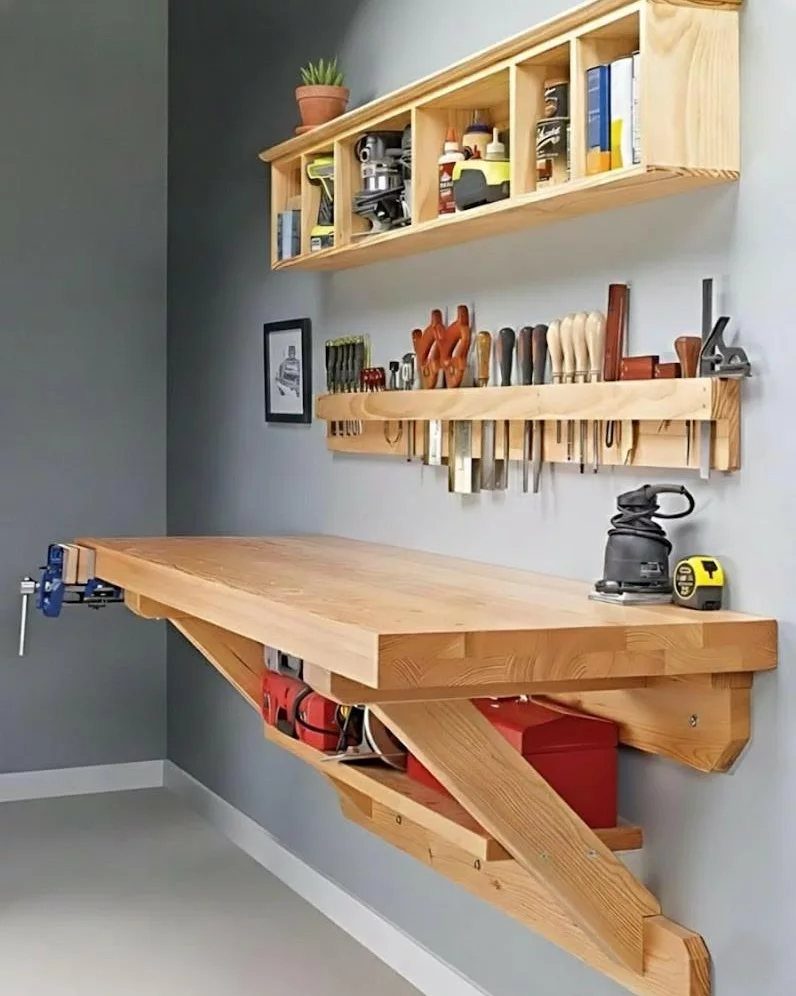
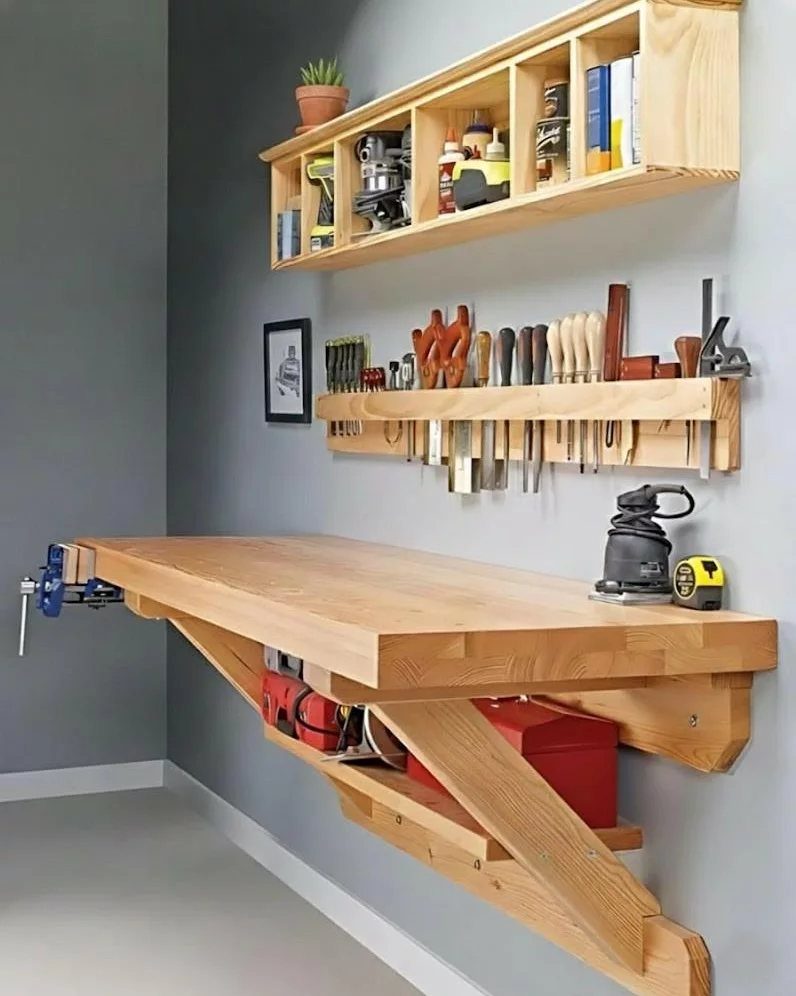
A wall-mounted bench gives up no floor at all, which is why it suits a small room better than any freestanding table. The top stays at working height, and the shelving and rack above it hold tools at arm’s reach.
I would anchor it into wall studs, not just drywall, since a sander and a vise-clamped board put steady load on the brackets. A toolbox parked underneath, as in this setup, uses space the bench would otherwise waste.
A compact bench has a shallower top than a standalone one, so large panels need a second support, like a sawhorse or a roller stand at the same height.
2. Mobile Workbench
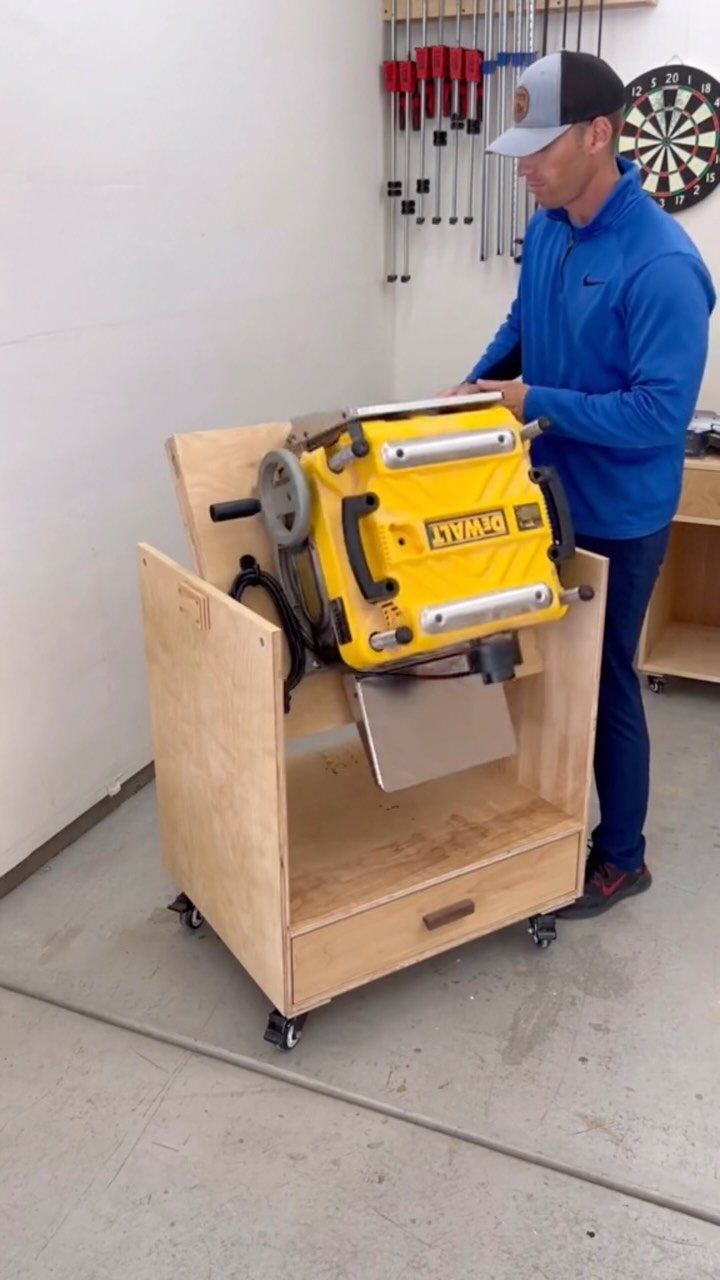
Wheels turn one bench into several: it can sit against the wall on a cramped day and roll to the middle of the garage when a project needs room on all sides.
Locking casters are the part I would not skimp on, because a bench that creeps while you cut is a nuisance at best.
Plywood keeps the cost low and the build within an afternoon.
3. Workbench with Built-in Storage
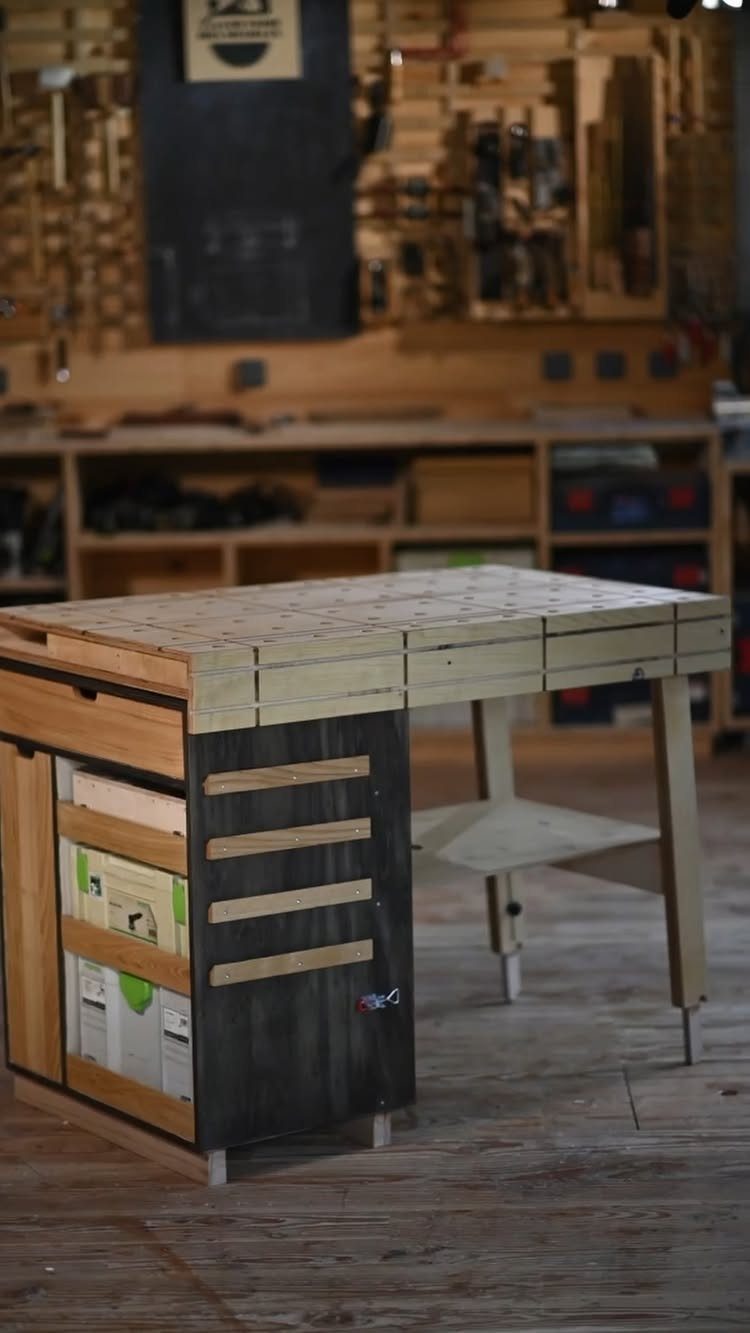
Drawers and shelves under a thick top put every hand tool within a step of the work, so nothing needs a separate cabinet taking up floor space.
A thick top also gives you something solid to clamp, plane and hammer against.
I would sort the drawers by task, with measuring and marking tools in one and fasteners in another, so you never dig for anything mid-cut.
This is the heaviest build of the four, and the cost in lumber and time is higher, but it replaces a bench and a storage cabinet at once.
4. Workbench with Integrated Table Saw
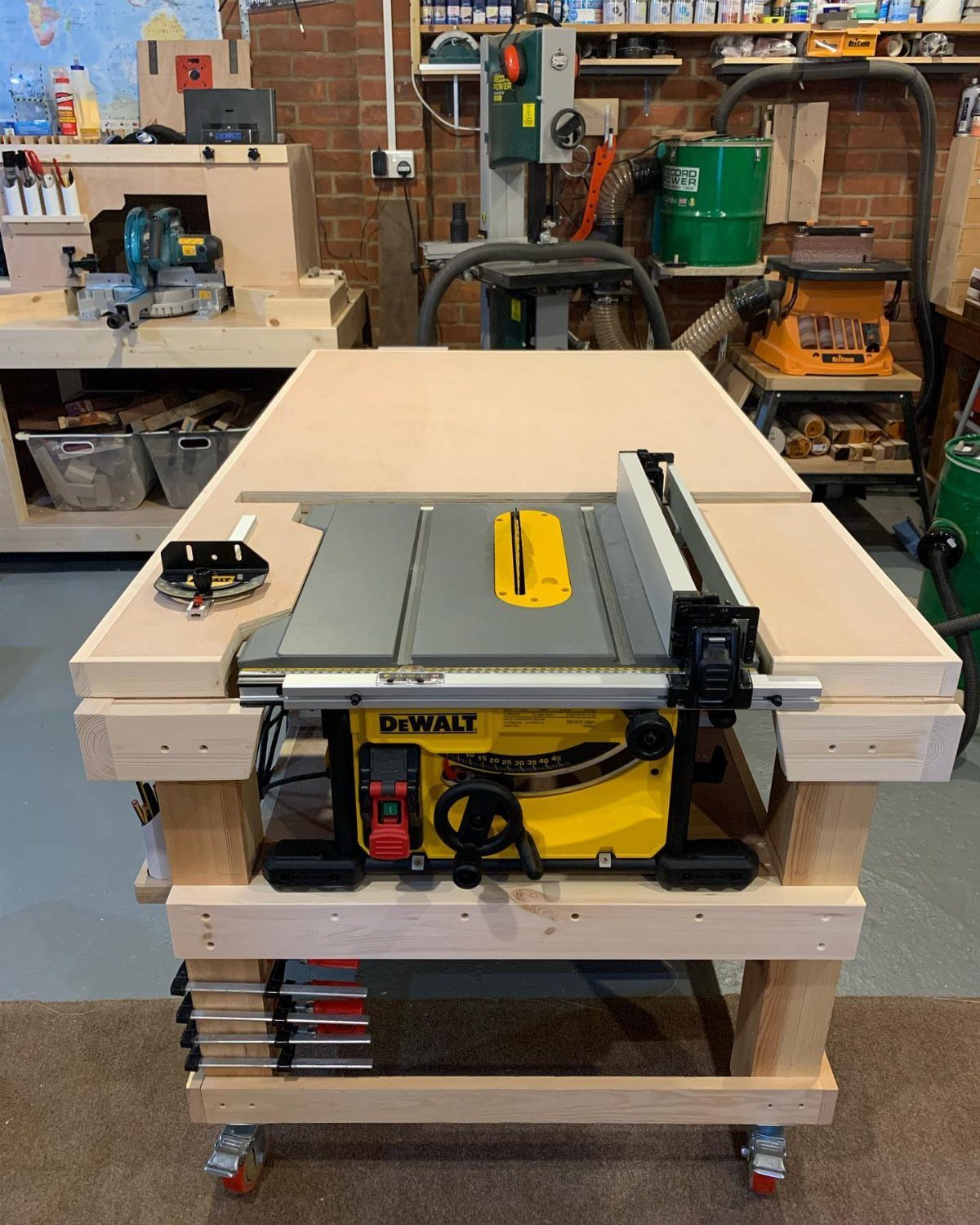
Setting a table saw flush with the bench surface lets the bench itself act as the outfeed table, so long boards ride out across the top instead of tipping off the back.
That saves buying a separate outfeed stand and the room it would occupy.
Flush matters: get the saw top level with the bench, or a board will catch at the seam. Casters, as on this build, let you roll the whole unit out for cutting and tuck it away afterward.
Surrounding it with storage bins keeps blades and accessories close.
Materials and Tools
A basic bench frame needs only 6 2x4x8 boards and one 4’x8′ sheet of ¾" plywood. Add 3" casters (4 of them) if you want it to roll.
For fasteners, buy a 50-count box of 2½" pocket hole screws, a 50-count box of 1¼" pocket hole screws, a 1 lb box of 1¼" wood screws, and 8 3" wood screws.
Tools are a circular saw, a miter saw, a pocket hole jig and a drill/driver.
A miter saw is a convenience, and a circular saw with a clamped guide can handle the same cuts. A rip guide is optional too.
Cabinet-grade birch plywood gives a smooth, durable top and shelves that look good. A cheaper plywood works if you want to save money.
Pick the straightest, driest 2x4s in the pile, since a warped board shows up in every joint. Before you build, check every dimension on the cut list, because changing one measurement can shift several other parts.
Try the cut on scrap first, and wear safety glasses.
Beginner-Friendly Projects
A simple workbench is a good first woodworking project. It needs few tools and goes together in just a few hours, so it fits in an afternoon.
Choose a plan sized for the tools and projects you actually have, not the biggest bench you can picture. A bench you finish and use beats an ambitious one that stalls halfway.
Most beginner plans lean on a drill, a circular saw, a tape measure, a speed square and clamps. Start with those, and add a miter saw or pocket hole jig only when a build calls for one.
Frequently Asked Questions
Is it cheaper to build or buy a small workbench?
Building usually costs less, and you get to size it to your space. One example build with lumber, screws and casters ran roughly $135 in materials as of March 2025, while store-bought benches of similar size started around $200.
The cheapest store-bought ones had no casters, so they couldn’t roll. Lumber prices vary by location, so check your local yard before counting on that figure.
Can a lightweight workbench handle heavy-duty projects?
A steel or aluminum frame can carry a surprising amount of work, because those metals resist flex and wear far better than a thin softwood build.
Look up the rated load for the exact bench before buying, since the number varies a lot between models.
What is the best space saving workbench for a small garage?
A wall-mounted bench wins for a small room because it takes no floor space at all.
If you need to work on all sides of a project, a rolling bench on locking casters can sit against the wall and move to the middle when needed.
Can a beginner build a workbench in an afternoon?
Yes. A simple bench needs few tools and goes together in a few hours.