The stamp on the pallet decides which of these projects you can build, and it matters more than skill or tools: "HT" means heat-treated and safe to bring home, while "MB" means methyl bromide, so those stay behind.
Past that, the list runs from a storage box that is mostly sides, a bottom and a lot of screws, to a built-in reading nook that takes more than an afternoon.
Whatever you pick, sand with 80 grit first and finish with 120.
1. Pallet Coffee Table
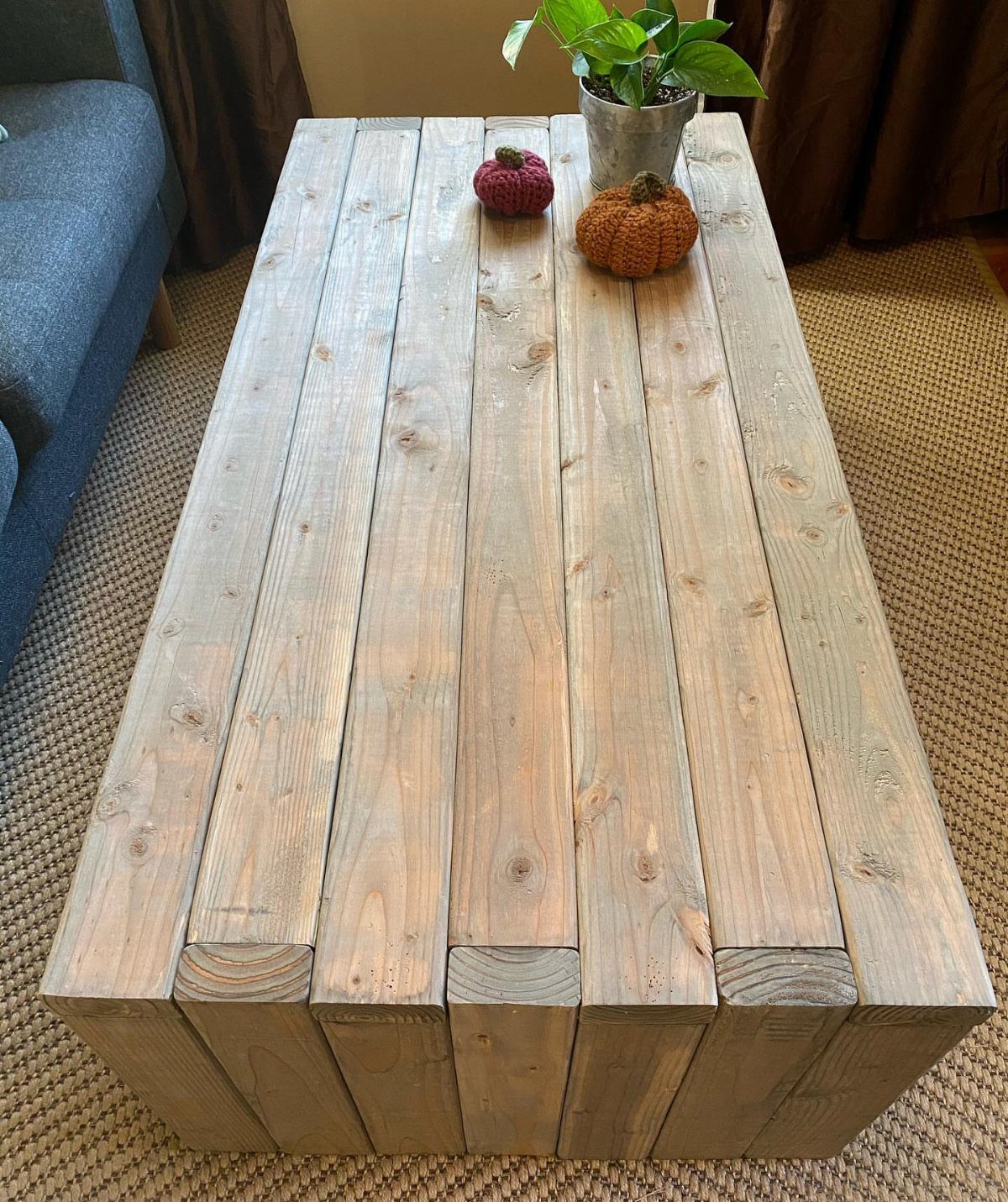
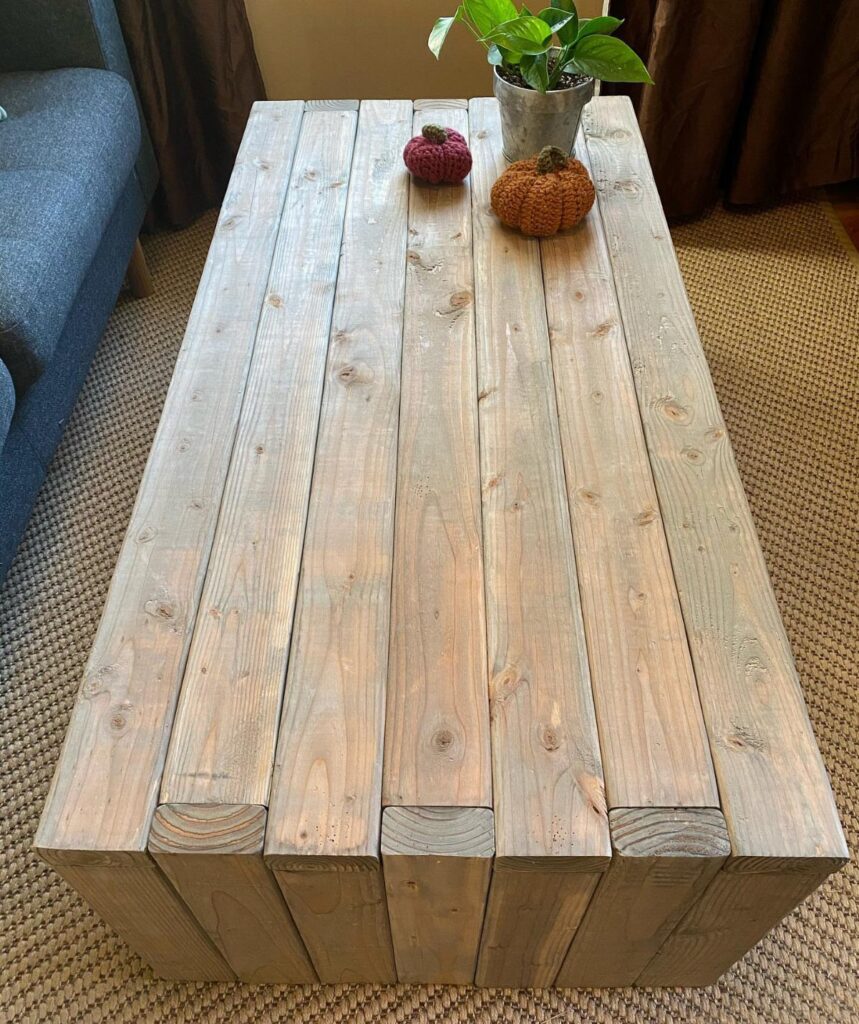
A grey-washed finish is what gives this table its weathered, driftwood look, and it suits pallet planks well because the grain stays visible through the thin color.
Thinned paint or a wash stain does the job, and a couple of coats on sanded boards is cheap.
Sand the top smooth before you wash it. A coffee table gets mugs and elbows, so a plain, even surface matters more than a perfectly rustic one.
2. Pallet Bookshelf
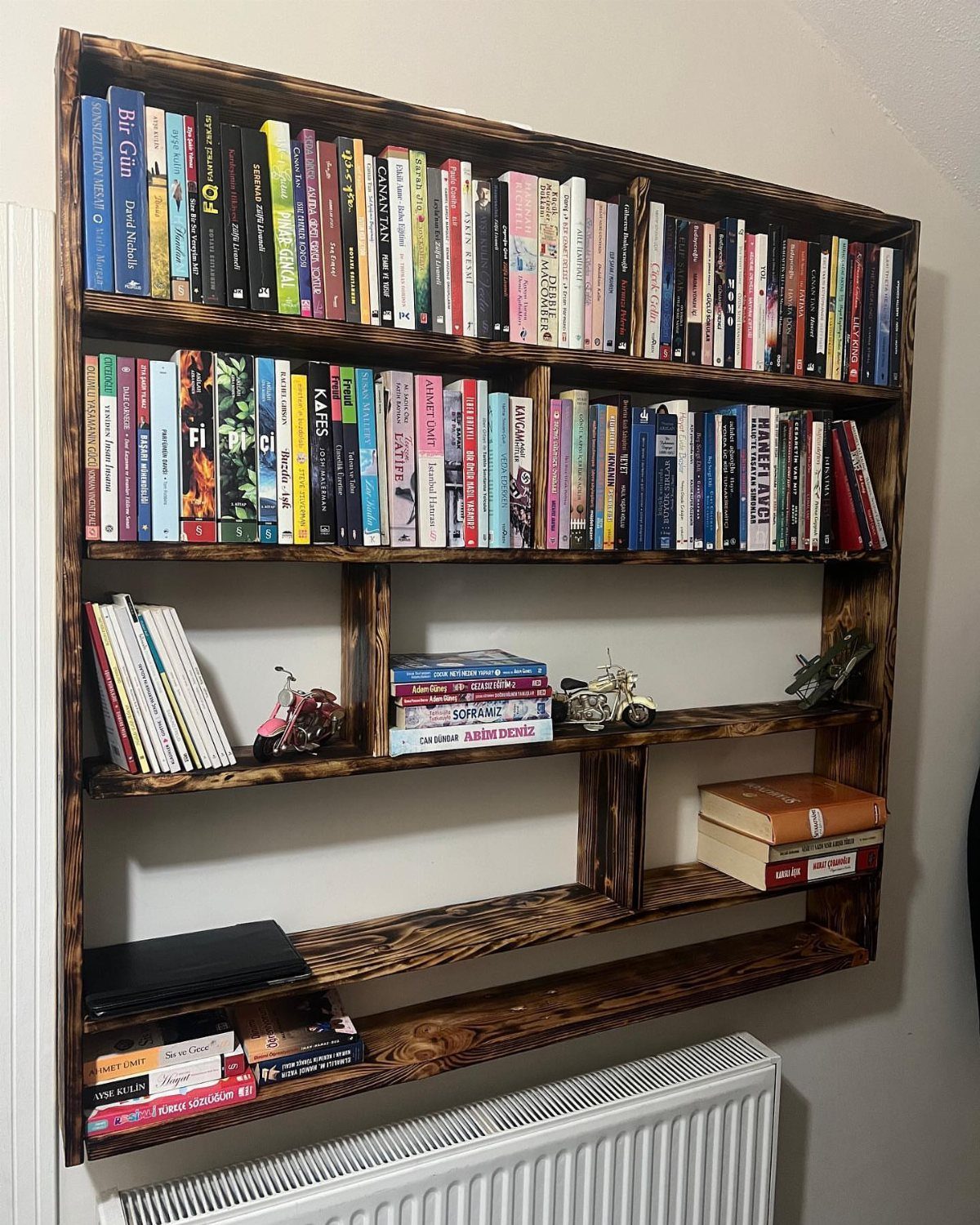
Wall-mounted shelves take up no floor space, which is why a pallet bookshelf makes sense in a tight spot like the strip above a radiator. Dark stain also hides the mismatched tones you get when boards come from different pallets.
Books are heavy, so screw the frame into studs rather than relying on drywall anchors. Sand the edges well, since you’ll be sliding books across them constantly.
3. Pallet Couch
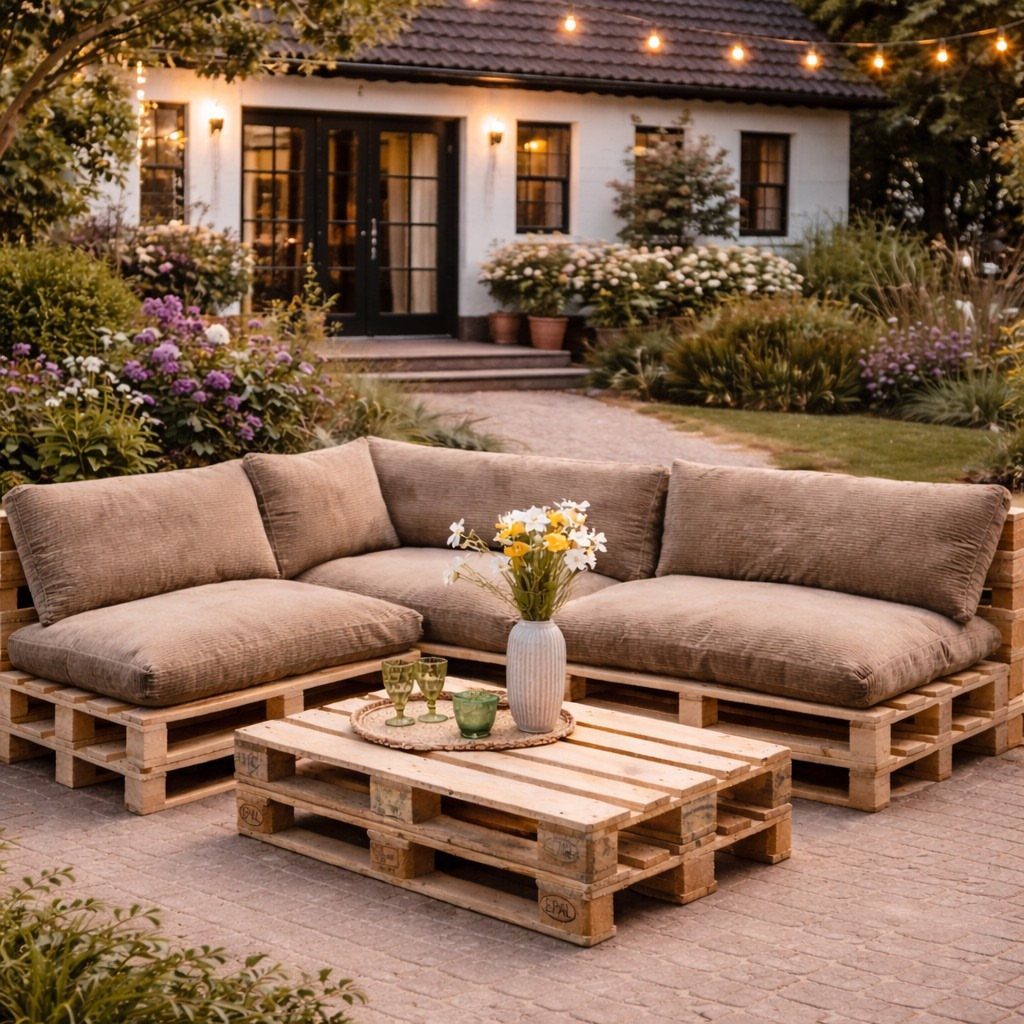
Stacking pallets into an L-shaped sectional gives you seating for a patio at the price of cushions and a few screws. Matching the layout with a low pallet table, as here, keeps the setup feeling planned rather than piled together.
Brown cushions are a sensible pick outdoors because they hide dirt better than pale ones. Sand every surface your legs and arms will touch; pallet splinters are the real hazard.
4. Pallet Towel Rack
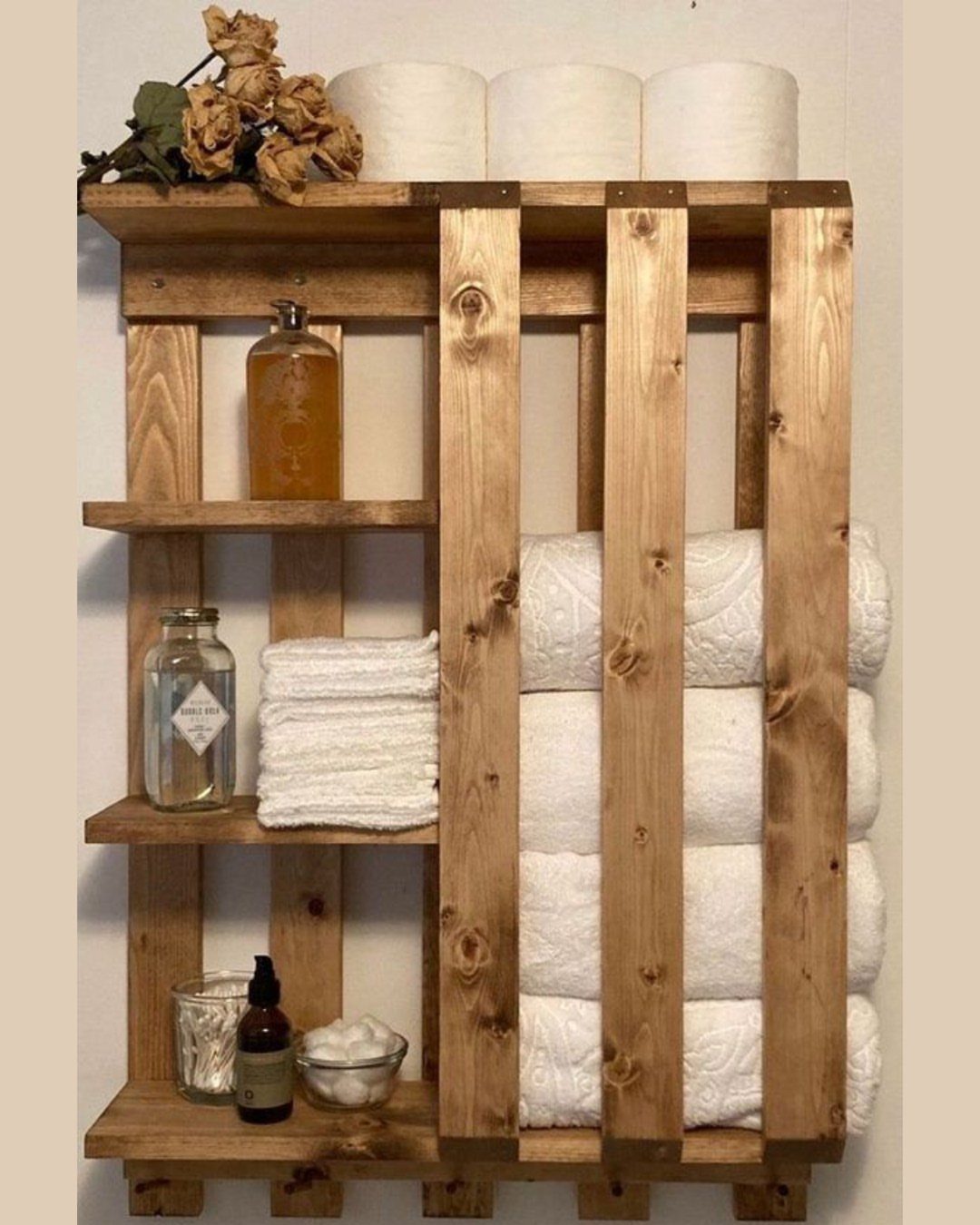
Slats already have gaps and a ready-made frame, so a pallet towel rack is mostly a matter of cutting a section and hanging it.
Shelves on the rack hold the small bathroom things, like toilet paper and a soap dispenser, off the counter.
Keep the wood natural for a rustic look, or seal it if the bathroom gets steamy. Mount it on the wall with screws sized for the load, and check that it hangs level before loading it.
5. Pallet Planter
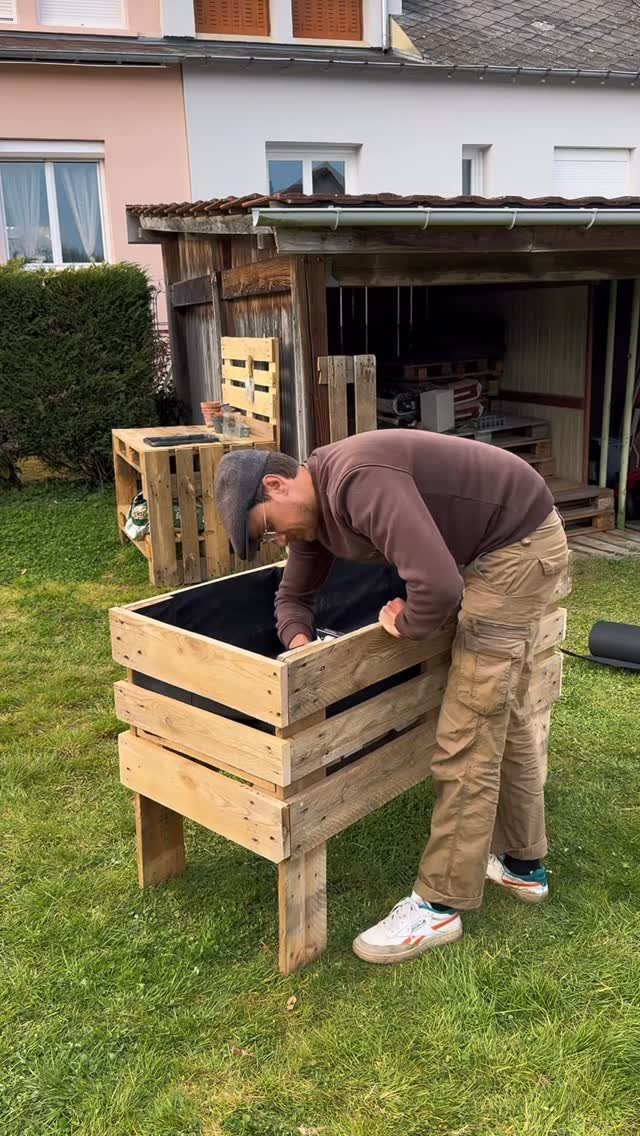
A square planter built from pallet boards is one of the quickest ways to use the wood, and it sits right on the grass without any foundation work. Cut the boards to matching lengths so the corners meet cleanly.
Pale pallet boards, especially pine left unstained or given a thin coat of whitewash, set off plain green foliage well, so I’d skip bold colors and let the plants do the work.
Line the inside with plastic or landscape fabric to slow rot, and leave drainage so water doesn’t pool.
6. Pallet Wall Clock
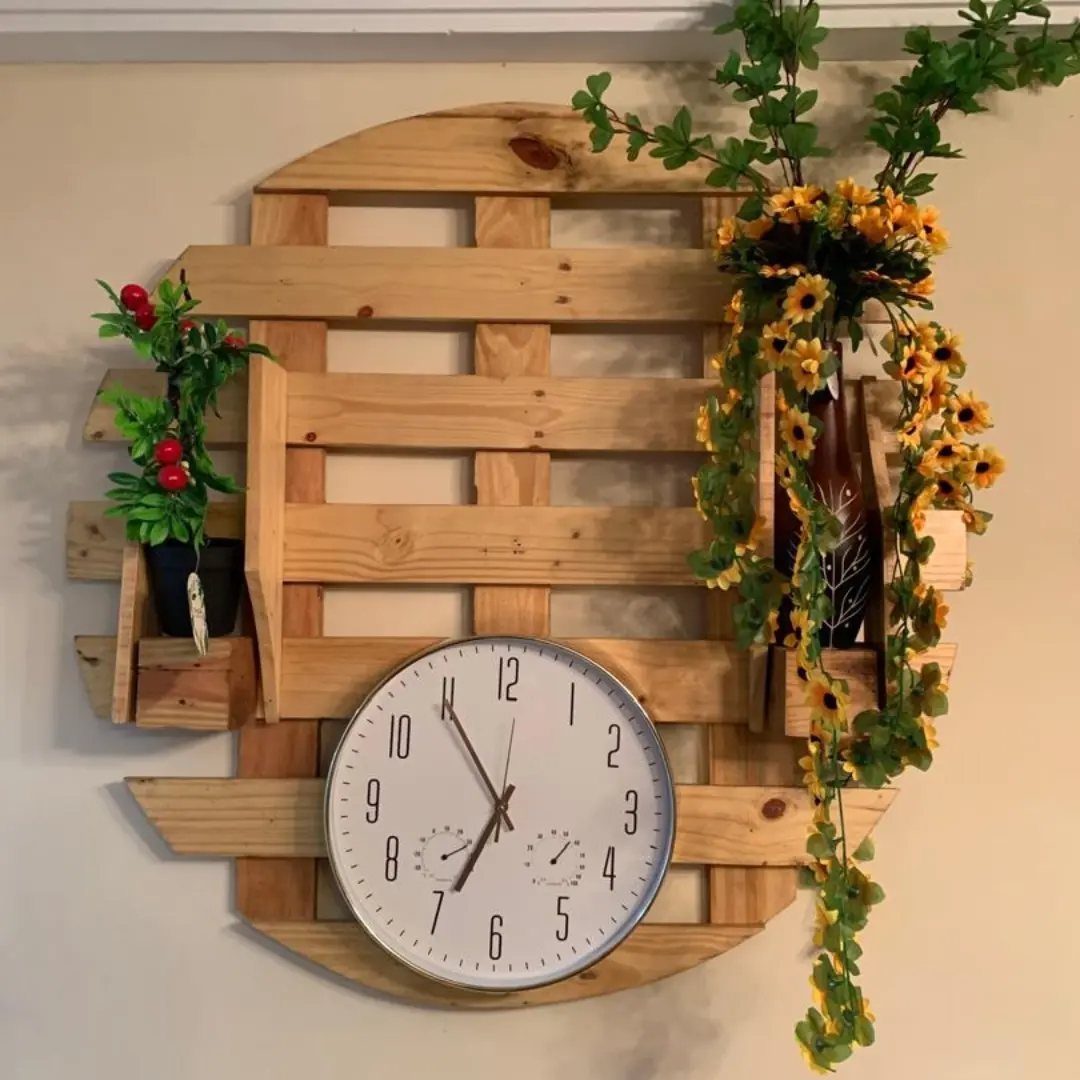
A round clock face set into a circular pallet backing makes the wood the star, and the small shelves on each side give you room for a few plants. Faux greenery is the easy choice because it needs no watering.
Buy a clock movement kit and drill a center hole to fit its shaft. Cut the circle with a jigsaw and sand the rim smooth before you mount anything.
7. Pallet Vertical Herb Garden
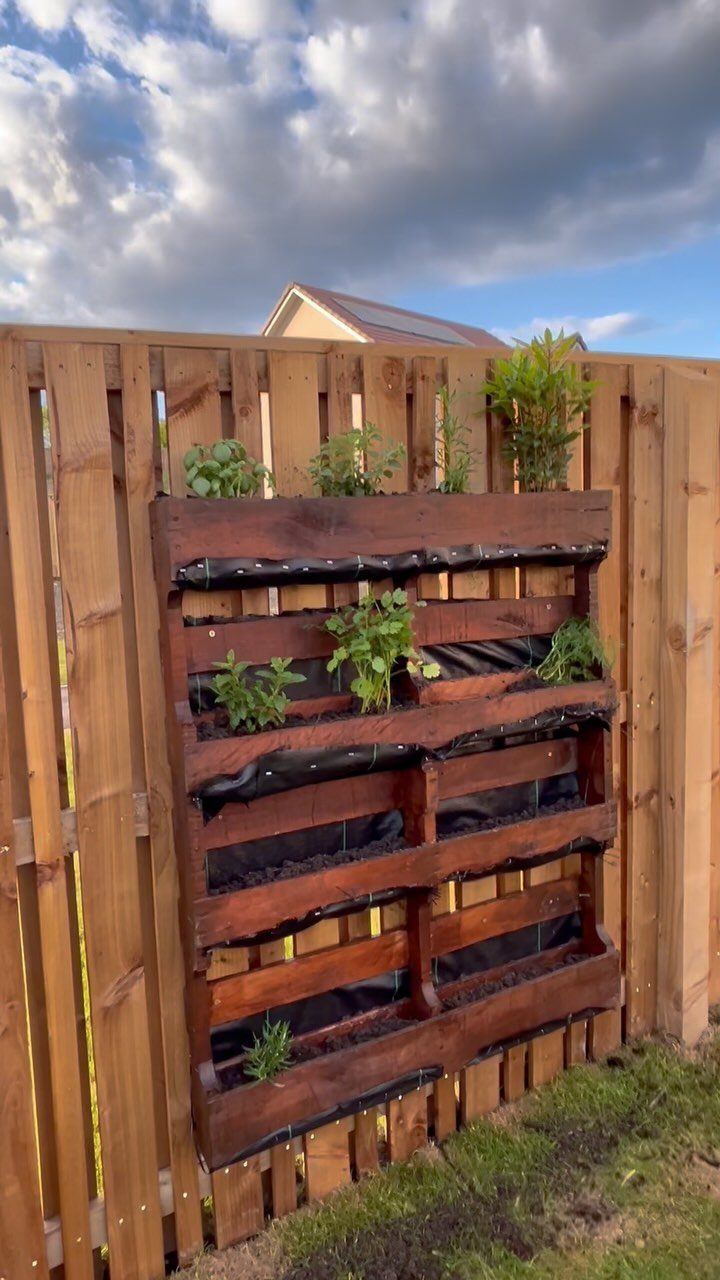
A pallet stood upright against a fence already has its pockets: the gaps between slats hold soil and herbs, so a vertical garden takes almost no building. A dark stain, as on this one, makes the green leaves stand out.
Staple landscape fabric behind and under the slat pockets so soil stays put.
Herbs stay small and shallow-rooted, so a few inches of soil per pocket is plenty; screw the pallet to the fence so a watered, heavy planter can’t tip.
8. Pallet Pumpkins
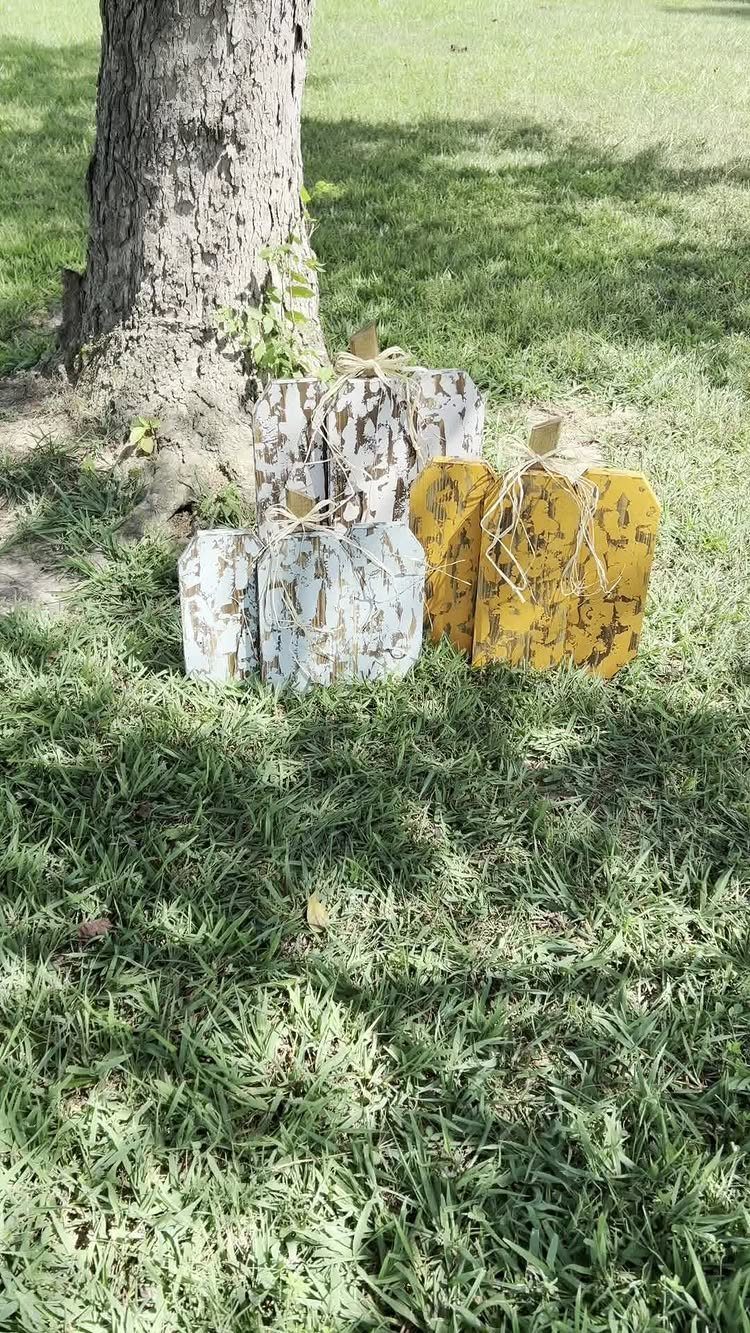
Pumpkins cut from pallet boards never rot, never attract squirrels, and come out again every fall. White and yellow paint, as here, keeps them bright against grass or a porch step.
The maker of this set says scrap pallet wood works, and fence pickets would too.
Pickets are usually cleaner and more uniform, so I’d pick them if scrap boards are rough. Sand the edges, paint, and knot twine around the stem for the bow.
9. DIY Pallet Bed Frame
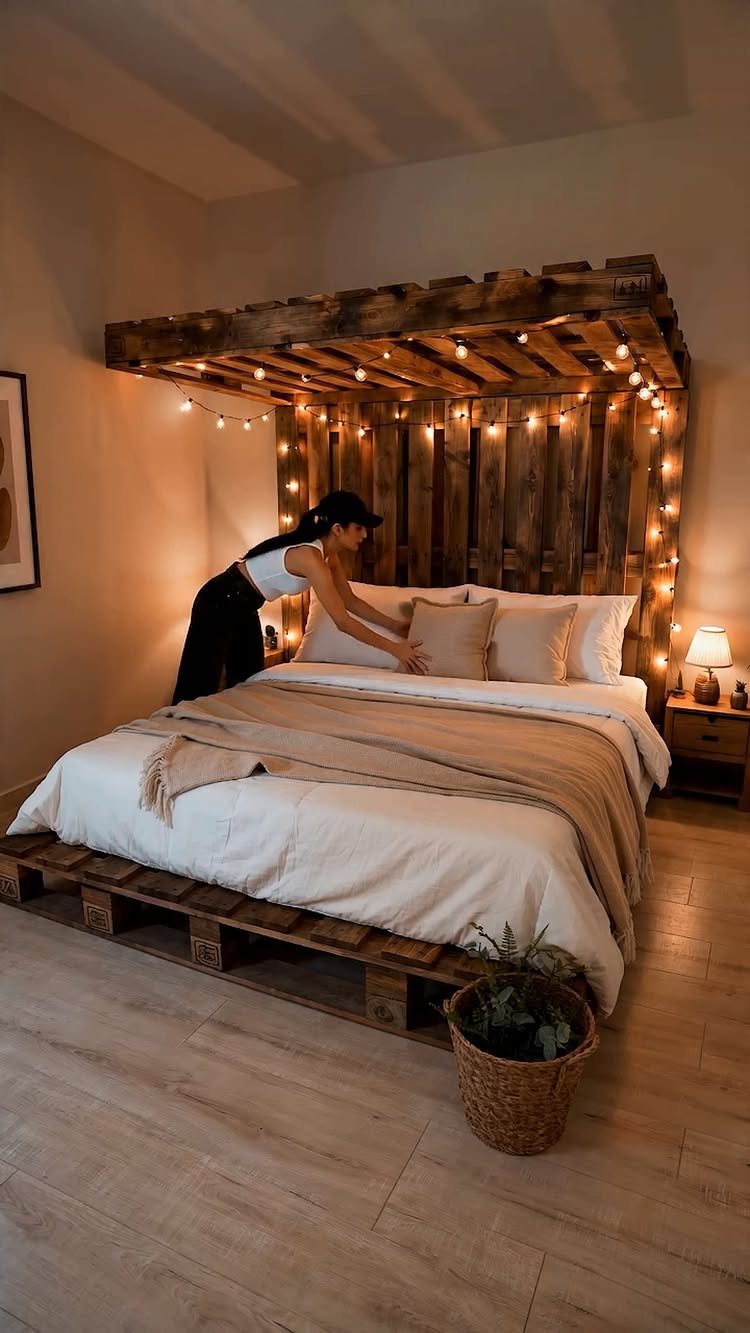
A platform bed built from pallets sits low and solid, and the headboard can be the same stacked wood so the whole piece reads as one build.
Pallets are cheap, often free from a local business, so a bed frame saves more money than almost anything else you can build from them.
Sand the top and sides thoroughly, since sheets will snag on any splinter. A canopy strung with lights is an easy add-on that costs little and makes the bed feel finished.
10. Pallet Farmhouse Sign
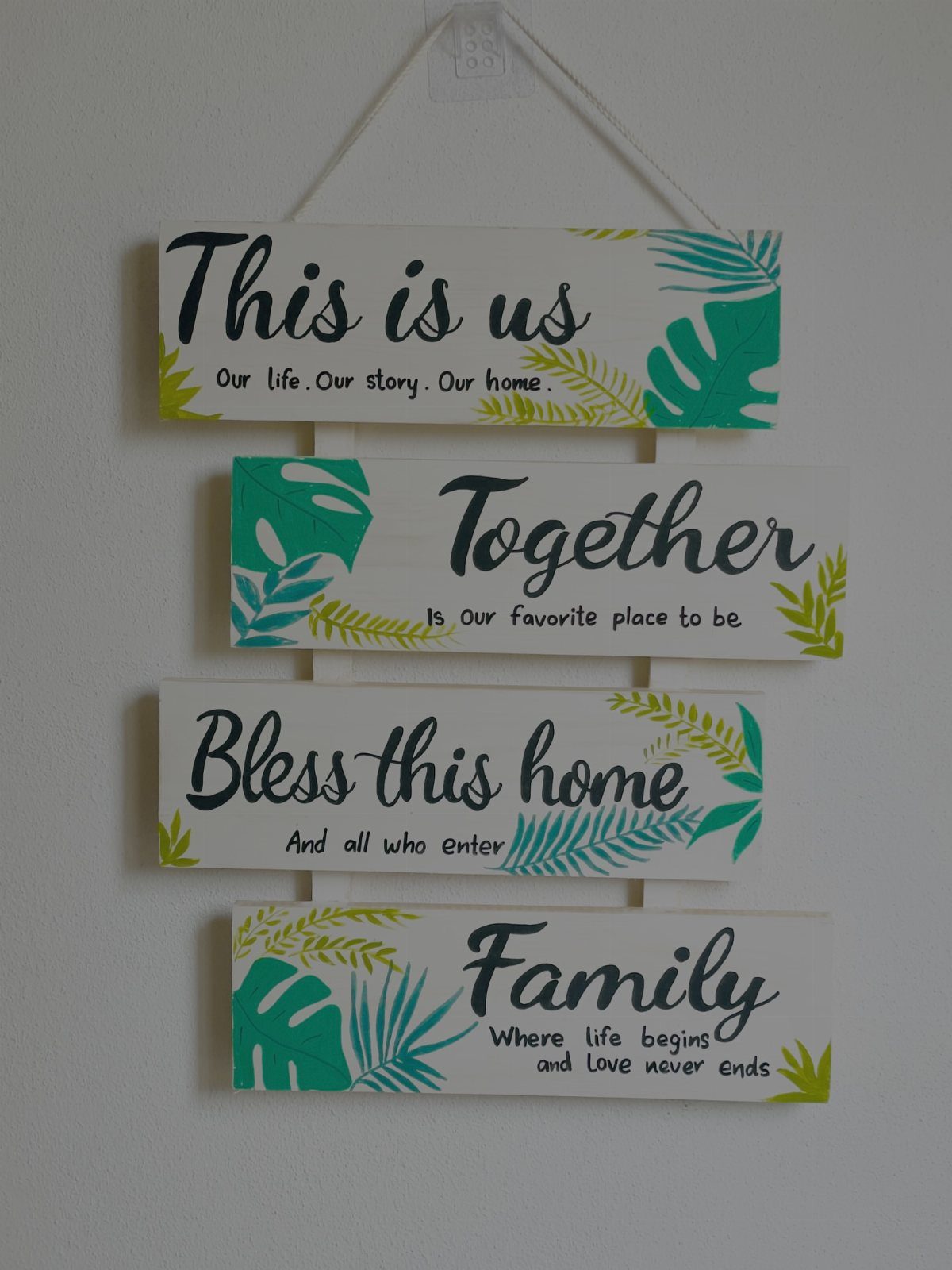
4 stacked planks make a sign with room for several short phrases, and painting them white lets painted leaves and dark lettering stand out. Pallet boards give you the plank look without buying lumber.
Paint the whole board white first and let it dry before adding letters.
Short phrases read best from across a room, so keep the wording tight. Use a stencil if your handwriting isn’t steady.
11. Pallet Gingerbread Man
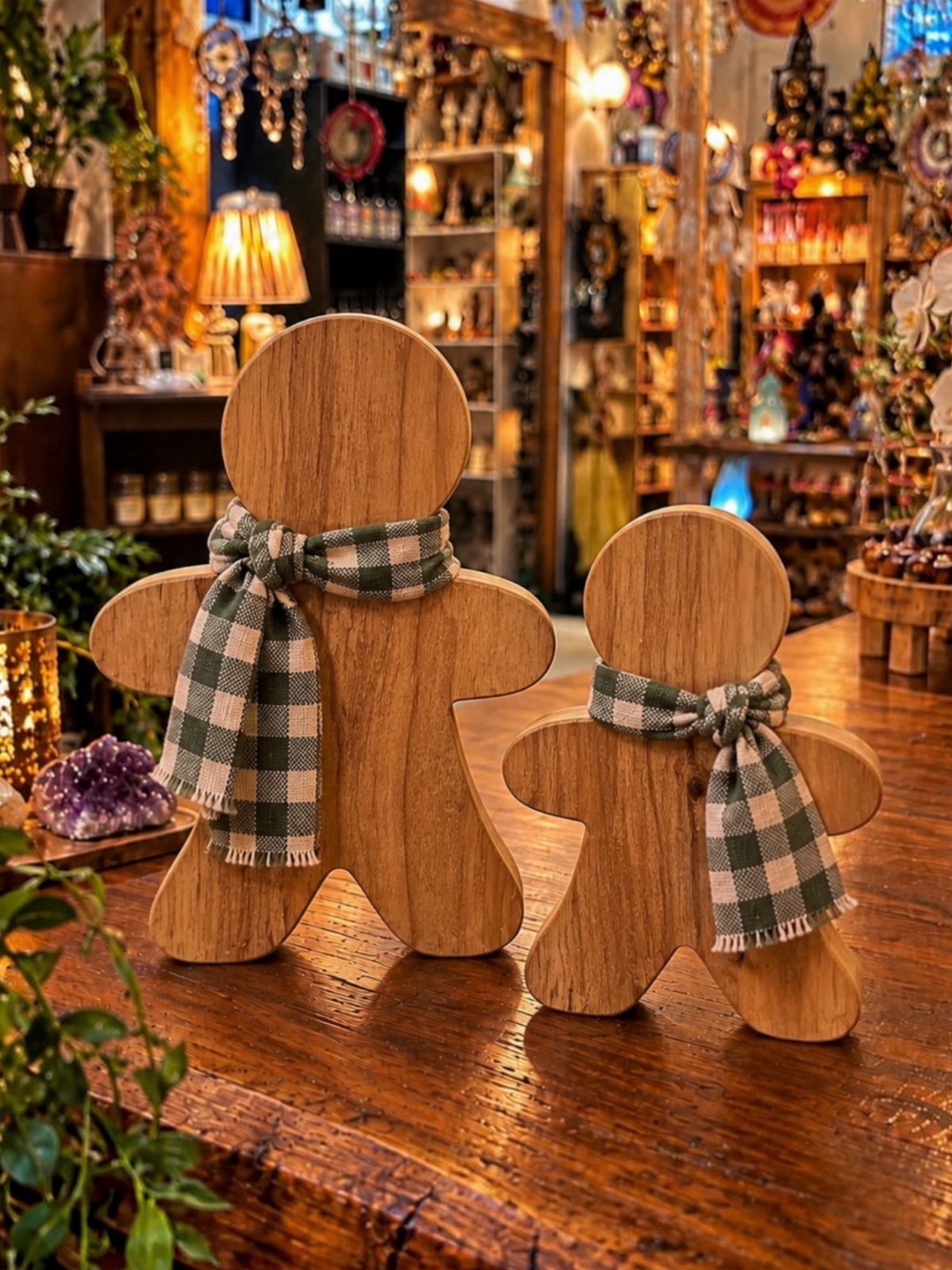
Cut a gingerbread man outline from a pallet board with a jigsaw, and a scarf does most of the decorating. Making 2 sizes, as here, gives you a pair that looks good on a shelf or table.
Trace the shape from a paper template so both figures match.
Sand the edges, then paint or stain the body. Fabric scraps tied at the neck are the cheapest way to add a plaid scarf.
12. Pallet Snowman
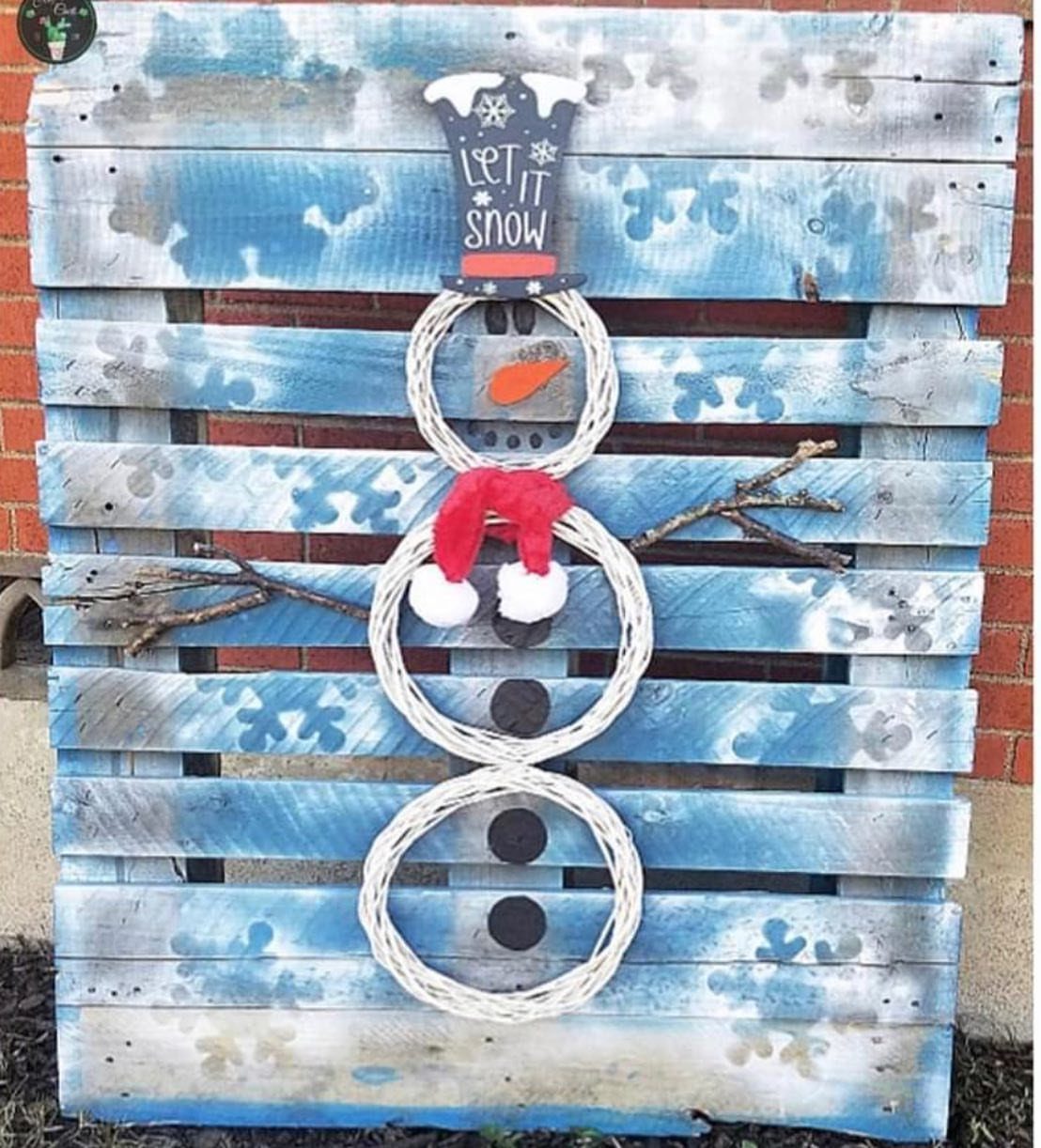
A snowman built from white rings and branches on a blue-painted pallet backdrop turns one pallet into a yard display. The blue makes white show up clearly, so it’s the choice I’d copy.
Paint the pallet before attaching anything, since brushing around finished pieces is tedious.
Add a hat with "Let it snow" lettered on it and tie a red scarf for color. Outdoors, seal the paint so it lasts the season.
13. Pallet Christmas Tree
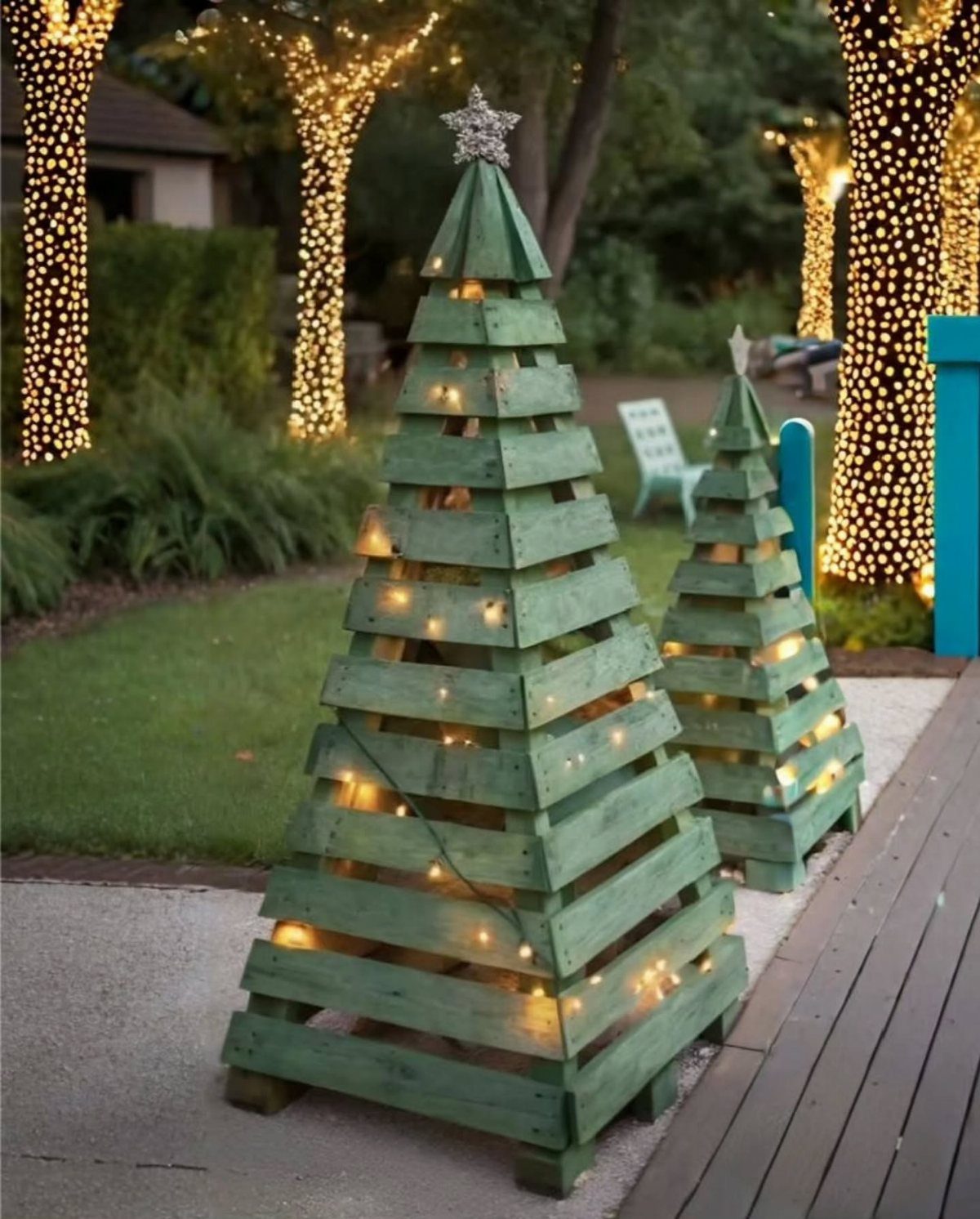
Stacked slats cut shorter toward the top give a cone that reads as a tree from across the yard, and green paint does the rest.
String lights wound around it and a star on the point finish the job for very little money.
Cut the slats in graduated lengths and sand the ends before painting. Two trees in different heights, as here, look better than one lonely tree.
14. Pallet Fence
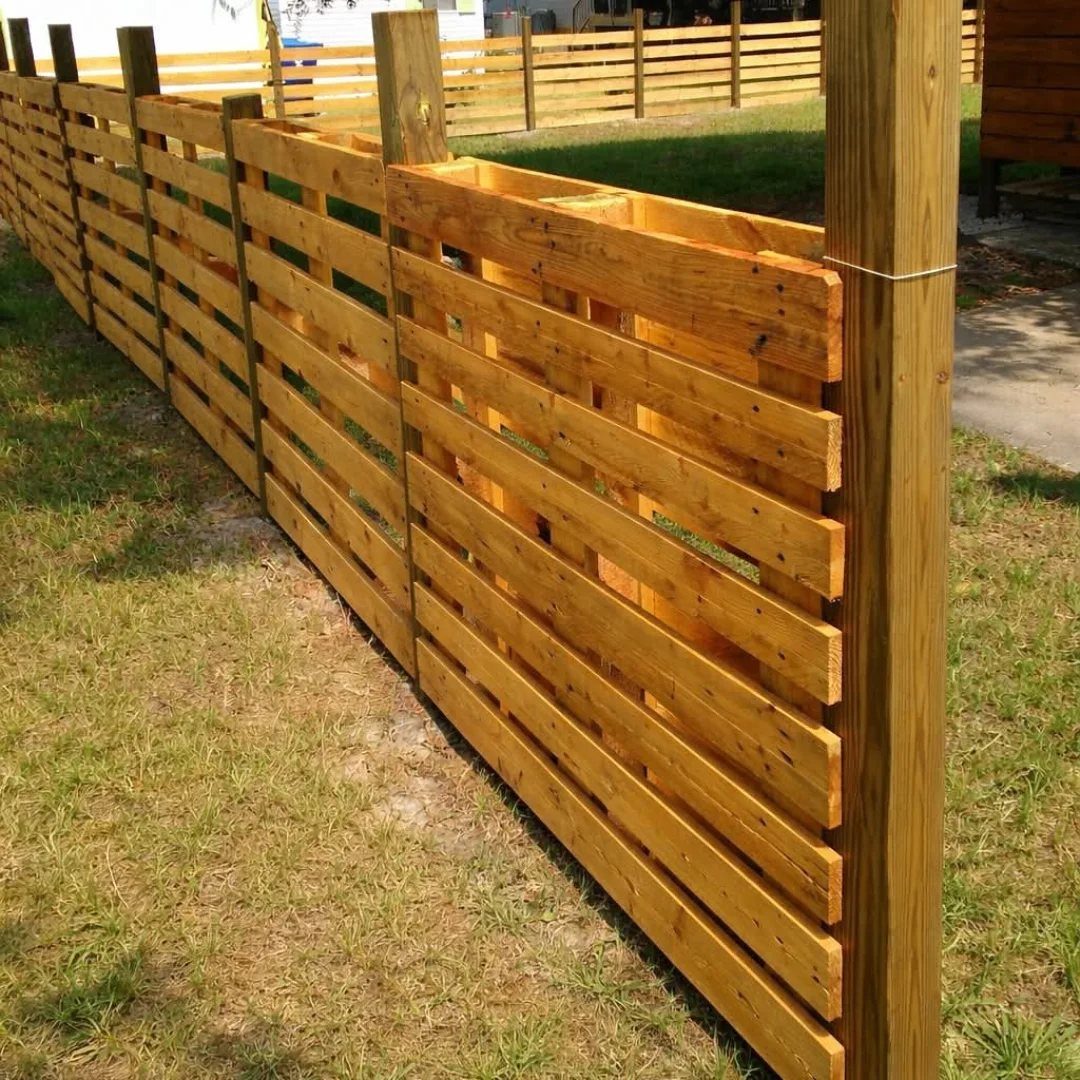
Pallet slats nailed horizontally between thick posts make a low yard fence for close to nothing, since the boards are the whole material cost. Keep the gaps between slats even so it looks planned.
Set the posts first and fasten the slats to them afterward, so the spacing is easy to adjust. A fence stays outside year-round, so I’d seal the wood or stain it before it goes up.
15. Pallet Garden Tool Organizer
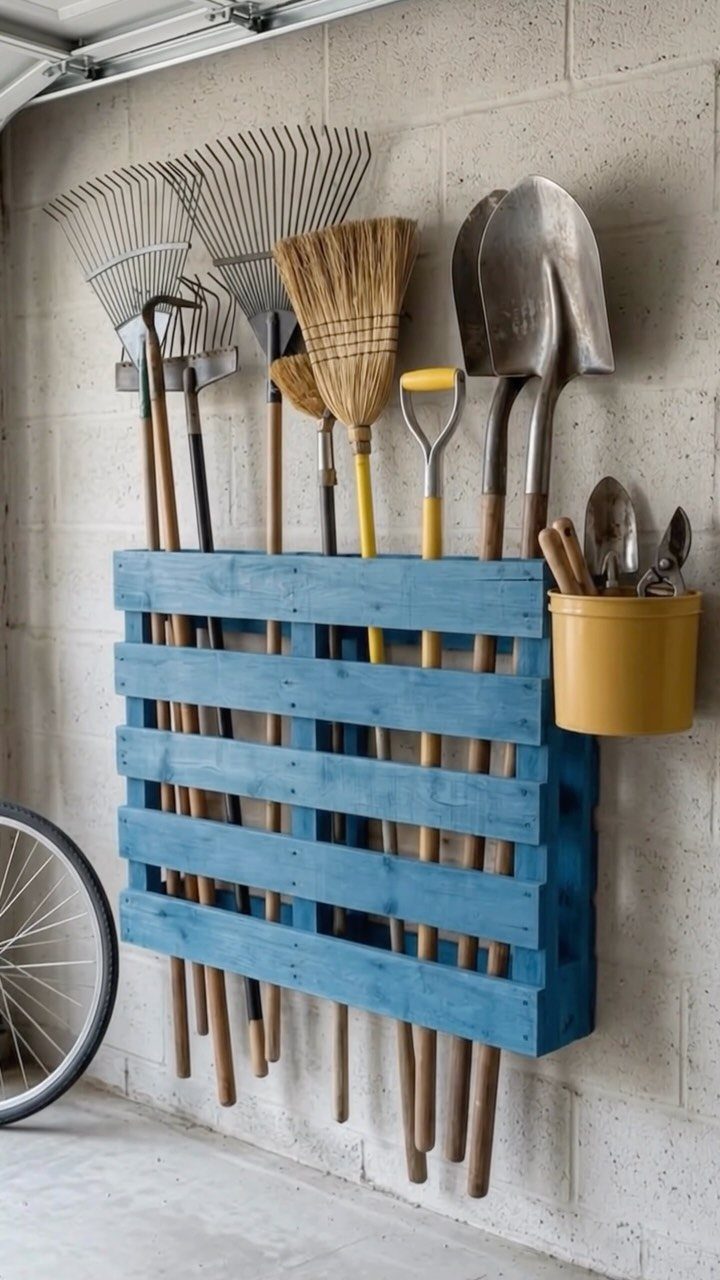
Mounting one pallet flat on a wall lets rakes, shovels and a broom hang upright by their handles, off the floor and out of the way. Blue paint brightens a dull cinder block wall, and I’d copy that choice.
Paint the pallet before hanging it, then anchor it into the wall with masonry screws.
Garden tools are heavy, so use several fasteners. A bucket fixed to the side holds trowels and other small tools.
16. Pallet Wood Accent Wall
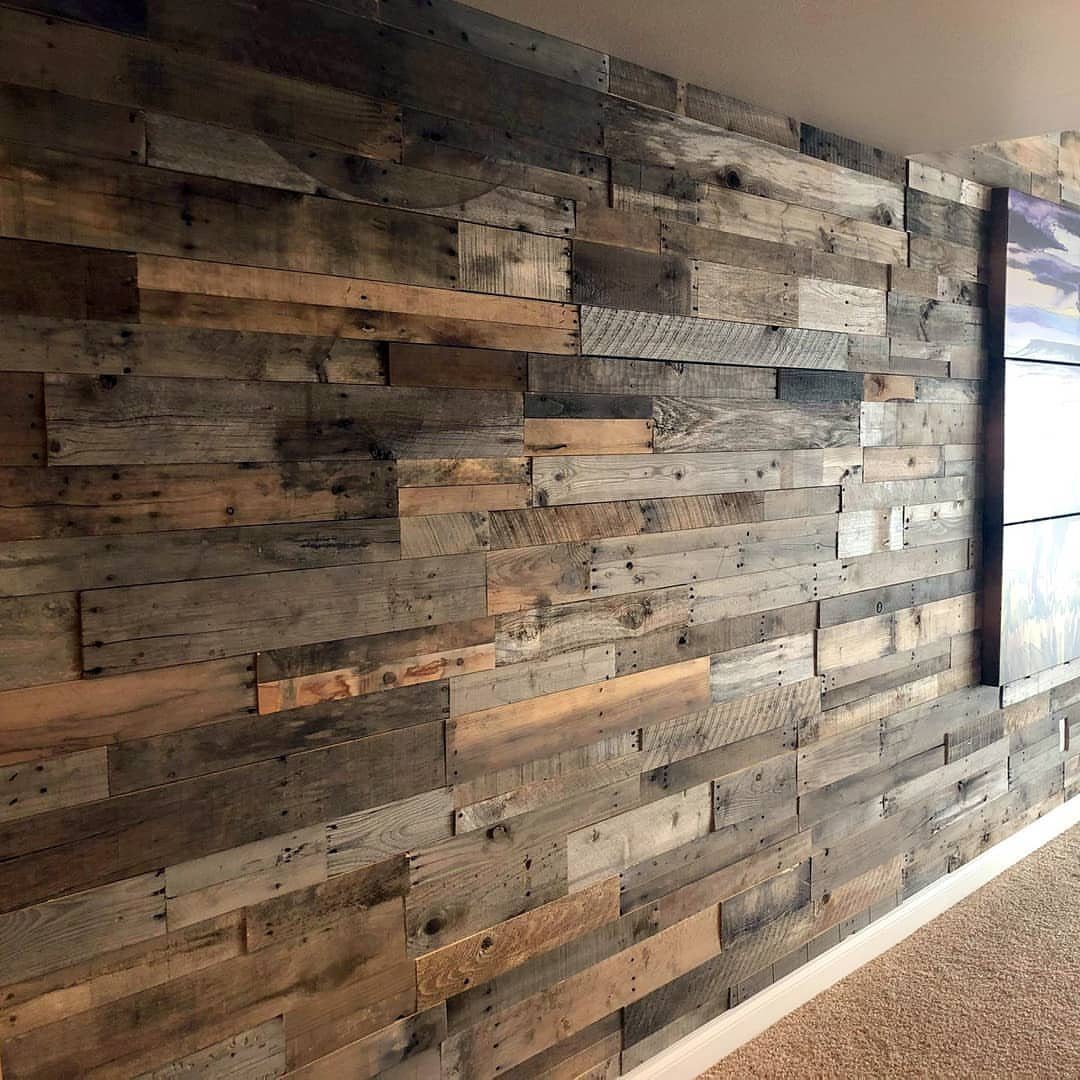
Weathered planks in mixed tones and lengths are the whole charm of a pallet accent wall, so don’t sand away the color variation. Lay the boards horizontally and stagger the joints so the seams don’t line up.
Sort the planks by shade before you nail them up, and spread the darkest ones around instead of grouping them. Pallet boards vary in thickness, so test-fit a few first.
17. Built-in Pallet Reading Nook
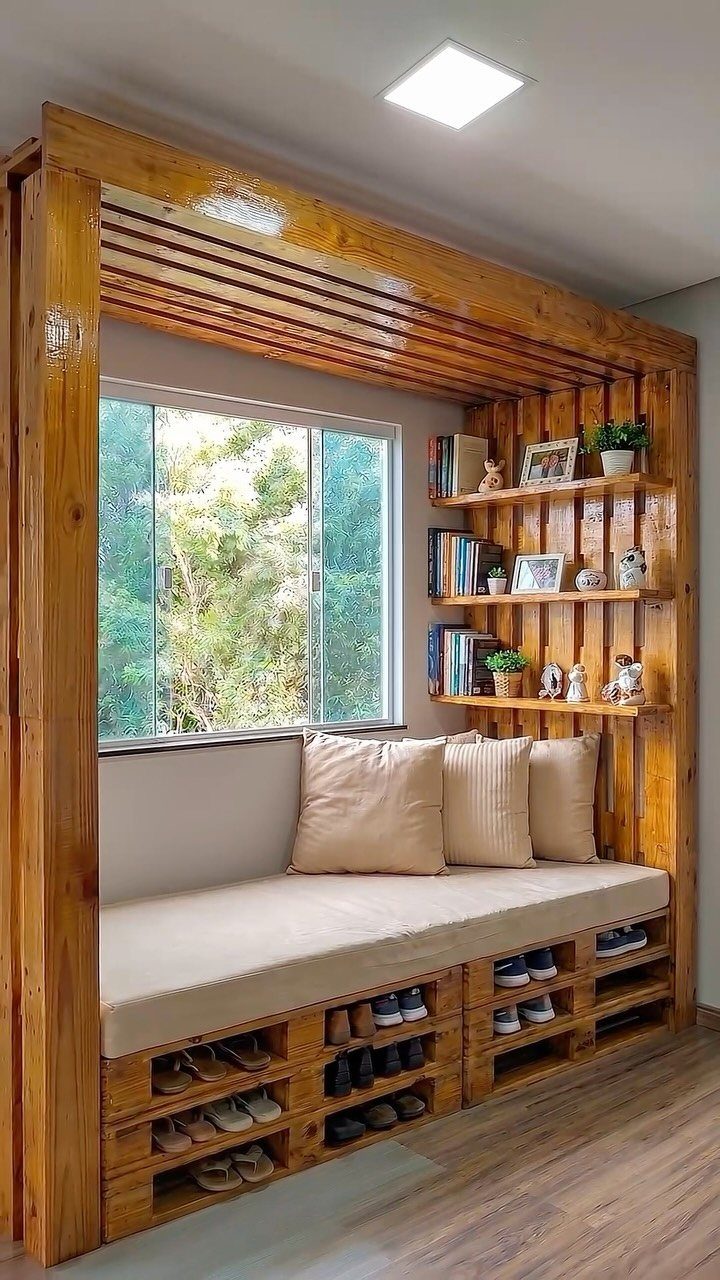
A window seat with shoe cubbies underneath and shelves above packs three jobs into one corner. Pallet wood works well here because the slats become the bench frame, cubby dividers and shelves.
Run sandpaper over every board until it feels smooth, because bare legs, socks and shoes will drag across that surface daily.
Beige cushions keep the polished wood looking warm. This is the biggest build on this list, so plan on more than an afternoon.
18. Pallet Patio Deck Platform
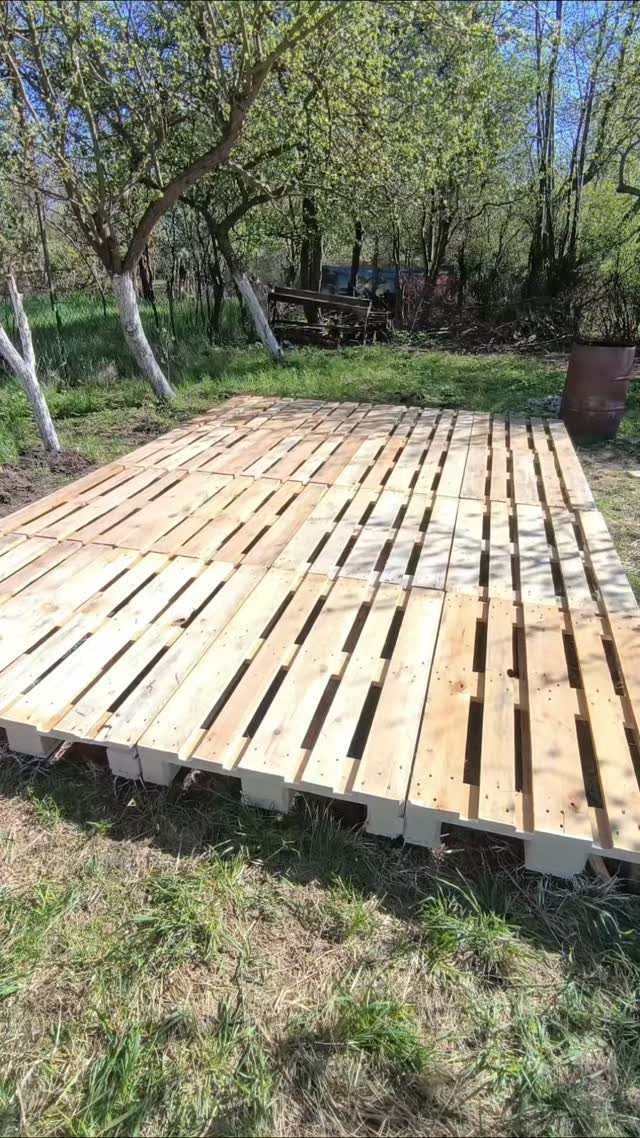
Laying pallets flat on a lawn gives you a level surface for a chair and table with no digging or concrete. Pick pallets of the same size and butt them tight so the surface reads as one platform.
Sand the slat tops so bare feet are safe.
Grass beneath will stay damp, so seal the wood. Light-colored slats, as here, brighten a shaded garden spot.
19. Slatted Pallet Bench
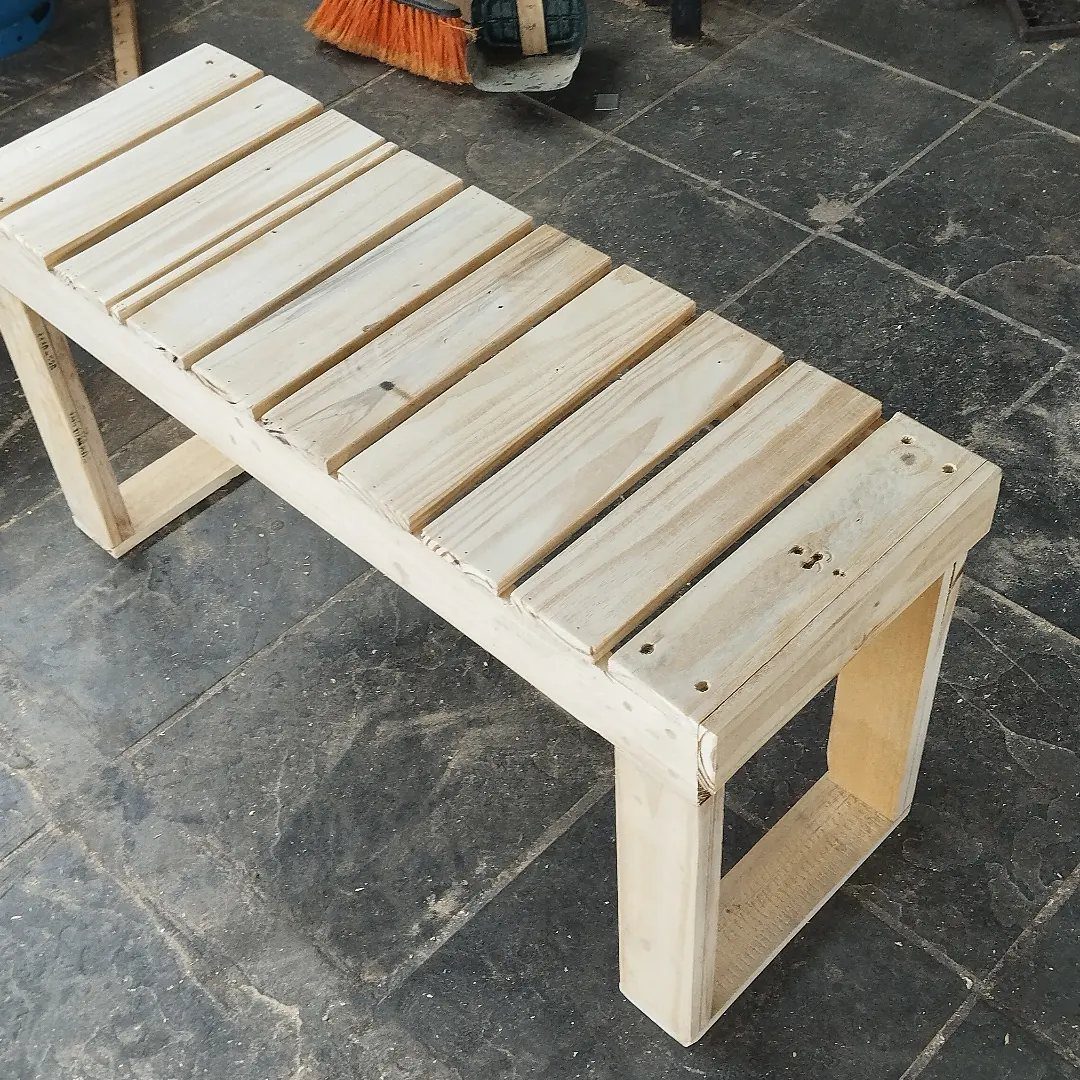
A slatted top made from light pallet boards gives a bench a clean, minimal look, and leaving the wood unfinished keeps it pale and quiet in a plain room.
Even gaps between the slats do most of the design work, so space them with a scrap spacer rather than by eye.
Sand every slat until the seat feels smooth, since you’ll be sitting on it in thin clothes. A coat of clear sealer is an option if the bench will see wet shoes.
20. Pallet Wood Storage Box
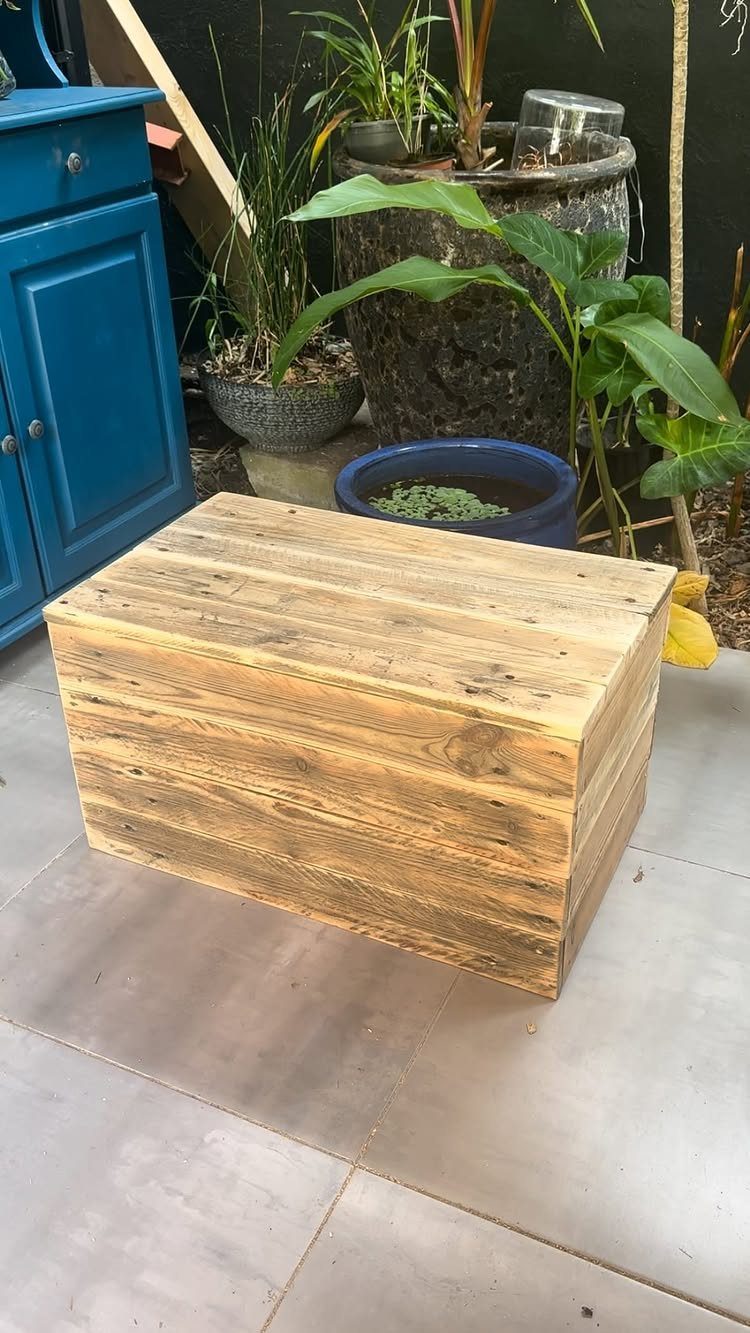
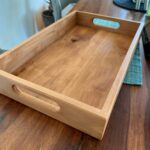
A plain rectangular box built from pallet planks is about as simple as pallet work gets: some sides, a bottom and a lot of screws.
Sand the rim and the inside edges, because hands go in and out of a storage box all the time.
If it sits on a patio like this one, I’d seal the wood so the bottom boards don’t soak up damp from the tile.
21. Covered Pallet Garden Gazebo
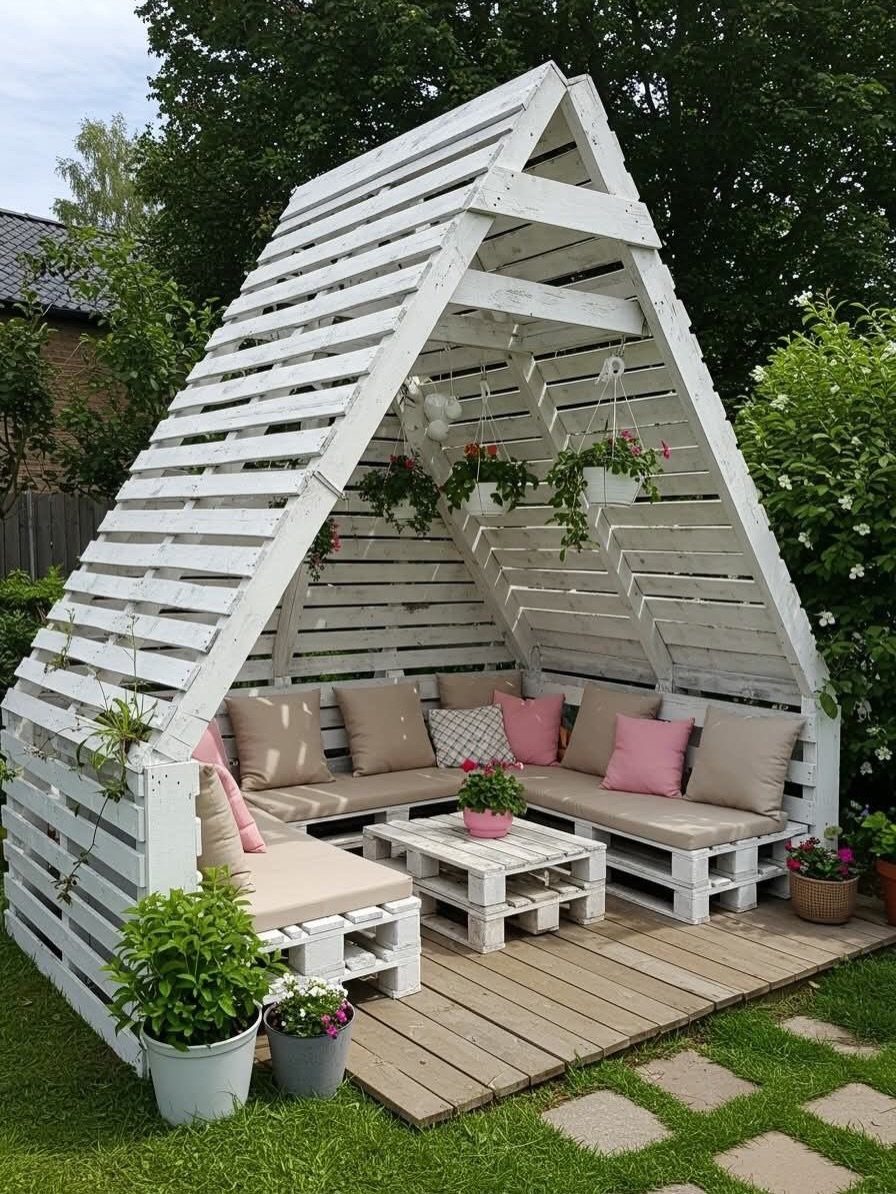
White paint ties a pallet gazebo together: the peaked roof, the built-in seating and the walls read as one structure, and the pale color holds up against green garden.
Cushions and a small table turn it from a shelter into a place to sit.
Build the seating and frame on a level deck or platform first, then add the roof. Paint everything before the cushions go in, and seal the paint since it lives outdoors.
How to Prepare Pallet Wood
Splinters, dust and possible chemical residue are all part of the job.
Wash the pallet first with soap and water, then follow with a bleach solution to clear off dirt, grime and contaminants. Look it over for damage while it’s wet and the problem spots show.
Take the boards apart with a pry bar and hammer, and use a saw where a board won’t budge. Nails and staples hide in the wood, so check each board as it comes off and pull every one.
A thorough sanding takes care of splinters and sharp corners, and I’d start with 80 grit before moving to 120 for a smooth finish.
If you have access to a planer, running the boards through it leaves them smooth and a uniform thickness.
Where to Find Pallets
Grocery stores, big box retailers and warehouses all receive shipments on pallets, and they often give them away.
Always get a yes from the owner first; plenty of businesses reuse their pallets or are required to send them back to the supplier.
Local online marketplaces are another source. People list pallets for free there, sometimes left over from a delivery they have no plans for.
Inspect every pallet before you load it into the car. Skip any with damage, mold or signs of pests, and pass on anything that looks contaminated or structurally unsound.
When nobody is giving pallets away, try a local pallet manufacturer, which will usually sell them for a few dollars each.
Safety Tips for Using Pallets
Find the stamp on the pallet before you plan anything.
"HT" means heat-treated, and that’s the one to bring home. "MB" means methyl bromide, a toxic chemical treatment, so leave those pallets where they are.
If a pallet has no readable stamp, I wouldn’t gamble on it. Pick another.
Keep your gloves, goggles and dust mask on from the first lift through the last sanding pass. Residue and fine dust are the hazards you can’t see.
Clean the wood, then check each board for nails and staples before it goes near a saw or sander.
Frequently Asked Questions
How can a beginner make pallet furniture?
Start with a simple build like a coffee table or a plain storage box, where the work is mostly cutting, sanding and screwing boards together.
Prepare the wood first: wash it, pull every nail and staple, and sand with 80 grit, then 120 for a smooth finish. Check the pallet’s stamp too, and only use "HT" (heat-treated) pallets, never "MB".
How do you attach pallets together?
Screws are my pick for joining pallets, and nails work for lighter jobs like slats on a fence.
Fasten into the thick frame pieces where you can, and use plenty of fasteners on anything that carries weight, such as shelves or a wall-hung tool rack.
Pick pallets of matching size and push them snug against each other, so the finished piece looks like a single unit.