The right desk depends on how much floor your room can spare, since the designs here run from a floating desk with no legs and a fold-down wall-mounted unit that is just a shelf when closed, up to an executive desk in dark wood that crowds a small room fast.
Effort swings just as widely: a wood and metal frame desk goes together with basic tools, while a curved leg desk means shaping and sanding each leg to match.
Measure the wall and the doorway first, and the choice usually makes itself.
1. Modern Minimalist Wooden Desk Designs
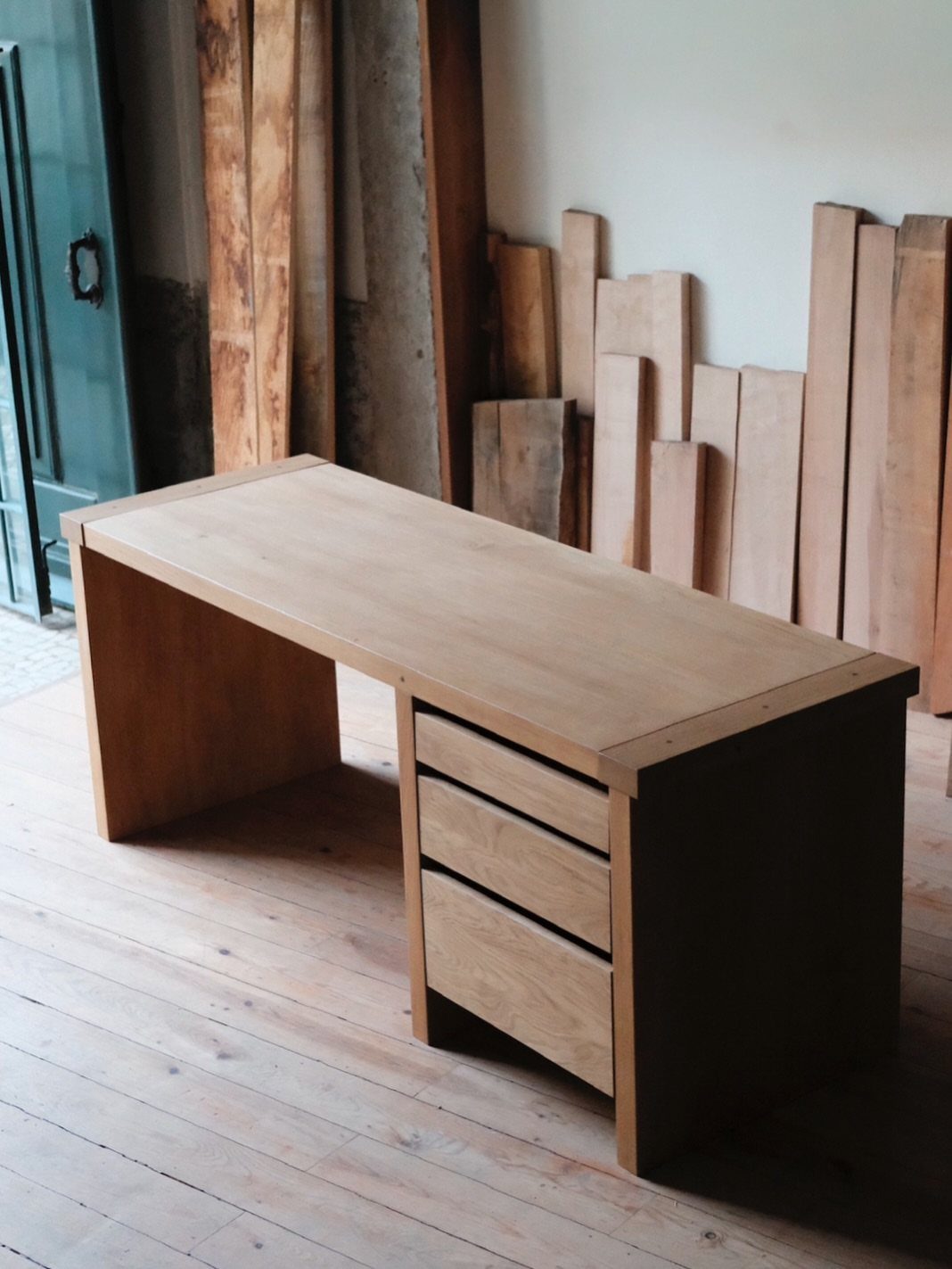
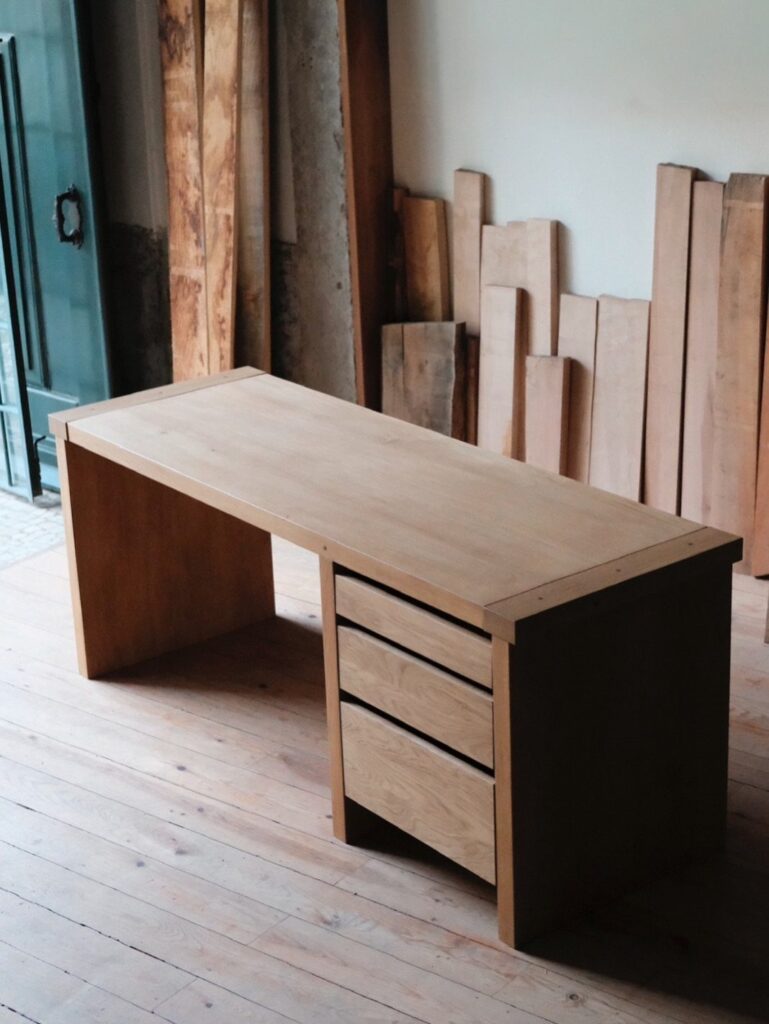
3 drawers carry most of the storage a minimalist desk needs, and that is why I like this version. Closed drawers keep cables, pens and paper out of sight, so the top stays clear.
Pale wood like birch or maple keeps a compact room feeling calm, where a dark walnut stain can make the walls seem closer.
If you build one, keep the lines plain: straight legs, square edges and flush drawer fronts. Skip decorative hardware, since the desk looks best with recessed or simple pulls.
2. Floating Wooden Desk
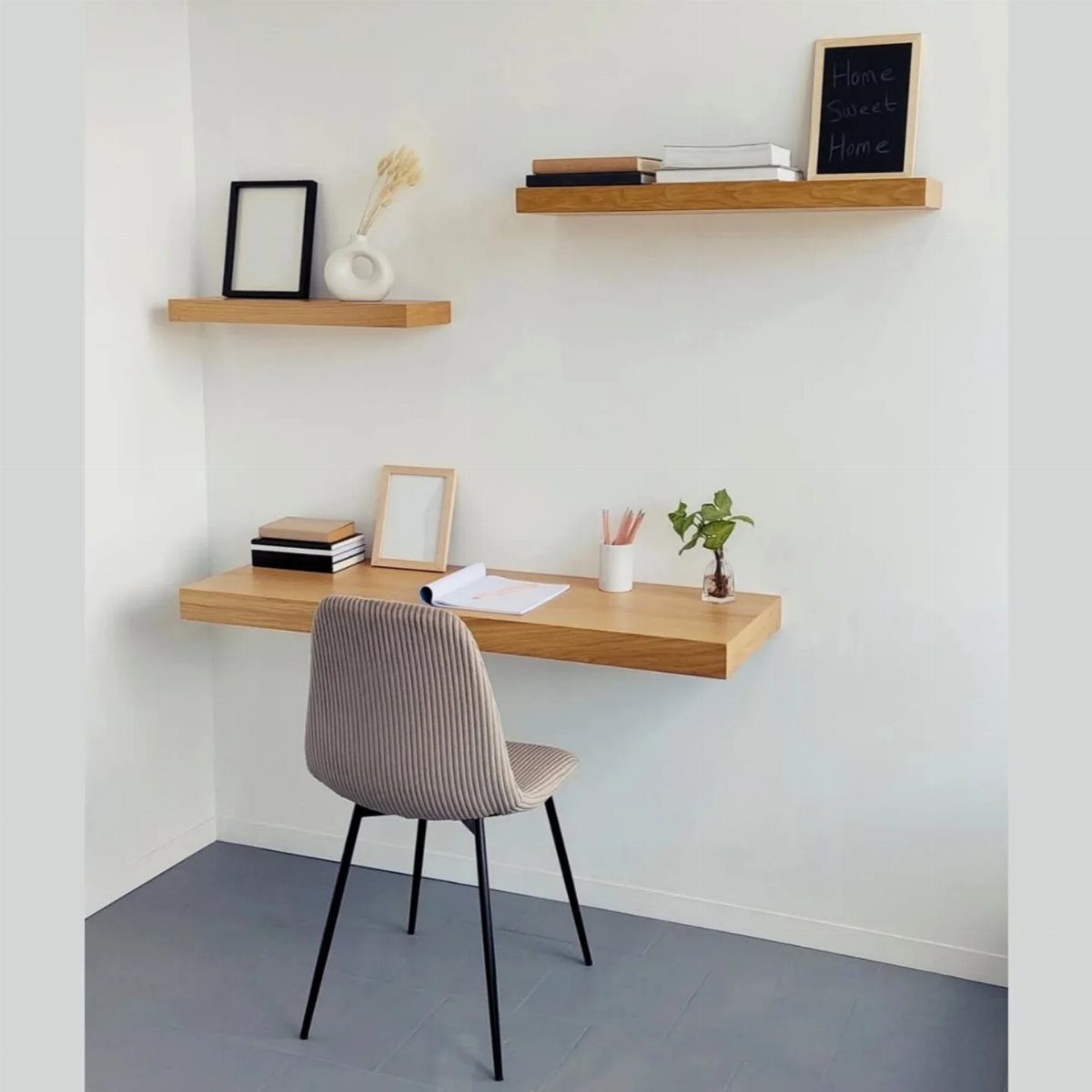
Floating desks free up the floor, which makes them a strong pick for a tight room. With no legs, a chair can slide in from any angle and the space beneath stays open.
The weight of the desktop, a laptop and a few books all hangs from the wall, so the mounting matters more than the wood.
Anchor brackets into studs, not drywall alone. Shelves mounted above a floating desk, lined up with its width, hold supplies and books without taking up any floor space.
3. L-shaped Wooden Corner Desk
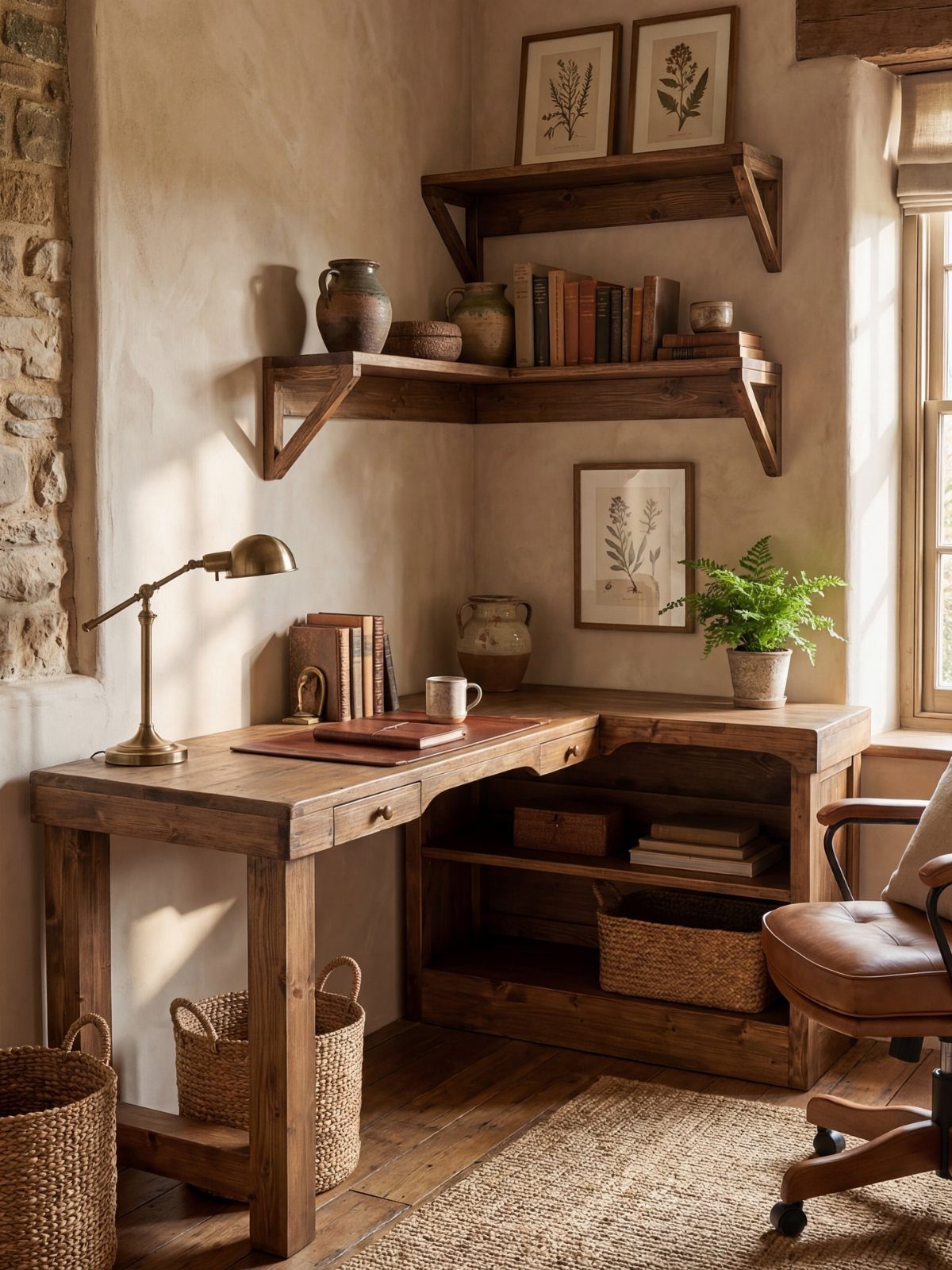
A corner is wasted space in most rooms, and an L-shaped desk puts it to work. One arm can hold a computer while the other stays clear for writing or craft projects.
For a rustic look, I would choose a thick, warm-toned top and add open shelves above the long arm.
Measure both walls before you buy or cut anything, and allow enough clearance to slide a chair out without hitting the corner.
4. Wooden Desk with Built-in Hutch
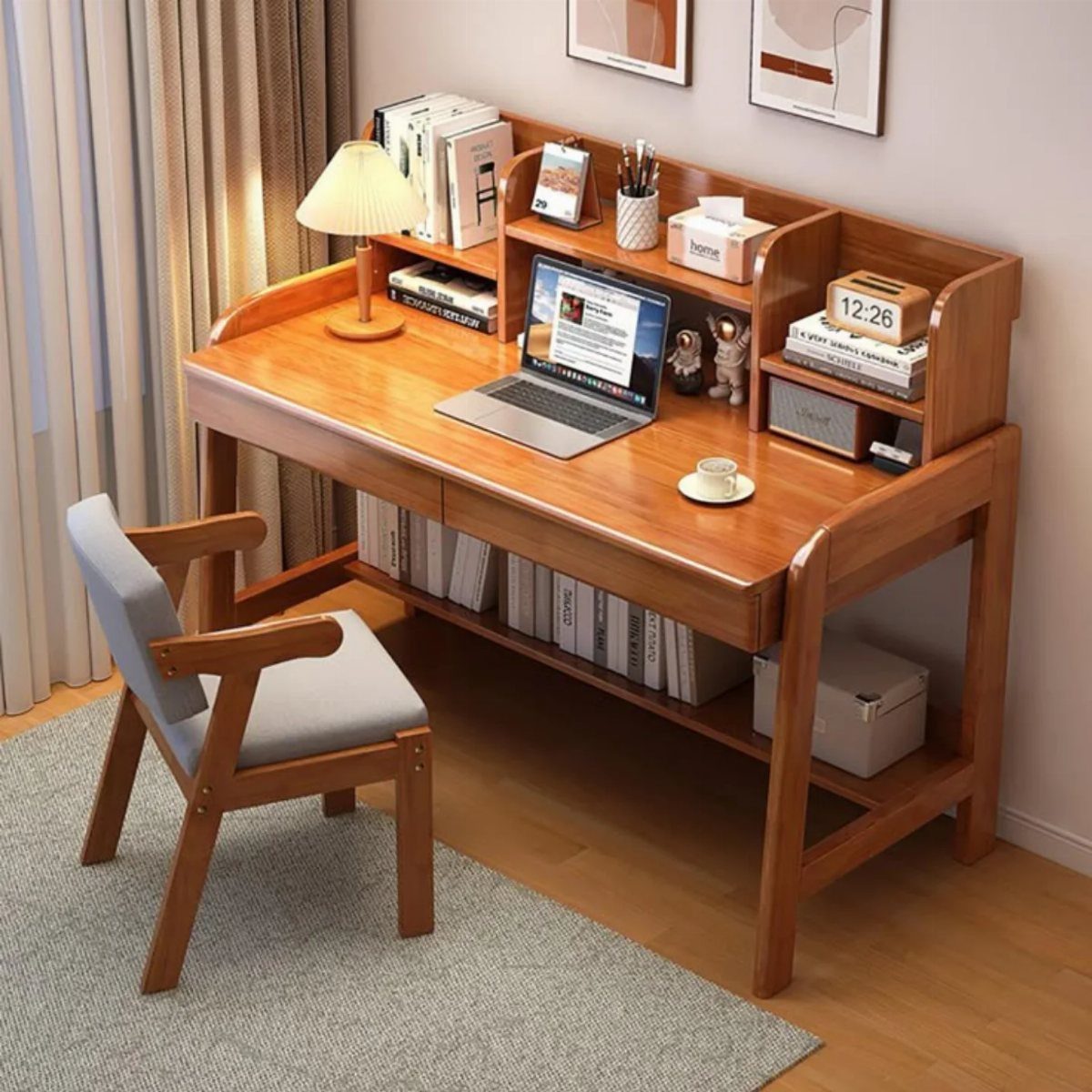
A hutch turns the wall space above your desk into storage, so the desk uses height instead of floor area. That helps in a small room where a wider desk simply will not fit.
Medium-brown wood with a polished finish looks traditional and tidy.
Use the hutch cubbies for books and a few display pieces, and keep daily supplies within arm’s reach. One drawback: a hutch makes the desk heavier and harder to move.
5. Wooden Desk with Storage Cabinet
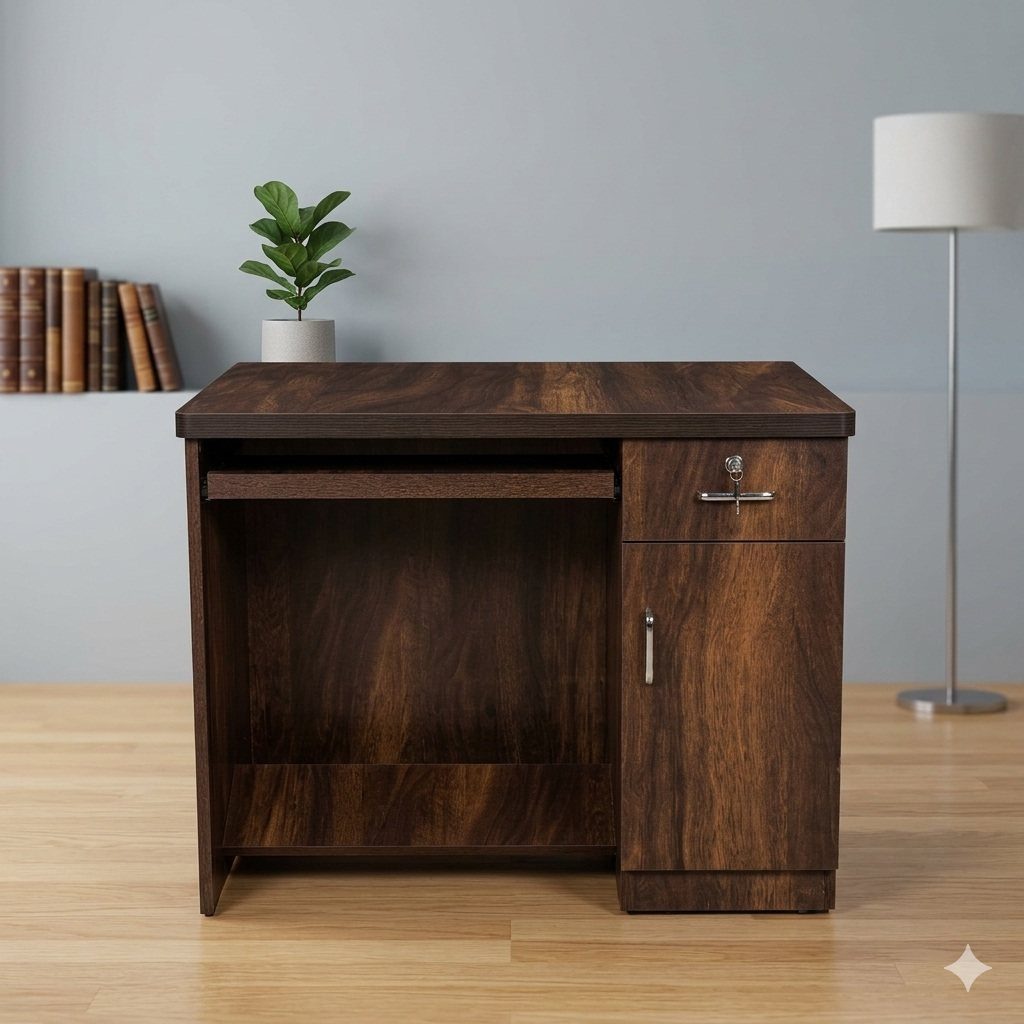
Pairing a side cabinet with a slide-out keyboard tray lets one desk handle files, supplies and typing. The tray keeps your wrists at a comfortable height and frees up the desktop when you are not using it.
Dark brown wood hides scuffs well, which suits a desk that gets daily use.
If you build it, install full-extension drawer slides for the tray so it pulls out completely. The cabinet adds weight, so plan its spot before you assemble it.
6. Wood and Metal Frame Desk
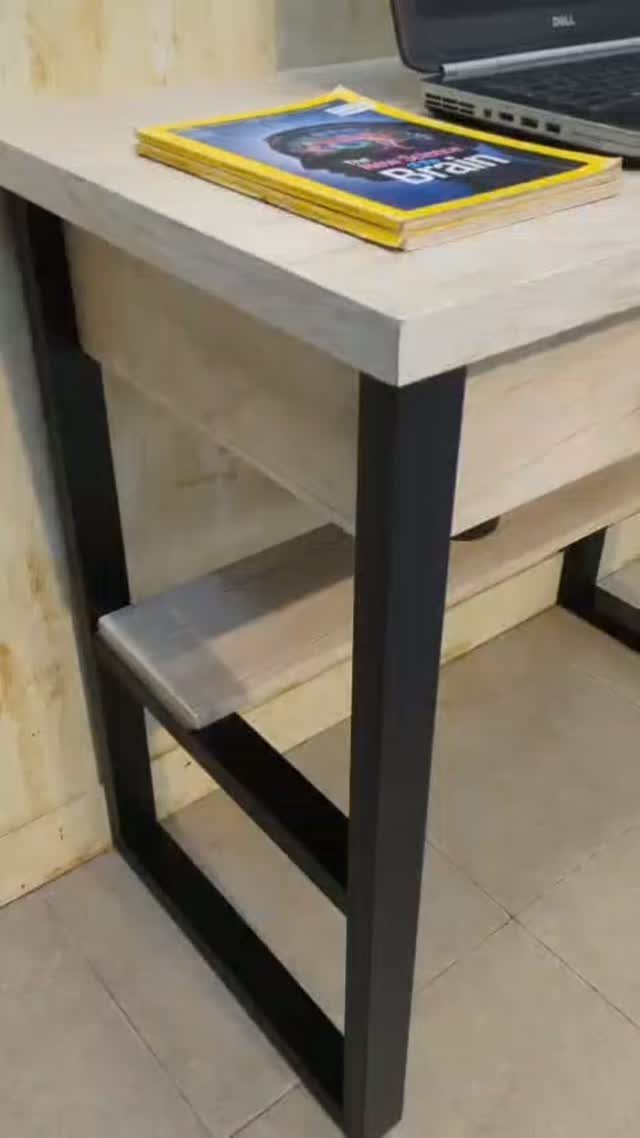
Light wood on a black metal frame is the easiest of these desks to build with basic tools. A plain board for the top, a pair of metal legs and a shelf set low between them make a sturdy base.
I like the contrast between pale wood and black steel; it looks industrial without feeling cold.
The lower shelf holds books or a printer, though it limits legroom, so check the clearance before you commit. Sand the top smooth and seal it for daily use.
7. Live-Edge Wooden Desk
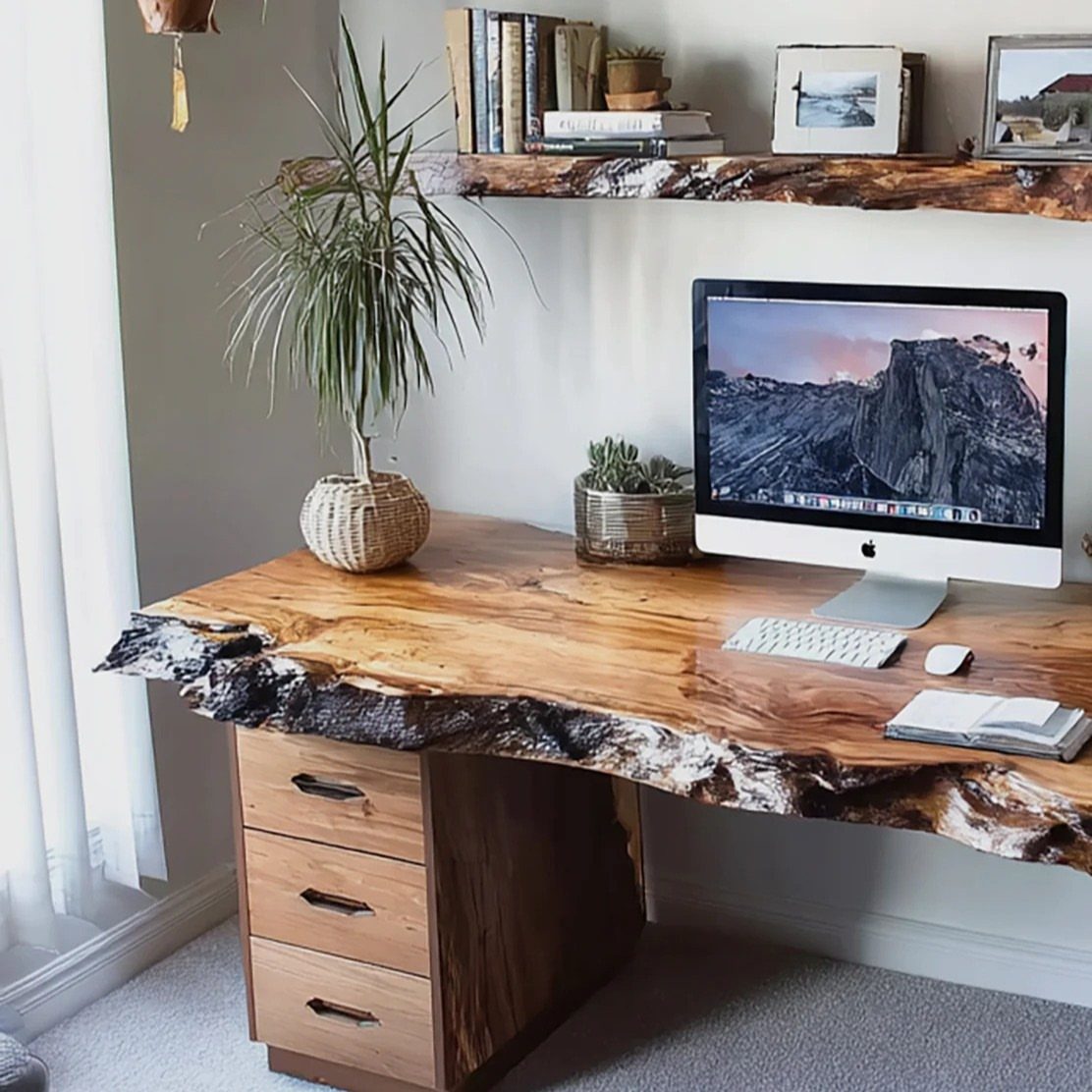
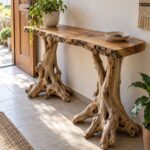
A live-edge top keeps the natural contour of the tree along one side, so no two desks look alike. Paired with a matching wall shelf, the grain repeats above the desk and ties the corner together.
3 drawers under the top keep the surface clear for a monitor.
A smooth, sealed top is worth the effort here, since the uneven edge collects dust and pen marks more easily than a straight one. A plant or two next to the screen suits the rough, organic look.
8. Fold-Down Wall-Mounted Wooden Desk
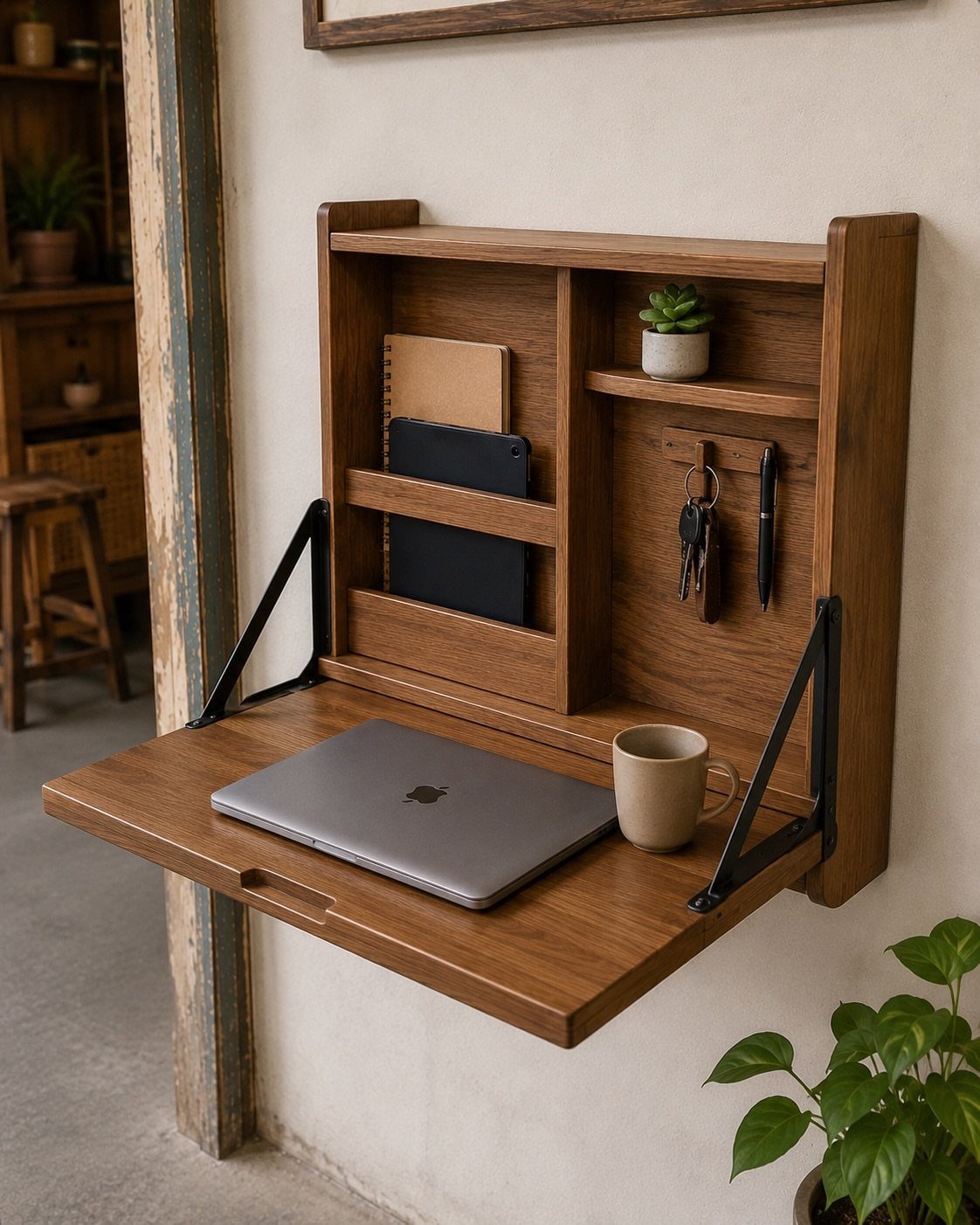
Folded up, this desk is just a wooden shelving unit on the wall; folded down, it becomes a work surface for a laptop and a mug.
That makes it my pick for a shared room or a corner with no floor to spare.
The unit’s shelves hold a notebook, a tablet and small items, so everything lives within reach.
Screw the mounting into wall studs, because the open surface carries the laptop’s weight. The limit is depth: it suits light work, not a big monitor setup.
9. Curved Leg Wooden Desk
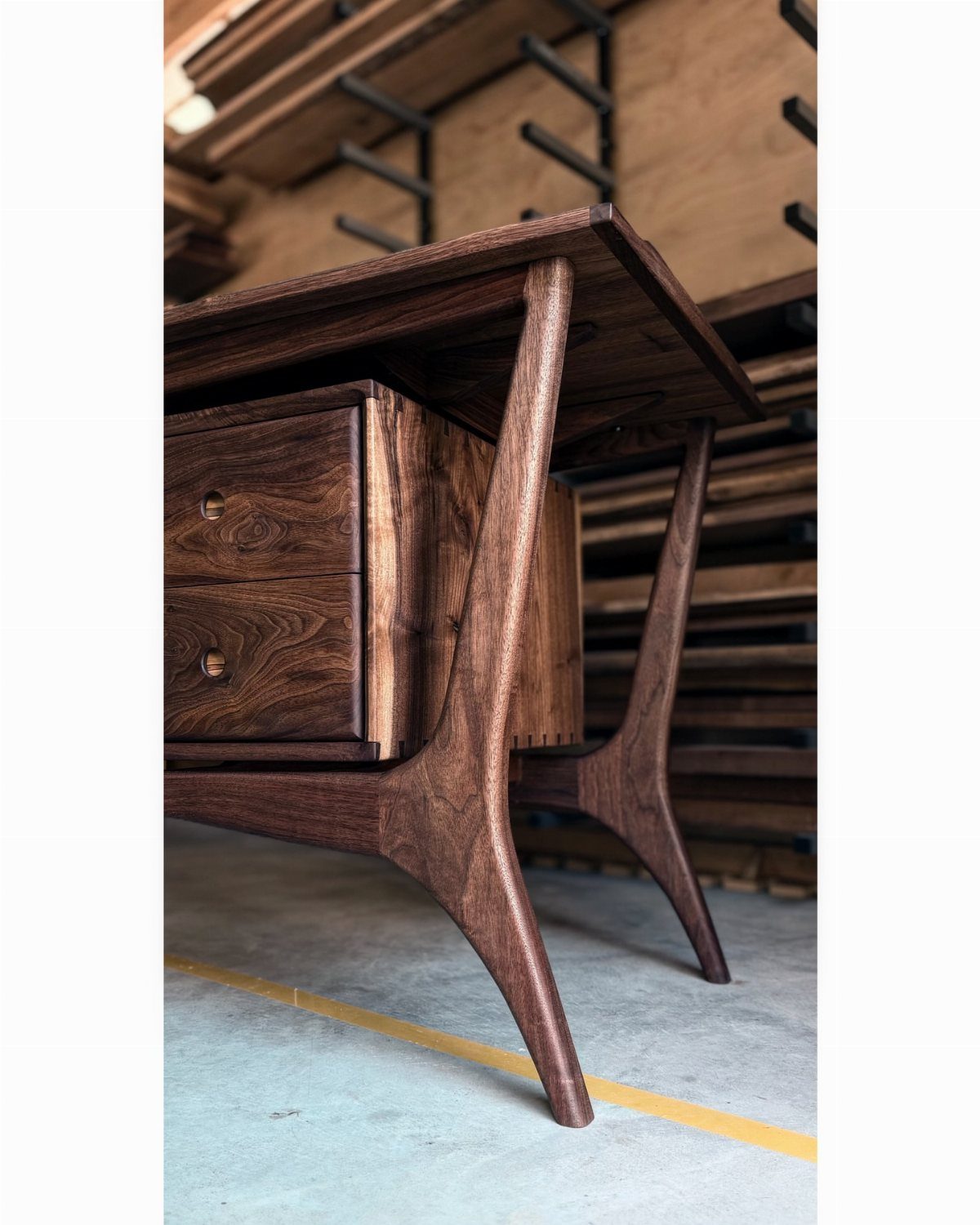
Curved legs soften a desk that would otherwise read as a plain box. In dark brown wood with 2 drawers, the shape feels traditional and a little formal.
Curves take more effort than straight legs. Cutting them by hand or on a band saw means shaping, then sanding each leg until every one matches the others.
If that sounds like too much for an afternoon, buy a desk with curved legs and build a plain top instead. A dark stain also hides small sanding flaws well.
10. Executive Dark Wood Desk
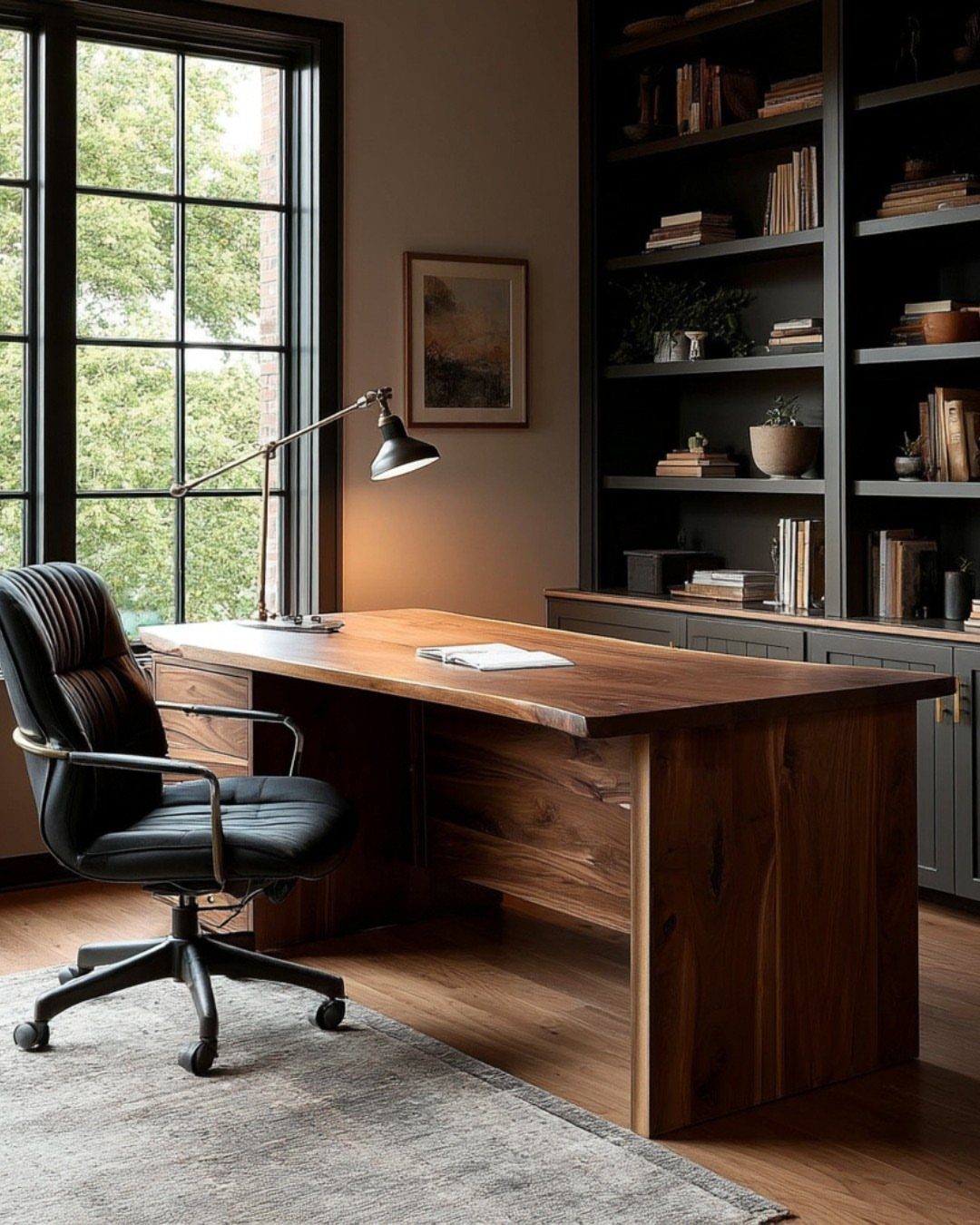
A big, solid dark wood desk makes a study feel serious, and it pairs naturally with a black leather chair. Built-in bookshelves and a window nearby keep the heavy color from feeling closed in.
I would choose this for a room with space and natural light, since the size and dark finish crowd a small room fast.
A desk lamp is worth adding for evening work. Expect real weight and a higher cost than lighter desks, so measure the doorway before you order.
How to Choose the Right Wooden Desk
Start with what the desk will actually do all day. A computer setup needs room for a monitor, a keyboard and whatever sits beside them, so measure that gear first and pick the desktop size from there.
Storage comes next.
If you keep paper and supplies close, look for drawers, shelves or a cabinet built in. If you keep little, a bare top is fine.
Match the wood and finish to the furniture already in the room, so the desk looks like it belongs.
Solid wood is very durable and lasts for years. Engineered wood costs less and comes in good-looking designs, which makes it a fair choice on a tight budget.
Benefits of Wooden Desks
Wood earns its place on a desk for a few plain reasons.
Properly maintained, it lasts a long time, and it suits both classic and contemporary rooms. It also adds warmth that most modern materials lack.
Wood also comes in many sizes, finishes and designs, so you can fit it to your space.
Check 3 things before you buy:
- Source: choose responsibly sourced or FSC-certified timber.
- Wood that has been properly seasoned stays flatter and shows deeper grain, and boards cut from younger stock are more likely to warp or crack as they dry out.
Customization Options for Desks
Size is the easiest thing to adjust, and it pays off most. Set the width and length to your wall and your gear, not to whatever a store happens to stock.
Next, pick the finish and color to suit the room. Wood tone changes the whole mood, so test a stain on scrap before you commit to the full top.
You can also choose the material and the shape of the edges. Rounded edges are gentler on forearms than sharp square ones.
Some online makers offer 3D configurators that let you set the tabletop size 1 cm at a time and preview the grain and color. Even if you build it yourself, a quick sketch with exact measurements does the same job.
Frequently Asked Questions
Is it cheaper to build a desk or buy one?
Building usually costs less than buying, particularly with a drill, a saw and a sander already in the garage.
A plain wood top on a pair of metal legs with a low shelf is the easiest build I know, and it needs nothing fancy.
Curved legs or a big executive-style desk take more time and skill, so for those, buying can make more sense.
How to make a simple wooden desk?
Start with a plain board for the top, add a pair of metal legs, and set a shelf low between them for books or a printer.
A few coats of finish over a smooth surface will help the top handle daily wear. Check legroom before you fix the shelf, since a low shelf cuts into it.
What type of wood is best for desks?
Hardwoods like teak, oak and walnut are the best picks, because they are strong, resist warping and look rich.
For a small, calm room, pale woods like birch or maple keep things light, while dark walnut can make walls feel closer.
Boards that have dried properly stay flat, while lumber that is still young tends to cup, twist or split as the moisture leaves.
What are some good DIY desk designs?
A wood top on black metal legs is the easiest, and a floating desk anchored into wall studs saves floor space. A fold-down wall-mounted desk suits a tight corner, though it only handles light work.
An L-shaped corner desk puts unused space to work, with one arm for a computer and one for writing or crafts. Curved legs are the hardest, since each leg must be shaped and sanded to match the others.