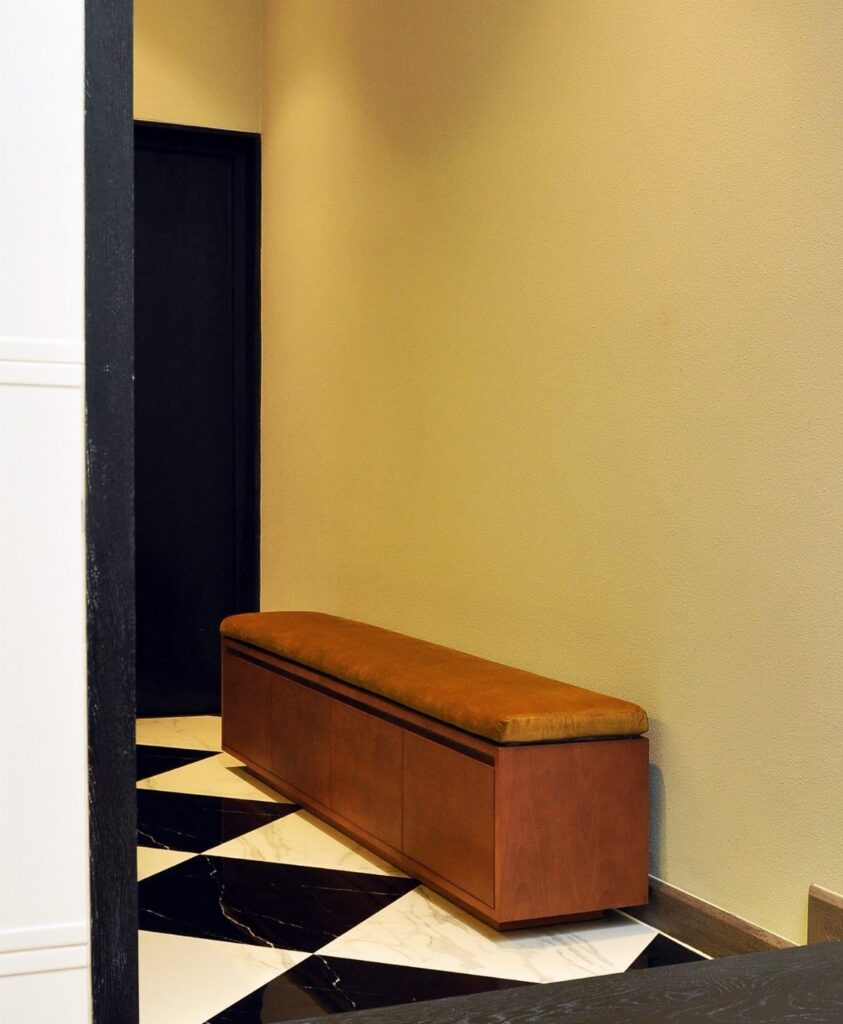
Where the bench will live decides which of these builds to pick: an entryway wants storage and a lower shelf for shoes, a garden wants a sturdy outdoor bench like the pallet or X-leg designs, and a quiet corner suits something small or upholstered.
The builds here range from a simple bench with plain wood legs to a plywood entryway piece with storage and a drawer.
Pick the spot first, then match the wood and finish to it, and the rest of the choices get easier.
1. Simple DIY Bench
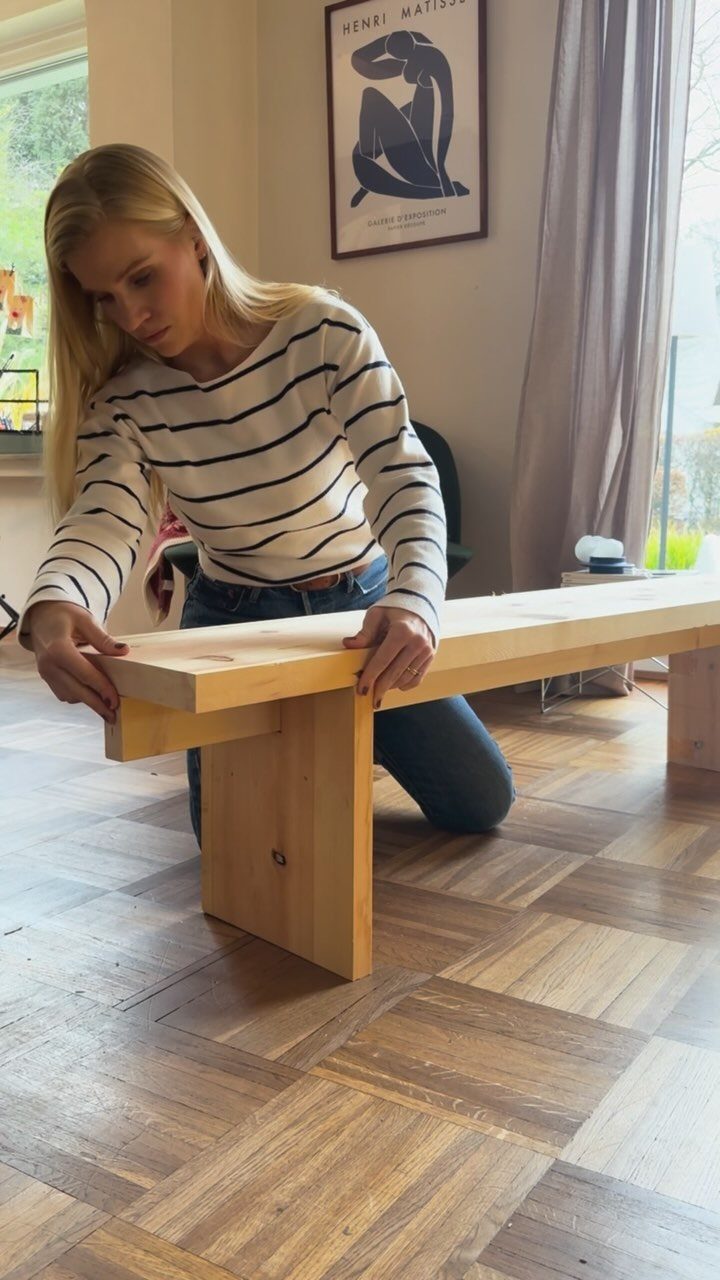
Clean lines and square cuts keep this bench simple enough for a first build.
Light wood, a flat top and straight legs keep the cuts square and the joints easy to read, so mistakes show up while the glue is still wet.
I’d pick a pale wood and finish it with a clear coat so the grain does the decorating. A simple design has nowhere to hide rough corners, so run sandpaper lightly over each edge.
With a saw, a drill and a free afternoon, you can finish this one in a day.
2. Rustic DIY Bench
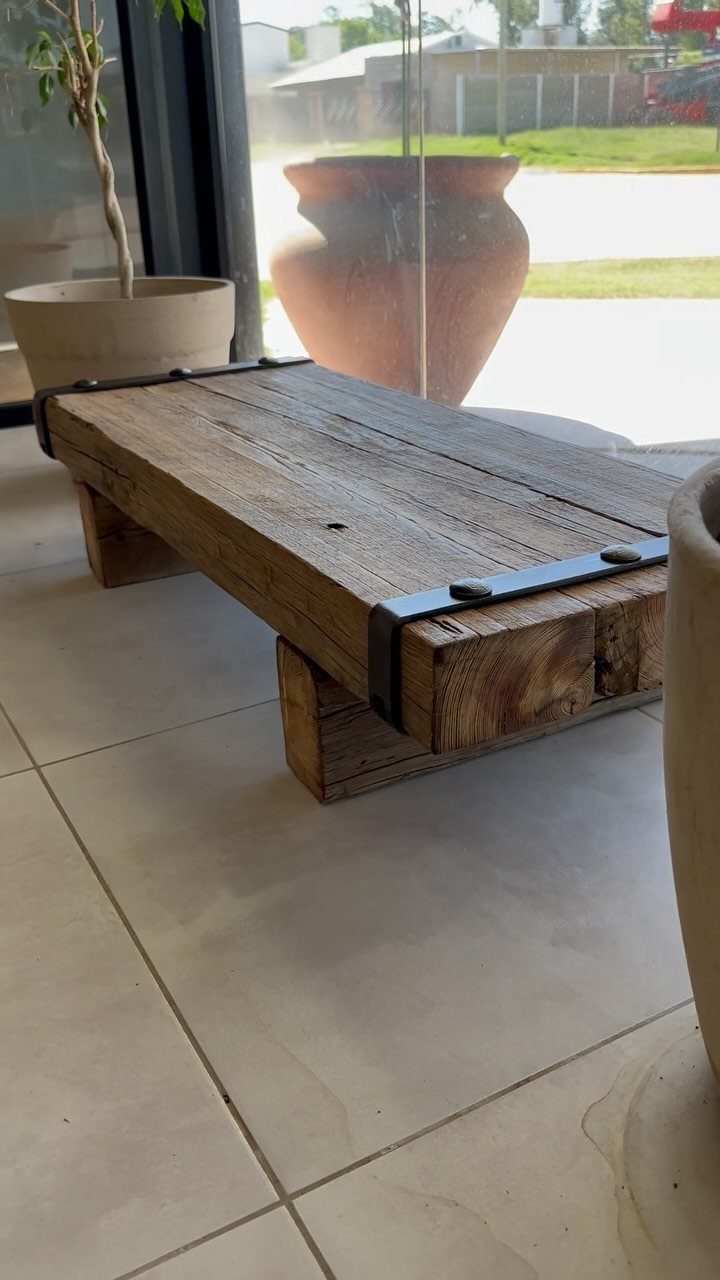
Building this rustic bench from basic lumber and simple joints keeps the cost low and the build simple.
Reclaimed or rough lumber suits the look better than new boards, and imperfections are part of the appeal. Choose brackets in a dark finish; against pale, worn wood they read clearly.
I’d choose this over a fussier design if budget is the priority.
3. Upholstered Bench
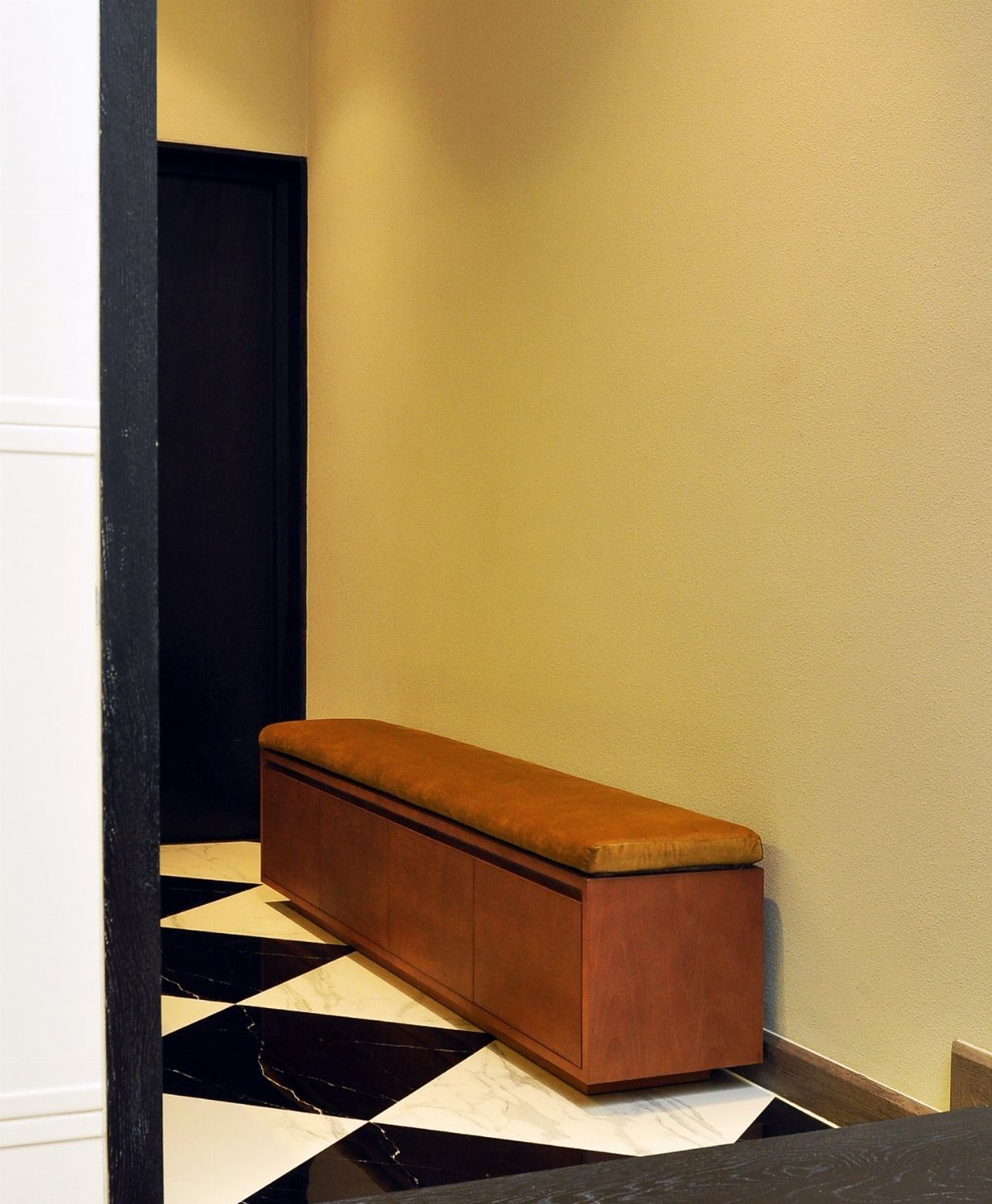
A cushioned top makes a plain storage bench a seat you’ll actually want to sit on. The brown upholstery here sits on a wooden base, so the box stays sturdy while the fabric handles comfort.
Pick a fabric that hides wear if the bench will be used daily; darker tones forgive scuffs better than light ones. Foam and a staple gun are the basic supplies for the cushion.
It means extra work, since you’re building 2 things: a base and a cushion.
4. Plywood Entryway Bench with Storage and Drawer
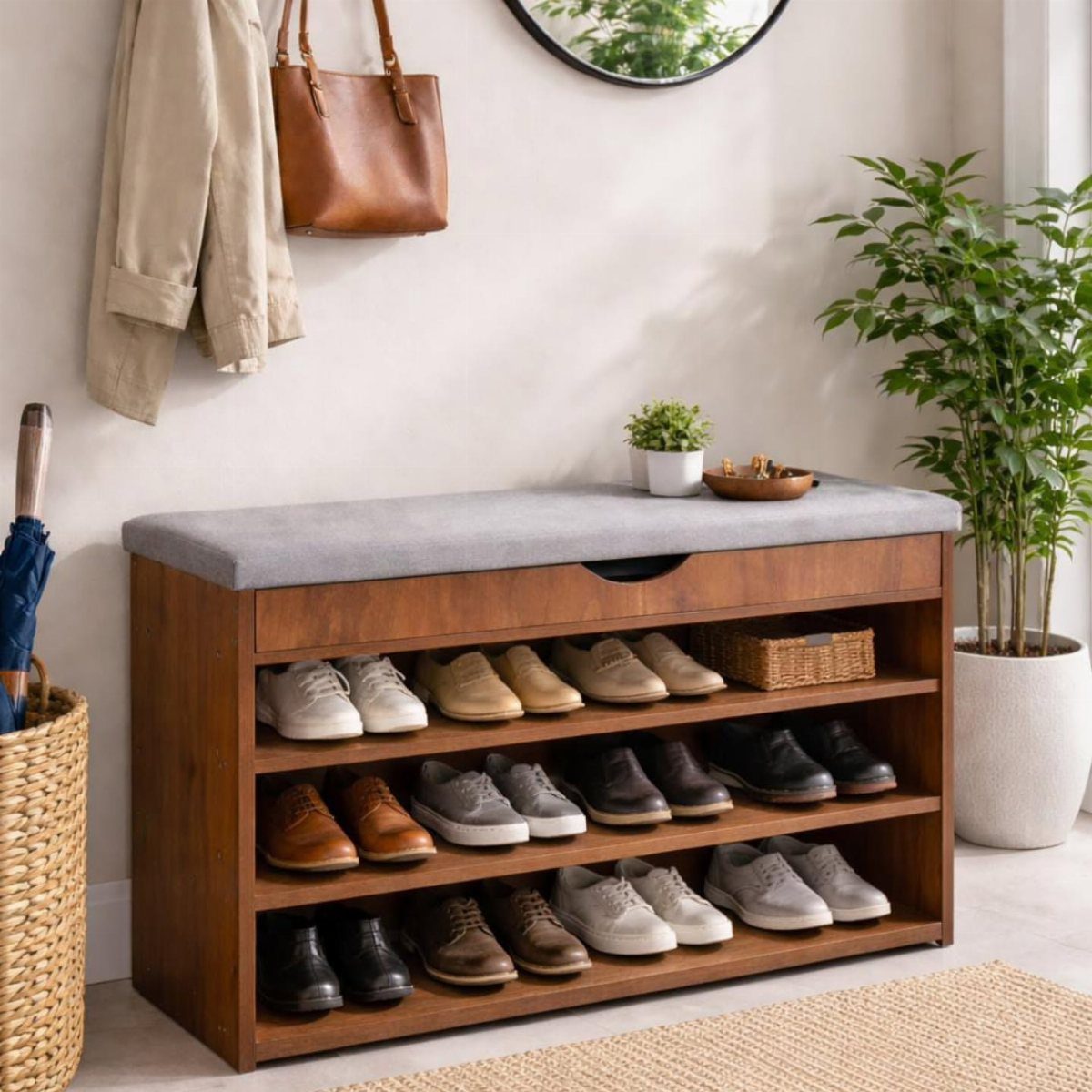
Shoes pile up fast by the door, and this plywood bench gives them 3 shelves plus a drawer for the small things like keys or gloves. A grey cushion on top makes it a comfortable spot for pulling boots on.
Plywood keeps the material cost down and cuts into flat panels easily, which suits a build with this many parts. Edge banding on the cut faces hides the layers and gives a finished look.
Of the entryway builds in this list, I’d call this the most practical.
5. Outdoor Storage Bench
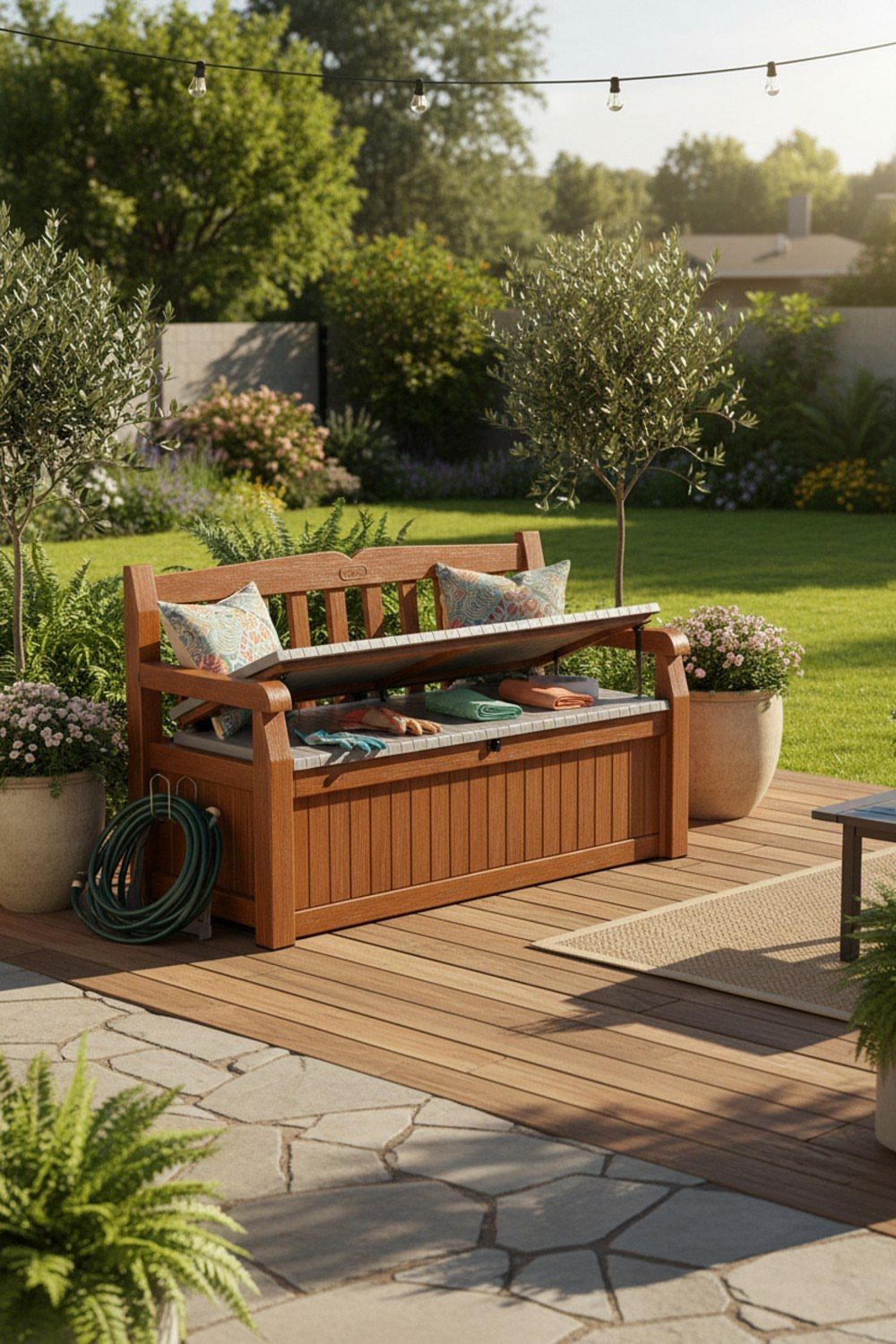
Seating for several people and a hidden place for towels, cushions or garden gear: a lid on the seat does both jobs. A lidded bench like this gives loose items a place to go, which tidies a deck quickly.
Use an outdoor-rated finish on all surfaces, especially the top that gets the most sun and weather. Add a lid support so it doesn’t slam shut on fingers.
I like a long bench like this better than separate chairs and a bin, since it takes up one footprint.
6. Modern Woven Bench
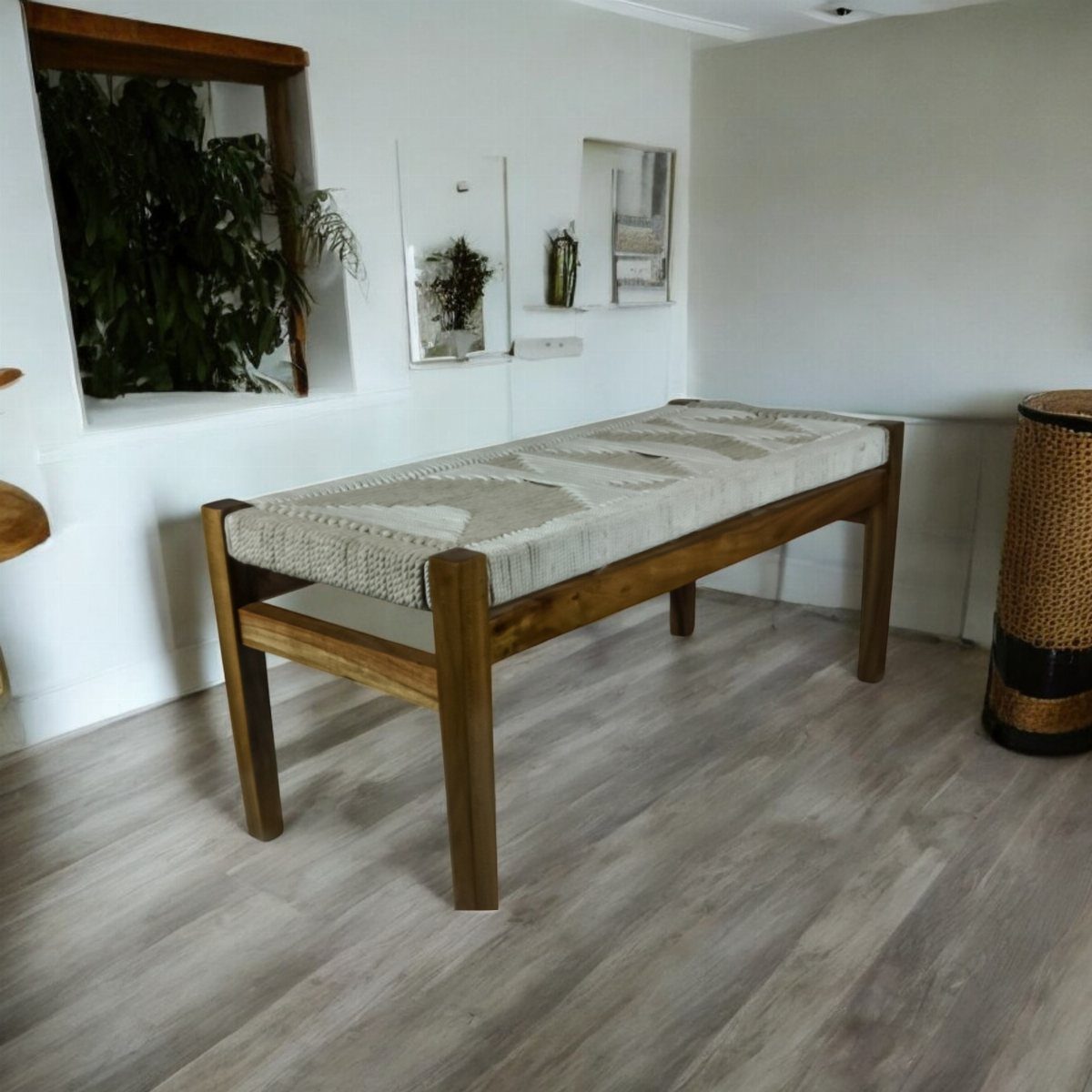
Weaving brings texture to what would otherwise be a plain wooden bench.
A woven top can be built over a simple frame, so the wood work stays easy while the weaving takes the time. Choose a pattern with a tight, even weave for a neat look.
Expect more patience than a basic plank build, but the result looks far more expensive than it is.
7. Small Wooden Bench
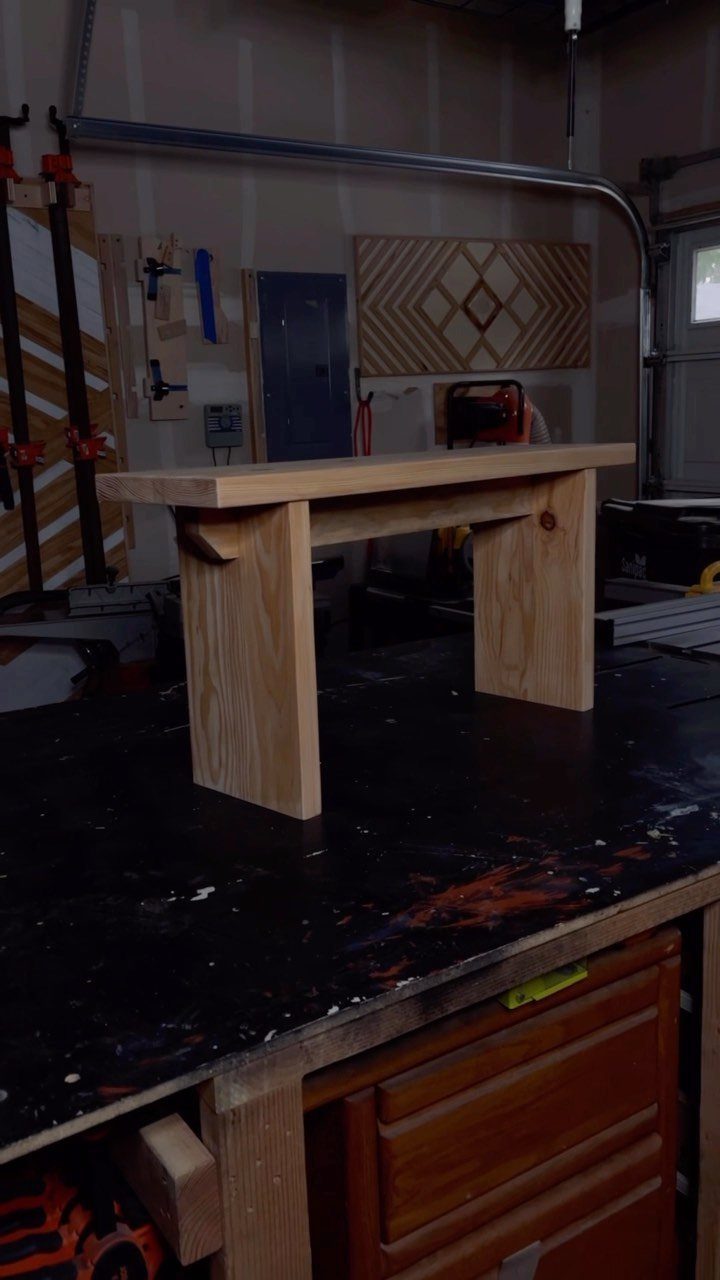
A bench built from 2x4s with block legs is about as compact as seating gets, and it suits a corner, a porch step or the end of a bed. Construction lumber costs little, so a mistake won’t sting.
Sand the faces and ease every edge, because 2x4s come with rounded, rough corners that snag clothes. Leave it unfinished if it will live in the workshop, or add a clear coat for the house.
The maker mentioned wanting a whole series of 2×4 bench designs, and I’d read that as a good sign for the material.
8. Wood and Metal Slat Bench
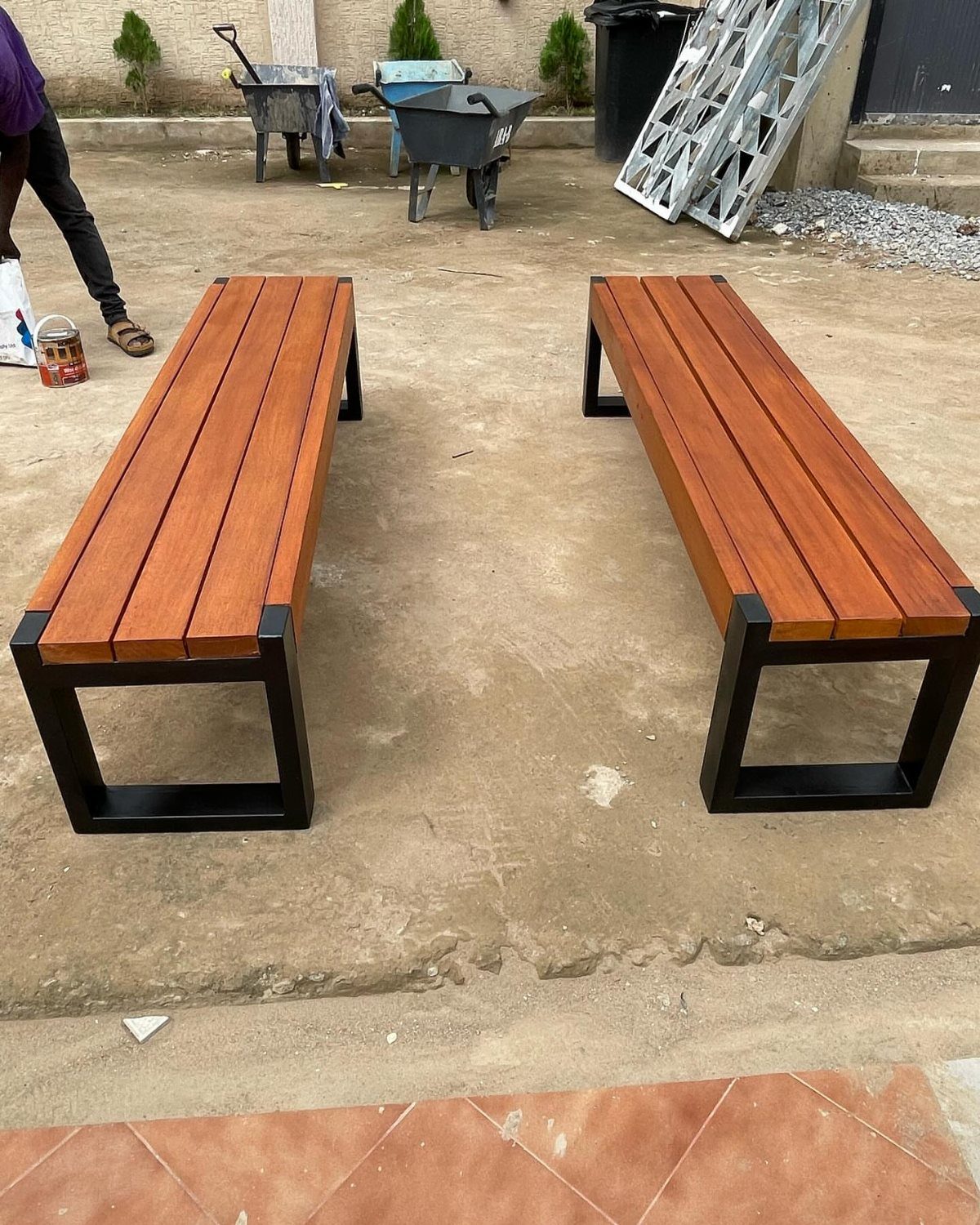
Black metal frames under wooden slats give these long benches a clean, industrial look. The metal sets the shape, so the wood side comes down to cutting slats to length and spacing them evenly.
Pick a seating wood with a finish made for outdoors, since a concrete patio holds heat and moisture. Black frames pair well with warm-toned slats.
I’d choose this over an all-wood bench if you want a crisp, modern line.
9. Entryway Bench with Lower Shelf
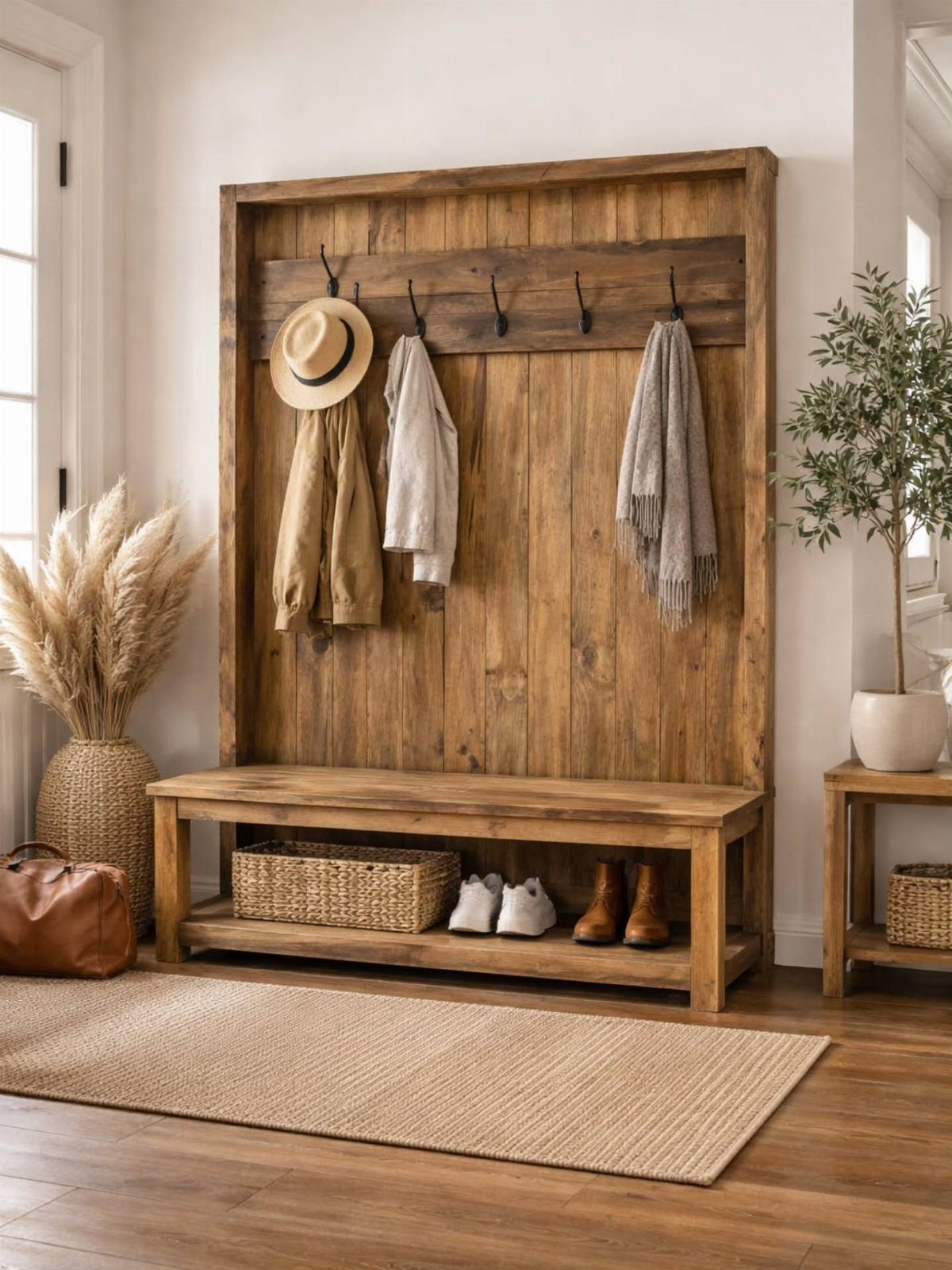
An open lower shelf turns an entry bench into a place for a basket and a row of shoes. Nothing hides behind doors, so everyone can see where things go.
Build a matching wall panel with hooks and the pair reads as one piece of furniture. Use the same wood and finish on both so they match.
Open storage is quicker to build than drawers, which suits an afternoon project. An open lower shelf shows every stray shoe and bag, so a basket or 2 keeps it looking tidy.
10. Pallet Wood Garden Bench
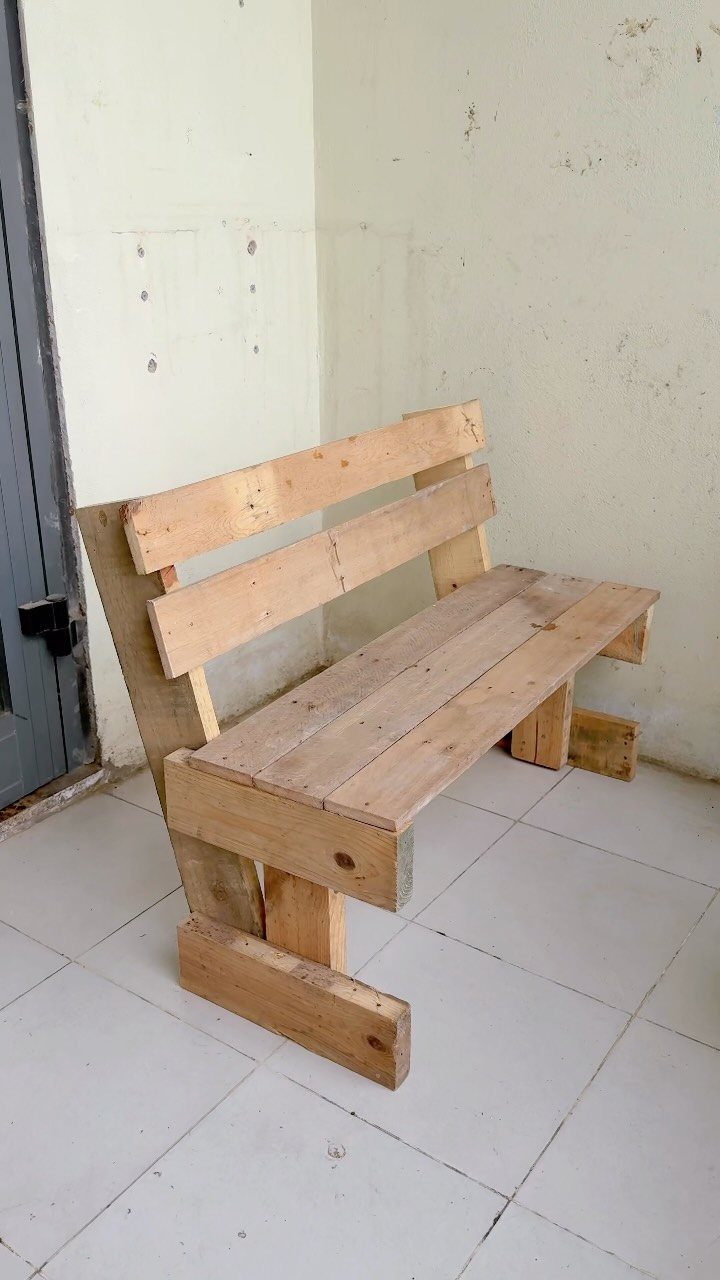
Pallet boards give this bench its slatted seat and backrest for close to nothing. The light wood stays pale and plain, which looks good in a bright room.
Pallet lumber is rough, so sand every board before assembly, especially the seat where hands and legs land. Check the boards for nails and splits as you take the pallet apart.
I’d pick this when budget matters most. The cost is time spent pulling pallets apart, which is slow work.
11. X-leg Wooden Garden Bench
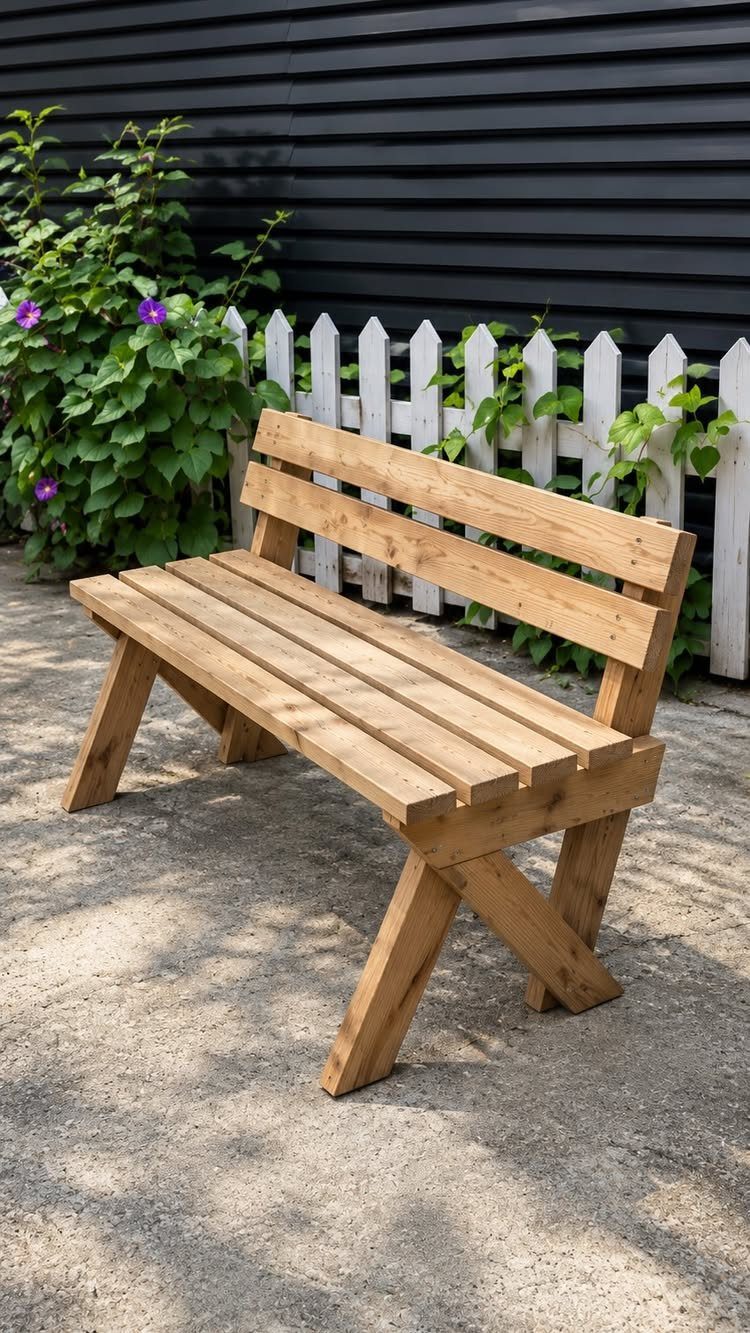
X-shaped legs give this garden bench a crossed, sturdy look, and the slatted seat and backrest keep it light. A picket fence behind it shows how well the style suits a yard.
The angled leg cuts take the most care, so mark them from a template and cut both pairs together so they match. Use an outdoor finish on the slats.
Next to a plain-leg bench, the X-leg design wins for looks, though the angled cuts take more patience than straight ones.
How to Build a DIY Bench
Start with where the bench will live, because the spot decides the size, the wood and the finish. An entryway, a deck and a dining table each ask for something different.
A basic bench takes just 2x4s, a sheet of plywood and a box of screws, with a saw to cut the pieces and a drill to join them.
Cut every piece to the plan before any screw goes in, then assemble the frame first and add the top last.
Sand once the bench is together, then pick your finish: stain, paint or upholstery. Each one changes the look completely, so test it on a scrap piece before committing.
Tools for Making a DIY Bench
A miter saw gives the cleanest square cuts and makes angled cuts easy, such as the ones on a bench base.
A circular saw does the same job if that’s what you own; it just takes a bit more care with a guide.
If I were buying one tool to add to a starter kit, it would be an impact driver, since it sets long screws without stripping heads or tiring your wrist.
Its internal anvil does much of the work, so screws sink without you leaning on the tool.
Hand tools can build a bench too. Hand tools can still get the job done: a handsaw, a hammer and a screwdriver will build the same bench, just with a lot more time and sore arms.
If you can add a power saw, a drill and a pocket hole jig, the build gets much easier.
Cost of Building a DIY Bench
Expect a DIY wood bench to cost $20–$100. Price swings depend on 3 things: which wood you pick, what hardware goes in, and how you finish it.
Wood is usually the biggest line, so it’s the place to save. A simple farmhouse-style bench sits at the low end of that $20–$100 range, and a plain design keeps the supply list short.
Stain, paint and upholstery foam add up, so price the finish before you buy lumber. Check what you already have in the garage first.
Frequently Asked Questions
What wood to use to make a bench seat?
Pine, poplar or maple in a light tone suits a first bench, and a clear finish lets the grain do the decorating. Reclaimed or rough lumber suits a rustic look, and outdoor benches need a finish made for weather.
What is the easiest DIY bench to build?
Flat top, straight legs: that basic shape is the easiest bench there is, and a 2×4 version with block legs is no harder.
Because every cut is square and every joint is plain, a crooked piece shows itself while the glue can still be fixed.
Can I build a DIY bench without power tools?
Yes. A handsaw, hammer and screwdriver can produce the same bench; expect a longer day and tired arms.
A pocket hole jig paired with a drill and a circular saw cuts the work down a lot, and the joints come out tighter too.