The 6 range from a few boards and screws to a modular outdoor sofa you can build one section at a time, so the lumber bill spreads across several weekends.
Start with the smallest project that catches your eye, since a finished piece teaches more than a stalled one.
1. Kitchen Island
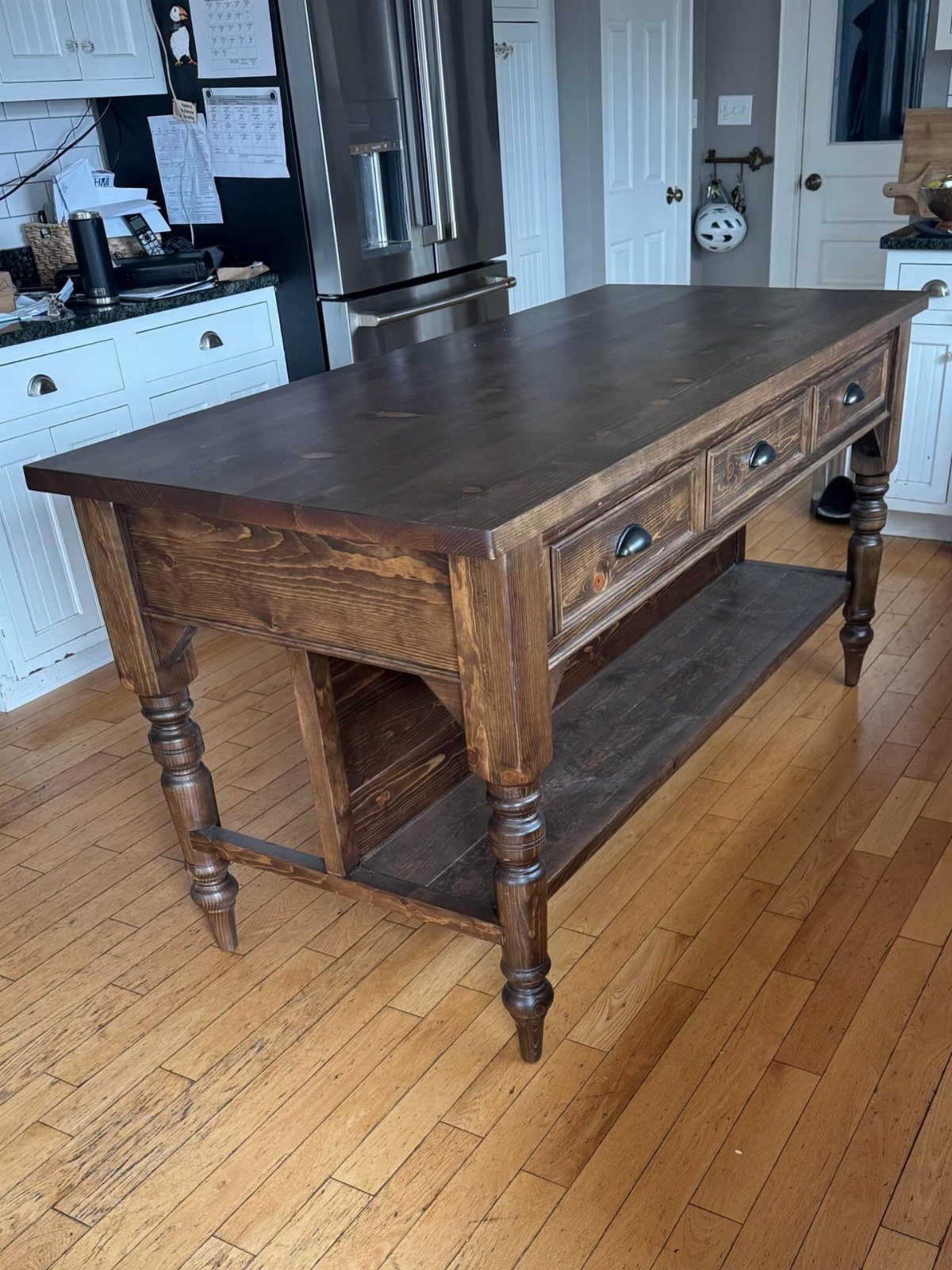
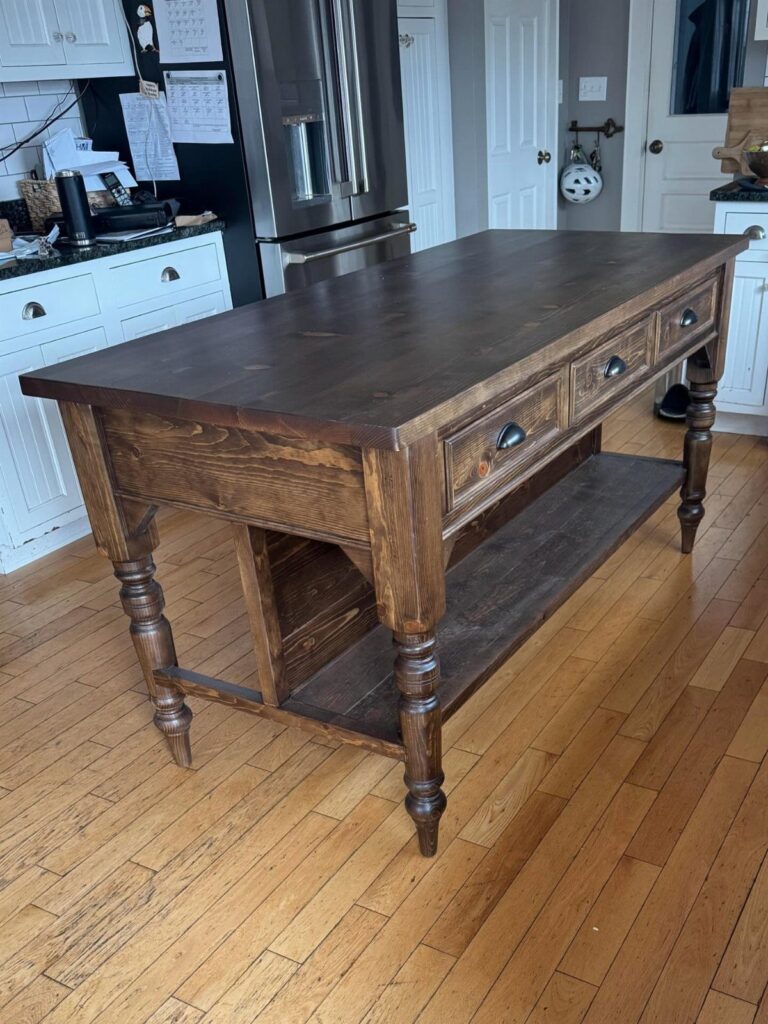
A kitchen island with three drawers and a lower shelf gives you two kinds of storage in one footprint. Drawers hide utensils and linens, while the open shelf holds baskets or cookbooks you grab daily.
Drawers are the slowest part of the build, so for a first furniture project, I’d budget the most time there. A dark stain hides small flaws in the wood, which helps a beginner.
2. Bookshelves
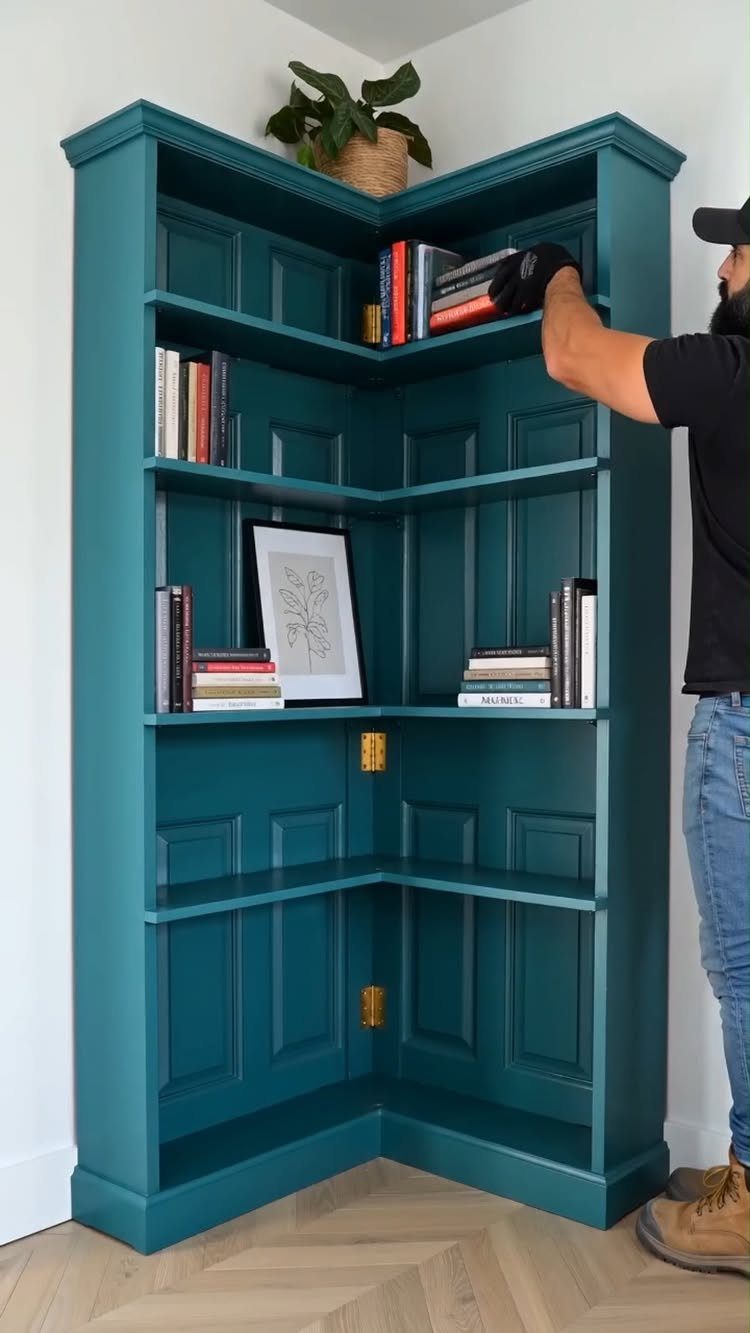
A corner bookshelf uses the one spot in a room that usually sits empty. The paneled backing in this teal version adds a finish that plain shelves lack, and it makes the whole unit feel built in.
Shelf spans are the weak point on any bookcase, since books are heavy and long boards sag. Keep each shelf short, or add a center support.
Paint covers modest lumber well, which keeps the budget low.
3. Outdoor Sofa

Modular is the smart way to build an outdoor sofa.
The maker of this one says you can mix and match the chaise, the 2 or 3 seater and the corner chair, so the layout fits your yard instead of the other way around.
Start with one corner piece and a single seat, then add sections as time and money allow. That spreads the lumber cost across several weekends.
Beige cushions look great but show dirt, so plan on removable covers.
4. Bunk Bed with Slide
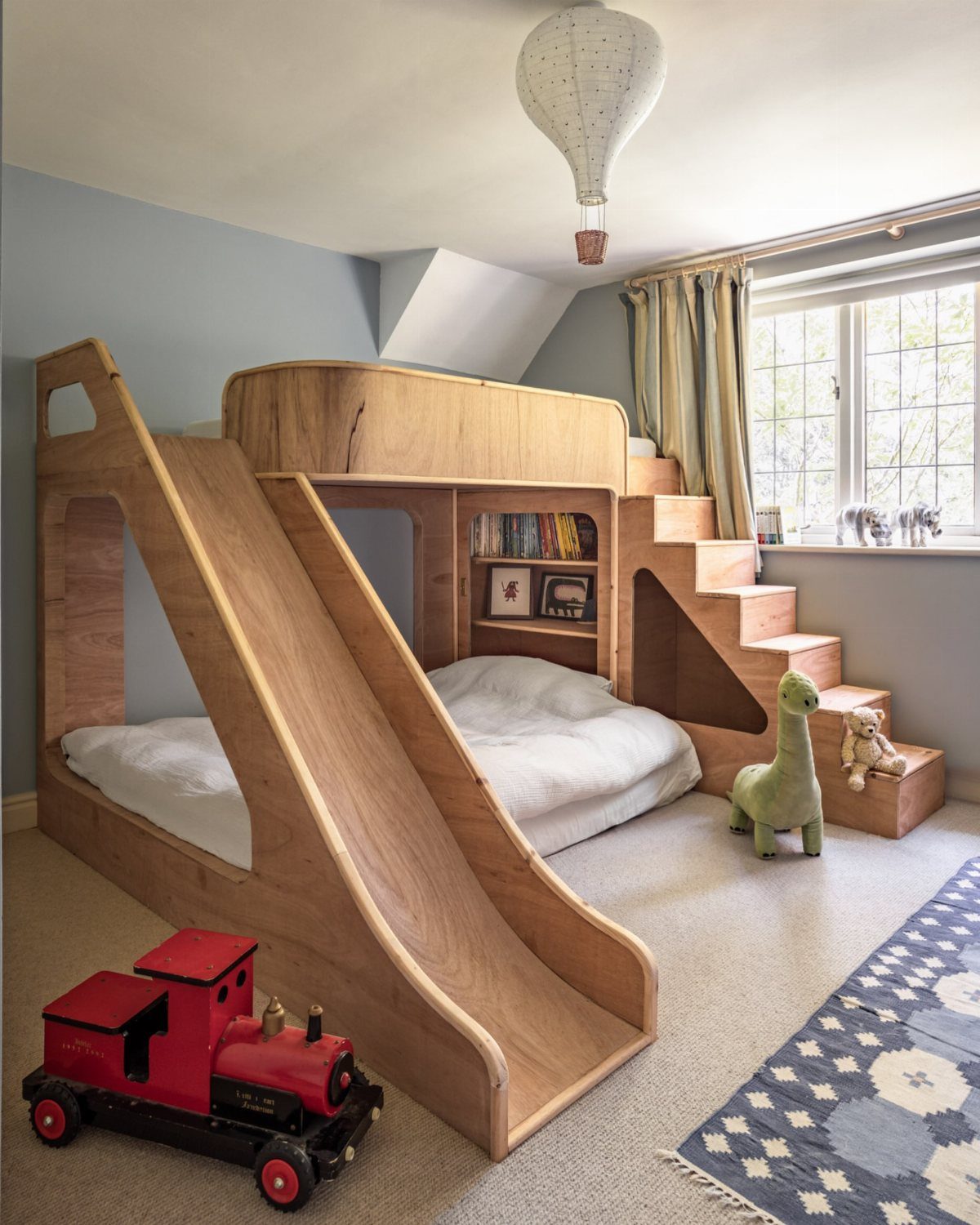
A bunk bed with a slide is a big build, and I’d call it a project for a confident beginner.
Plans for it often come as a PDF plus a SketchUp file, in imperial and metric, which lets you check every cut before buying lumber.
Stairs make the climb easier for small kids than a ladder does. Read the plan twice, because a bunk is a structure a child sleeps on, and the joinery has to be right.
5. Raised Garden Beds
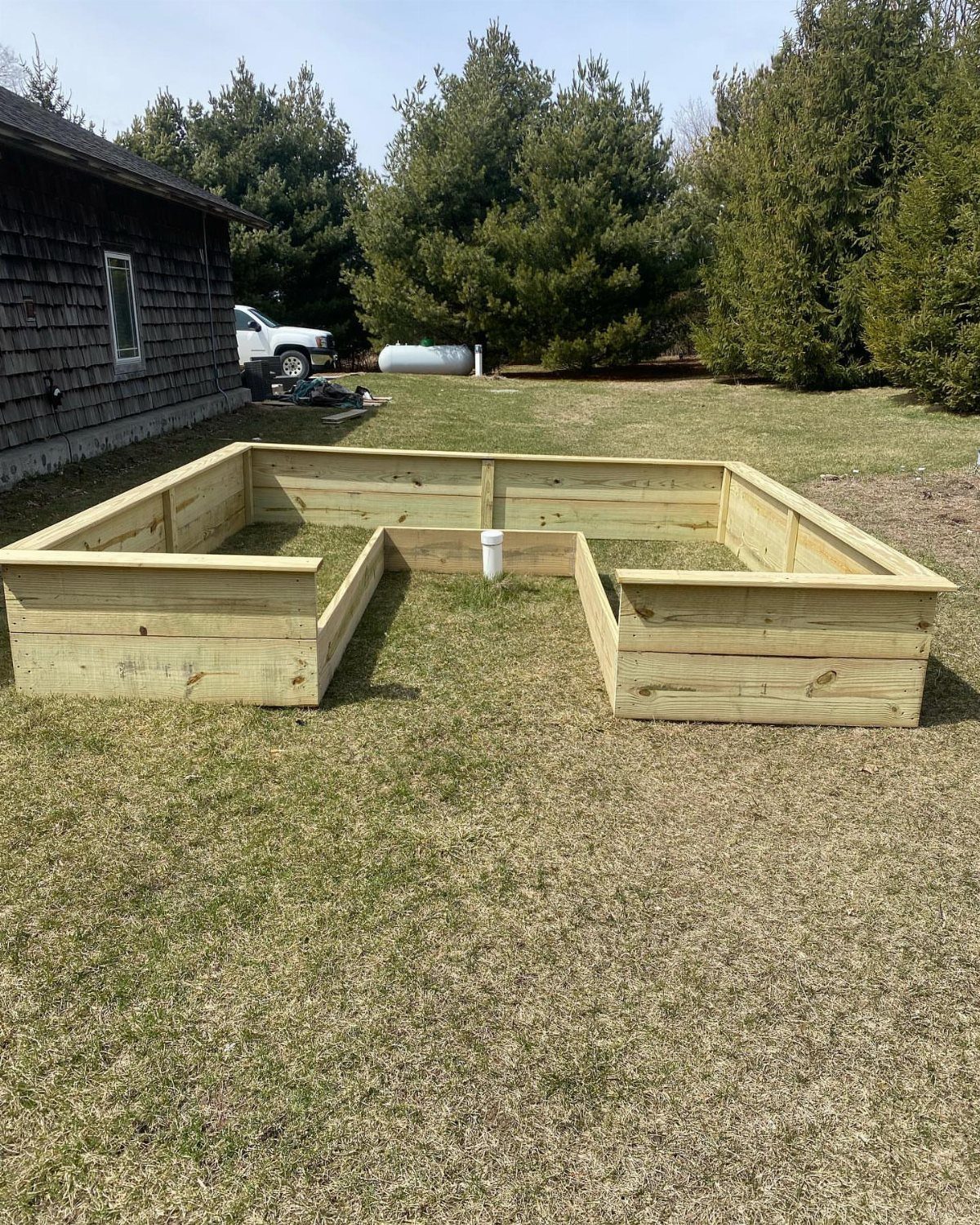
Raised beds are among the cheapest ways to start woodworking, since they are just boards and screws. This U-shaped layout lets you reach every plant from the outside without stepping on the soil.
Plan the footprint on the lawn first, with a string or hose, and leave room to walk around it. Level the ground before you assemble.
The U shape takes more cuts than a plain rectangle, so start with a single straight bed if you’re unsure.
6. Entry Bench
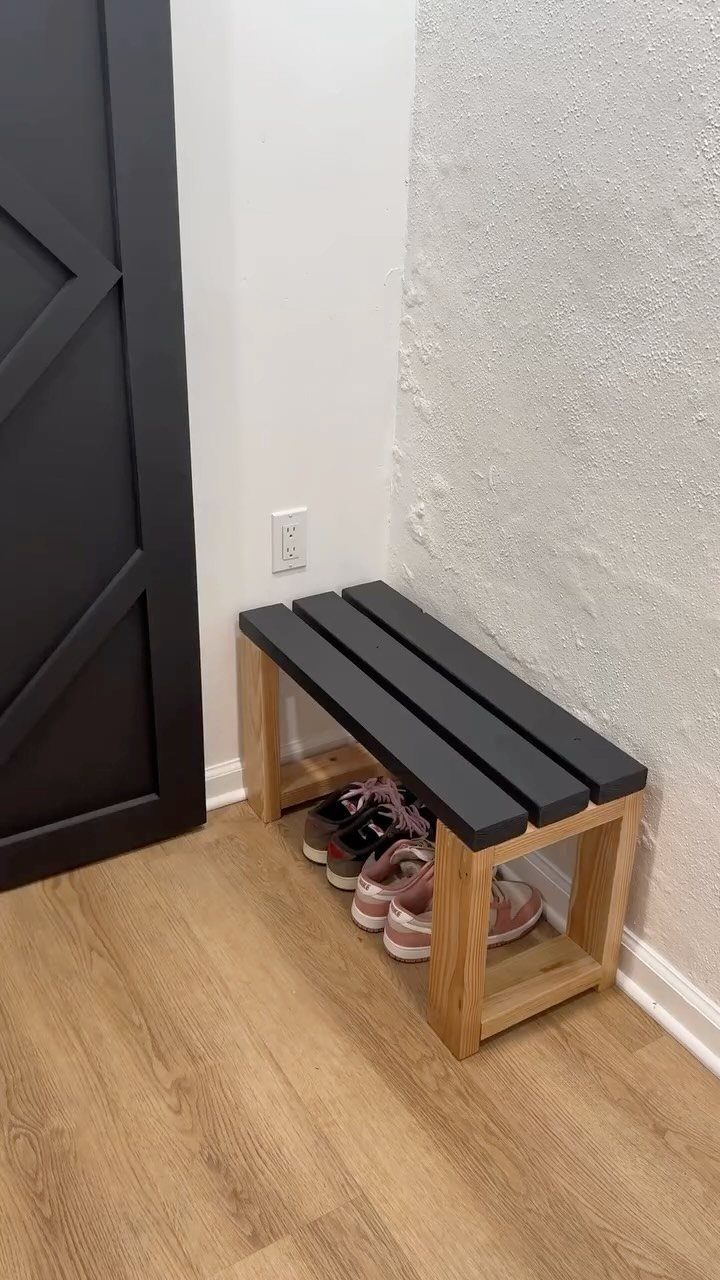
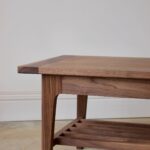
Slats are what make this entry bench work. A slatted top lets wet shoes dry and keeps grit from piling up, while the open space below holds a row of pairs.
I like the contrast of a dark top on light legs, and it’s easy to copy: finish the 2 parts separately before assembly, so no stain touches the legs.
It’s a small build with few cuts, a good afternoon project.
Beginner Woodworking Tips
A plan that spells out every step in order will get you a finished piece, and a gorgeous design with vague directions usually ends up as scrap, so choose the clear one first.
A plan that spells out each cut and each screw saves you more frustration than any tool you could buy.
Look for designs built from low-cost lumber and basic tools. Many beginner plans are written that way on purpose, and a few of them are free.
Start with the smallest build that appeals to you. A finished afternoon project teaches more than a half-built one that sits in the garage for months.
Tools for Woodworking
A drill, a saw and a pocket hole jig cover most of the plans you will run into. Those 3 tools are enough to build a surprising amount of furniture.
The jig is the one people skip, and I’d buy it early.
Pocket screws drive in at an angle from one face of the board, and that hidden joint pulls the pieces tight, so a sturdy frame comes together without a pile of clamps or fussy joinery.
Add a random orbital sander soon after. Sanding a whole project by hand is slow and tiring, and the sander gives a more even surface.
Keep your sandpaper discs sorted by grit so the right one is always within reach.
Project Customization
Many plans can be resized, so measure your space before you cut anything. Write the real dimensions on paper, then compare them with the plan.
Change one thing at a time, such as length, height or finish. If you resize a piece, recheck every part that connects to it, because a longer top usually needs a longer base.
Style is the easy change. Stain, paint and hardware swap freely and rarely affect the structure.
Test any finish on a scrap board first, so you see the color before it goes on the build.
Frequently Asked Questions
What are some easy woodworking projects for beginners?
An entry bench is a good first build: it has few cuts and fits in an afternoon. A single straight raised garden bed is another cheap start, since it is just boards and screws.
A corner bookshelf made from modest lumber and covered in paint also works, as long as you keep each shelf short so it doesn’t sag. Save bigger builds like a bunk bed for after you’ve finished a few small ones.
How can I customize my woodworking projects?
Measure your space first and compare the real dimensions with the plan, since many plans can be resized.
Alter one dimension at a time, whether length, height or finish, then recheck every part it touches; stretch a tabletop by 12 inches and the base has to grow with it.
Stain, paint and hardware swaps are the low-risk ones, since none of them changes how the piece holds together.