Where the project will sit decides which of these garden wood projects is yours: a bare wall suits the pallet herb planter, a yard with a tree suits the dining table built around the trunk, and a spot with room and help on hand suits the 3-door shed.
The list runs from a plain afternoon build like the window flower box to that shed, which needs extra lumber and more than an afternoon.
Lumber choice decides how long any of these builds last outdoors, and cedar, redwood or pressure-treated pine are the three I’d shop for first.
1. Potting Bench
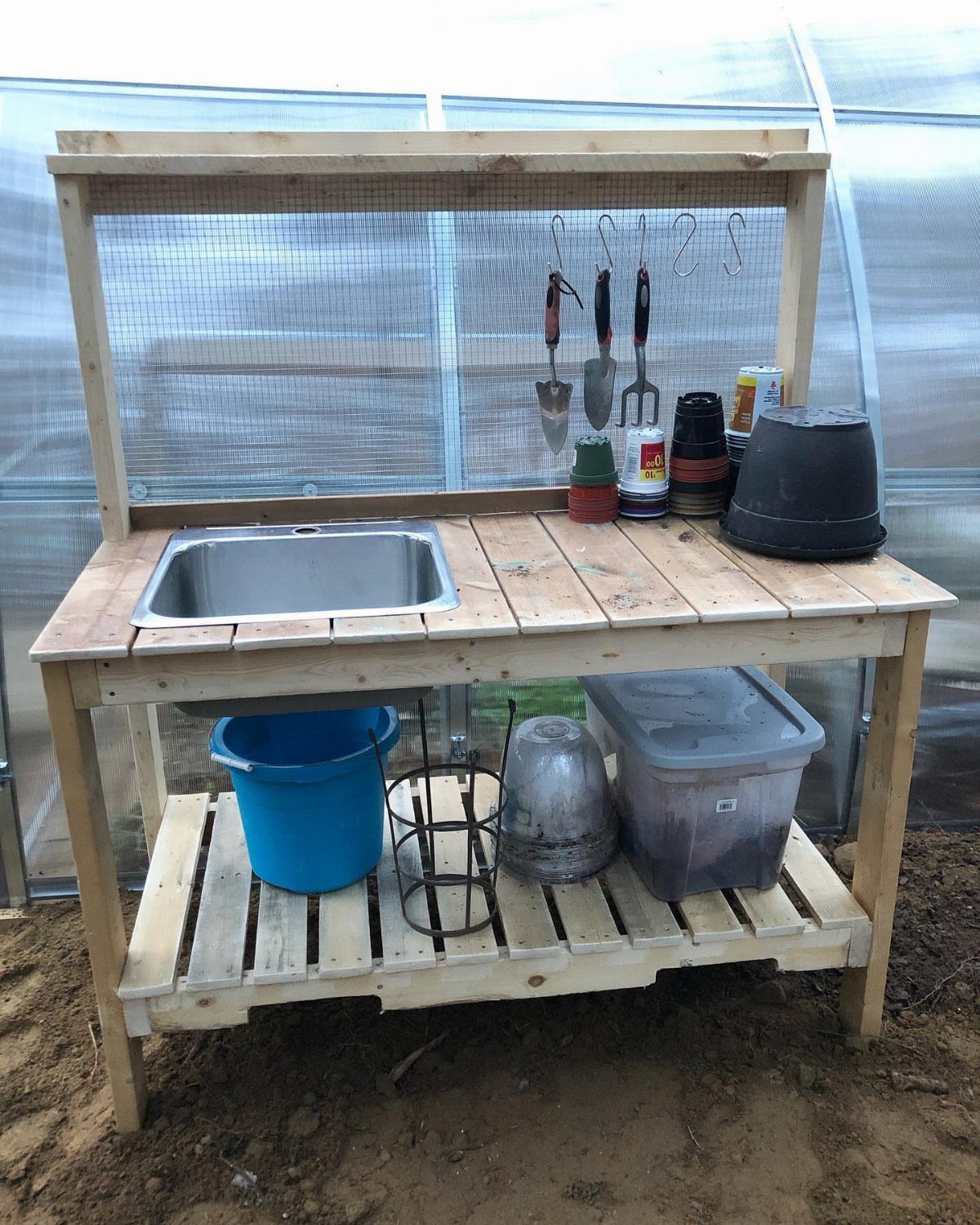
A potting bench gives soil, pots and tools one spot, so you stop hauling them across the yard. A bench with a lower shelf, like this one, keeps heavy buckets off the floor and within reach.
A backboard with hooks does the rest. Hang trowels and pruners where you can see them, and they stay put.
Add a sink only if a water line is close; otherwise a plain work surface does the job.
2. Trellis
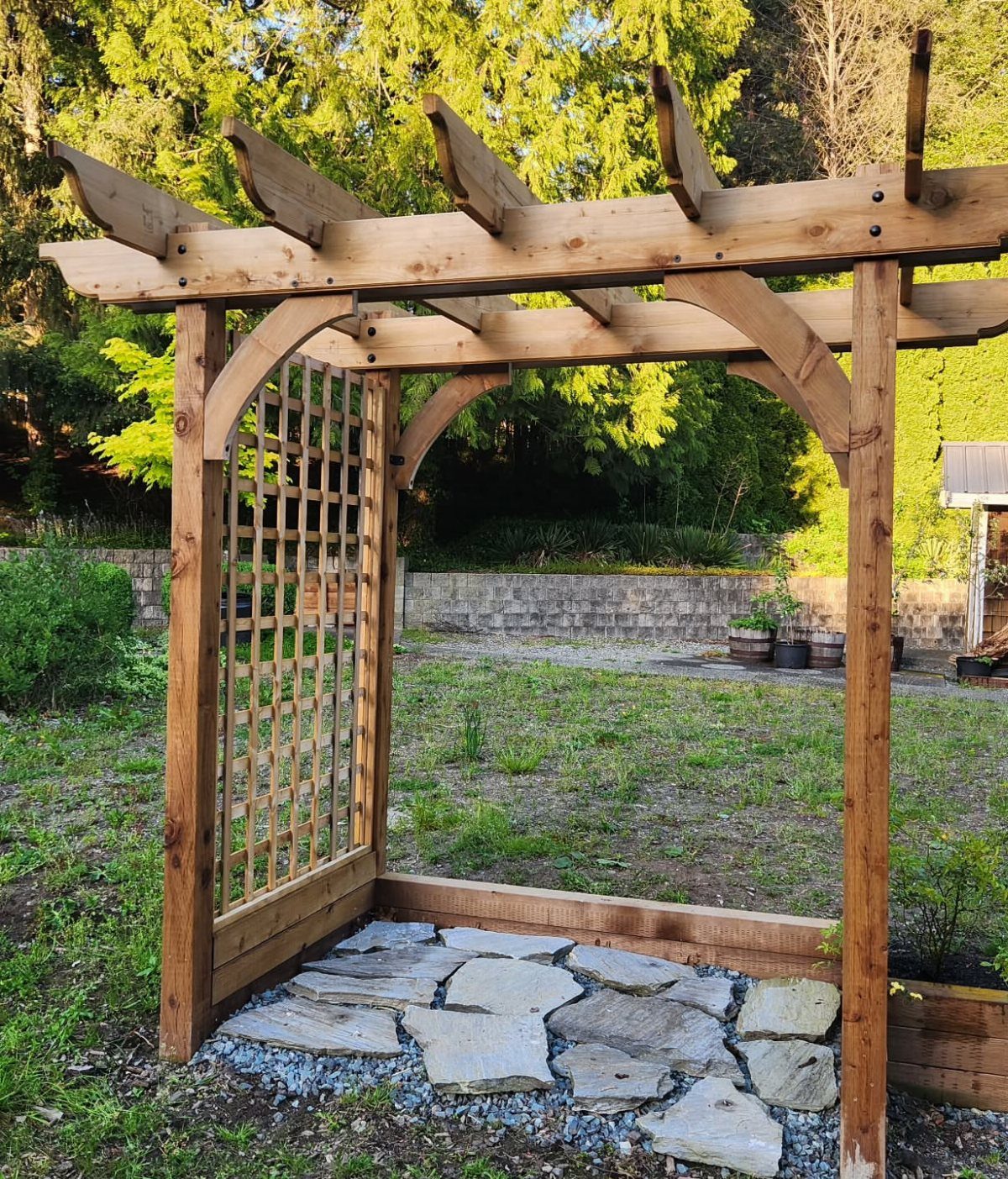
Climbing plants need something to hold, and a lattice wall gives vines a grid to grip while adding height to a flat yard.
Wood lattice is simple to cut and screw into a frame with basic tools, which makes this an easy afternoon build.
Setting the frame on a solid base, as the stone one does here, keeps the wood away from damp ground. Pick a stain or sealer for outdoor use, since the structure will stay wet through every season.
3. Wooden Swing
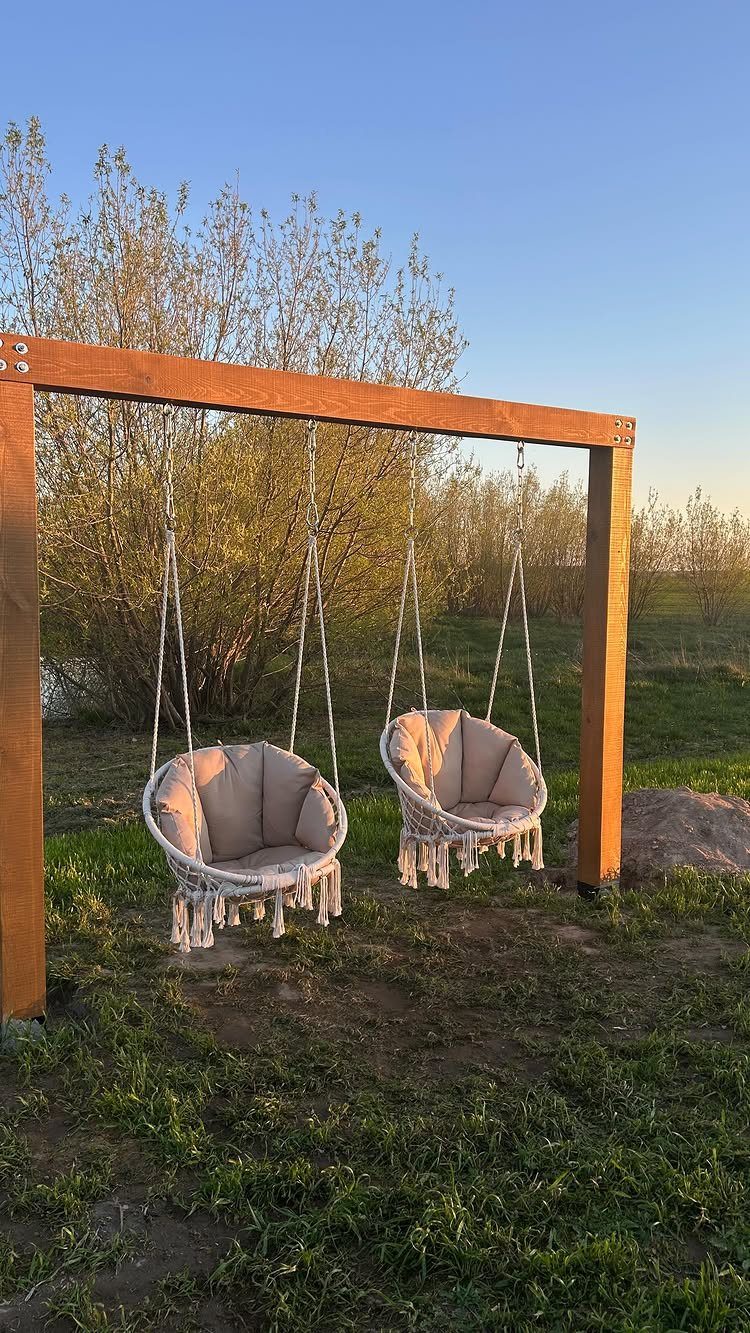
Two seats hung from one beam make a better spot to sit than a single swing, and a wooden frame holds them without needing a tree limb. Hanging chairs with cushions feel like a reading nook outdoors.
I would build the frame first and hang the chairs last, so you can judge the beam height with the chairs in place. Use a sturdy beam and hardware rated for the weight of the people who will sit.
4. Vertical Herb Planter
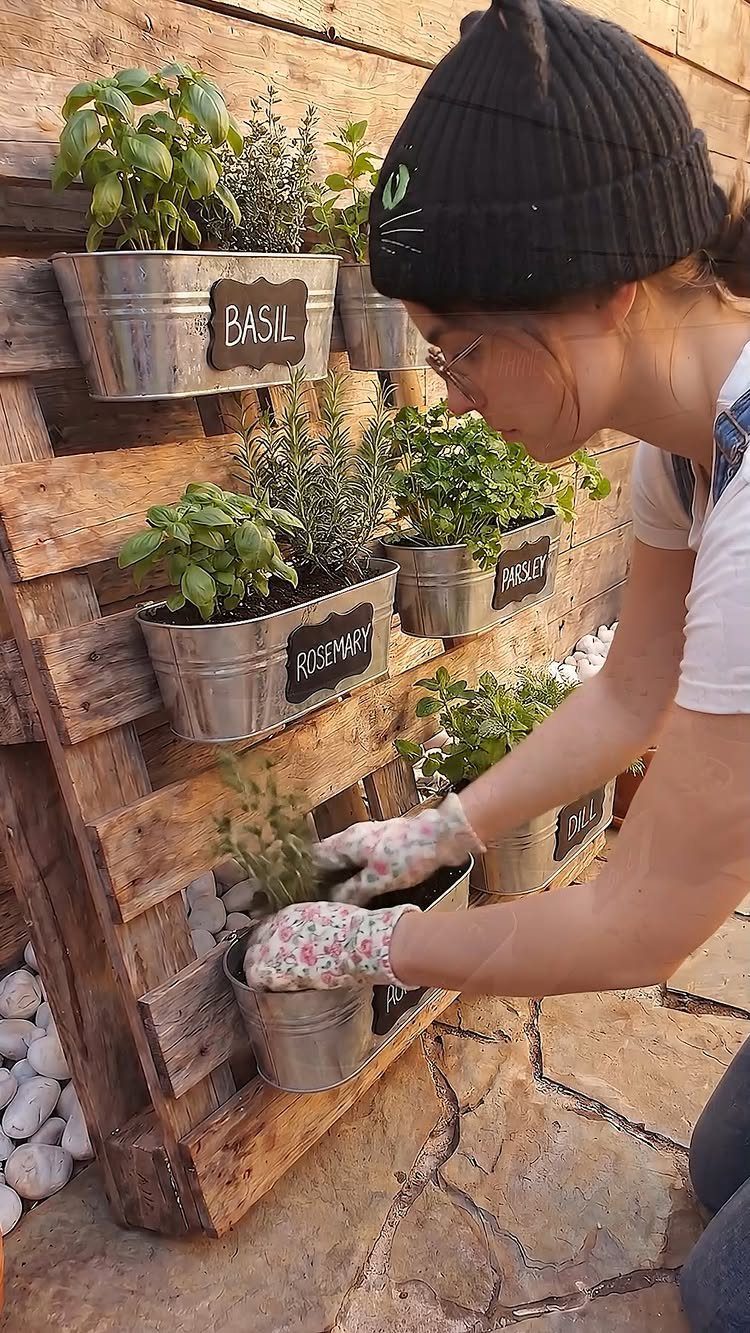
Pallet boards turn a bare wall into a herb garden. Buckets screwed to the slats hold one plant each, so basil, rosemary, parsley and dill each get their own pot.
Label each planter with a plant marker or a paint pen, because leafy herbs like mint, oregano and thyme look nearly the same once they grow in.
Drill drainage holes in the bottom of each bucket before filling it. Mounting the pallet near the kitchen door means you will actually pick the herbs.
5. Garden Shed
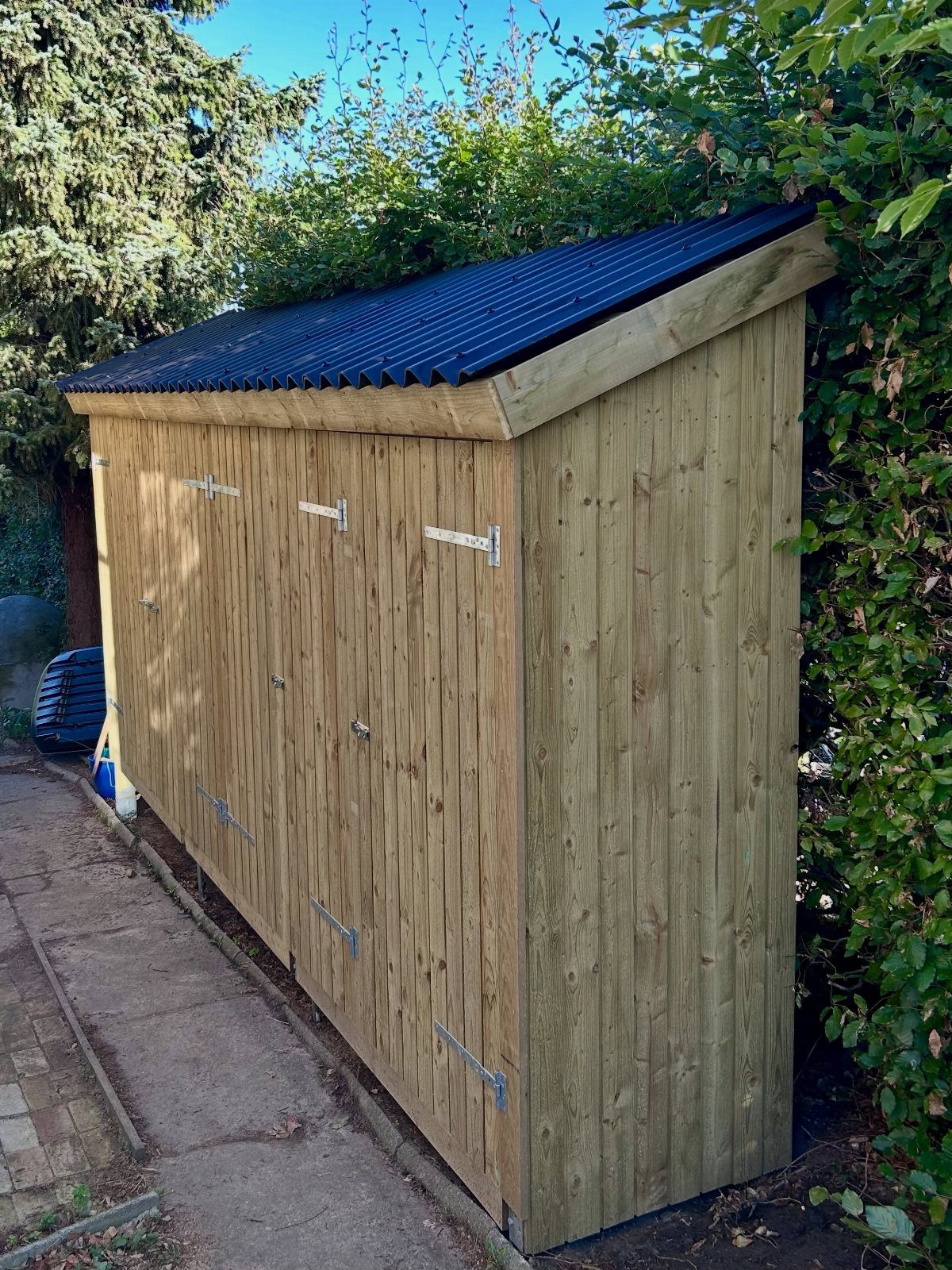
A shed with 3 doors splits storage into separate bays, so mowers, tools and pots each get their own door.
A corrugated metal roof sheds rain fast, comes in panels you can cut with tin snips, and suits a simple shed frame with a single slope.
Set the shed on a hard surface like a concrete pad, pavers or compacted gravel, so the floor stays off wet soil and the framing lasts longer.
This is the biggest project in the list, so expect more than an afternoon and plan for extra lumber and help lifting walls.
6. Outdoor Lantern Stand
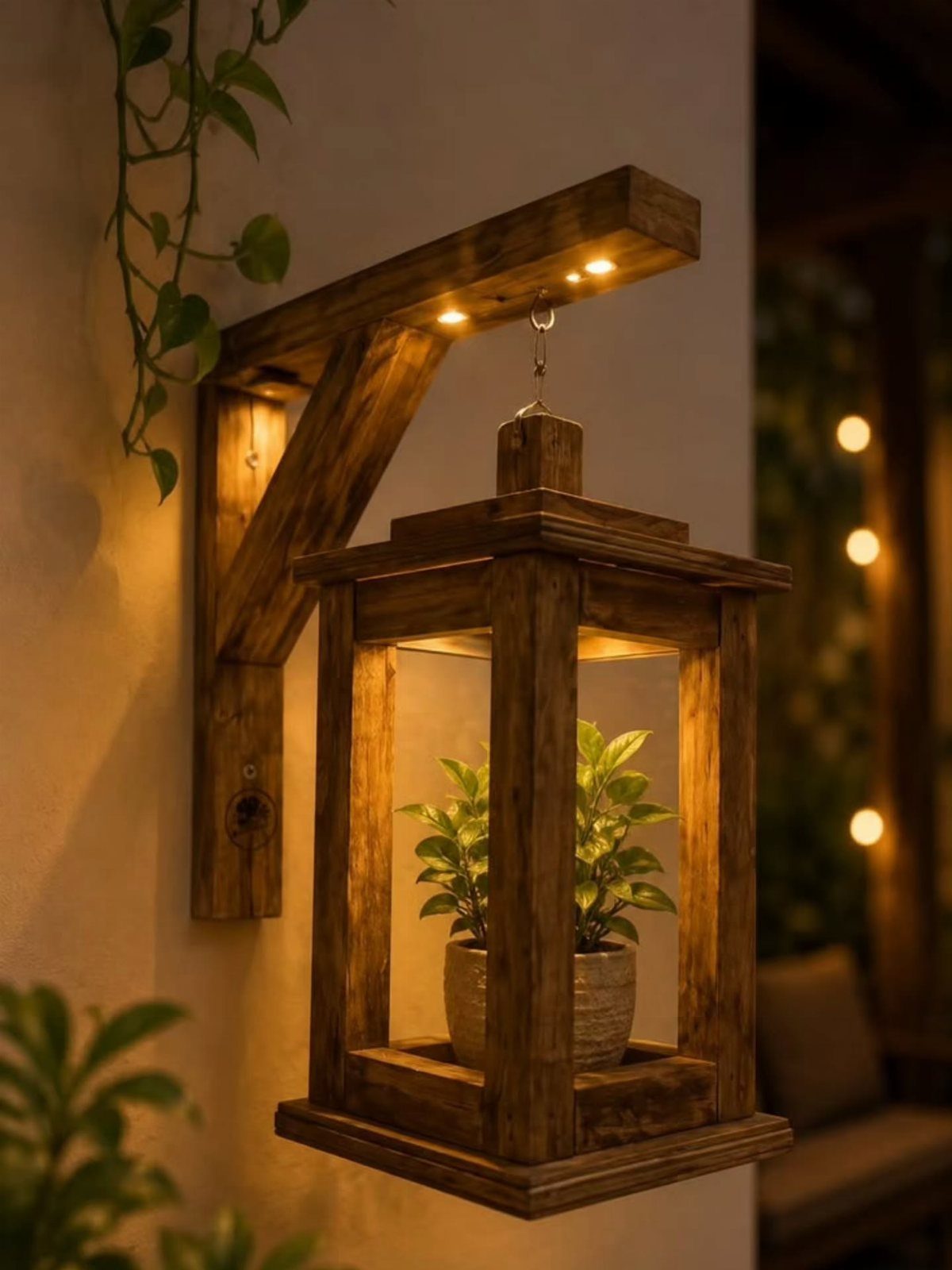
A wall bracket holding a hanging lantern gives you light at eye level without taking up patio floor. Cut the bracket from sturdy lumber and fasten it into a stud or solid masonry anchor.
A wooden lantern with small plants inside also doubles as a planter, which I like. Add a battery string light so no wiring is needed.
Choose a finish made for outdoor wood, since the bracket and lantern will both take weather.
7. Window Flower Box
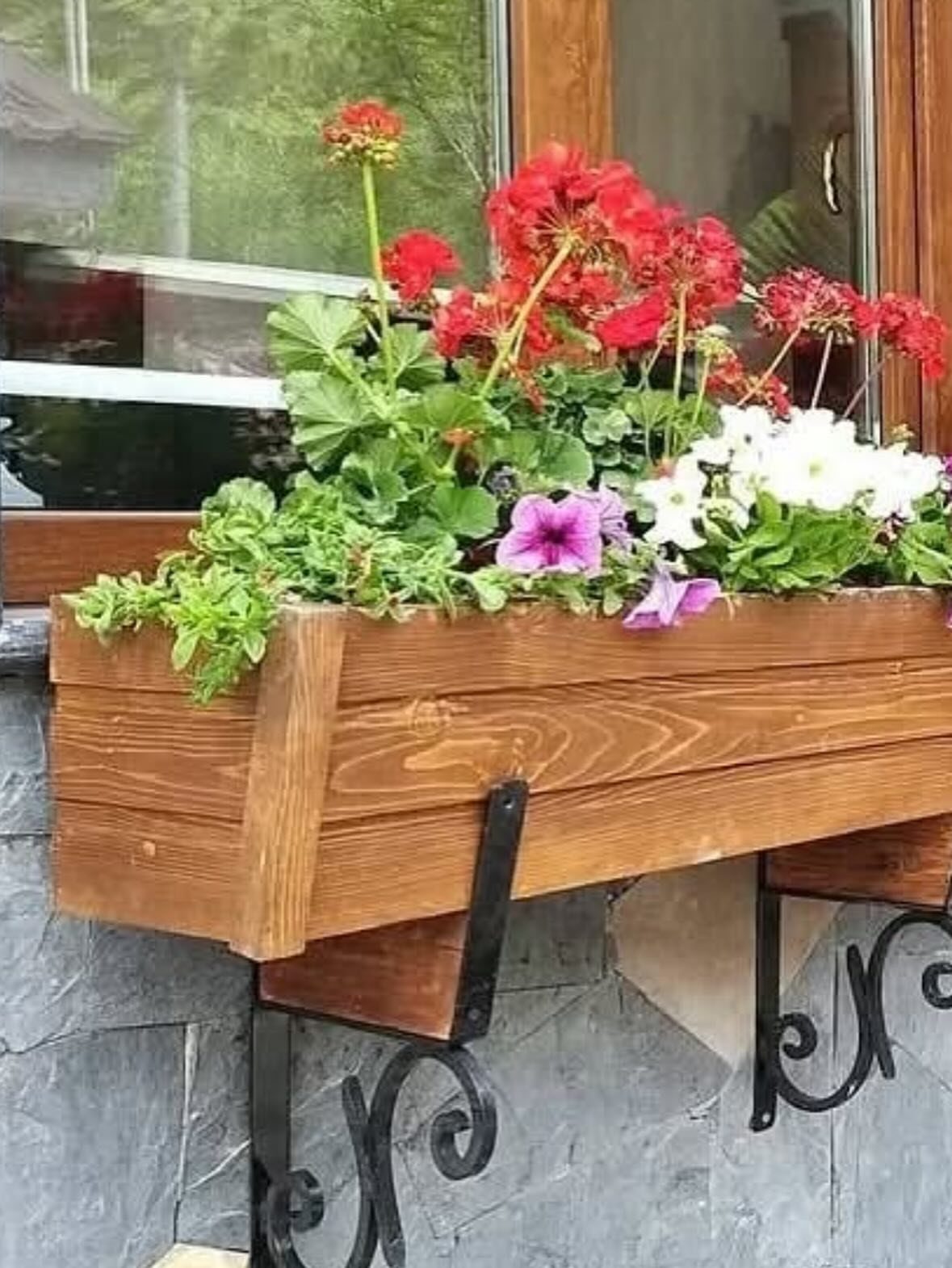
Build the box from exterior-grade boards and join it with stainless screws, which resist rust where rain hits.
Drill holes in the base or leave small gaps between slats so water drains. A liner inside keeps soil from washing through and protects the wood.
Set the brackets into solid wall before you load the box with wet soil.
8. Square Outdoor Dining Table
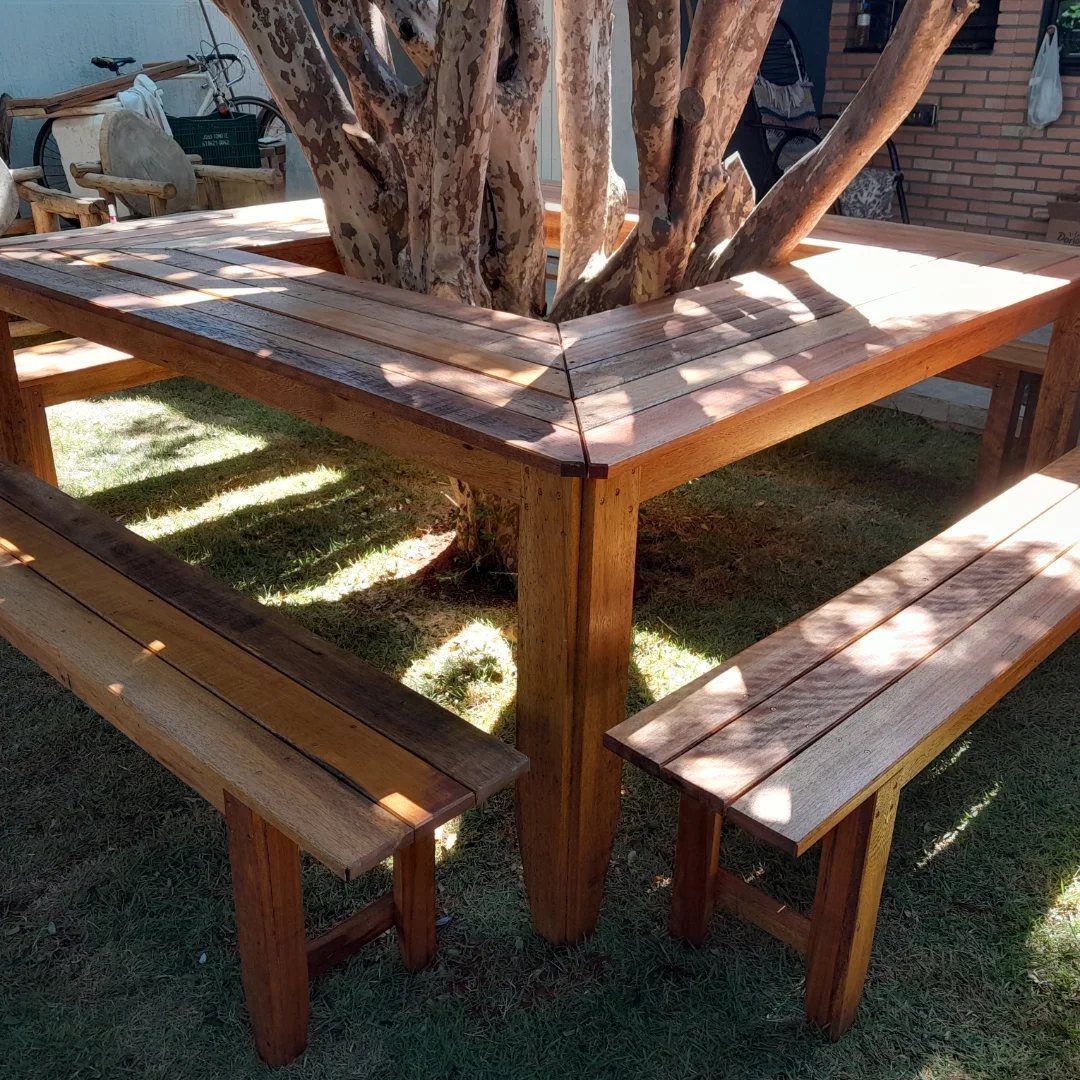
Building a table and benches around a tree trunk gives a family dinner spot with shade already overhead. A square layout suits that job, since each side becomes a straight run for boards and a bench.
I would cut a generous opening around the trunk so the tree has room to grow. Choose a sealer made for outdoor wood, because the tabletop takes sun and rain together.
This is a bigger build than a planter, so plan more than an afternoon.
9. Garden Cart
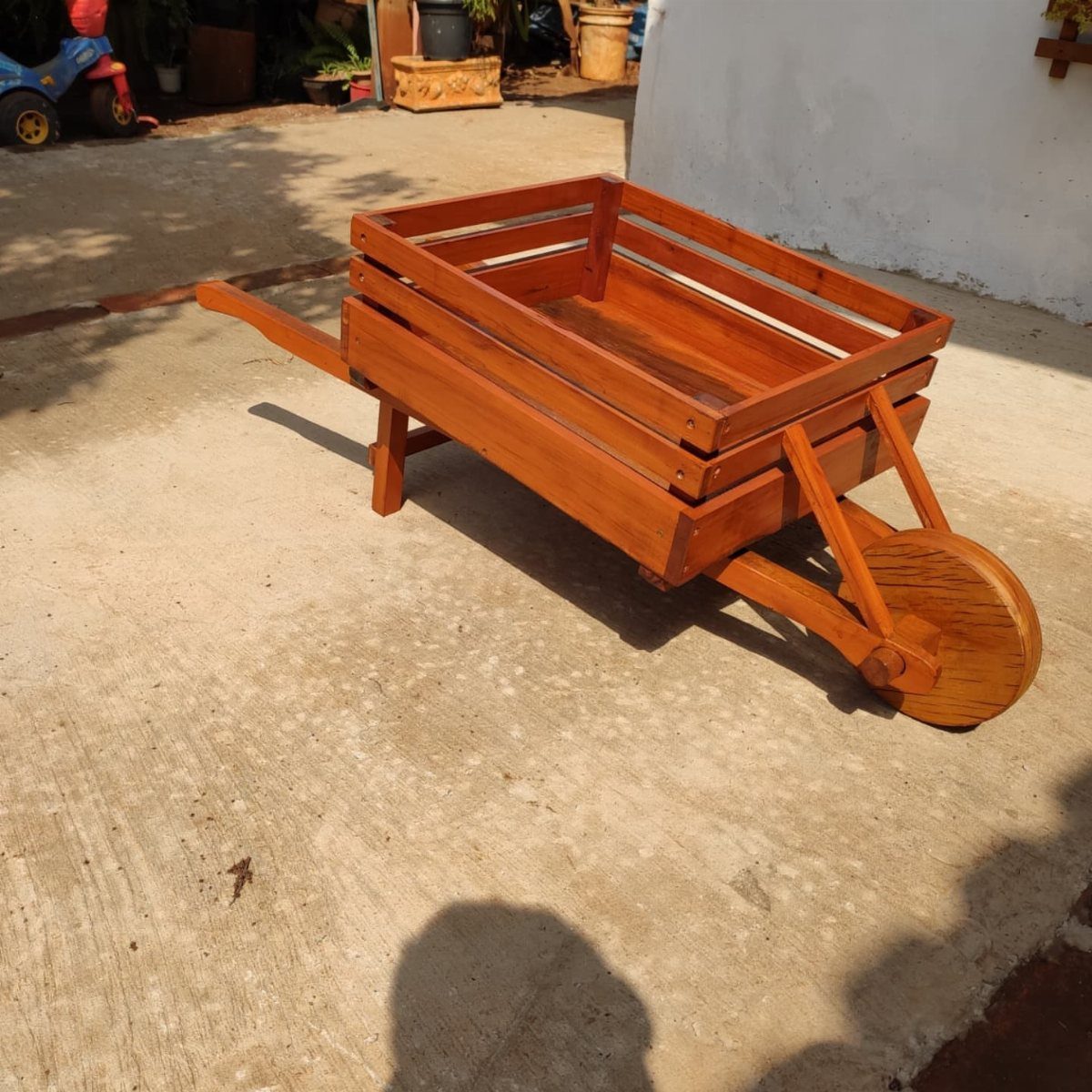
One large wheel makes a cart easy to steer along a path, and a wooden bed holds pots, soil bags and tools in a single trip. Keep the bed shallow enough to reach into without bending far.
Pick the wheel before you cut anything, since its size sets the frame height and where the axle sits. Screw the joints rather than nailing them, because a loaded cart shakes its fasteners loose.
Finish the wood with an outdoor sealer and store the cart under cover when you can.
10. Butterfly House
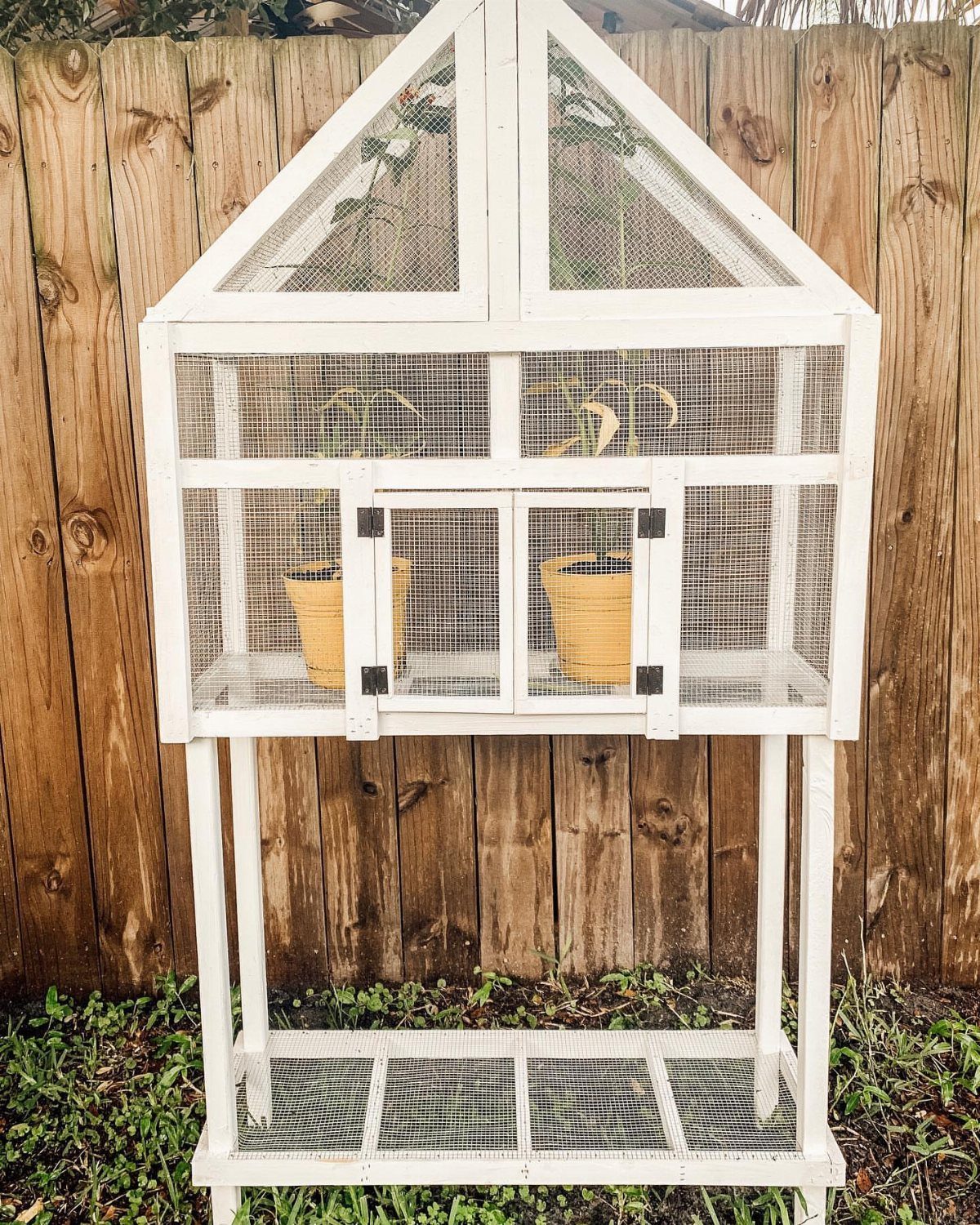
I like a hinged door, so you can water the plants and reach in without taking the structure apart.
Rain will soak this frame again and again, so use an exterior-rated stain or sealer and recoat it every year or two.
Standing it against a fence gives the back some support.
11. Sandbox with Built-in Seats
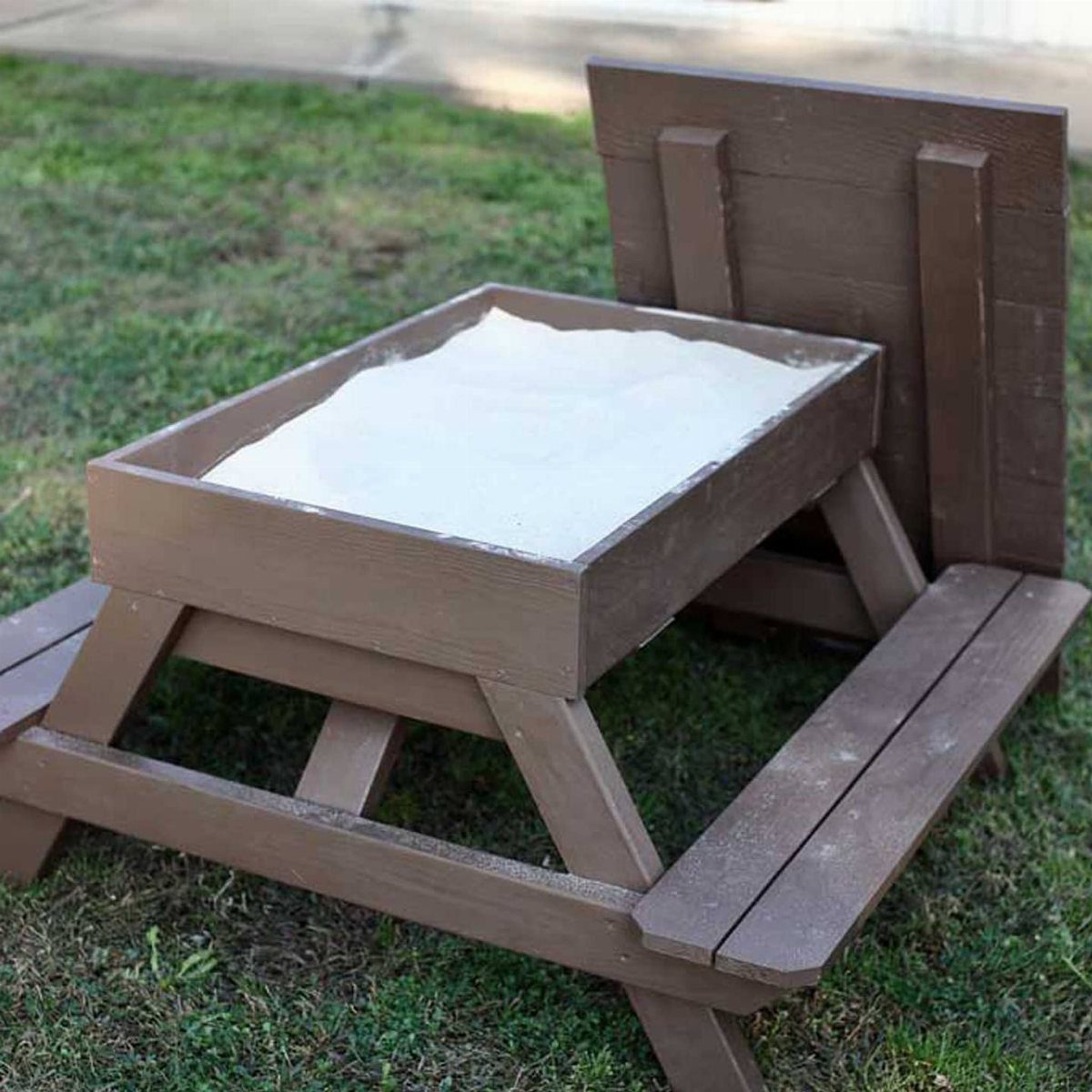
Benches built into the frame give kids a spot to sit while they dig, and a backrest means a parent can sit too. Make the seats part of the sandbox walls so there are fewer separate pieces to wobble.
Sand the top edges and screw heads smooth, since small hands will find every rough spot.
Sand holds moisture against the wood, so a coat of exterior stain or sealer on the seats and inside faces keeps the boards from rotting early.
Set it on level lawn so the seats stay even.
12. Garden Arbor
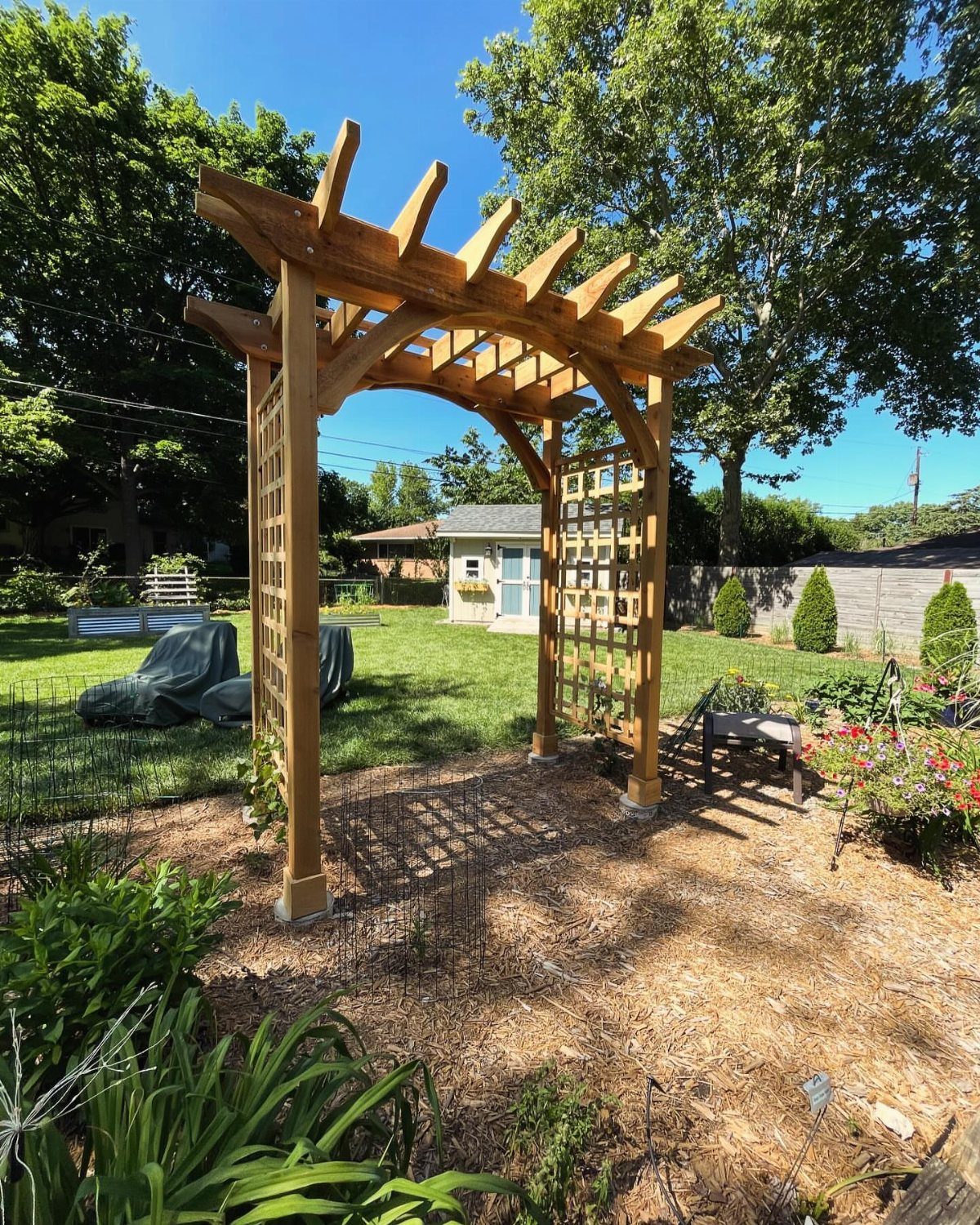
A curved top and lattice sides turn a simple opening into a garden entrance, and a vine climbing the lattice softens the frame. Lattice screws easily to posts, which keeps the build within basic tools.
Set the posts firmly, because an arbor with plants on it catches wind like a sail. Use outdoor sealer or stain on every cut edge.
Standing it on mulch, as here, keeps the base tidy, though I would keep wood off wet soil where I can.
13. Three Tier Planter
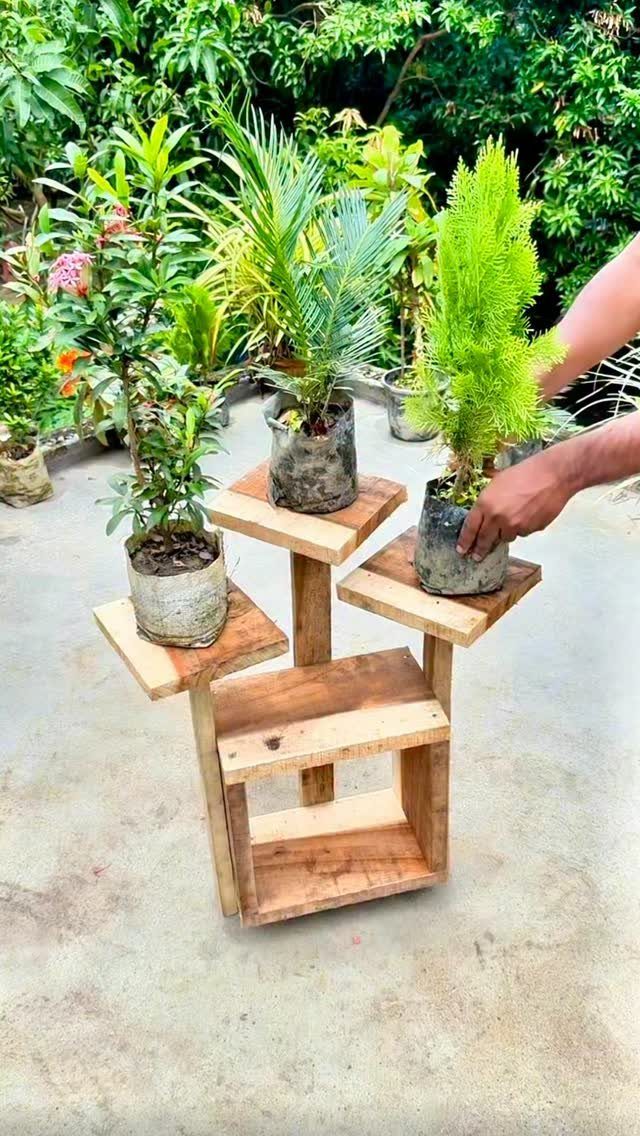
Stacking three levels lets a small patch of yard hold three pots in the footprint of one, and each plant gets its own shelf at a different height.
Stands like this one suit potted plants you already own, so the build can stay simple.
Cut the tiers as separate platforms and screw them to the uprights, so you can adjust the spacing before anything is final. Leave room between levels so the top plant doesn’t shade the lower ones.
Use an outdoor sealer on the wood, since water will drip from pot to pot.
Choosing the Right Wood
For anything that will sit outside, I stick with cedar, redwood or pressure-treated lumber, since all three resist rot and moisture far better than plain pine or fir.
Cedar and redwood cost more, but they are easier to cut and drill, which suits an afternoon build. Pressure-treated lumber is the practical pick for anything that sits close to the ground.
Choose by how the piece will be used.
If it holds plants or sits in a spot kids will touch, I lean toward cedar or redwood. If it only needs to survive and stay out of sight, treated boards do the job.
Buy a little extra, and sort through the stack at the store for boards that are straight and free of loose knots.
Basic Tools for Woodworking
A saw, a drill and a sander will get you through most garden builds.
A handsaw or circular saw makes the cuts, a drill sets the screws and drainage holes, and a sander takes the splinters off before anyone touches the piece.
If you only have a few tools, that set still gets you a long way. Fancy cuts and extra gear can wait.
Start with something simple, like a garden stool or a plain bench. Beginner projects need fewer tools, skip tricky joinery and finish faster, so you learn how the wood behaves without wasting a weekend.
Once straight cuts and tight screw joints feel easy, move up to a bigger build.
Safety Tips for Woodworking
Wear eye protection every time you cut, drill or sand. Sawdust and flying chips find eyes quickly, and safety glasses cost very little.
Dust deserves the same attention.
Sand outdoors or in an open garage, and wear a dust mask. Open doors and windows when you stain or seal, so fumes don’t build up.
Check reclaimed boards before you cut them. Before cutting, scan reclaimed boards for stray nails, cracks and loose knots, and skip sanding or sawing anything with an old finish you can’t identify, because that dust isn’t something to breathe.
Clamp the workpiece before you saw or drill, and measure twice. Read the manual for any tool that is new to you.
If kids are helping, an adult should handle the cutting, drilling and other power-tool work.