Which toy to carve depends on how much knife work you want and how many hours you have, and the list runs from small animal figurines and toy soldiers to carved dolls and a front-end loader built from plans.
Animal figurines, dolls and toy soldiers are about an afternoon of knife work in soft wood like basswood, while the front-end loader is a weekend of cutting flat parts from dimensioned plans, with a dowel-pinned bucket arm that pivots.
Dolls and toy soldiers sit between them, and a soldier gets faster with every copy once you trace a pattern from the first.
1. DIY Wooden Toy Projects
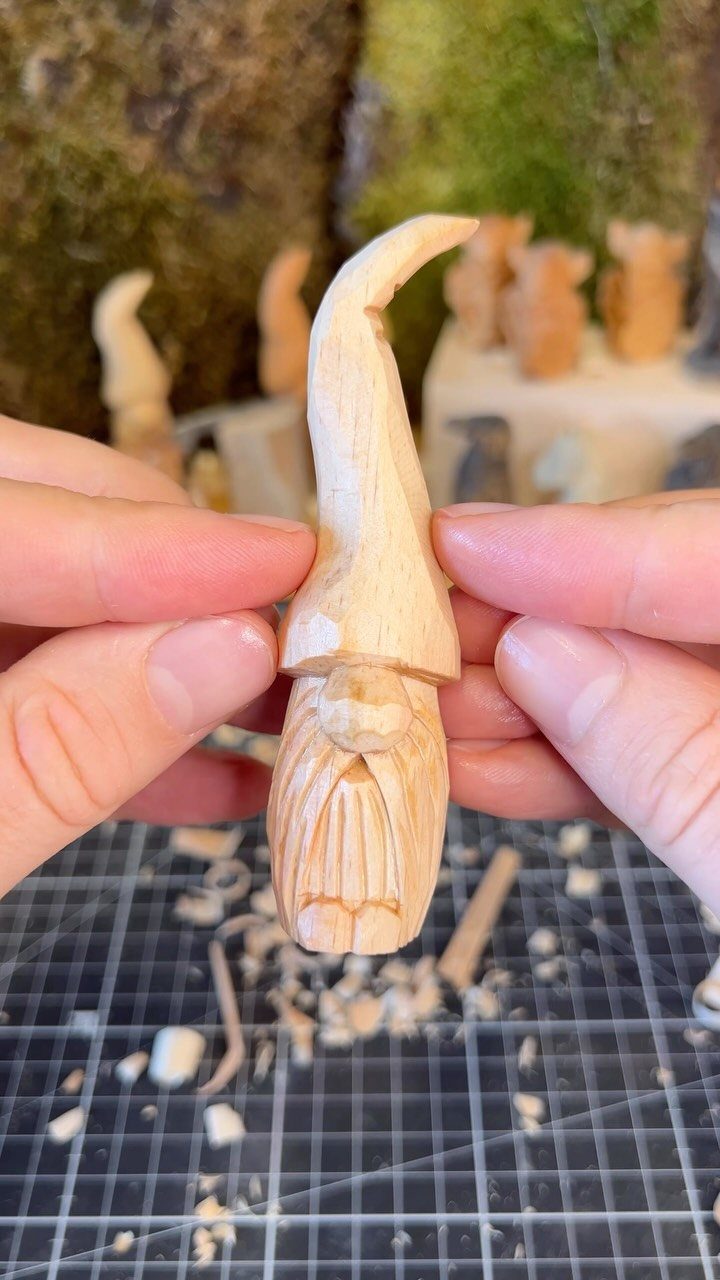
A gnome is about the friendliest first carve there is: a pointed hat, a round nose, a beard, and almost no fine detail to ruin.
Basswood is the usual beginner pick because it cuts easily, though any soft, straight-grained wood works.
Plan on an afternoon.
Rough out the shape with big cuts, then save the face for last, since one slip there shows. Wearing a cut-resistant glove on the hand holding the piece is cheap insurance.
For many woodworkers, there is no finding–it’s all in the making! Handcrafted wooden toys can be simple or complex, easy and fun to make, and fun for kits to play with too!
2. Wooden Animal Figurines
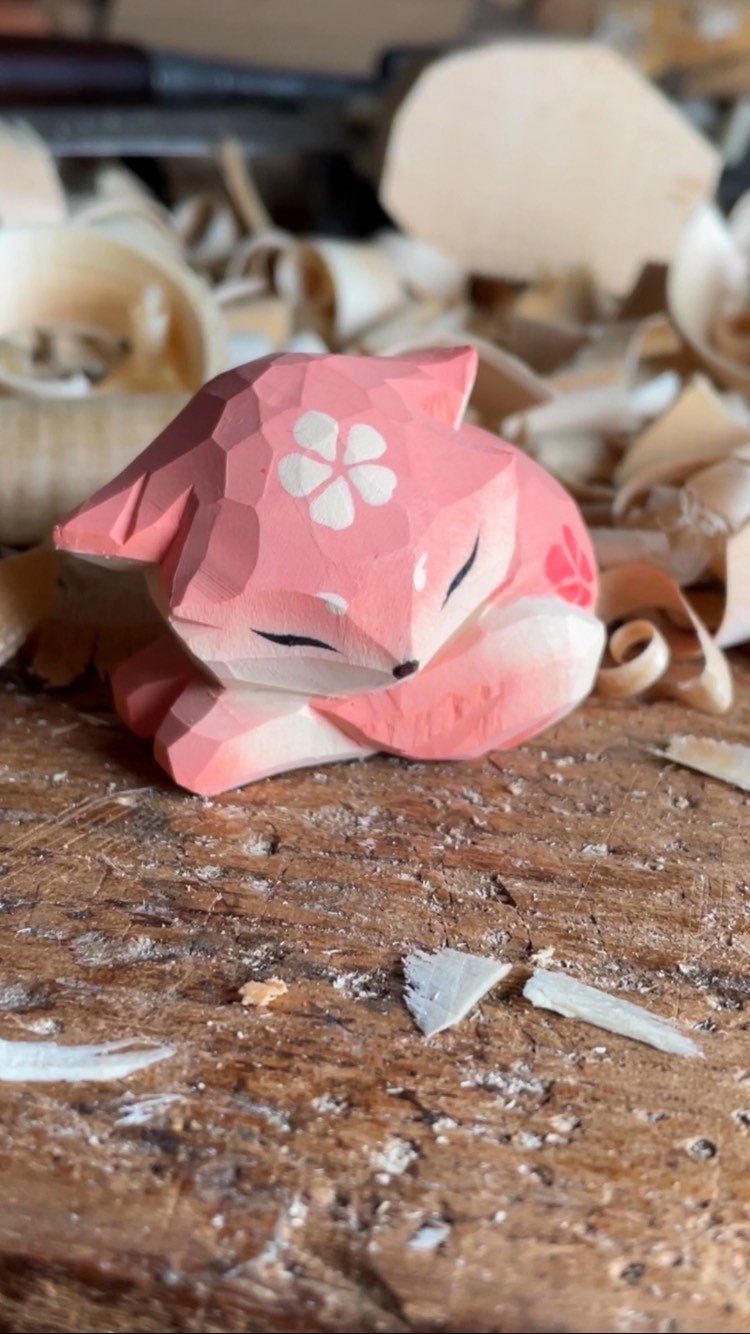
Sleeping animals suit heirloom carving because the body folds into one smooth, rounded mass with no thin legs to snap off. A curled fox is the proof: it fits in a palm and shrugs off being dropped.
Keep the shapes soft and the edges rounded, then sand through finer grits until the wood feels like stone.
Paint is a choice, and so is a clear finish. If a child will mouth the toy, check that the finish is labeled toy-safe before you use it.
3. Front-end Loader Toy Plans
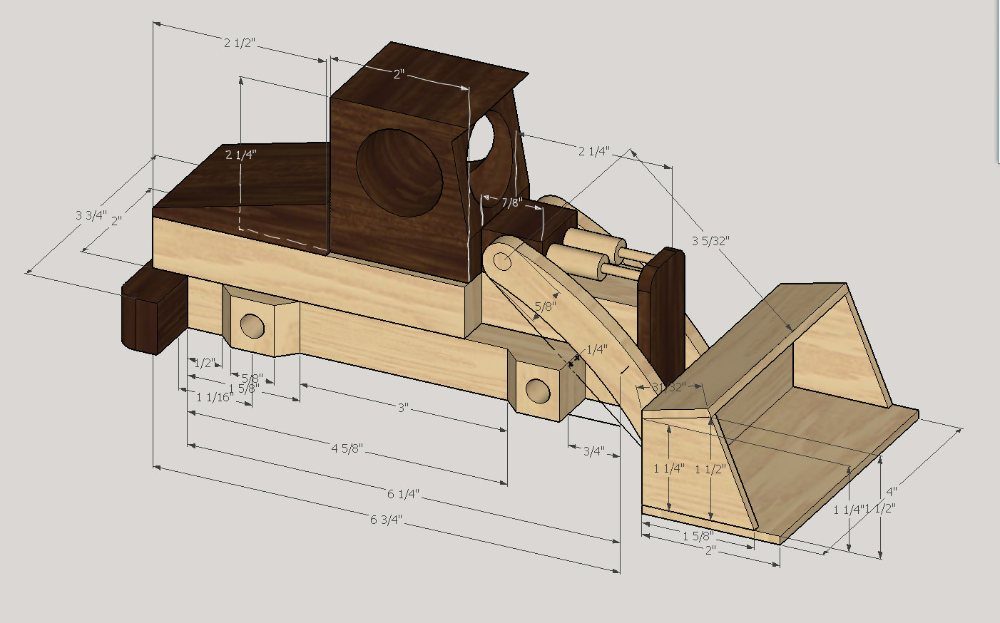
Dimensioned plans are what make a front-end loader doable in one weekend, and a rendering with labeled measurements is the kind worth hunting for. Print them and check each measurement against your lumber before cutting anything.
Cut the parts first, then sand them while they’re still flat and easy to handle.
Glue the chassis before adding the bucket arm. I would pin the arm with a dowel so it can pivot, because that moving part is what makes kids reach for it.
4. Carved Wooden Dolls
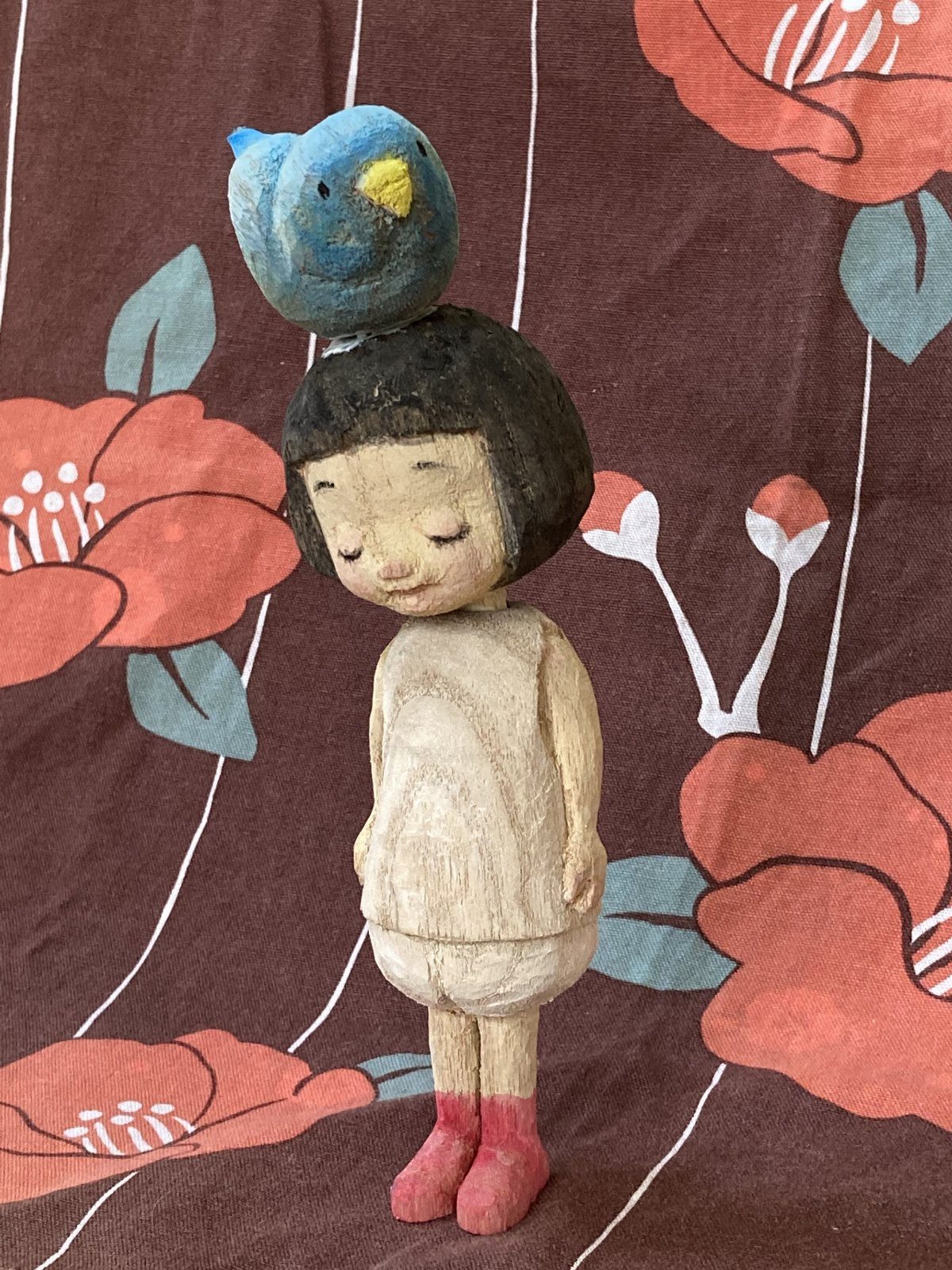
Carving a doll as a stylized figure, with a simple rounded body and a few bold features, is easier and more charming than chasing realism.
Keep the proportions chunky.
Thin arms and necks break first, so I like to leave them thick. Paint the face and clothing in flat colors with a fine brush, and let each color dry before adding the next.
5. Toy Soldiers
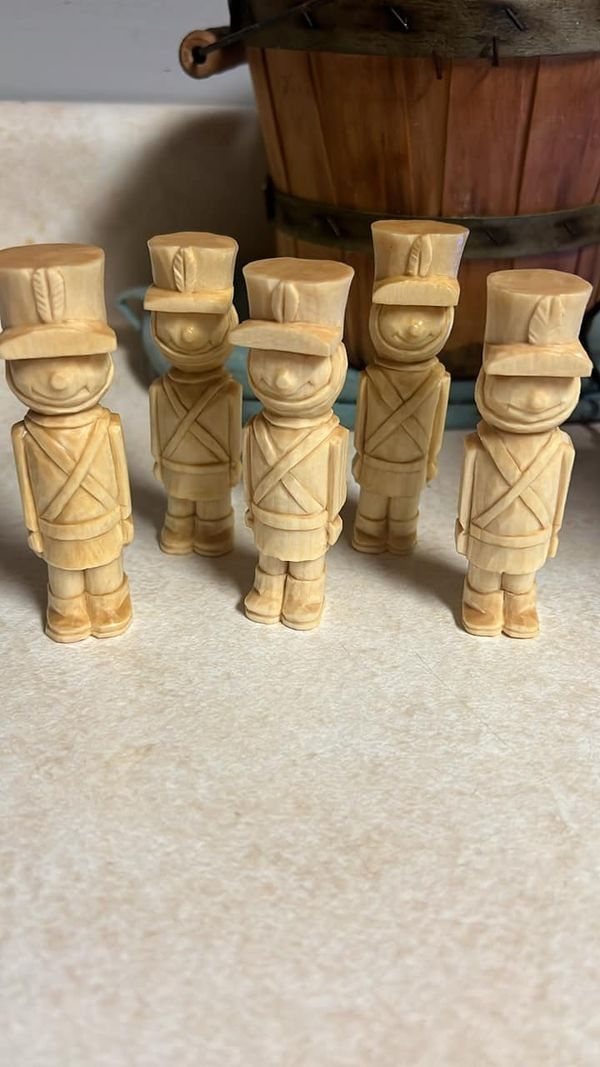
Soldiers work well as a set, and that is the appeal: once you carve one, the rest go faster.
Repeating the same hat and coat shape across a whole row of figures teaches you more than a single detailed piece would.
Make a pattern from the first soldier and trace it onto each blank so they match in size.
Vary the details, like hat shape or uniform color, so each stands out. Stand them on flat bases so they don’t tip over.
Frequently Asked Questions
What are the best woods for wood carving?
Basswood is my pick for beginners, and maple and birch are other common choices. Basswood cuts easily, and any soft, straight-grained wood behaves in a similar way, so the knife glides instead of fighting you.
Who are some famous wooden toy makers?
Ostheimer is a well-known name, recognized for imaginative wooden toys. It’s a good brand to study if you want ideas for simple, rounded figures.
What are some good woodworking gift ideas for children?
Wooden toys and games you make by hand are a strong pick for kids, since they last for years and nobody else will have the same one.
A front-end loader with a pinned, pivoting bucket arm is another good one, because the moving part is what kids reach for.
Is a wood carving toy safe for a child who mouths things?
It can be, if the finish is right. Read the can before you open it: any paint or clear coat should say toy-safe on the label.
Round every edge, then sand up through the finer grits until the surface feels smooth as a river stone; thin necks and arms should stay thick so a tug won’t snap them.