Room size and wall space decide which of these pieces fits your home: a carved tree trunk plant stand needs floor space, while slat floating shelves, wooden hooks and racks, and serving trays work with a bare wall or a bit of counter.
The range runs from small pieces like a rustic wooden bowl or a decorative cutting board to a carved tree trunk plant stand that holds several plants in one footprint.
1. Wooden Planters and Vases
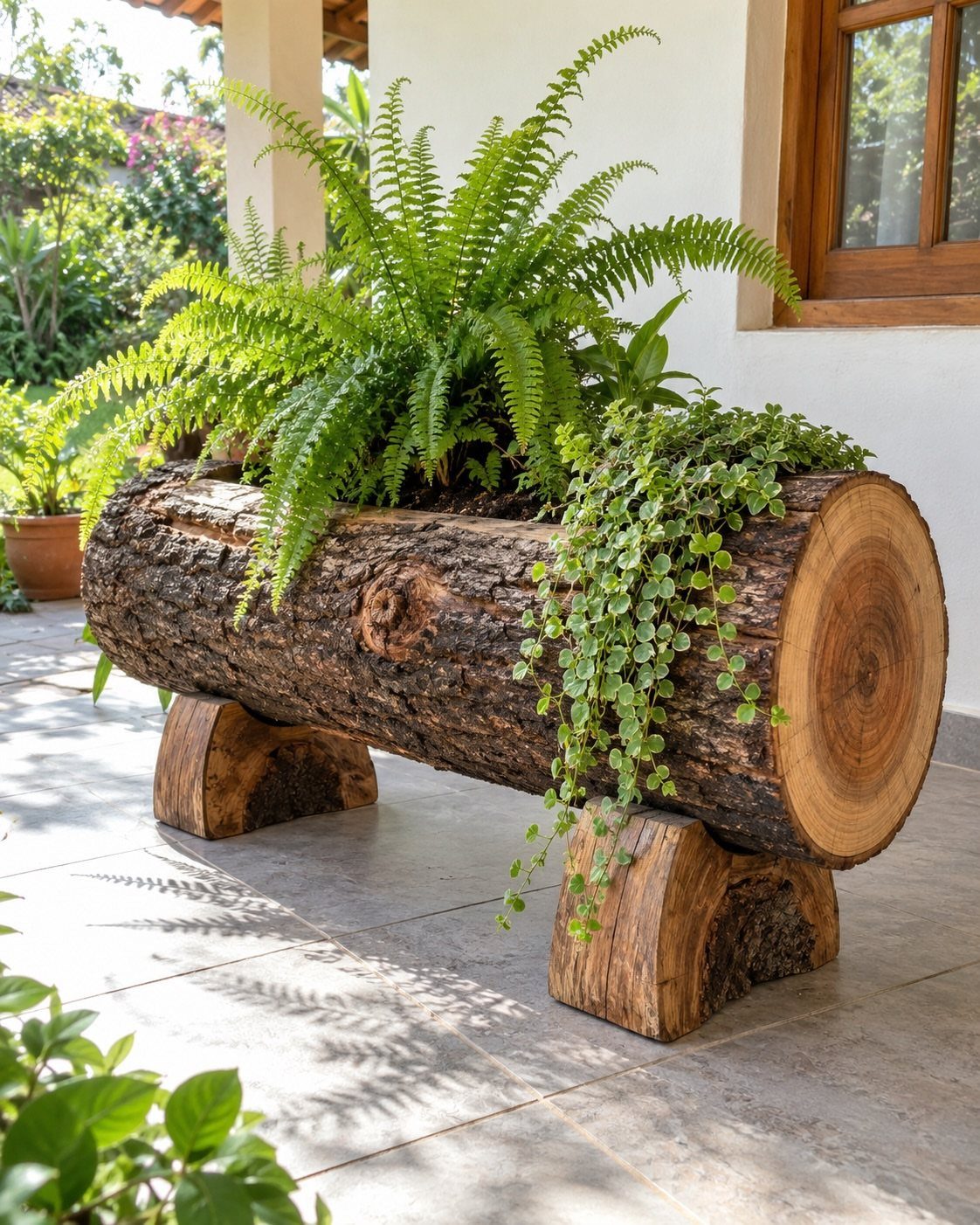
A hollowed log makes a planter that needs no pot at all, and ferns and trailing plants suit it because their fronds spill over the rough rim.
Setting it on two smaller log blocks, as this one is, lifts it off the tile and keeps the whole arrangement in one material.
I’d keep the plants in their nursery pots and set them inside the hollow. That makes swapping them out easy and keeps soil off the bare wood.
2. Rustic Wooden Bowls
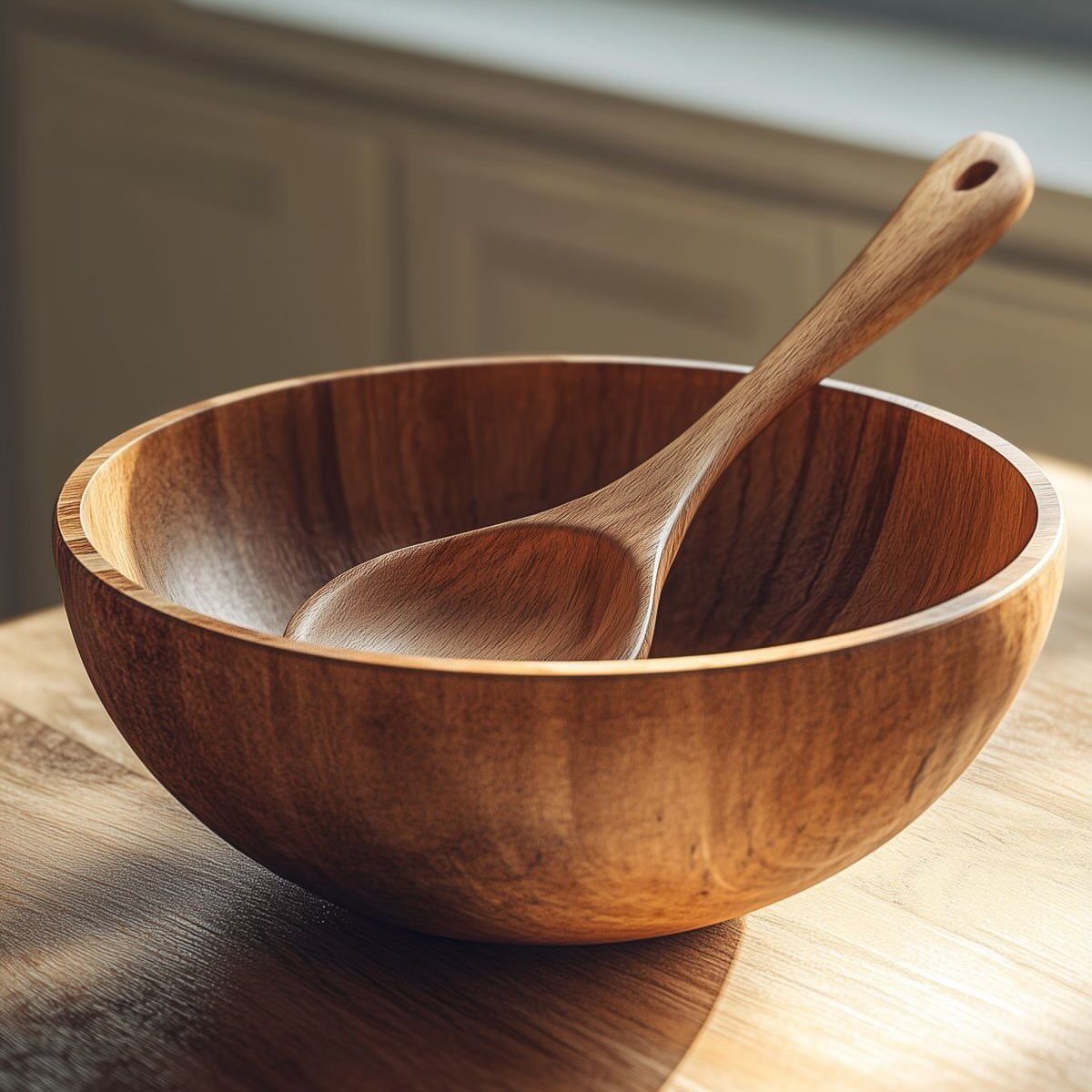
Carved bowls earn their spot on a counter because they work as decor and as serving ware at once. Pairing one with a matching spoon, so the set reads as a single piece, is the move I like best.
Keep the bowl out where people can see it. Fill it with fruit, keys, or nothing at all, and the grain does the decorating.
3. Wooden Hooks and Racks
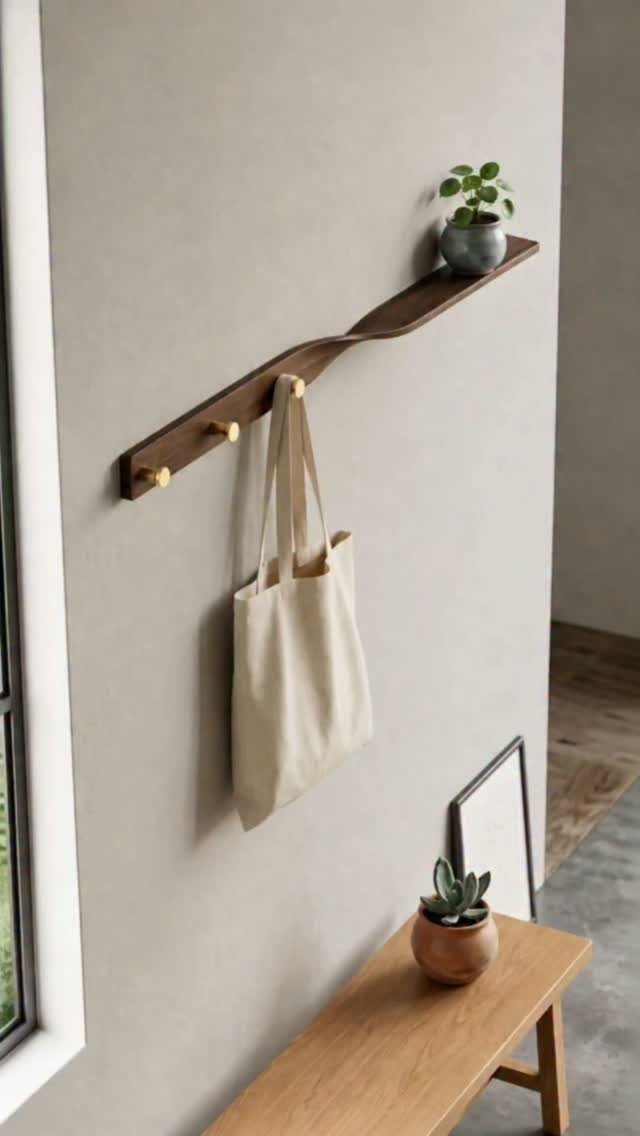
Wall racks with a few hooks and one small shelf cover a lot of ground in a small space. Mounted above a bench, one gives bags a landing spot, and the shelf holds a plant or your keys.
Gold hooks add a bit of contrast on wood, and I’d pick that finish over plain black metal. Screw into studs for anything heavy.
4. Wooden Slat Floating Shelves
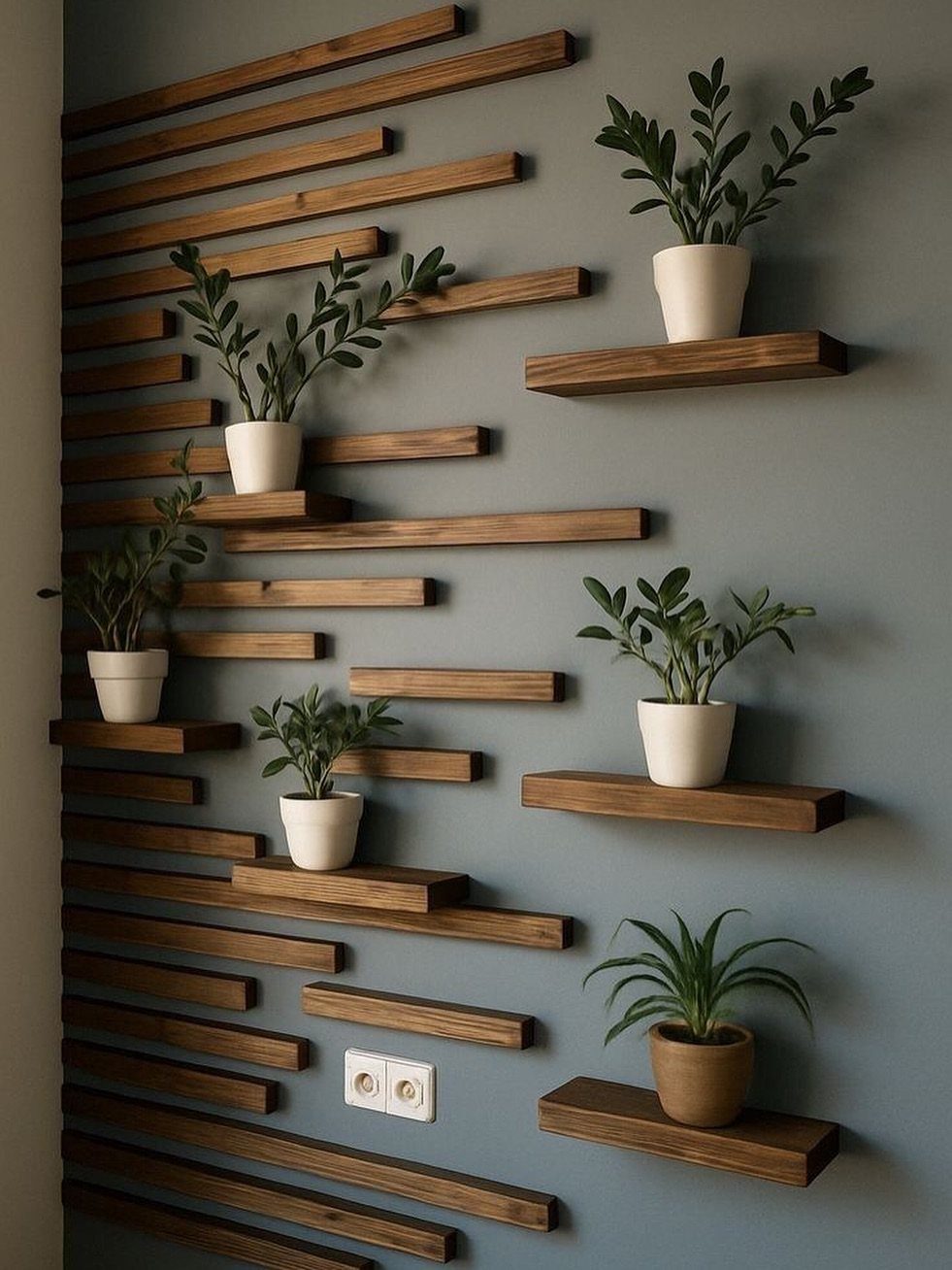
Horizontal slats in varying lengths turn a plain wall into a feature, and letting a few of them double as narrow shelves keeps the look tidy. Small potted plants sit well on slats this slim.
Plan the layout around any outlets, since one will interrupt the pattern. I’d mark every slat position with painter’s tape first and check it by eye before drilling a single hole.
5. Decorative Wooden Cutting Boards
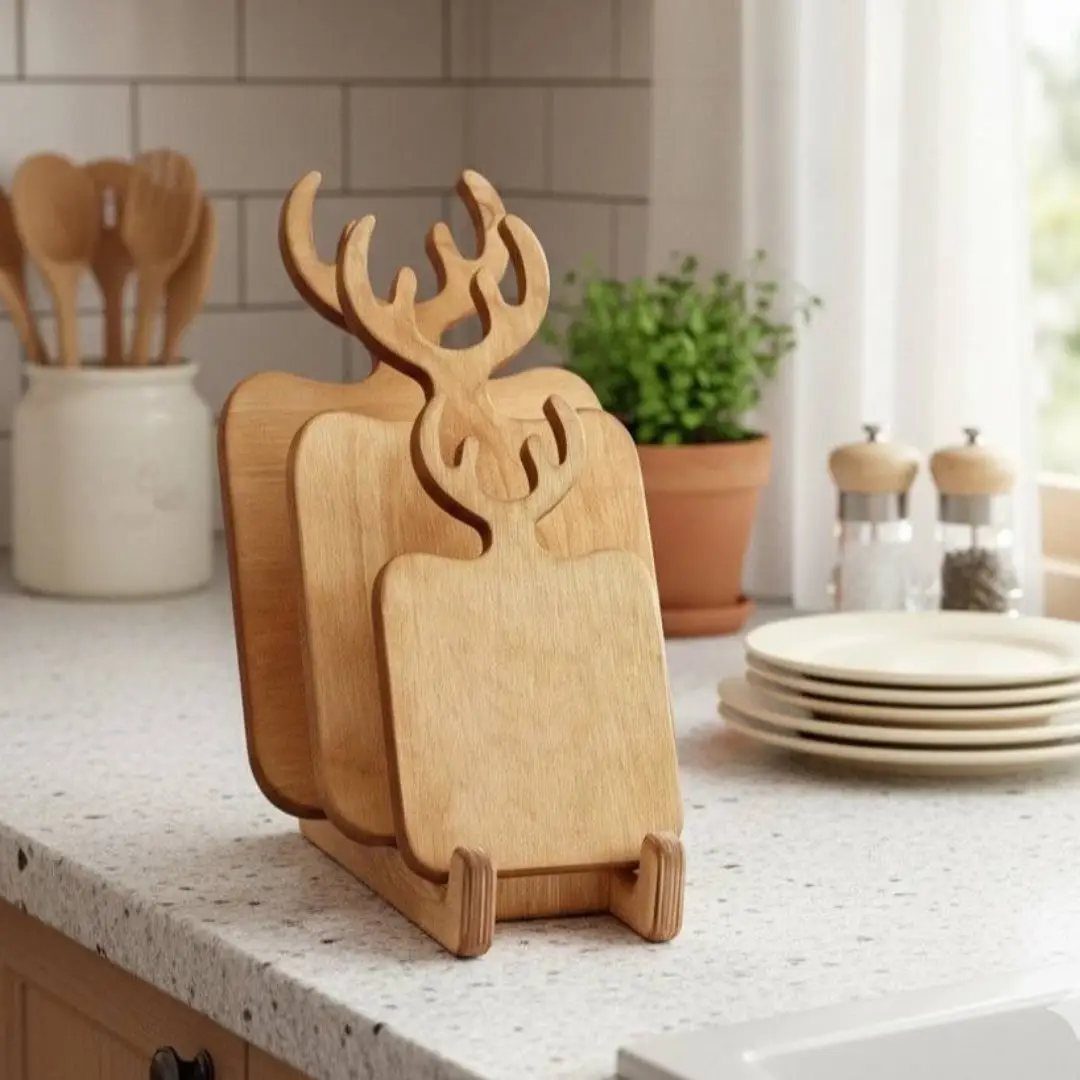
Cutting boards with deer antler handles look as good standing in a holder as they do in use. Keeping them on the counter means the set doubles as decor, which suits a kitchen with limited wall space.
A matching holder keeps the boards upright and easy to grab. Choose a set where the handles and holder feel like one family, and place it beside a plant or plates so it looks arranged.
6. Carved Tree Trunk Plant Stands
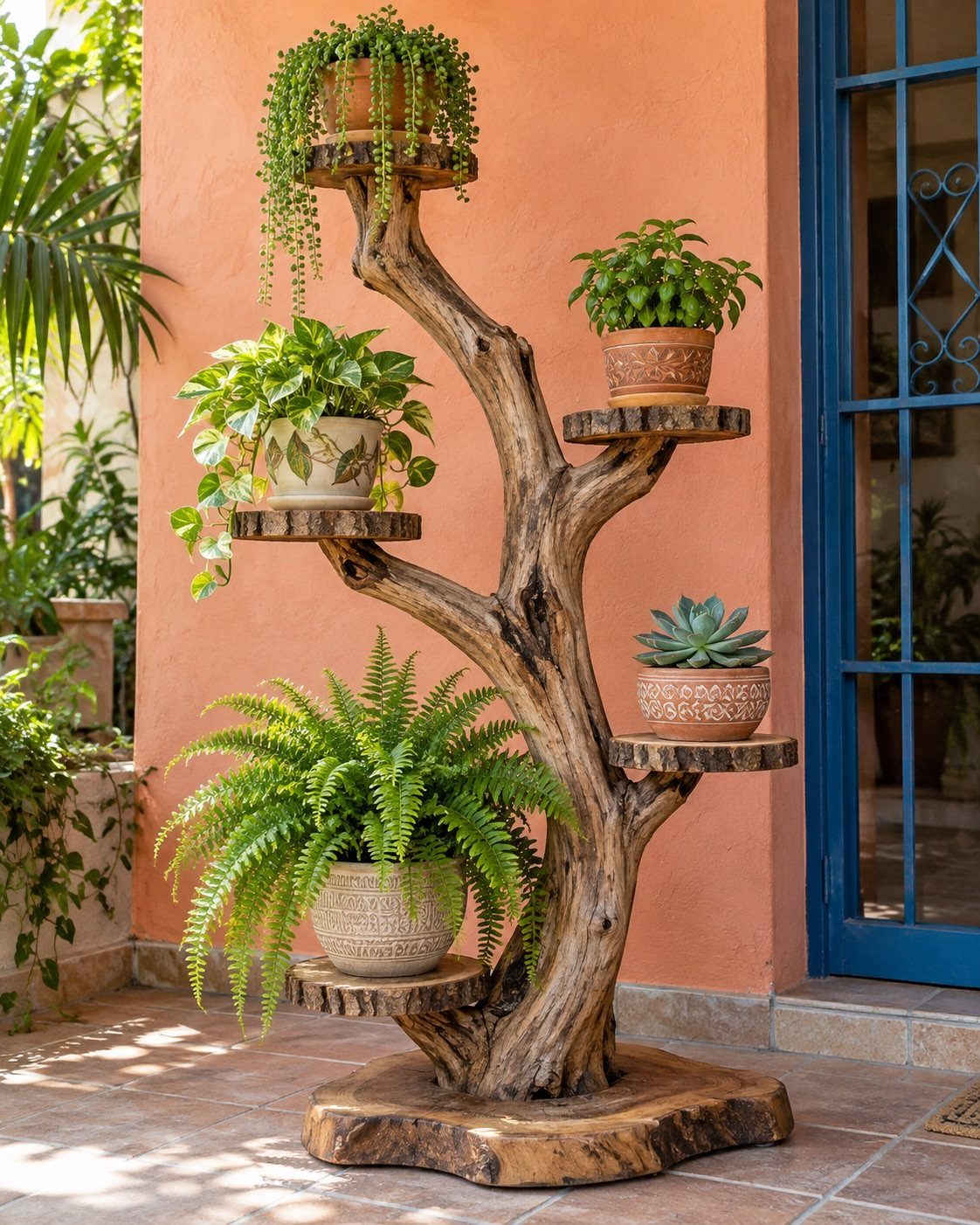
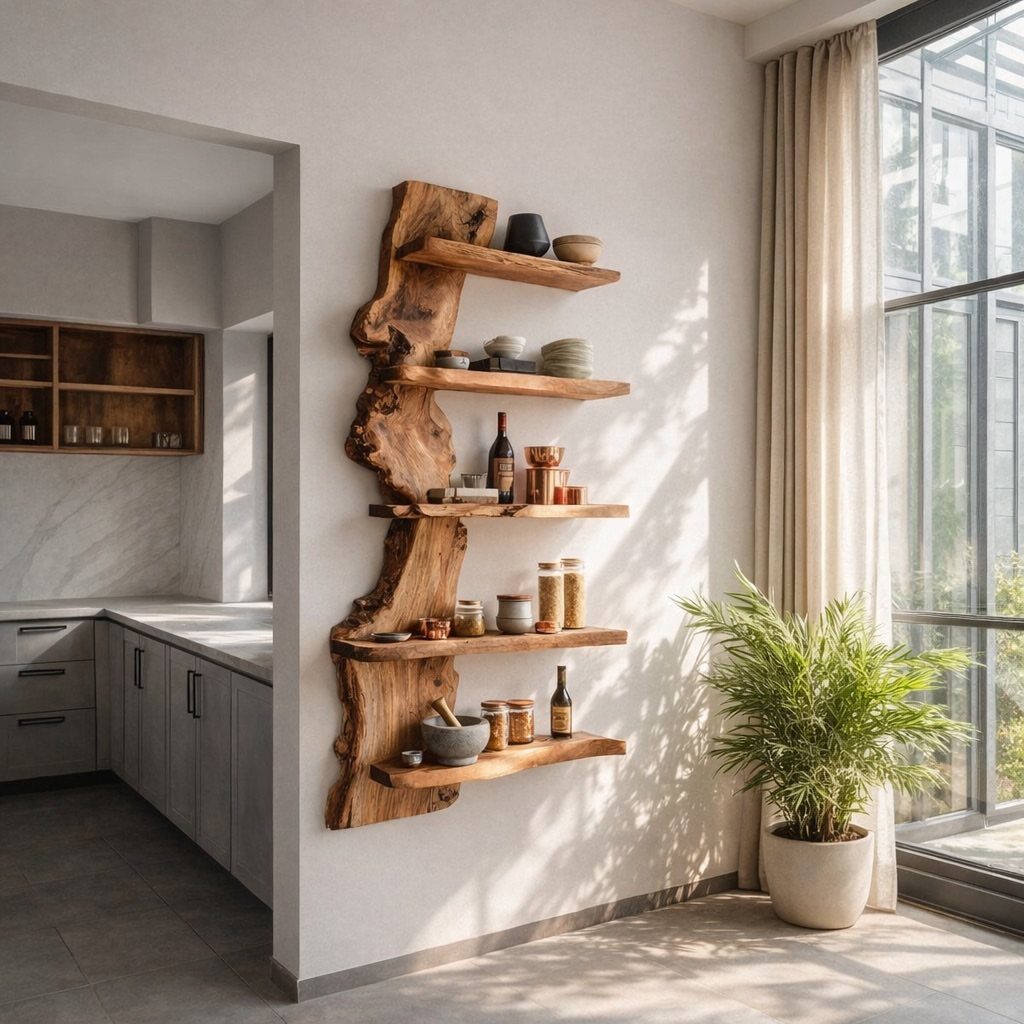
Shelves carved into a single tree trunk make a sculptural plant stand that holds a whole collection in one footprint. Tiers let you stack potted greenery vertically, which is handy on a patio where floor space runs short.
Set it against a solid, light-colored wall so the trunk’s shape stands out. I’d set the tallest plants on the bottom shelves and let smaller ones fill the top.
7. Decorative Wooden Serving Trays
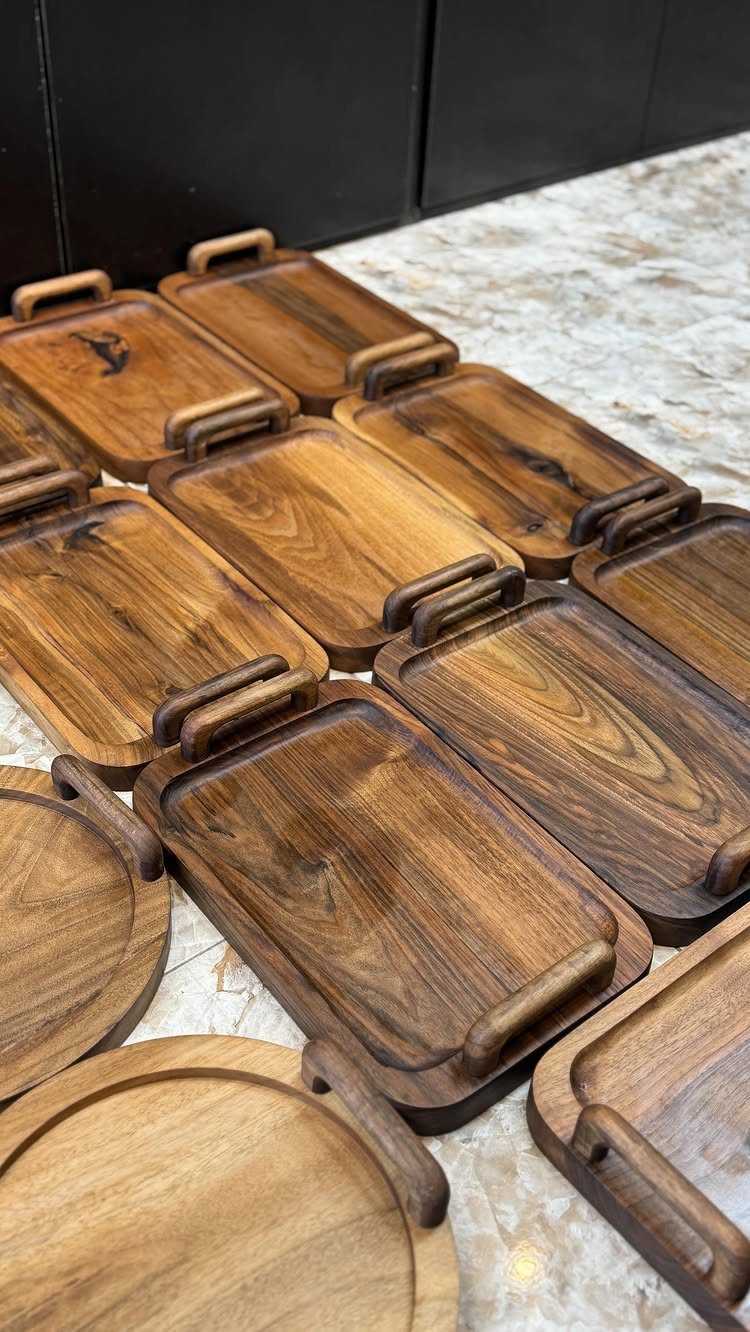
Polished trays in a mix of rectangles and rounds look best grouped, because the shared dark brown finish ties different shapes together.
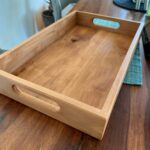
A handle cut straight into the tray’s ends, or carved into the sides, keeps your fingers from slipping and lets you carry a full load from the counter to the table in one trip.
I’d lean one against the wall and stack the others flat, so the group reads as a deliberate display. Set a candle or a small plant on the top tray to give it a purpose.
A polished surface shows water rings and scratches, so I’d wipe spills quickly and keep a cloth under hot mugs.
Caring for Wood Decor
Mild soapy water on a damp cloth is all most finished wood decor needs. Wring the cloth out well, wipe with the grain, then dry the piece right away so moisture never sits on the surface.
Skip the Indoor Potting Mix the source material suggests for cleaning. It is soil for plants, not a wood cleaner, and it will leave grit and residue on a finish.
Dust is the other enemy. A soft cloth or duster, run over each piece regularly, keeps buildup from settling into carved detail and grain.
Choosing Wood Types
Teak, oak and walnut each bring something different. Walnut runs a medium, rich brown, oak has a more pronounced grain, and teak adds its own texture and hue, so pick by the color you want in the room.
Lighter woods like beech and ash brighten a space, which helps in a small or dim room where dark wood would feel heavy.
Wood paired with metal gives an industrial edge, and a handcrafted piece from a local artisan adds uniqueness no factory piece has. Hold a sample against your wall color and floor before you commit.
Sustainable Sourcing
Wood is a durable, reusable material, so a piece you keep for years beats one you replace each season. That alone makes it a lower-waste choice.
Seasonal decor like pumpkins, stars, or wreath bases suits reclaimed scraps well, since you only need small pieces.
Wooden bunnies, egg-shaped ornaments, small tree-shaped wall pieces and pumpkin blocks topped with a handcrafted fabric pumpkin can all come out of storage year after year, with no messy cleanup like a carved jack-o-lantern.
Making your own pieces is another route, and scraps from a project often cover the small shapes.