The boards you can get your hands on decide which of these reclaimed wood projects to build, so the Sourcing Reclaimed Wood section is worth reading before you pick one.
Short scraps suit picture frames, signs and wall art, while long, wide boards give you the length for a bench, a headboard or an accent wall.
The ideas range from a 3-bottle wine rack that fits an afternoon to a floor-to-ceiling wall, and I’d start with one short wall if you try that one.
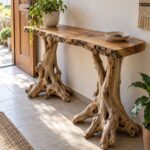
1. Rustic Bathroom Shelves
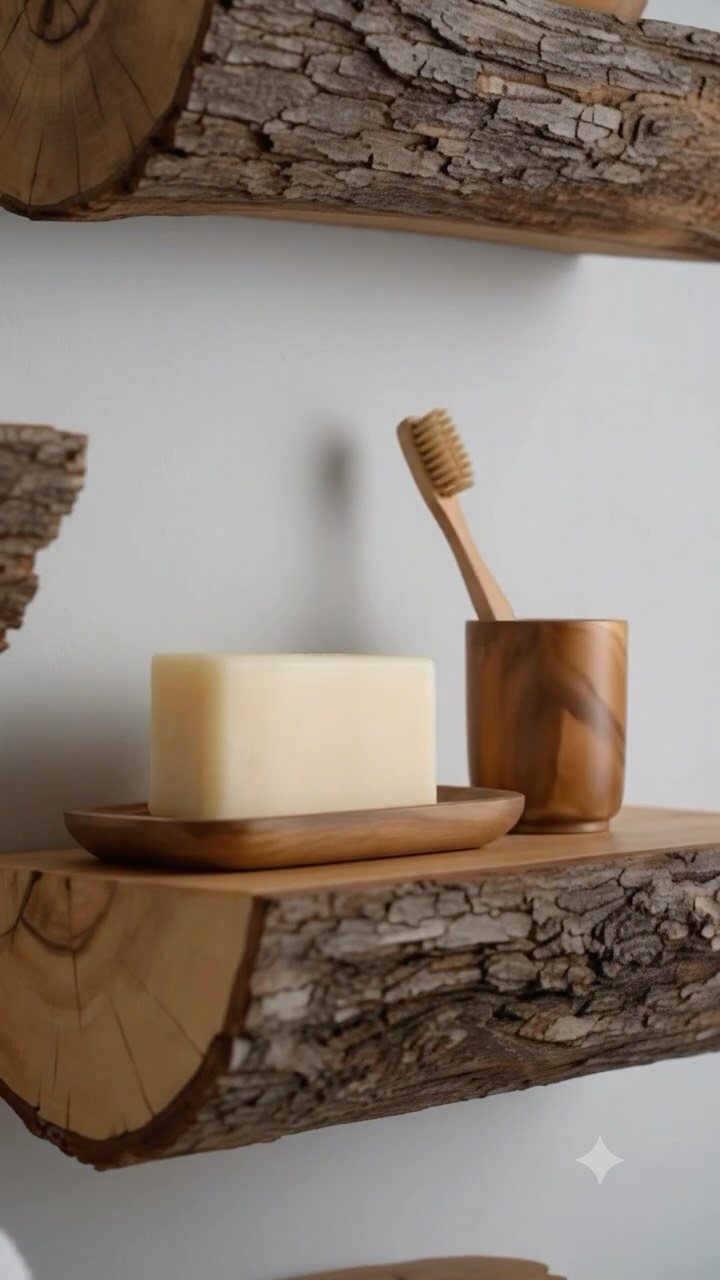
Bark-on log shelves suit a bathroom because the rough edge keeps small things from feeling lined up like a store display.
Keep the lower shelf light: a bar of soap on a wooden dish and a toothbrush in a cup are about all it needs, since reclaimed boards can warp when damp items pile up.
Keep the shelf to the essentials you reach for daily. 2 shelves stacked is plenty, and leaving the bark in place is what gives it character.
2. Wooden Toy Storage
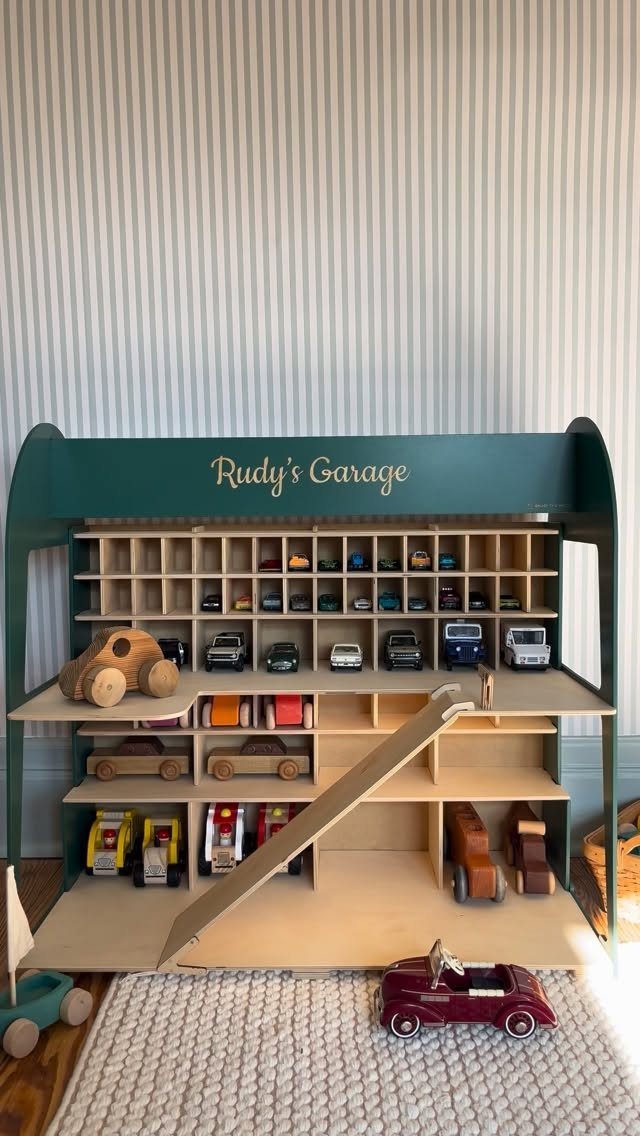
A toy garage turns a pile of loose cars into something kids actually want to put away. Shelves hold the parked cars, and a ramp makes cleanup feel like part of the game.
Paint the frame a soft green and leave some natural wood showing; the grain keeps the piece from looking like plastic. Adding a name to the front, like "Rudy’s Garage," makes it the child’s own.
3. Wood Bench
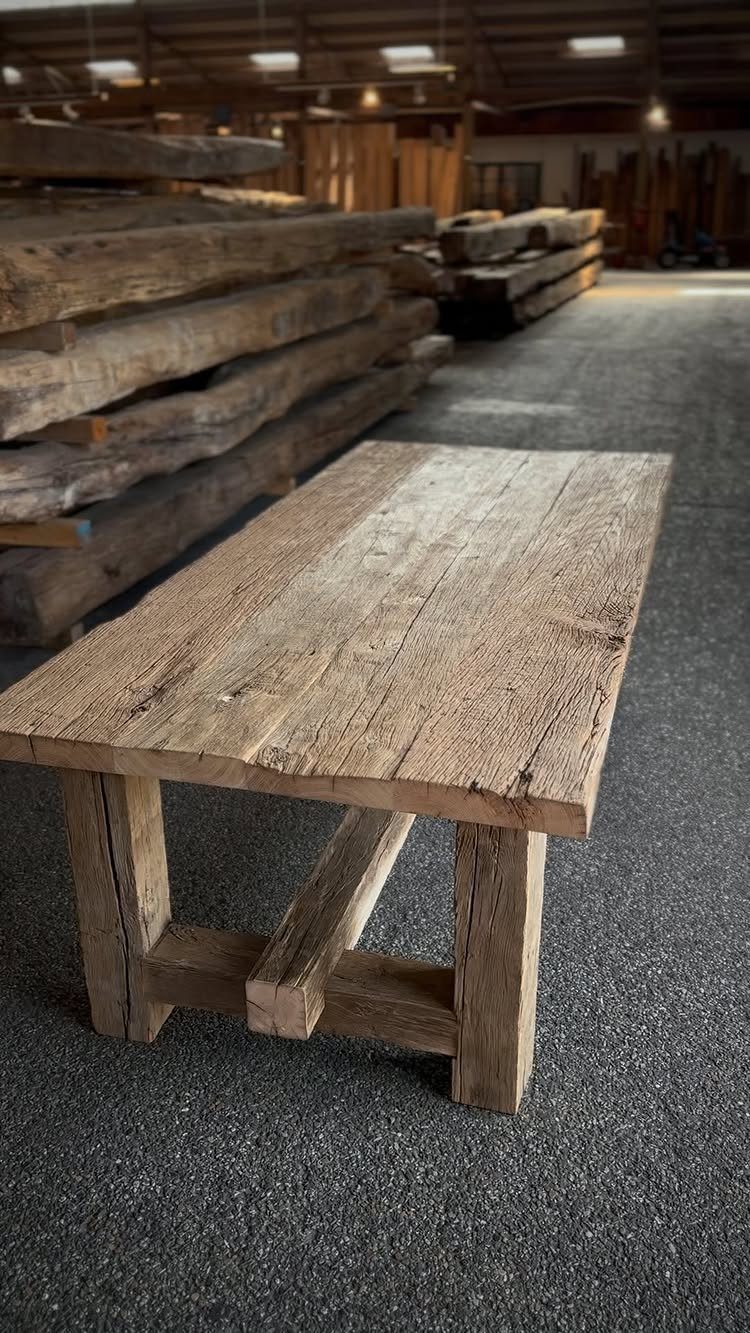
Thick, weathered planks do most of the work on a reclaimed bench: the wear is already there, so no finish can imitate it. Chunky timber also reads as sturdy, which is what you want from seating.
For an afternoon build, I’d choose the heaviest boards you can find and keep the design plain, since the wood is the feature. Sand only the top where people sit, and leave the rest rough.
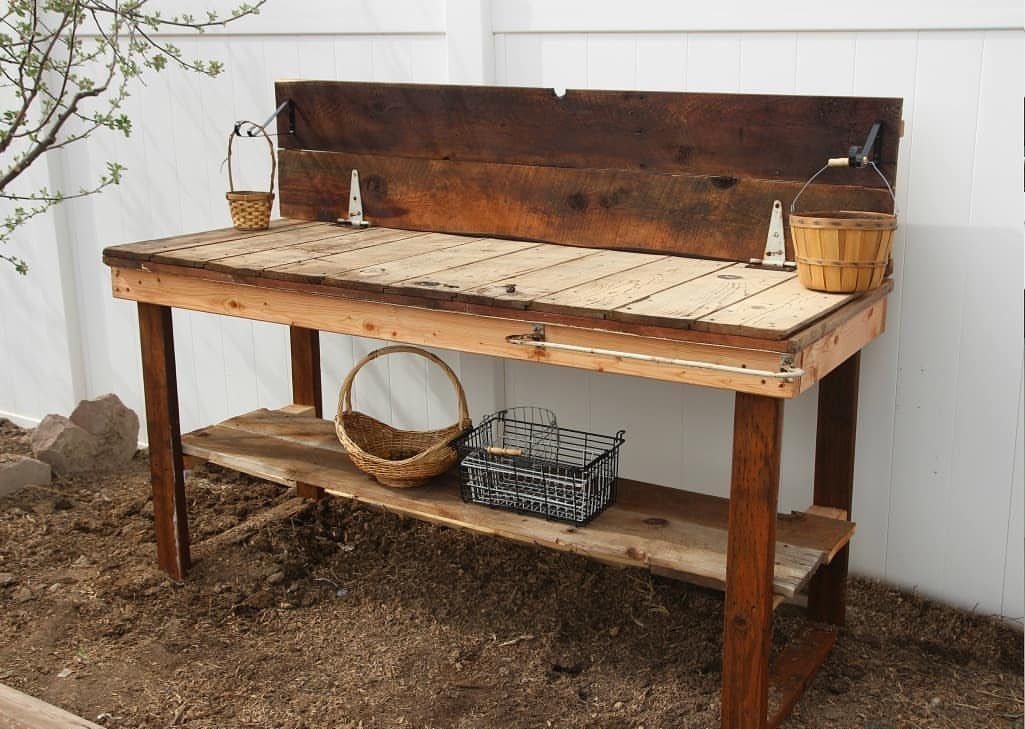
4. DIY Potting Bench
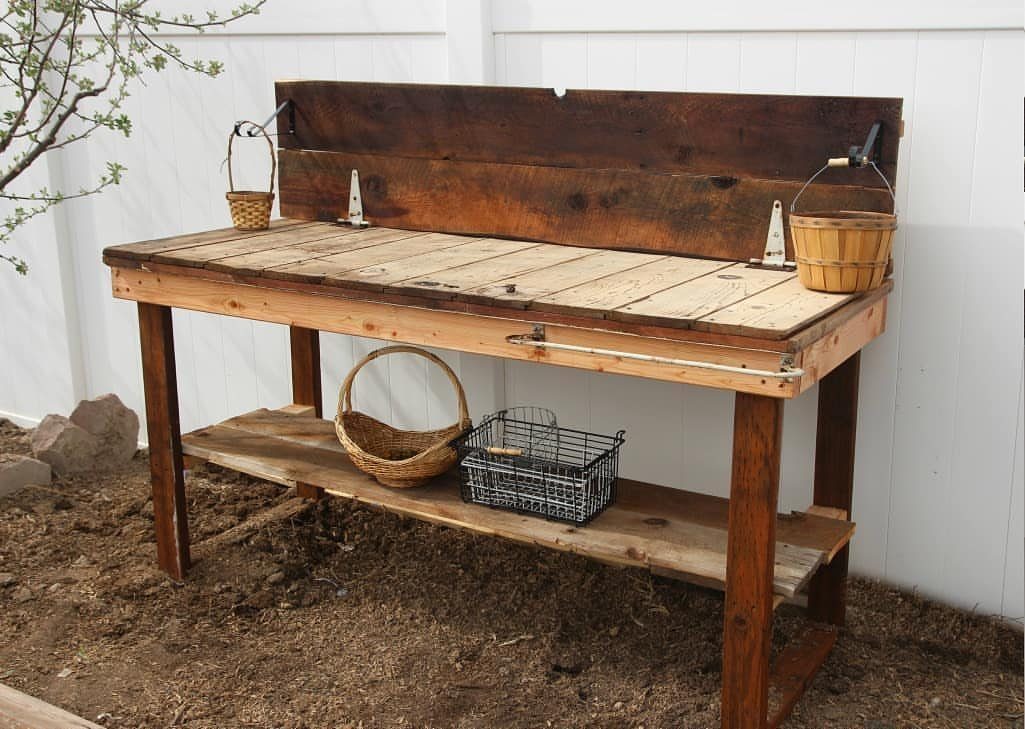
Reclaimed planks suit a potting bench well, since a garden piece is meant to look lived in. A backsplash, a lower shelf and a few baskets cover nearly every need at a potting bench, so I’d build all three in.
A wire bin is a cheap extra for gloves or seed packets.
5. Kitchen Island
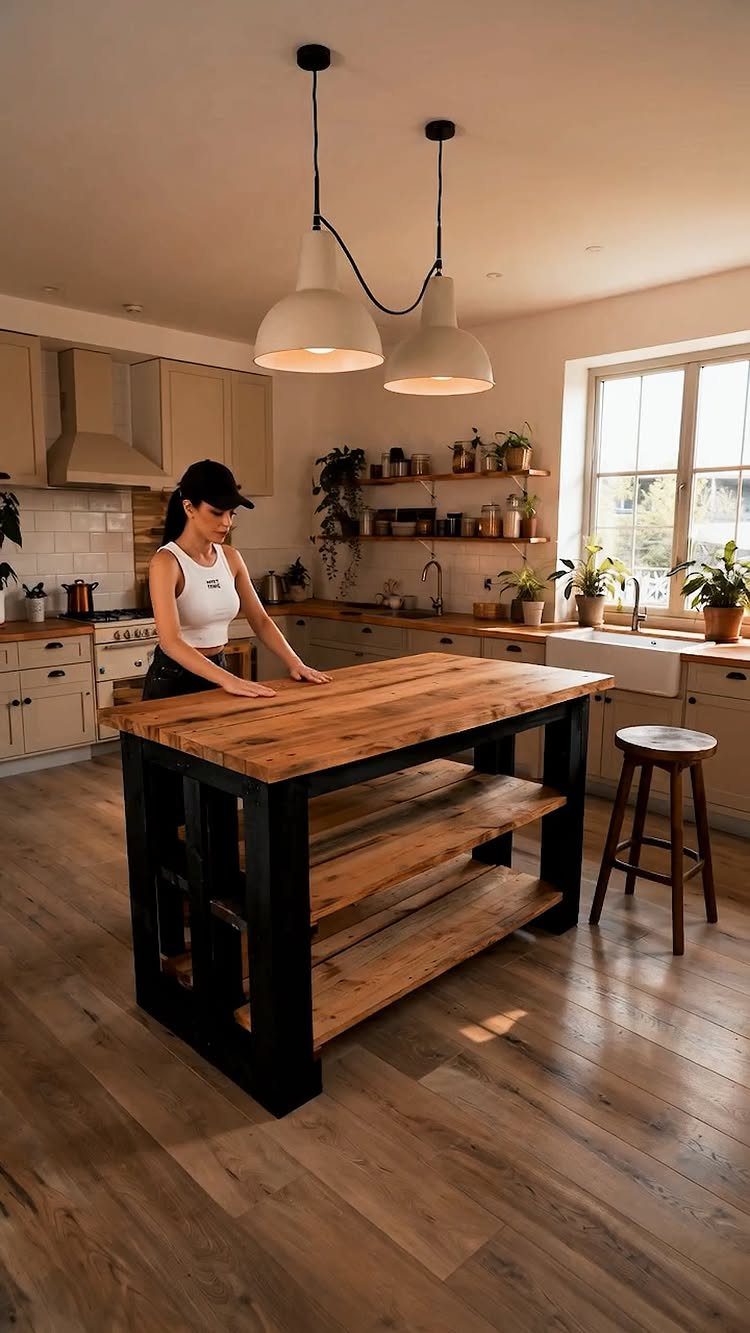
A reclaimed wood island with black legs gives a kitchen a focal point without needing a complicated build. The dark metal against warm, uneven planks looks sharp under a pair of white pendant lights.
I’d pick one thick, flat slab-style top so you have a good prep surface. Black legs keep the look clean next to the wood’s rough character.
6. Picture Frames
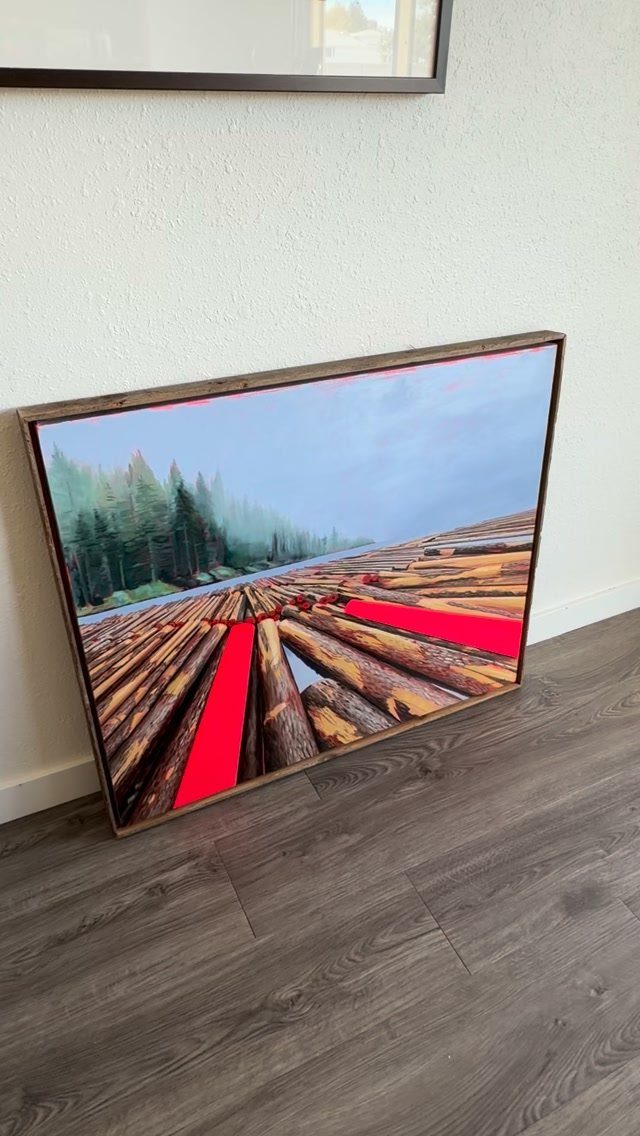
A frame cut from rough wood suits large pieces best, such as a big painting leaning against a white wall, where the heavy texture has room to stand out. The texture gives the artwork weight without competing with it.
Wide boards make the strongest frame. Leaning it on the floor, rather than hanging it, is the easiest way to display something that big.
7. Reclaimed Wood Sign
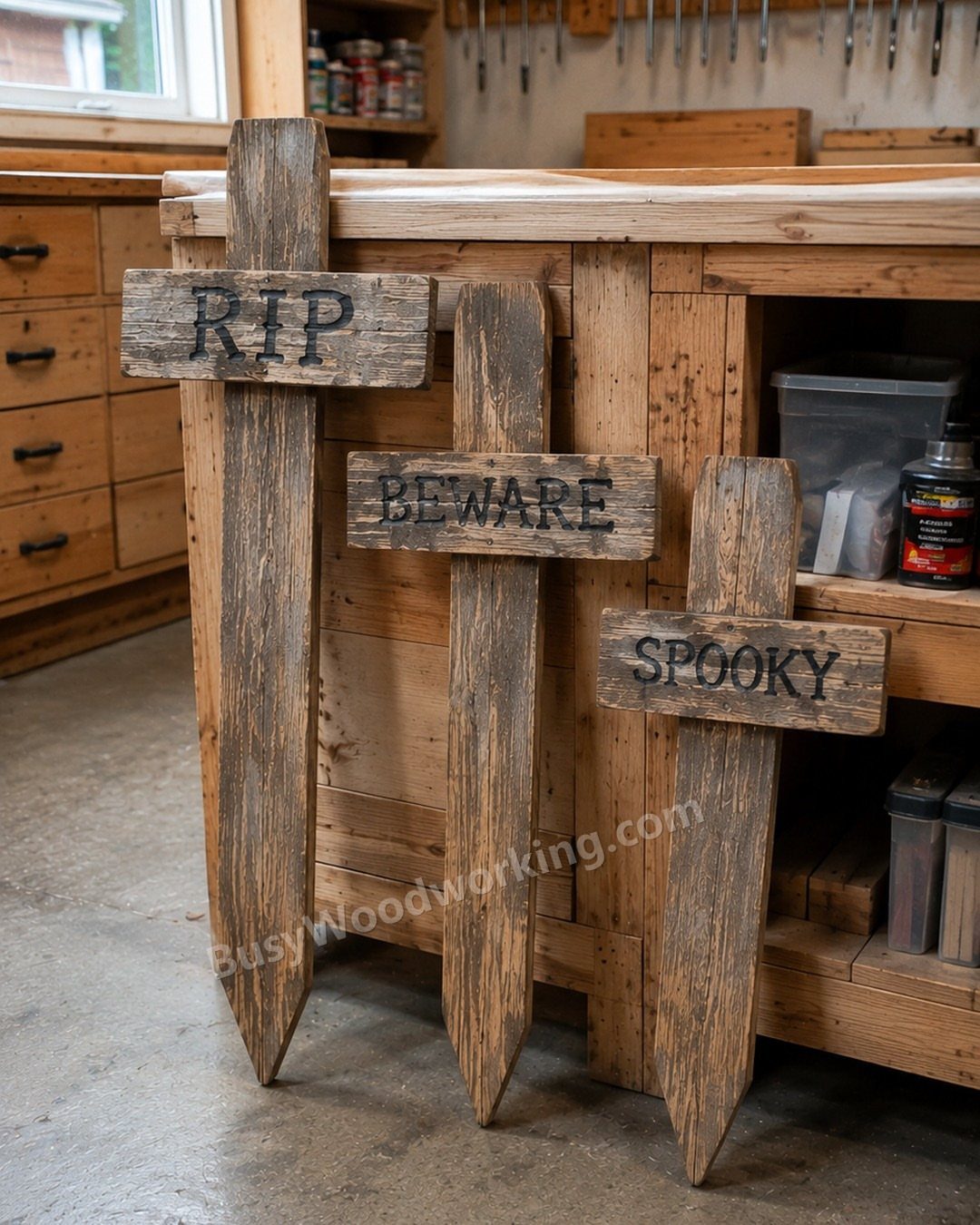
Cut the boards into crosses, letter them with short words like "RIP," "BEWARE" or "SPOOKY," and scrap becomes Halloween decor, since the lettering does all the personalizing.
Short messages read best on narrow boards, so pick a word you can fit at a large size.
I’d paint the letters by hand in a contrasting color and leave the board edges rough. Lean them on a mantel or porch step, since no hanging hardware is needed.
8. Reclaimed Wood Wall Art
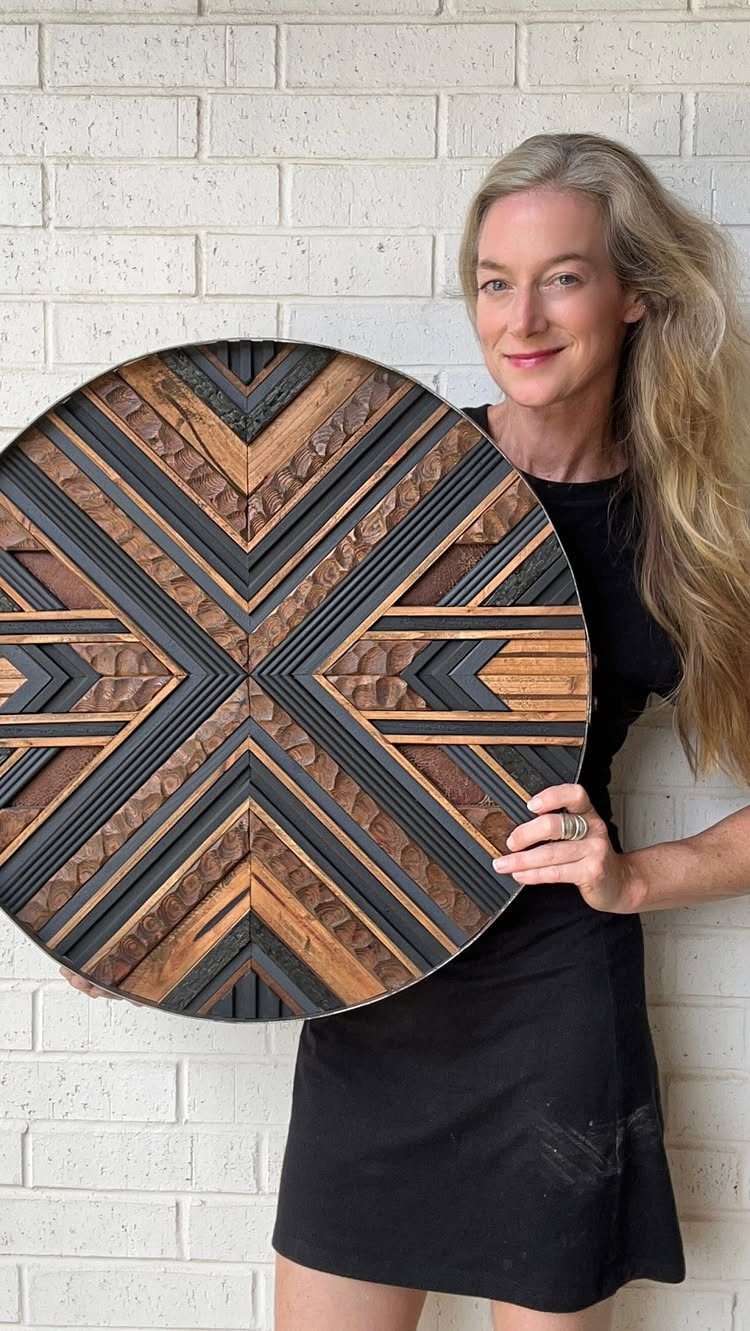
Short scraps in different tones are ideal here, because the pattern depends on contrast between pieces.
Cut the pieces to fit your layout first, then glue them down before trimming the outer edge to a circle. Against a white wall, the mix of tones stands out, so I’d skip any color on top.
9. Reclaimed Wood Accent Wall
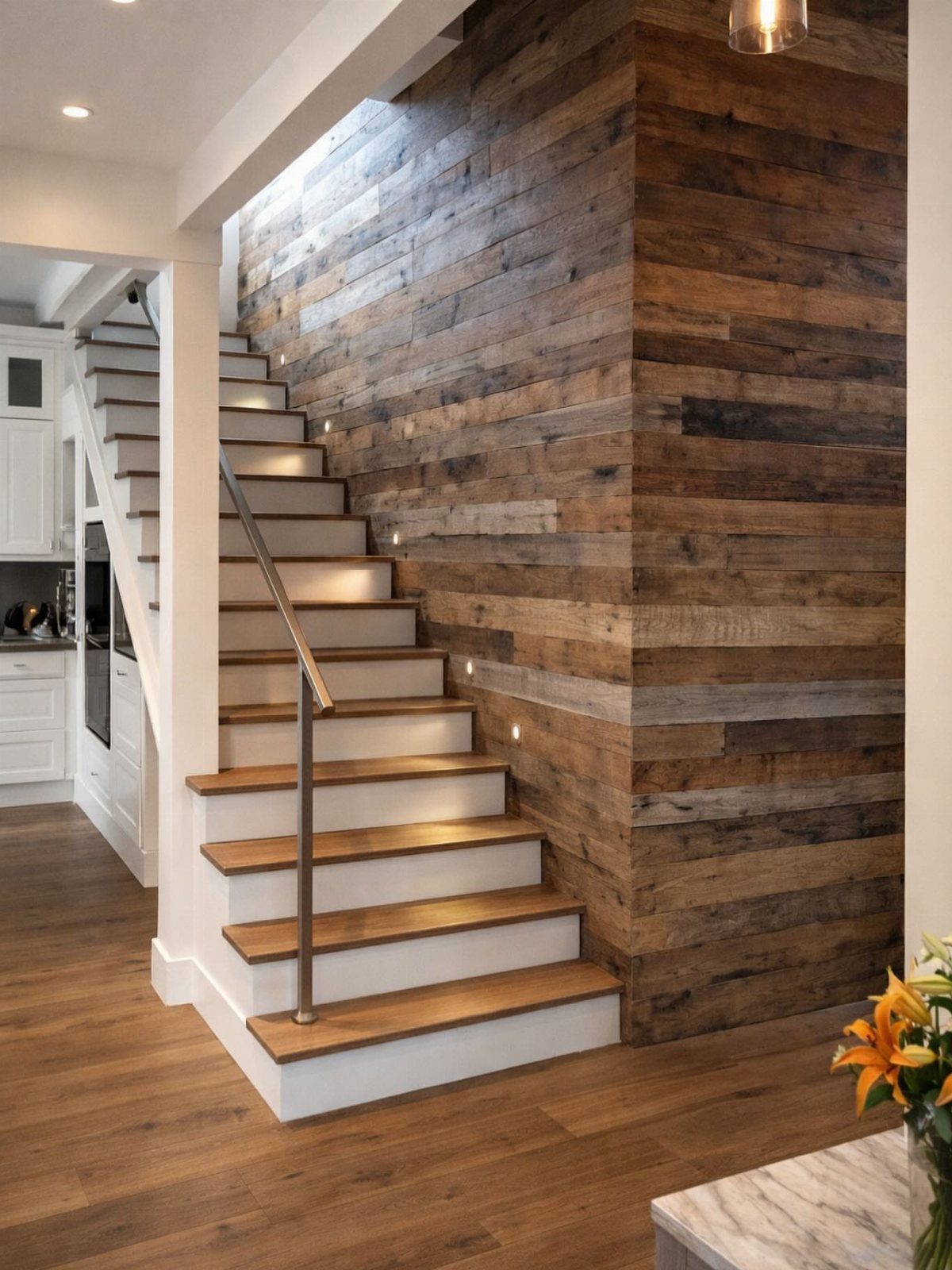
Planks running floor to ceiling beside a staircase give a plain wall real depth.
Cutting boards in a few different widths keeps the wall from looking too uniform and gives it a more natural pattern.
This is a bigger job than most on this list, so I’d start with one short wall, not a whole room.
10. Wine Rack
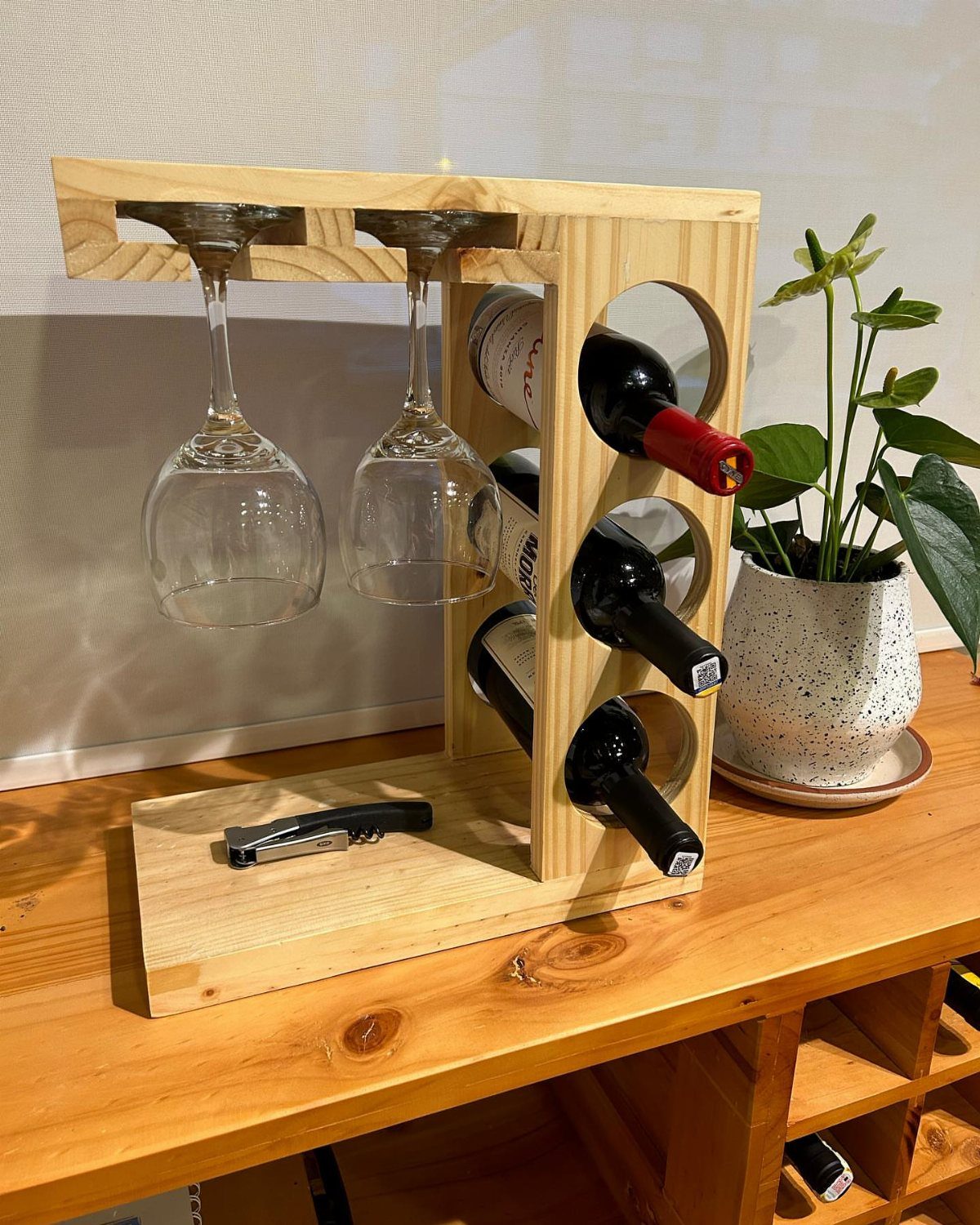
Add a row of hanging stemware slots and a small ledge for the corkscrew, and the rack does a lot more than hold bottles. Everything you pour with lives in one spot on the table.
A rack for 3 bottles is a good afternoon size, and a short offcut of reclaimed board works for the base. I’d keep the wood bare, since the grain looks good beside a potted plant.
11. DIY Headboard
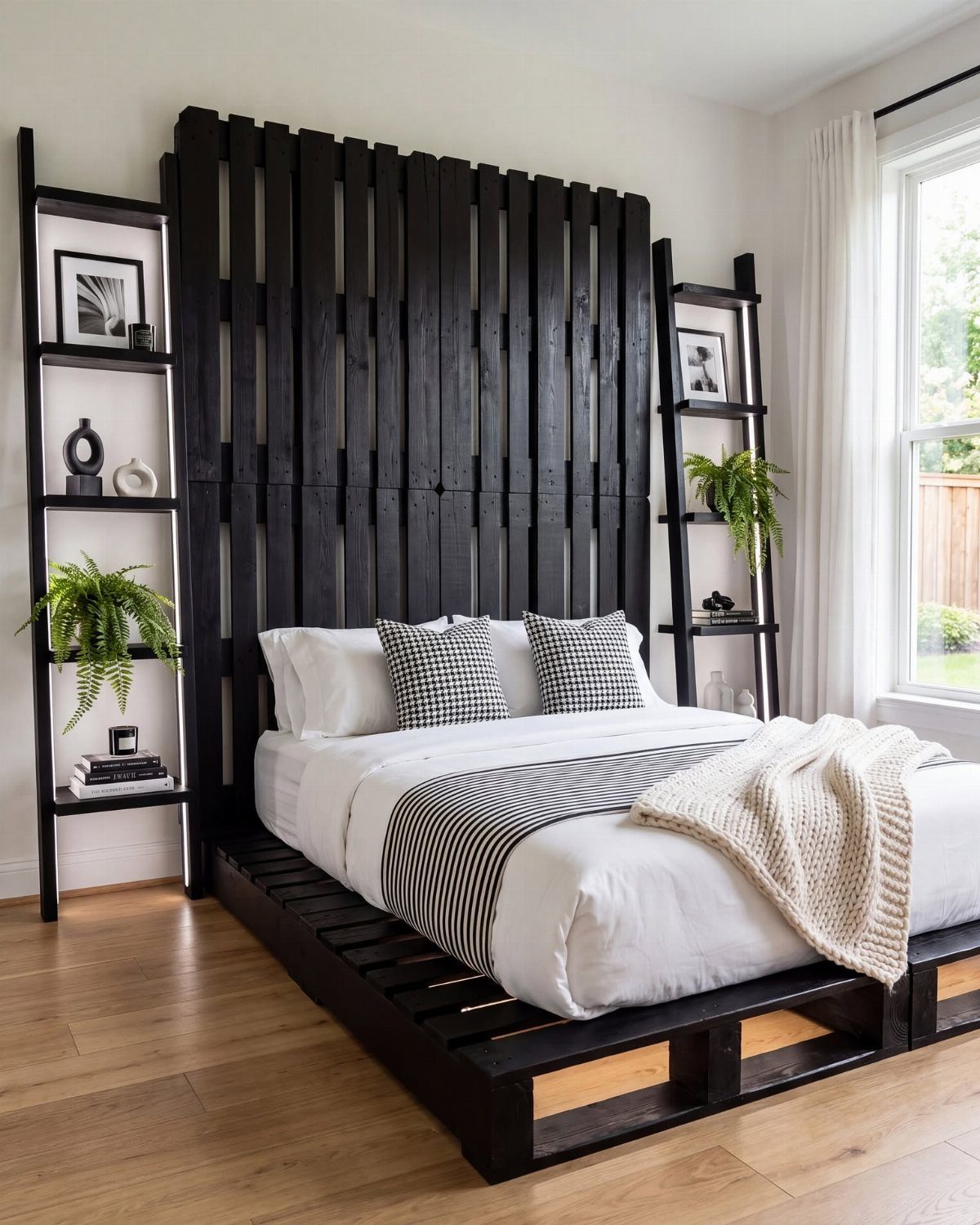
A pallet headboard painted black gives a bed an instant focal point, especially when the base matches. Dark paint also hides the mismatched boards, so pallet wood in rough shape still works.
I’d make the headboard wide and tall for impact, and paint the platform base the same black so the bed reads as one piece.
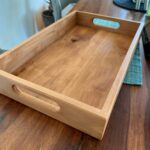
12. Reclaimed Wood Serving Tray
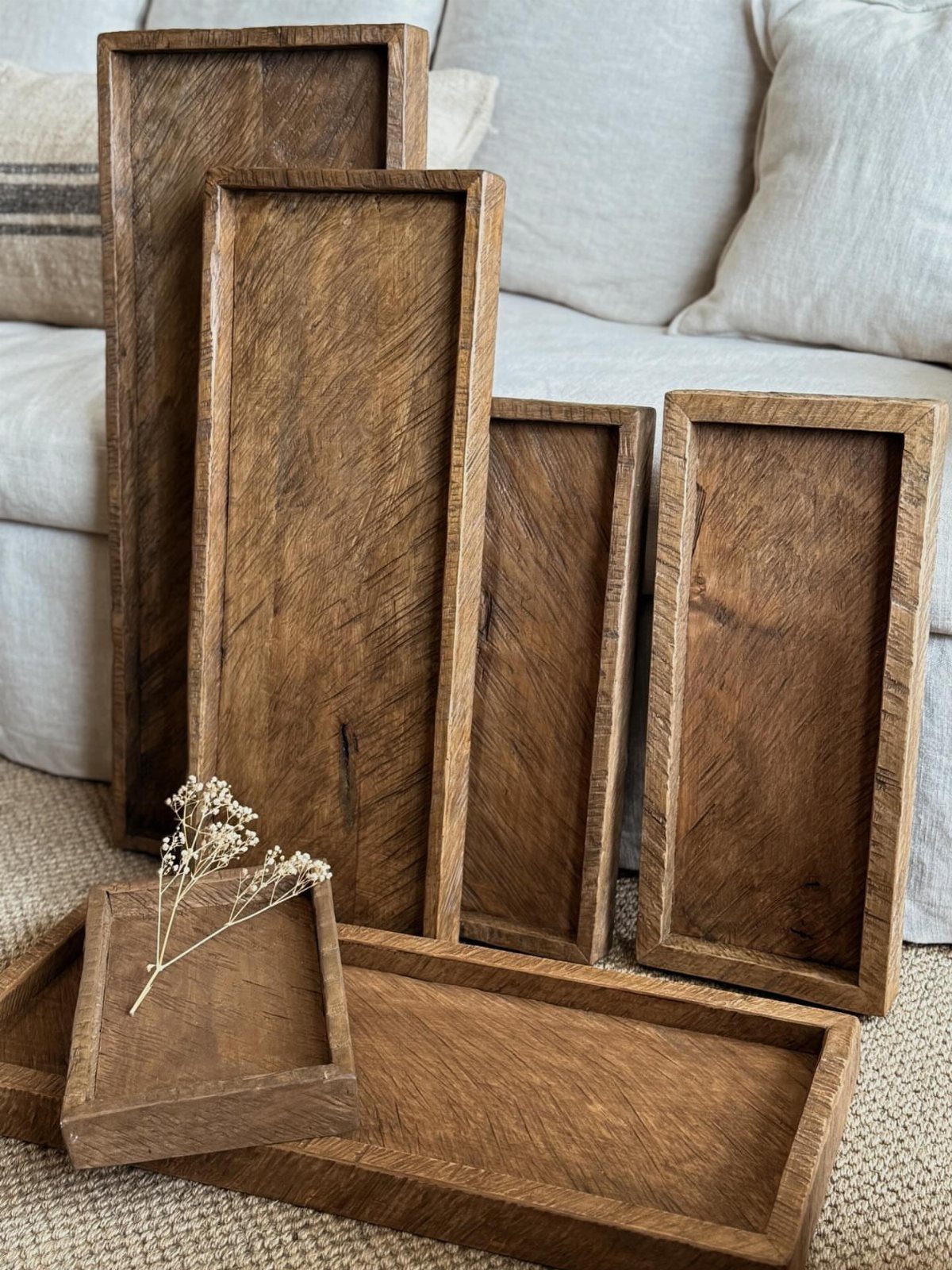
Trays in several sizes are worth making together, because one cut board often yields a small tray and a large one.
Leaning a stack against a sofa shows off the range, but they also work for serving, carrying or holding remotes.
Keep the shape simple and rectangular. On a serving tray, the inside needs a smooth, food-safe surface, while the outer edges can keep their weathered character.
13. DIY Wooden Clock
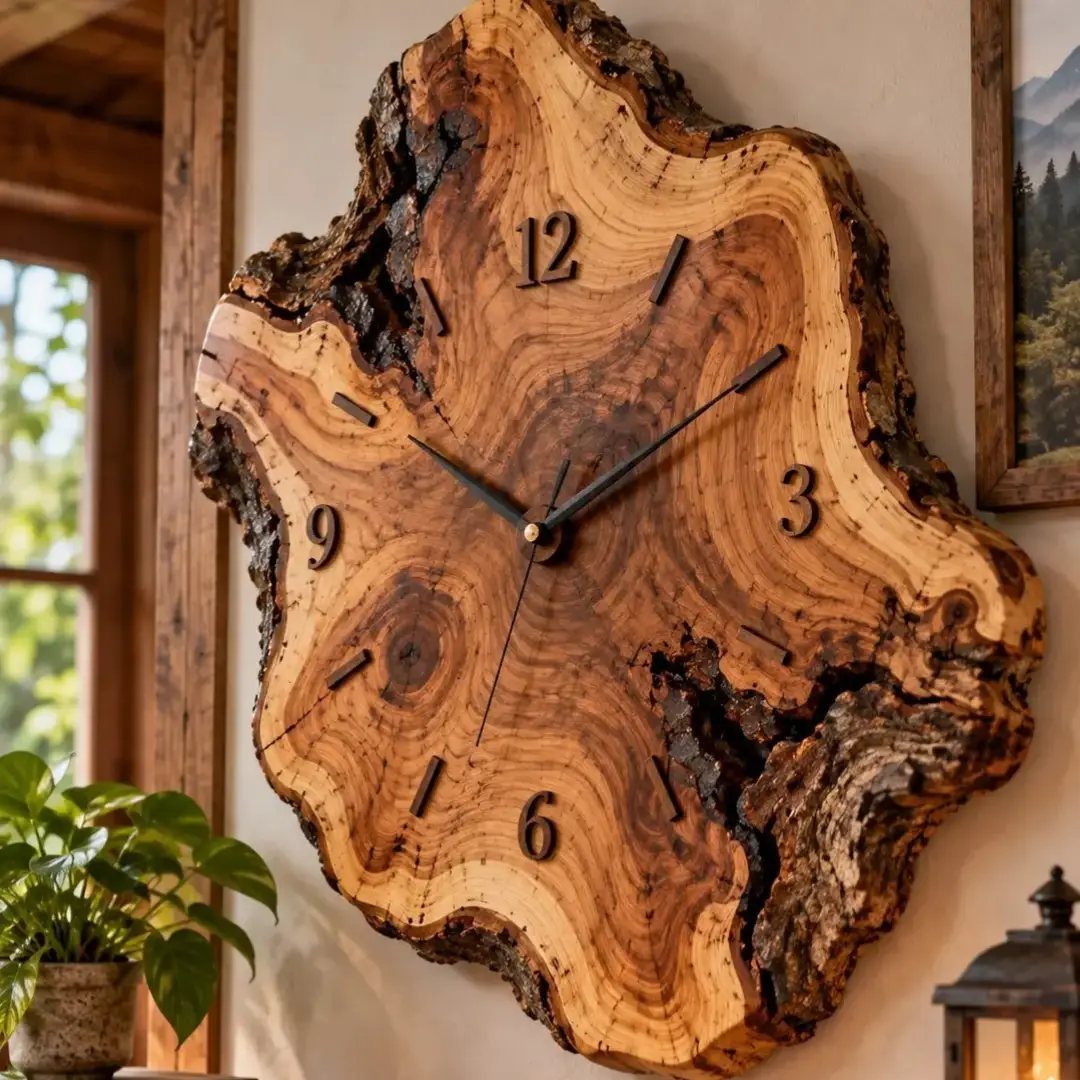
A live edge slice makes a clock that needs almost no extra decoration, since the bark ring already frames the face. Keep the numerals simple and evenly spaced, because the wood grain is busy enough on its own.
I’d pick a slice with a fairly flat face so the numbers sit cleanly and the hands clear the surface. A clock like this works best near a window with a plant, where the natural texture feels at home.
14. Wooden Plant Stand
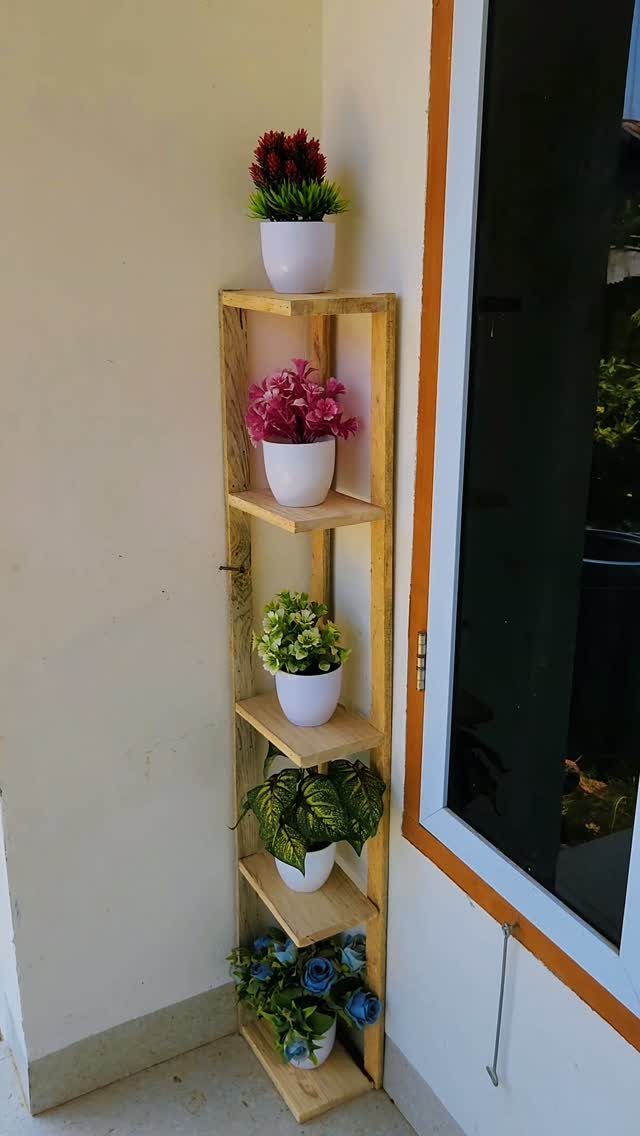
Five narrow shelves stacked in one tall frame give a lot of plants a home on very little floor. A stand like this slides into the gap beside a window, which is where small flowering pots want to be.
Matching white pots keep the row tidy, so I’d choose one pot color and let the blooms supply the variety. Space the shelves evenly, and use reclaimed boards for a tall, narrow build that fits an afternoon.
Sourcing Reclaimed Wood
Where the boards come from decides what they’re good for, so match the source to the build.
Barn wood weathers unevenly and varies in color, but it may have been around animals or chemicals, so wear gloves and a dust mask when you handle it.
Old snow fence boards come out of harsh mountain winters with a silvery, sun-bleached surface, and that is why I like them best for wall paneling.
Boards pulled from old factories tend to look industrial, and a few still hold flecks of old paint, so they suit modern furniture with clean lines.
Warehouse materials come in larger dimensions, so they suit bold wall installations and substantial pieces.
Pallet wood runs to shorter scraps. That works for small builds like picture frames and wall art, but not for anything long.
Whatever the source, pick boards that feel sturdy and show no signs of pests. If you can learn where a board came from, you get a backstory to go with it.
Preparation for Projects
Old boards behave differently from new lumber, so prep matters more than it looks. Expect hidden nails, uneven thickness and rough surfaces.
Start by cleaning. A good wash removes dirt and loose old paint, and the boards need to dry fully before you cut or glue anything.
Check every board for nails and screws before a blade touches it.
A cheap magnet or a slow pass with a metal detector wand catches what your eyes miss, and a single buried nail can ruin a saw blade or kick back at you.
Treat the wood for pests if there is any sign of them, and keep suspect boards outdoors until you have.
Round over any rough edges and sand every spot that hands will touch, such as tabletops and shelf fronts.
Wear a dust mask, since old paint can be in the dust. Boards of uneven thickness may need shimming or planing before they sit flat together.
Benefits of Reclaimed Wood
Reclaimed wood saves new lumber from being cut, which eases the demand on forests. That’s the eco-friendly argument, and it holds up because the boards already exist.
The look is the other draw. Weathered surfaces, knots, wild grain, old nail holes and the odd streak of leftover paint give a room a warmth that new lumber can’t imitate.
The same boards also work across scales. A coffee table, an accent wall and exterior siding can all come from salvaged stock, and the rustic character fits both traditional and modern rooms.
My advice is to treat the flaws as the feature. Sand away too much and you lose what made the wood worth choosing.
Frequently Asked Questions
Is reclaimed wood cheap?
It depends on the source and the condition of the boards, so there is no single price.
Pallet wood and salvaged scraps tend to be the easiest to come by, while heavier timber from barns or warehouses can vary more. Learning where a board came from helps you judge what it’s worth for your build.
What can I build with old wood?
Furniture, decor and storage all work well.
A bench from thick weathered planks, a potting bench with a backsplash and lower shelf, a kitchen island with a flat slab-style top, and a toy garage with shelves and a ramp are good picks.
For a quicker afternoon project, try a tray, a picture frame or a hand-lettered sign, since the weathered surface already supplies the character.
Is reclaimed wood safe to use?
Yes, if you clean and check it first.
Scrub off the dirt and flaking paint, give the boards a few days to dry all the way through, and inspect them for bug holes or fine sawdust; if you spot either, treat the wood and leave it outside until it’s clear.
A pair of work gloves and a dust mask are cheap insurance, because barn boards can carry animal droppings or chemical residue, and sanding old paint sends it straight into the air.