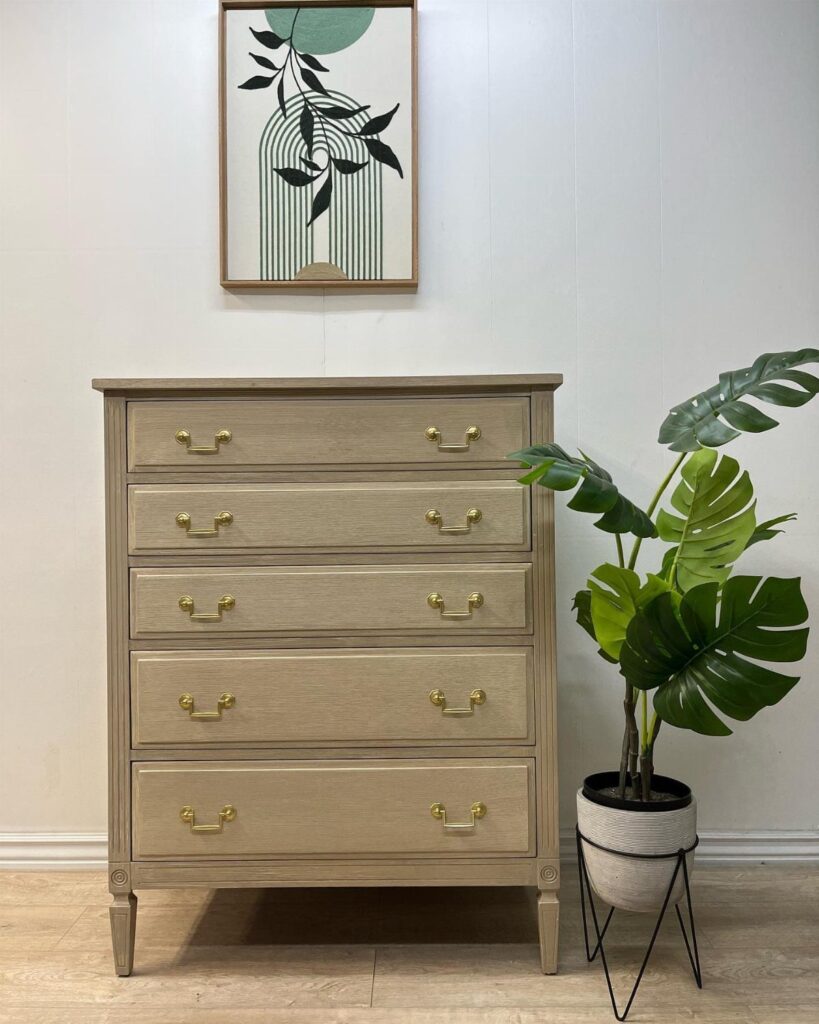
Drying time decides this list more than color does: water-based glaze is touch-dry in about 8–12 hours, gel stain takes about a day, and SFO (stain and finishing oil) needs 2–5 days.
For a dresser that has to be back in use this weekend, SFO is the wrong pick; it wants a week of quiet, so save it for a piece nobody needs right away.
1. Pottery Barn Dupe with SFO
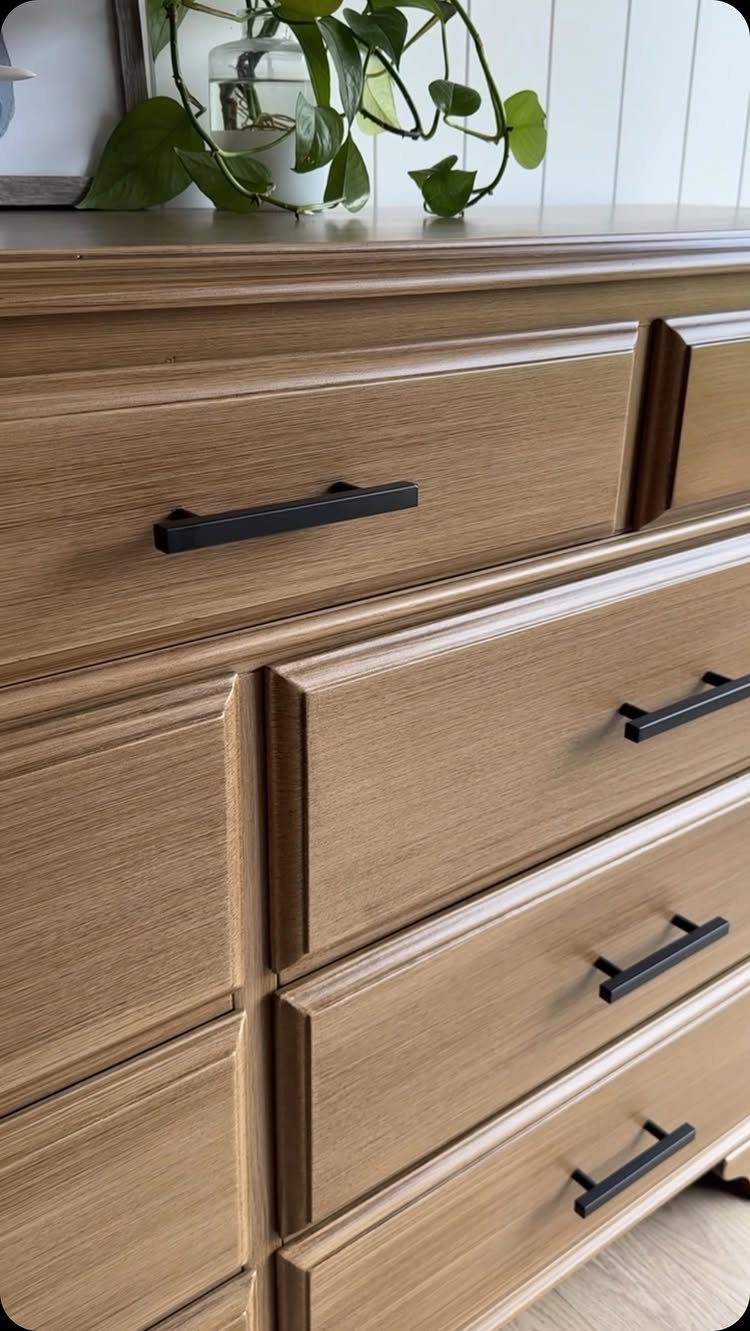
SFO stands for stain and finishing oil, and a single product that colors and seals in one pass is what makes this dupe friendly for an afternoon.
The result is a warm, rich brown that lets the grain show, which is closer to a catalog look than a thick coat of paint.
Matte black modern handles against a lighter finish give the piece the contrast that makes it look store-bought.
I’d wipe the oil on thin and build depth with a second coat rather than one heavy layer. Cost stays low because one can covers a dresser.
2. Weathered Light Brown Dresser
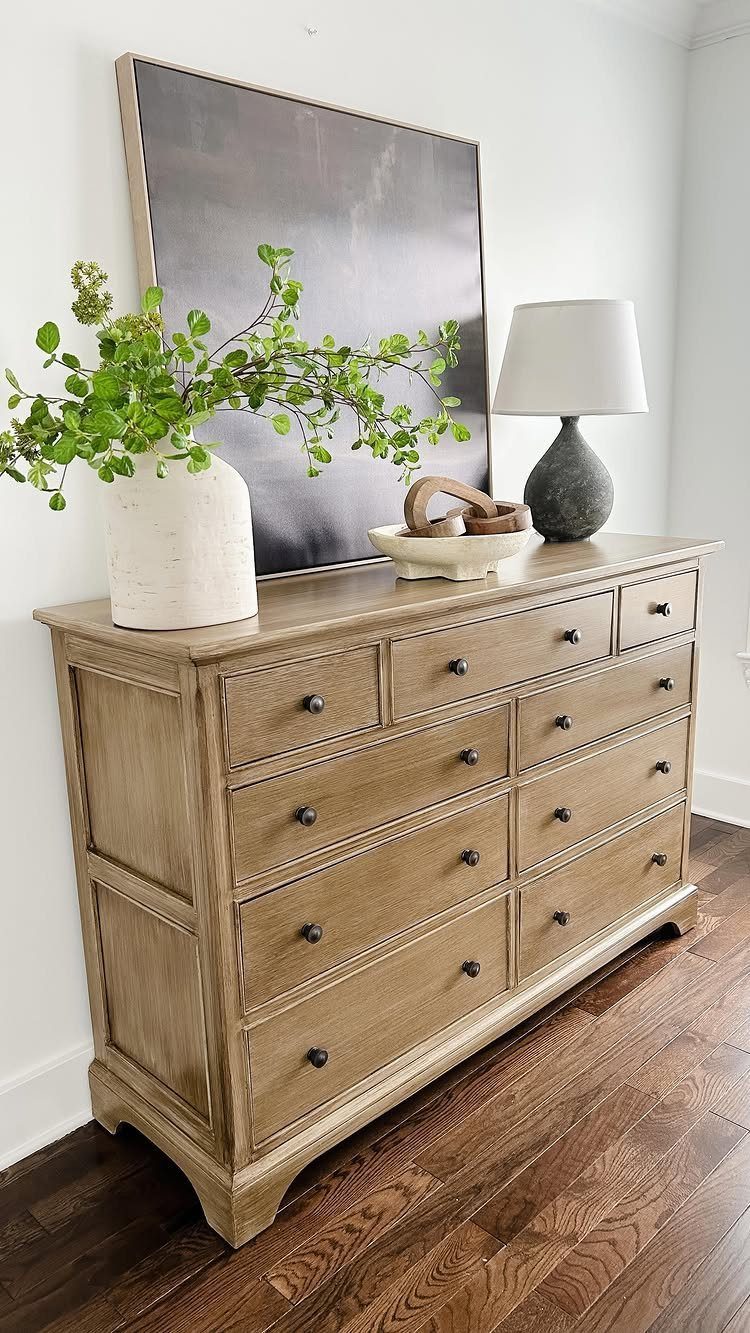
Sand first, and keep it simple: 220-grit sandpaper smooths the surface so the finish goes on evenly, according to the maker of this piece.
A weathered light brown reads soft and a little worn, which suits a dresser meant to hold lamps, vases and art.
The dresser’s pale wood grain looks sharp and defined in this weathered light brown finish, without any extra finishing work.
3. Matte Brown-Grey Side Tables
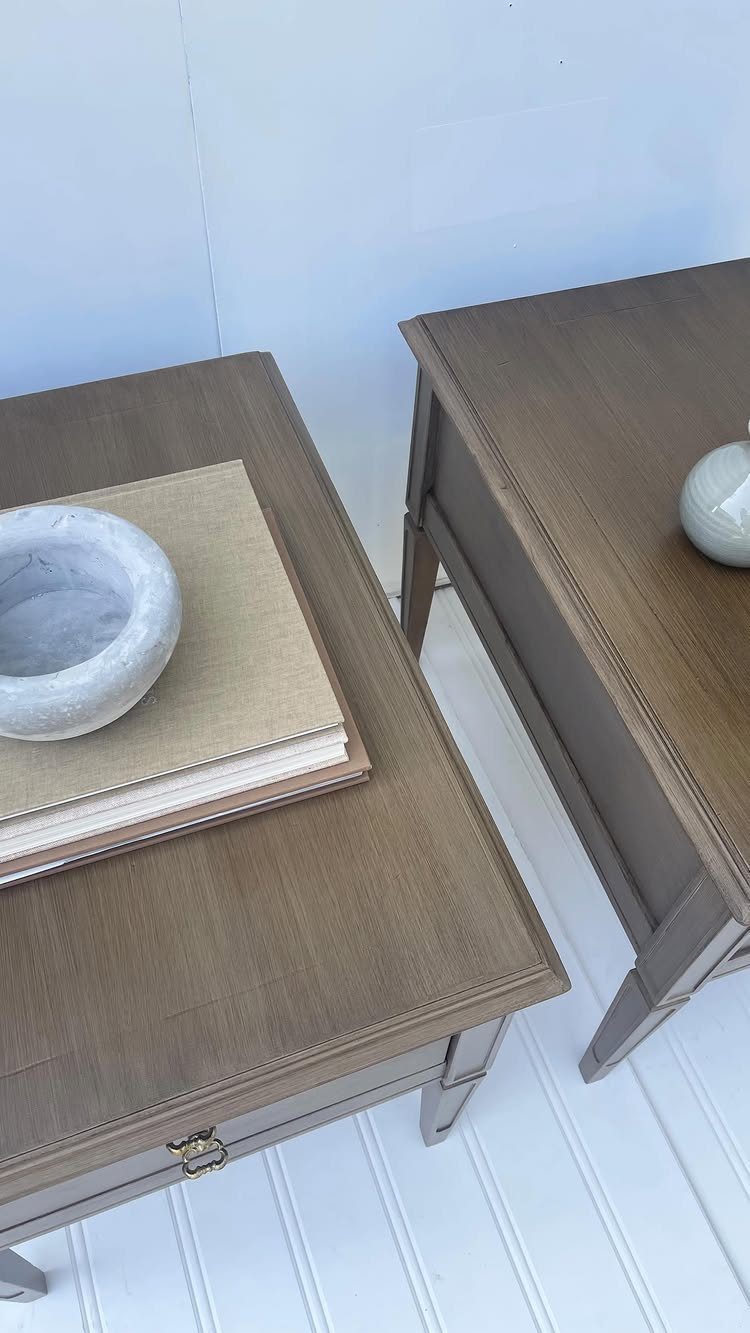
Soft matte brown-grey paint is a forgiving choice for side tables, since a flat sheen hides brush marks better than satin or gloss does. 2 matching tables look intentional, and the color sits quietly beside books and bowls.
Paint is the budget route to this look. Wipe the tables clean, paint in thin coats, and let each one dry fully before the next.
4. Light Beige Greige Dresser
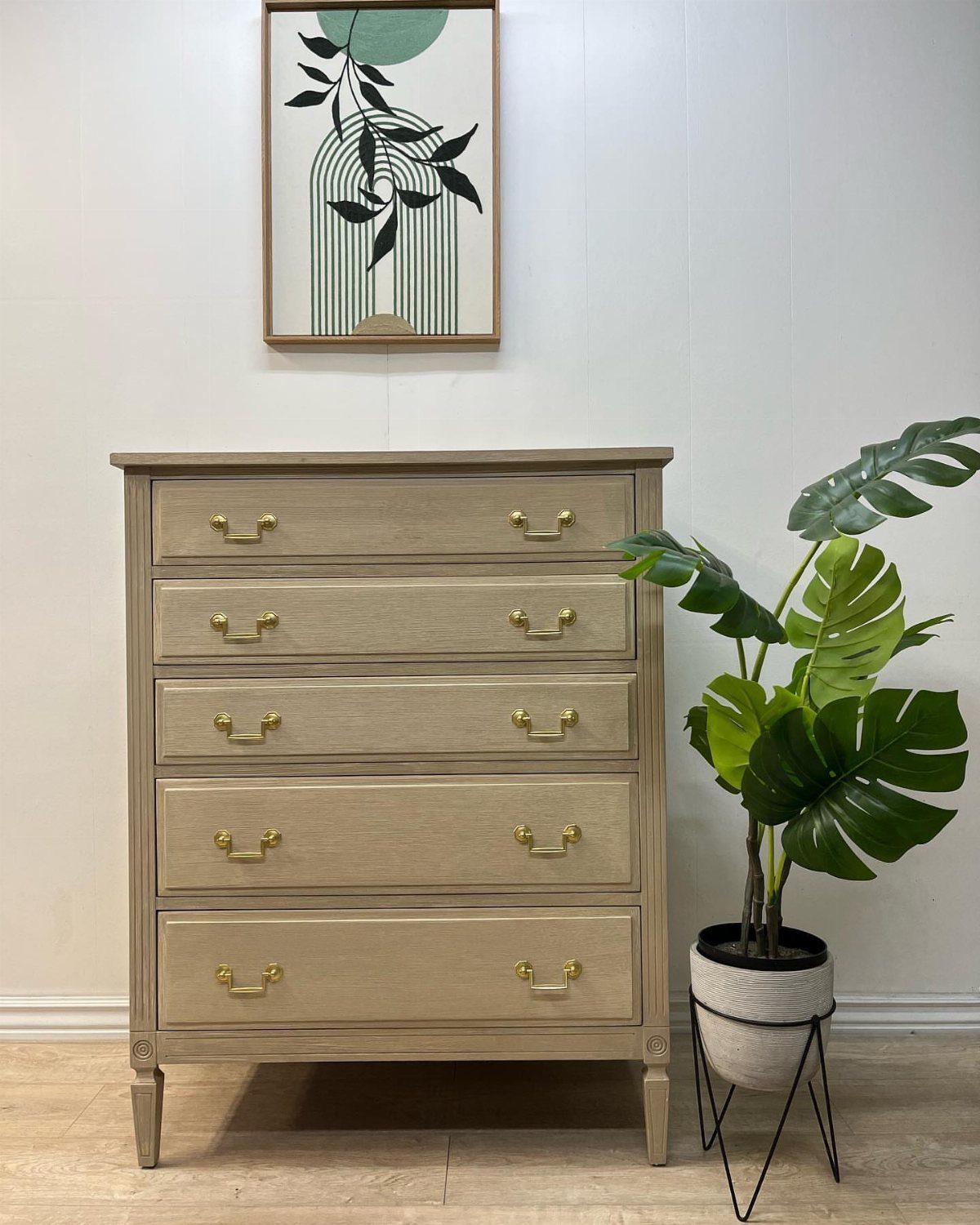
Greige is the color I’d pick when white feels too stark and brown feels too heavy. On a dresser, a smooth light beige coat with gold handles looks polished and warm.
Smooth is the word that matters.
Sand between coats and use a fine foam roller to keep the surface free of ridges. Swapping the hardware to gold costs little and does a surprising amount of the work.
5. Weathered Wood and Charcoal Tables
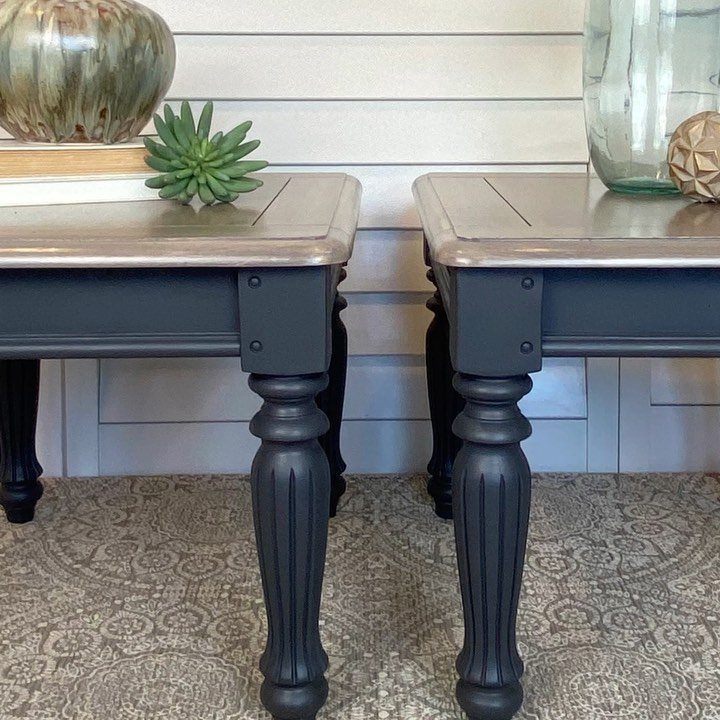
Two-tone tables get their character from contrast: weathered wood tops against charcoal grey bases. Only the legs and base get paint, so the wood grain stays on show where hands and lamps land.
Tape the line where top meets base before painting. A dark matte charcoal makes the pale top look lighter, and a pair of tables repeats the effect nicely.
6. Trim Pieces on Drawer Fronts
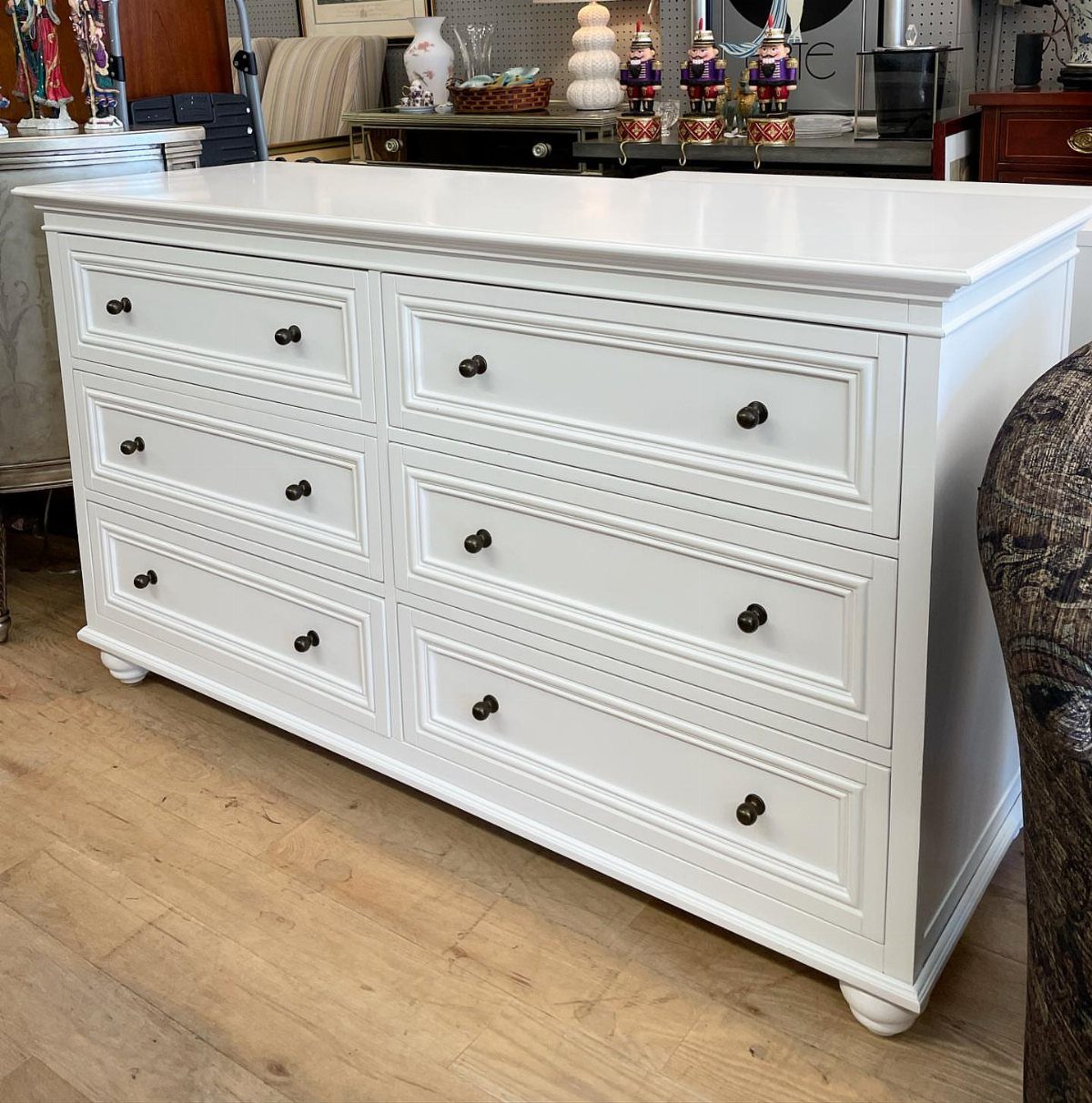
Trim on drawer fronts is the cheapest way to make a plain dresser look custom. Thin decorative molding glued to each drawer face adds the paneled detail that sells a store-bought look.
Paint the trim and drawer the same white so the shadow lines do the talking.
Dark knobs finish it. Measure each drawer front and cut the trim to fit before you glue anything down.
Choosing the Right Product
Pick the product by how hard the surface will be used. Over painted furniture that won’t get much wear or water, glaze is my pick because it goes on fast and forgives mistakes.
For a high-use surface, SFO is the durable pick, though it dries slower. Gel stain is the faster route to rich coverage when you can’t wait on oil.
If you go the glaze route over paint, let the paint cure for at least 2 days first.
A chip brush works well here: stroke the glaze on in the direction real wood grain would run, then wipe back the extra until the color looks right to you.
SFO stays workable for a long time, so you have room to adjust.
Drying Times
Drying time often decides this more than color does. Water-based glaze is touch-dry in about 8–12 hours, and it has little to no odor.
Gel stain dries in about a day. SFO is the slow one at 2–5 days, and it carries a slight oil smell, so plan around that if you’re sensitive to odors or short on time.
For an afternoon project, that means glaze or gel stain if you want the piece back in use quickly. Choose SFO only when you can leave the piece alone for several days.
Durability Considerations
SFO is an oil-based finish tough enough for floors, so a dresser top or table won’t need extra protection when it’s the only finish going on. SFO also works as its own sealer, which saves a step.
Of the two, water-based glaze is the one that needs a protective topcoat. On high-traffic or wet surfaces, add a clear top coat sealer over it for durability.
If you want gel stain, check your shade first: it comes in medium to dark tones. For a lighter wood tone, stir 2 or so drops of paint into clear glaze and you’ve mixed a custom shade.
Frequently Asked Questions
What is a Pottery Barn finish?
Think of a rich brown or a lightly weathered tone, with the grain still easy to see through the color, like a showroom piece and not something buried under paint.
Contrast helps too: matte black or gold hardware against the finish makes a dresser read as store-bought.
What is the most affordable way to finish wood?
A stain and finishing oil costs the least because it tints and seals the wood in a single coat, and a quart usually handles a dresser.
Gel stain is a close second when you want rich coverage faster. SFO cures to a hard oil-based film that holds up on floors, so a dresser top finished with it won’t need a second protective layer.
How do you glaze a piece of furniture?
Give the paint at least 48 hours to cure, then work the glaze on with a chip brush, stroking the way natural grain would run.
Wipe back the extra with a soft cloth until the color looks right. Anything water-based should get a clear sealer over it wherever hands, spills or heavy use are likely.