Your existing skills point to the right build: a saw and sandpaper cover the slatted rocker, a needle and thread handle the upholstered nursery chair, a paintbrush is all the floral chair asks for, and the wagon wheel and wood-and-metal frame chairs ask for the most from your tools.
A flat plank seat starts pressing on the sit-bones around the 20-minute mark, so a gently shaped seat counts for as much as the style you choose.
1. Wagon Wheel Rocking Chair
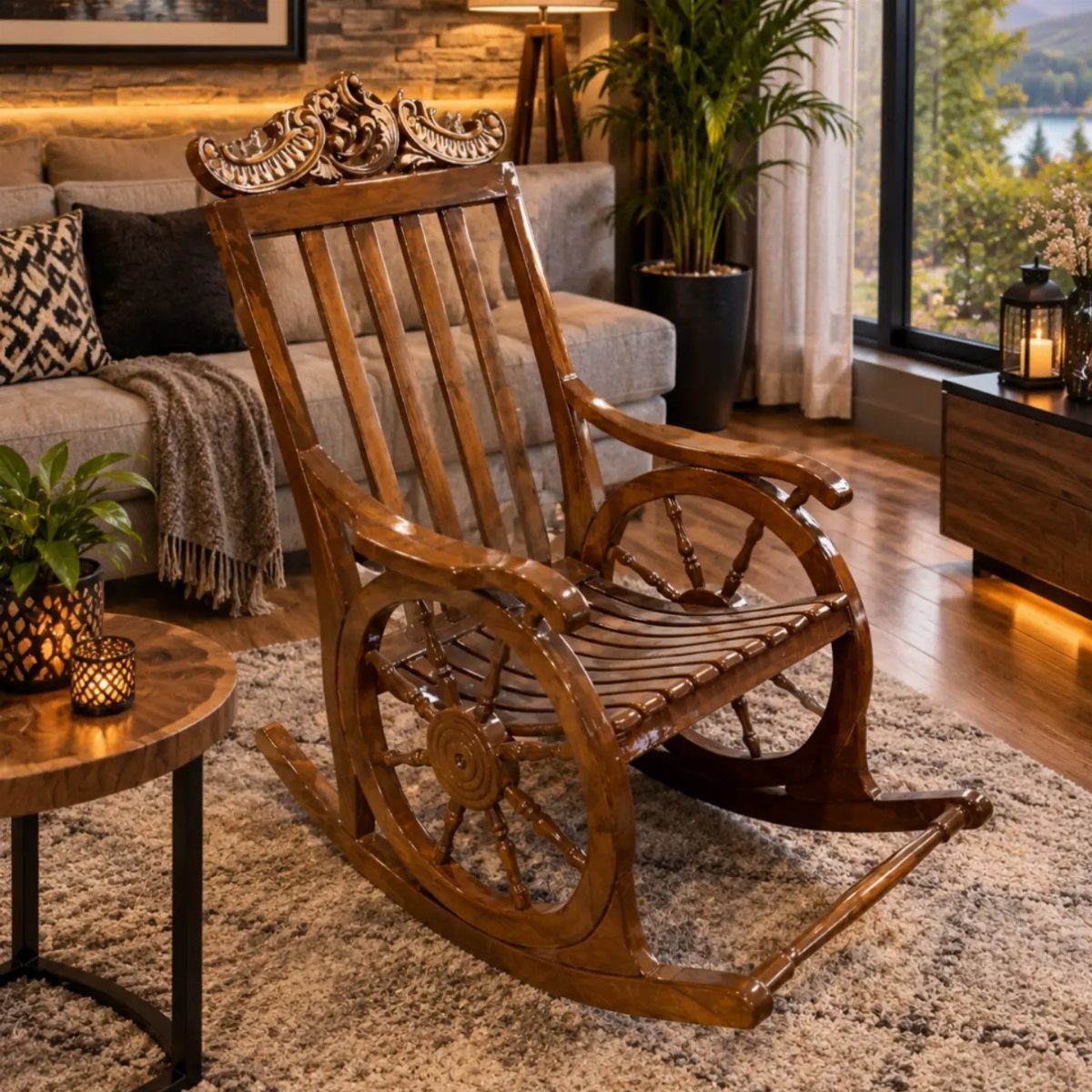
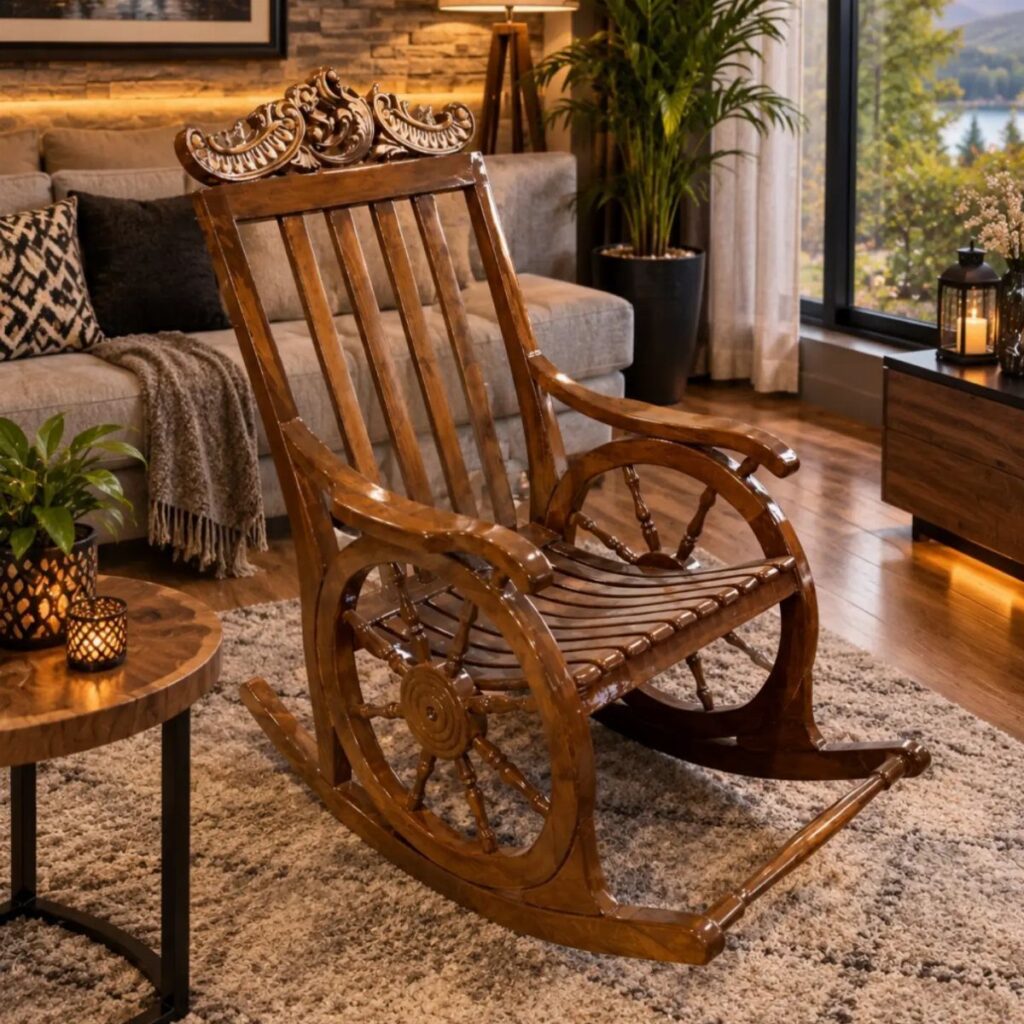
Two big wagon wheels do the structural work here, standing in as both side frames and armrests, so the build starts with sourcing wheels that match in diameter.
Mismatched pairs will make the chair lean, and no amount of clever joinery hides that.
I would hang the seat and back between the wheels on a sturdy crosspiece at the front and rear. Then check the balance before you commit to any glue or screws.
Rustic wood suits a living room with a rug and plants, but it asks for floor space. Measure the spot first.
2. Wood and Metal Frame Rocker
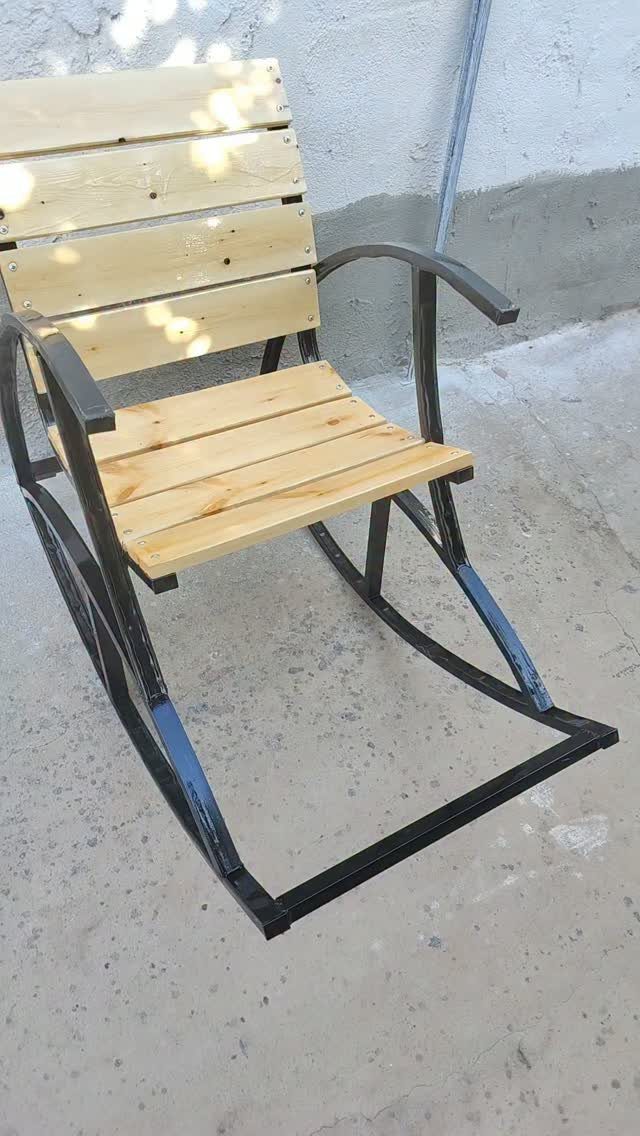
Black metal and pale wood make a clean pairing, and the contrast does most of the design work for you. The frame carries the shape, so the slats can stay simple: flat boards for the seat and back, spaced evenly.
Metal is the harder part of this build. If welding isn’t in your toolkit, a local shop can often bend and weld a frame from your drawing, then you handle the wood at home.
I would keep the slats unpainted or lightly sealed so the grain stays visible against the dark frame.
3. Natural Branch Rocking Chair
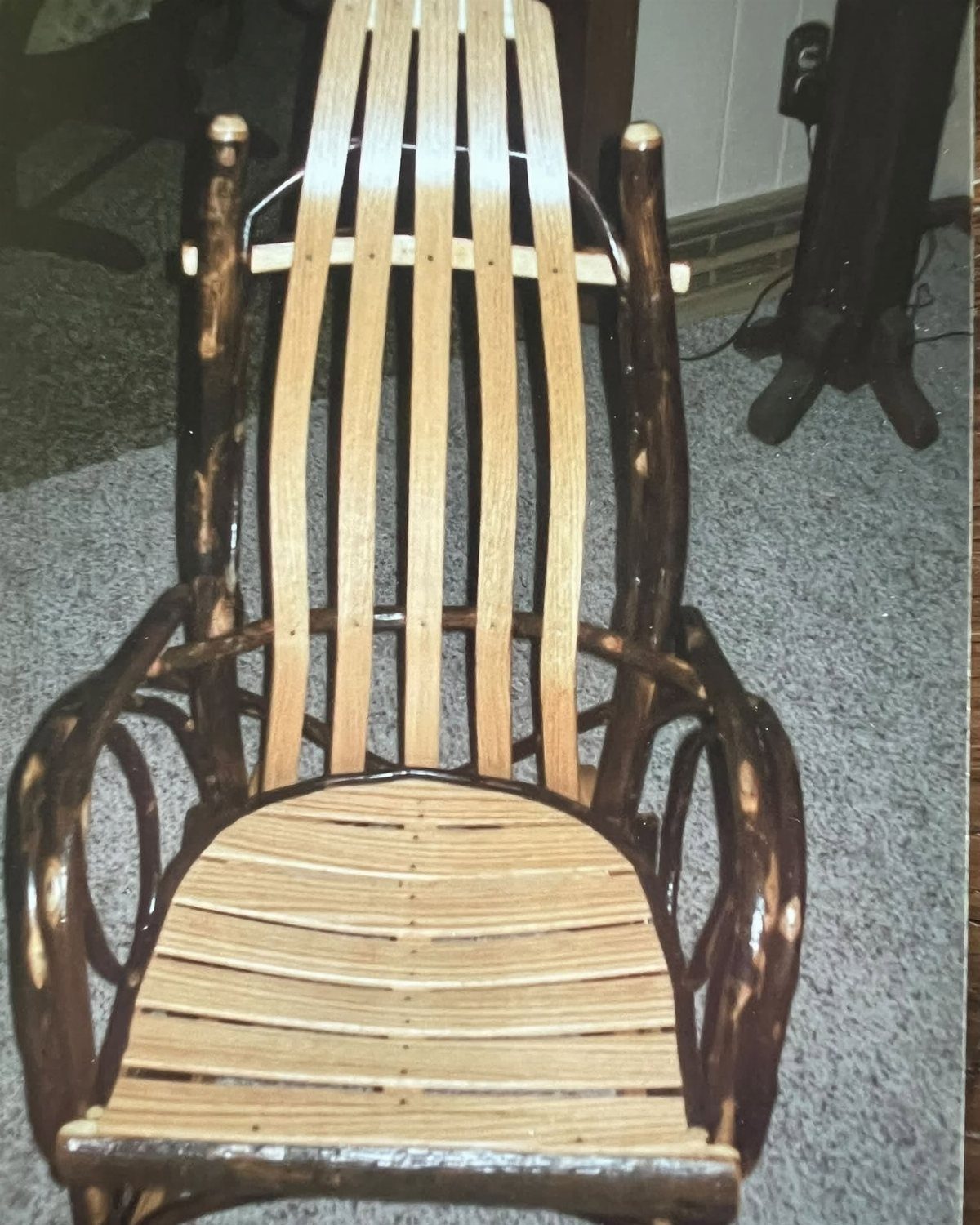
Branches with their bark and bends left alone give this rocker a frame no lumber yard can sell you.
Dark, natural limbs for the structure and light slats for the seat and back keep it from looking like a pile of firewood.
Pick branches that are dry and thick enough to carry a sitting adult, and match the curves as closely as you can on both sides. Expect to fit joints by eye, since no 2 limbs bend alike.
This takes longer than an afternoon, but the slats go quickly once the frame stands.
4. Classic Slatted Wooden Rocker
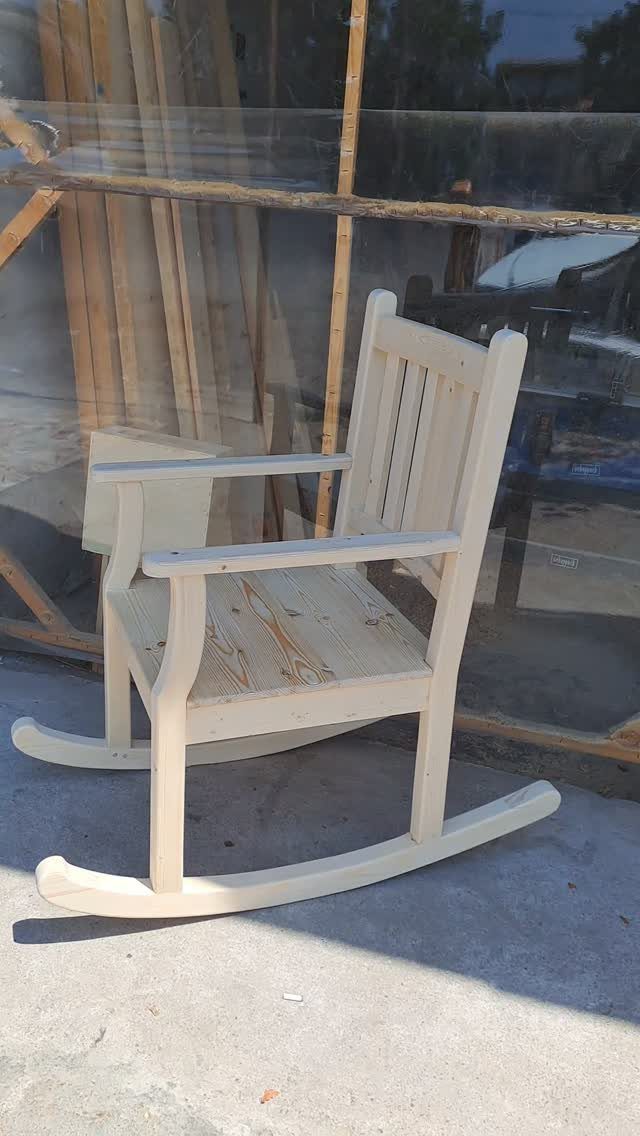
Slatted seat, slatted back, two curved rockers: that is the whole recipe, and it is why this one is the friendliest build on the list. Plain boards and a handful of repeated cuts get you a real chair.
Cut the rockers as a matched pair. Clamp them together and sand the curves at once so they stay identical.
Leave it unfinished while you test the rocking motion, then sand and seal. I like to sit in it bare before deciding on stain or paint.
5. Hand-Painted Floral Rocking Chair
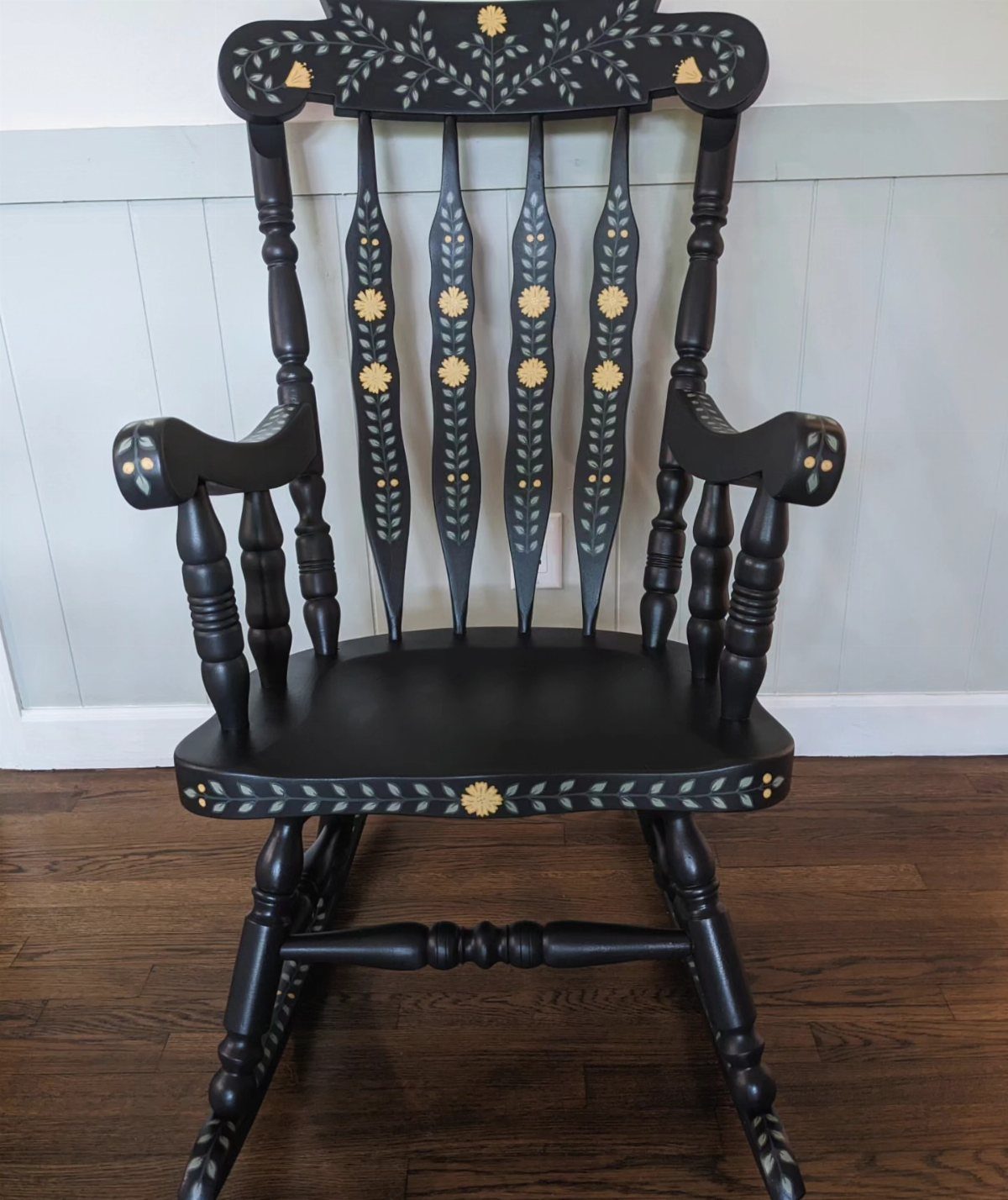
Black paint gives floral work a dark stage, and yellow and white pop against it without any fuss. Paint the whole chair black first and let it dry fully before any flowers go on.
Keep the motifs simple: a few petals and leaves repeated along the backrest and seat read as intentional. Sketch lightly in chalk or pencil, then paint over it.
A thin clear topcoat protects the seat, which takes the most wear. Skip the topcoat on the back if you prefer a flat, hand-painted look.
6. Upholstered Nursery Rocking Chair
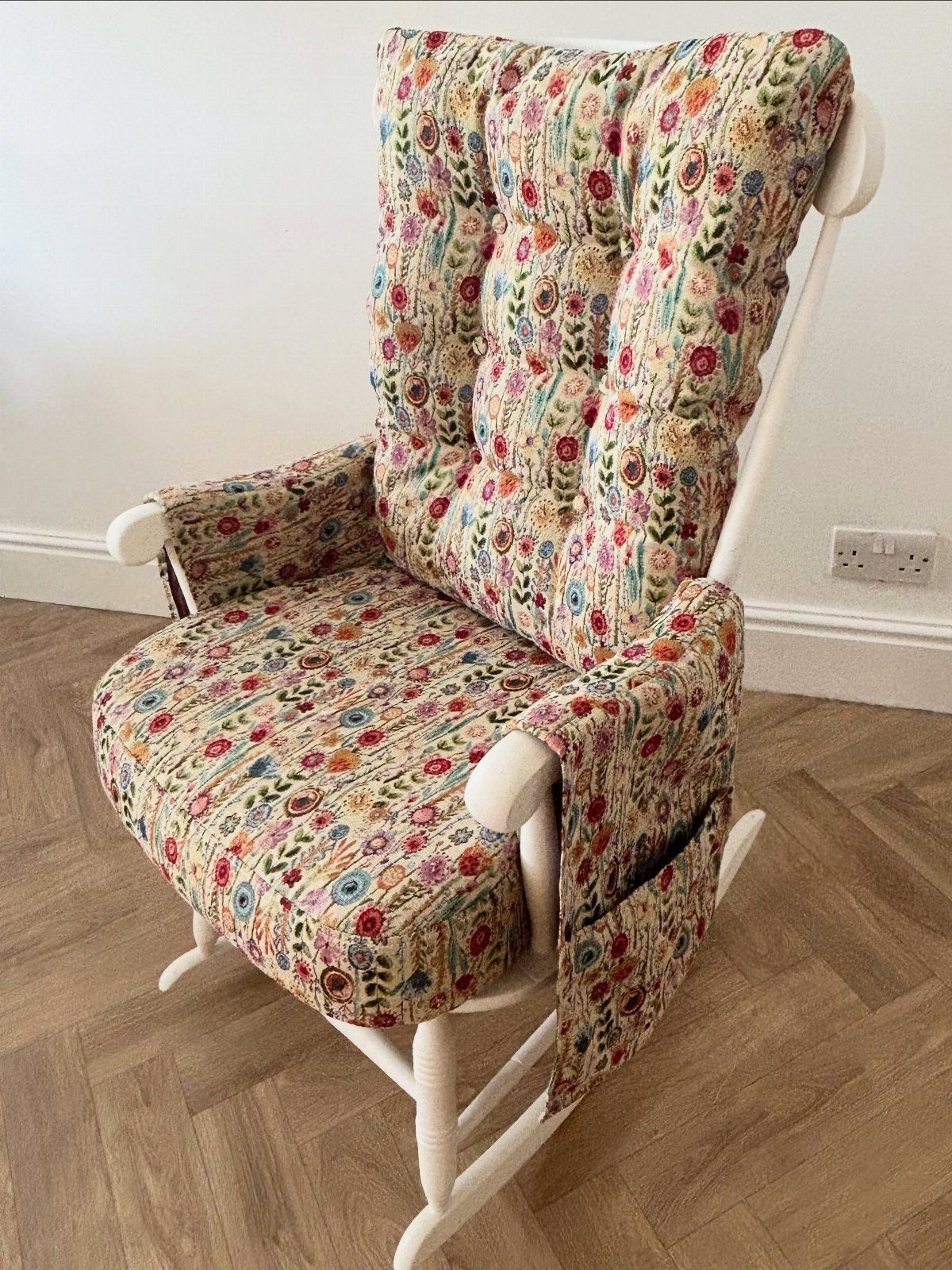
Cushions on the seat, back and armrests turn a plain white wooden rocker into something you can sit in for an hour.
Sewing them is the extra step, and it is what makes this version a nursery chair rather than a porch chair.
Make paper templates from the seat and back first, then cut your fabric from them. Floral prints hide small sewing wobbles better than solid colors do.
Paint the frame white before attaching anything, since taping around cushions later is a chore.
The rocking chair can be left largely unfinished, or be fully padded and painted.
7. Curved Wood Cushion Rocker
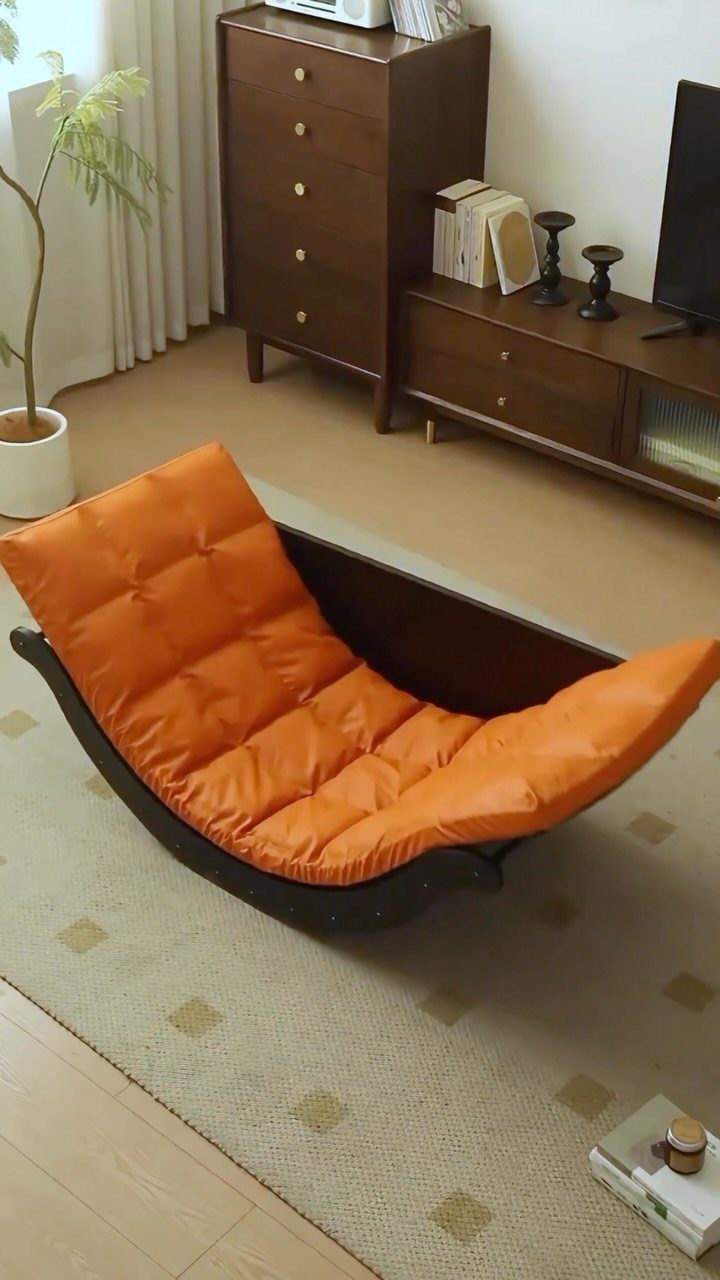
A thick, tufted cushion on a curved wooden frame gives you a chair that looks modern and sits soft. The wood does the shape work, so the cushion is where the project’s personality lives.
Sew the cushion to match the seat, and make a paper template first, as with any upholstered build.
Tufting adds buttons and ties, which means more steps than a plain box cushion. A solid, saturated color like orange stands out against pale wood and a light rug.
A light coat of clear finish is enough here, since a heavy stain or paint would pull the eye away from the curve of the seat.
8. Woven Rope Rocking Chair
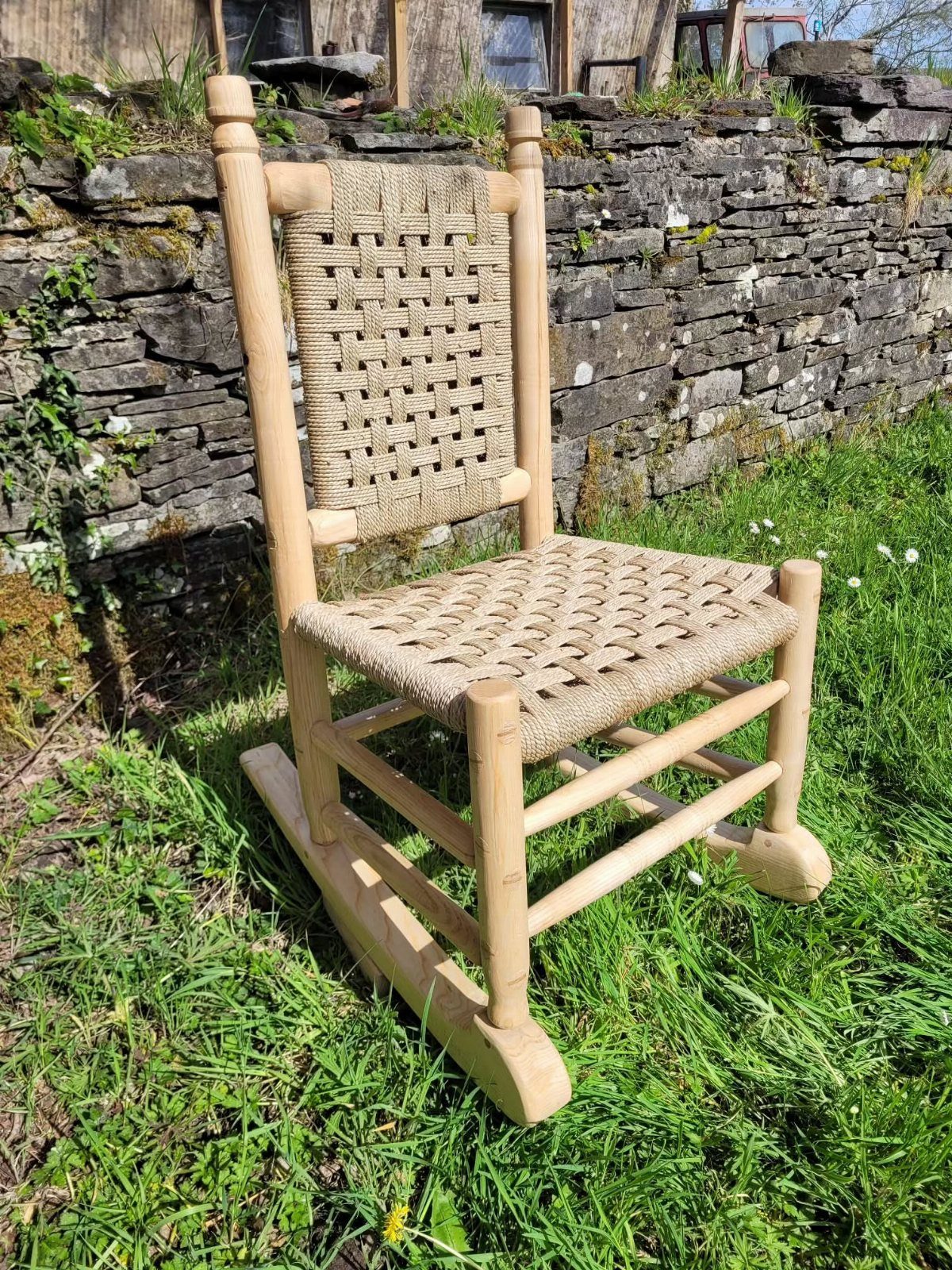
Rope woven across a light wooden frame replaces slats and cushions in one move, and it reads as casual and outdoorsy. The weave is the main job: it takes patience, not special tools.
Drill or notch the frame where the rope will wrap, then keep each pass pulled snug so the seat doesn’t sag. Rope stretches with use, so leave yourself room to tighten it later.
A chair like this belongs on a porch or lawn, so seal the wood and pick rope meant to live outdoors.
Importance of Comfort
A rocker that looks great but hurts after ten minutes is just sculpture, and two things decide which one you get: lumbar support and seat shape.
A flat plank seat goes together fastest, though it presses hard on the sit-bones after about 20 minutes.
With a little patience, you can scoop a shallow dish into the seat with a gouge or grinder, a shaping method known as saddling.
A power plane, a scorp, or plain sanding can all get you there, so the tool in your garage is enough.
Give the backrest a gentle curve that follows the natural line of the spine instead of a straight board.
Slightly contoured vertical spindles do this well. Getting the angles right takes extra time, but it pays off every time you sit down.
Rocking itself helps too. Tipping back lets the chair and gravity share the job of holding up your spine, so the back muscles can relax.
Common Mistakes
Rushed joinery is the mistake I see most often. Screws look like a quick fix, but the constant rocking motion slowly loosens them until the joint wobbles.
Mortise and tenon joints hold up far better, and they win for this reason. They are strong, and they let the wood expand and contract naturally.
Take the time to cut each joint so it fits tight before you glue anything.
Then check alignment as you assemble: both sides should match, with nothing twisted or leaning. A gap or a crooked joint now becomes a wobble later, and a rocking chair puts every joint under constant stress.
Testing for Stability
Before you decide the rockers are wrong, check the floor. Uneven garage concrete can make a solid chair look crooked, when the floor is the one at fault.
Test the rocking on a flat sheet of plywood laid over the floor, so the surface can’t skew the result. If it moves evenly and feels symmetrical on the plywood, the build is fine.
If it still pulls to one side, then look at the rockers. Make sure the 2 curves match before you sand or cut anything else.
Frequently Asked Questions
Is there a way to make a rocking chair not rock?
Yes.
You can modify the rockers or set the chair on a stationary base. The rocking comes entirely from the curved runners, so changing or replacing them is what stops the motion.
What is a rocking chair?
A rocking chair is a chair mounted on curved rockers, which lets it move back and forth.
Leaning back lets the chair frame and gravity carry part of the load, so the muscles along your spine get a break. The gentle rhythm is also naturally calming.
How hard is it to build your own chair?
It is challenging but rewarding, and it calls for patience more than fancy skills.
A slatted rocker built from 2 matched rockers and plain boards is the easiest build I can point a beginner toward. Chairs with welded metal frames or natural branch limbs take more time and fitting.
Why does my homemade rocking chair lean or pull to one side?
Check the floor first, since uneven concrete can make a solid chair look crooked.
A flat sheet of plywood set on the floor gives you a true surface to test on, and a chair that still pulls sideways there has a real flaw.
If it still pulls to one side there, compare the two rocker curves to make sure they match.
What is the best joint for a rocking chair?
I pick mortise and tenon joints for a rocker, and I would not swap them for anything else.
The wood keeps its grip under load, and the joint still gives a little as the boards swell and shrink with the seasons. Screws tend to loosen under constant rocking until the joint wobbles.