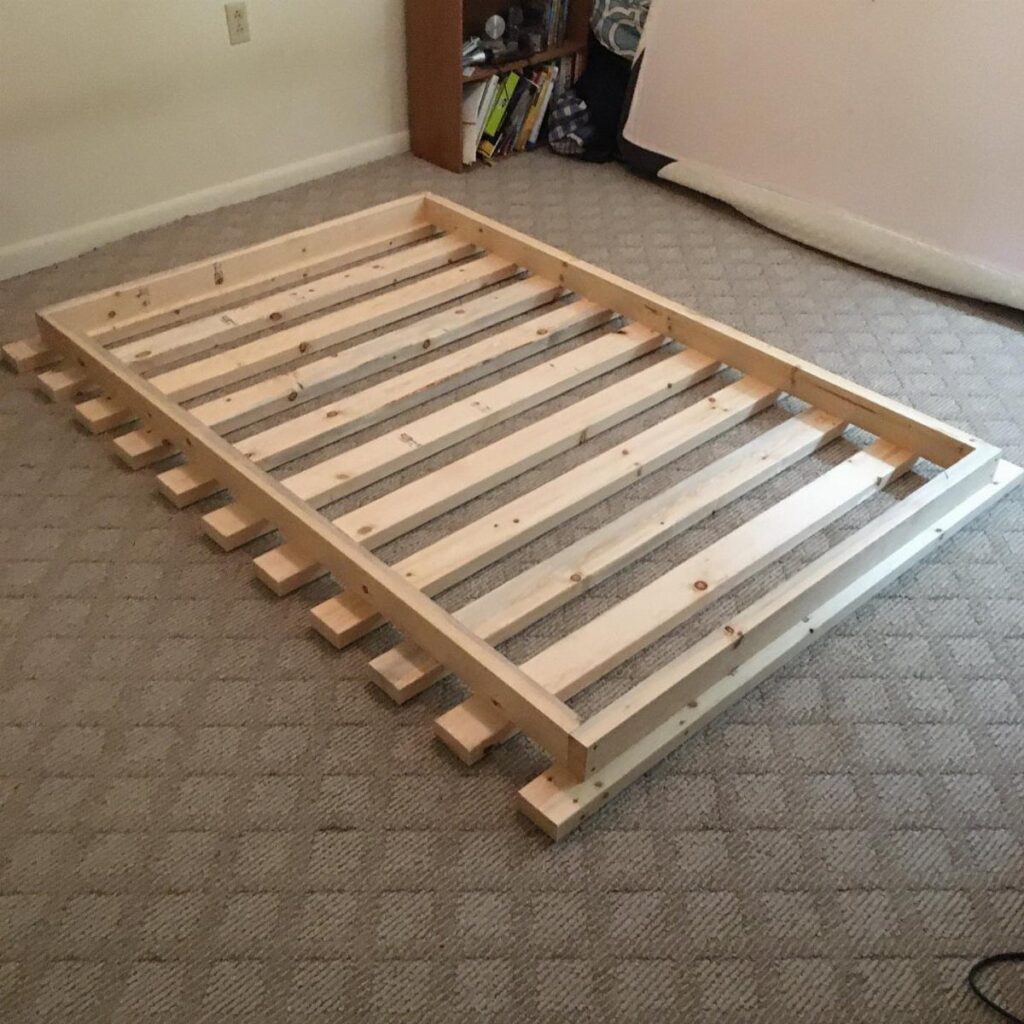
Skill level and free time decide which frame is yours: a pine slat platform base is simple cuts and one afternoon, while the faceted geometric frame and the Bed Frame with Built-In Storage Drawers ask for patience and detail work.
1. Custom DIY Wood Bed Frame
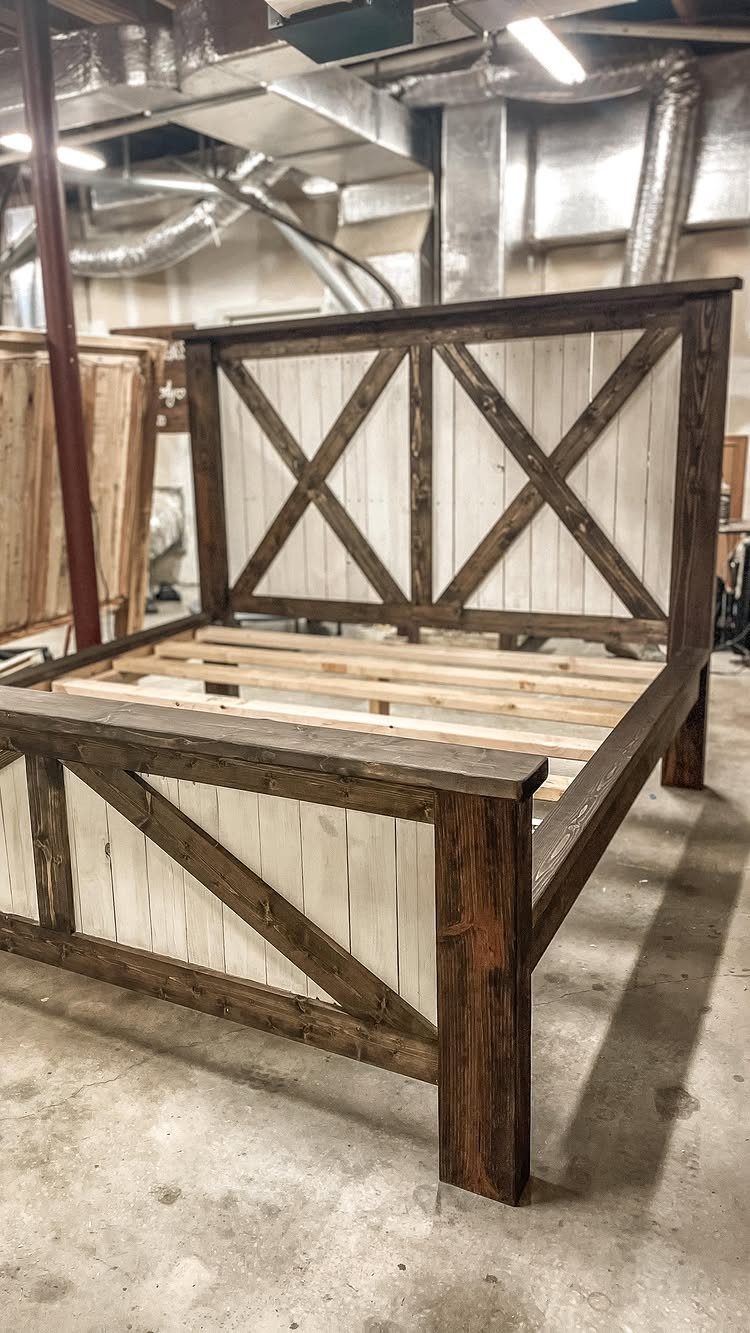
An X-brace headboard and footboard make a friendly first custom build, since the crossed boards carry the whole design and need nothing fancy. Stain the trim dark and paint the panels white for contrast.
Cut and dry-fit every piece before any glue or screws go in. Crossed braces are the part most likely to be off by a hair, and a loose fit shows at the corners.
Size the frame to your mattress before you buy lumber, since a custom build lets you choose the exact dimensions.
2. Pallet Wood Bed Frame
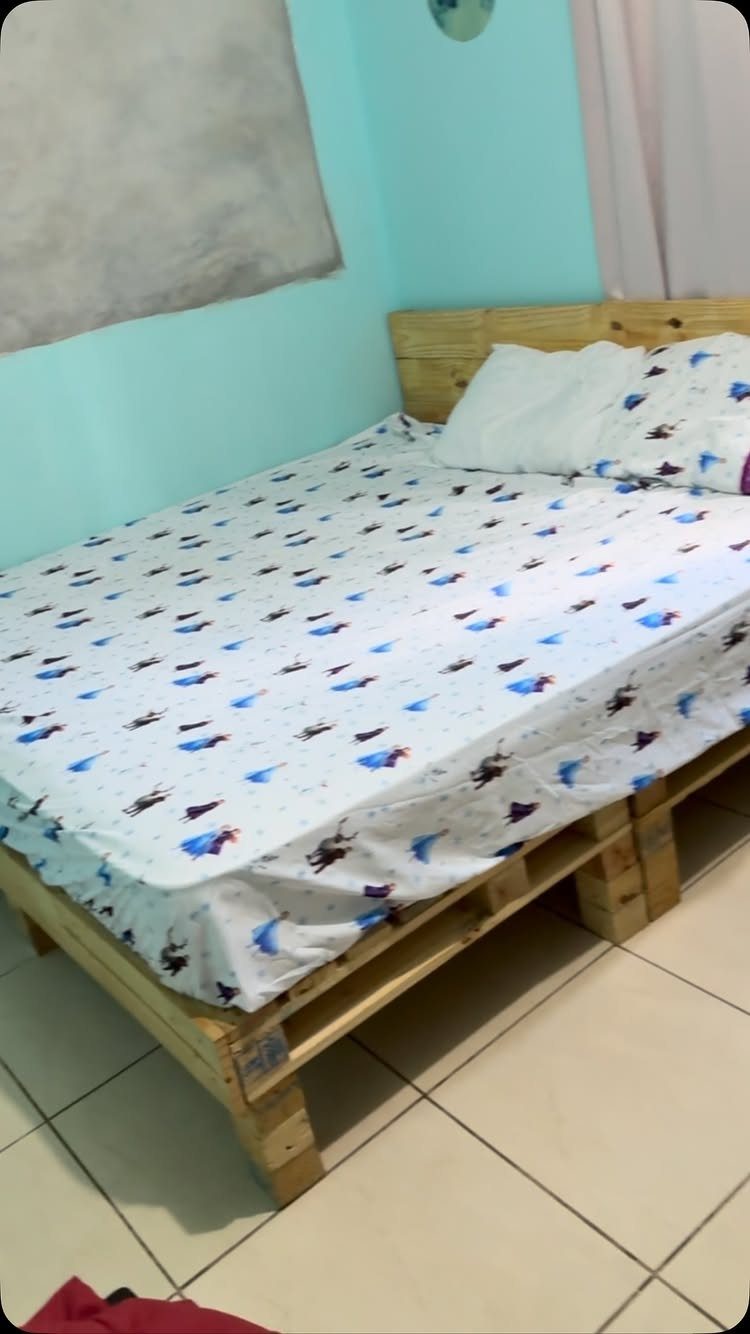
Stacked shipping pallets make the cheapest bed base I can think of, and their light wood sits well against a painted wall, especially a blue one.
Sand every surface you might touch, since pallet boards splinter. Check each pallet for protruding nails and pull or set them first.
Stack the pallets evenly and fasten the layers together so nothing shifts when you climb in. Budget is the draw here; a polished look takes extra sanding time.
If you want to build a bed from pallets yourself, you could do so for as little as £50. If, on the other hand, you are looking to build an exquisite, four-post bed from premium wood, the material costs could be as high as £400.
3. Curved Headboard Wooden Platform Bed
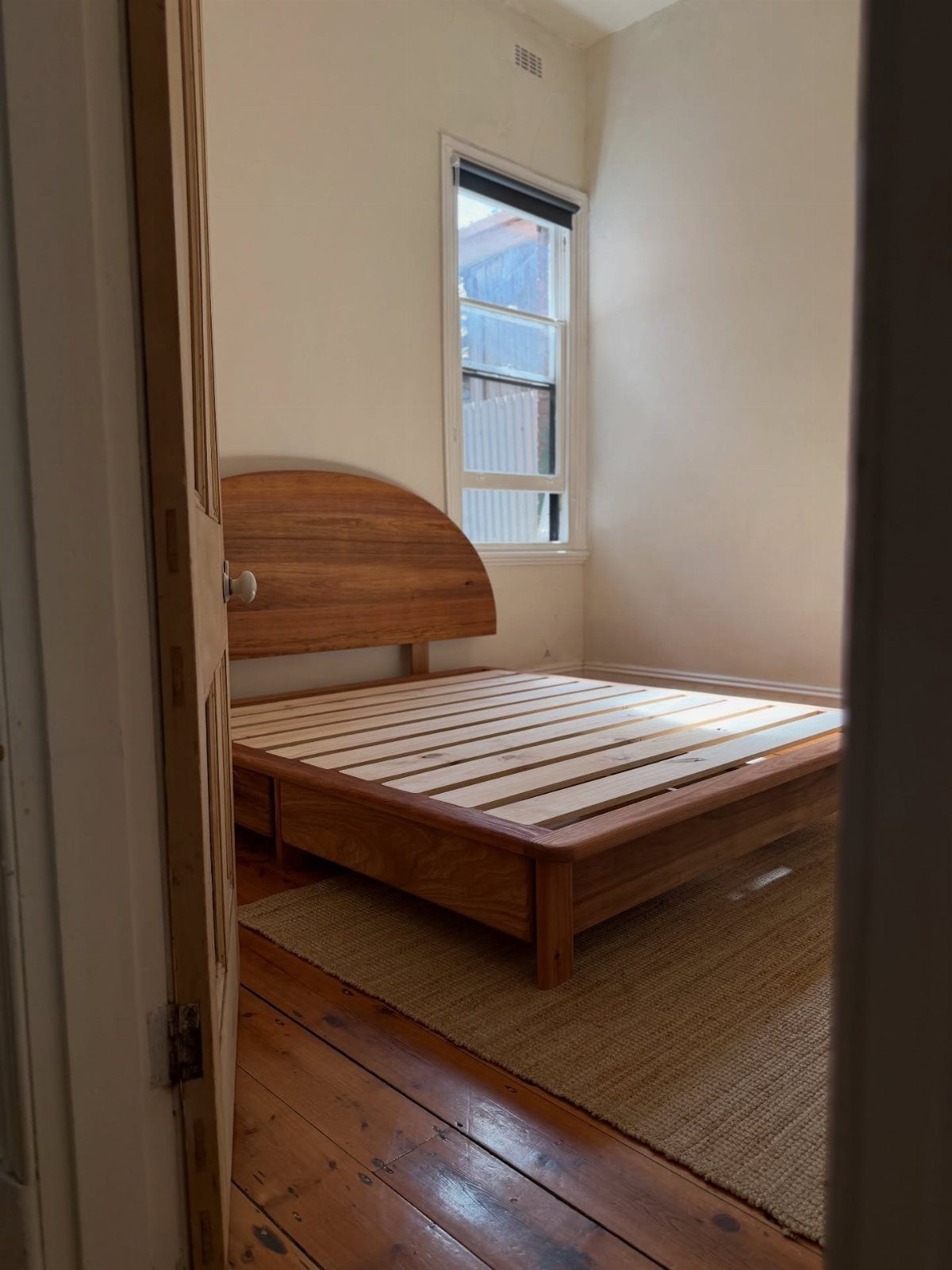
Curves are what make a platform bed feel built rather than bought, and a curved headboard is the one place I would spend extra effort.
Cut the arc from a wide board with a jigsaw, then smooth the edge with a sander. Trace it from a flexible batten bent to the shape so both sides match.
Keep the base simple, with slats on a plain frame, so the headboard stays the focus. Expect the curved cut to take most of your afternoon.
4. Low Headboard Wooden Slat Bed
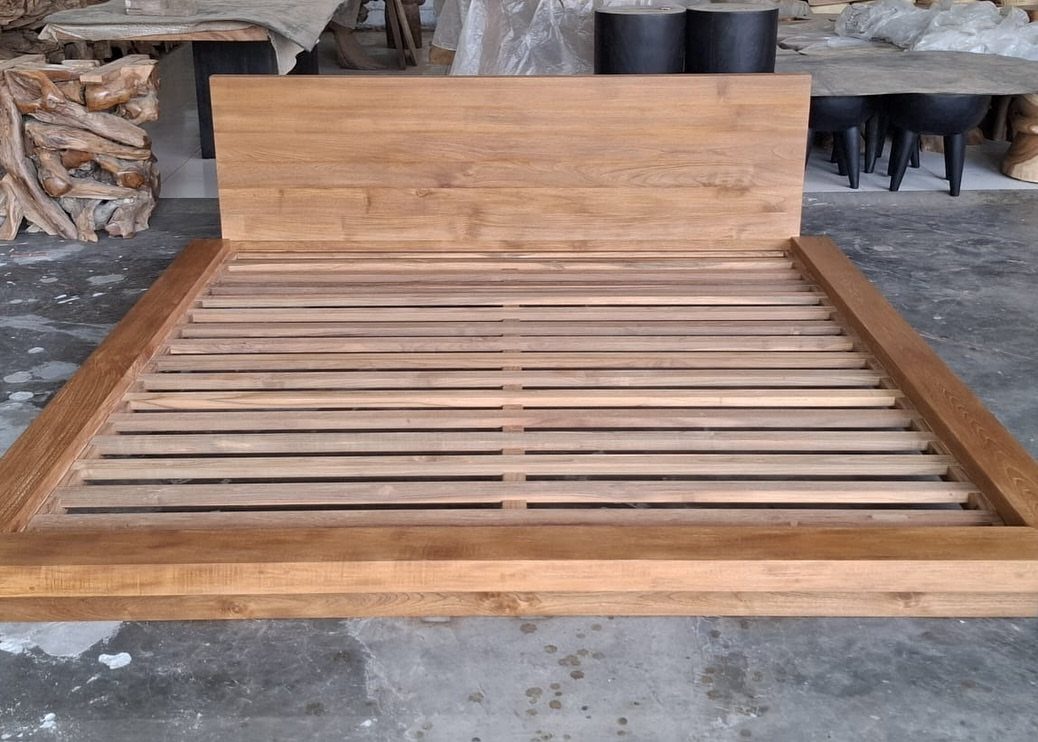
A low headboard keeps a slat bed light and open, and that is why I like this version: fewer parts, less visual weight, and a quick build.
Run the slats across the frame and space them evenly so the mattress gets steady support. Cut them all to one length at the same time so they sit flush.
Cut the headboard from the same species as the rails, or stain both to match, so the two read as one piece.
Light wood with a clear finish shows off the grain, and the lower headboard means less lumber to buy.
5. Bed Frame with Built-In Storage Drawers
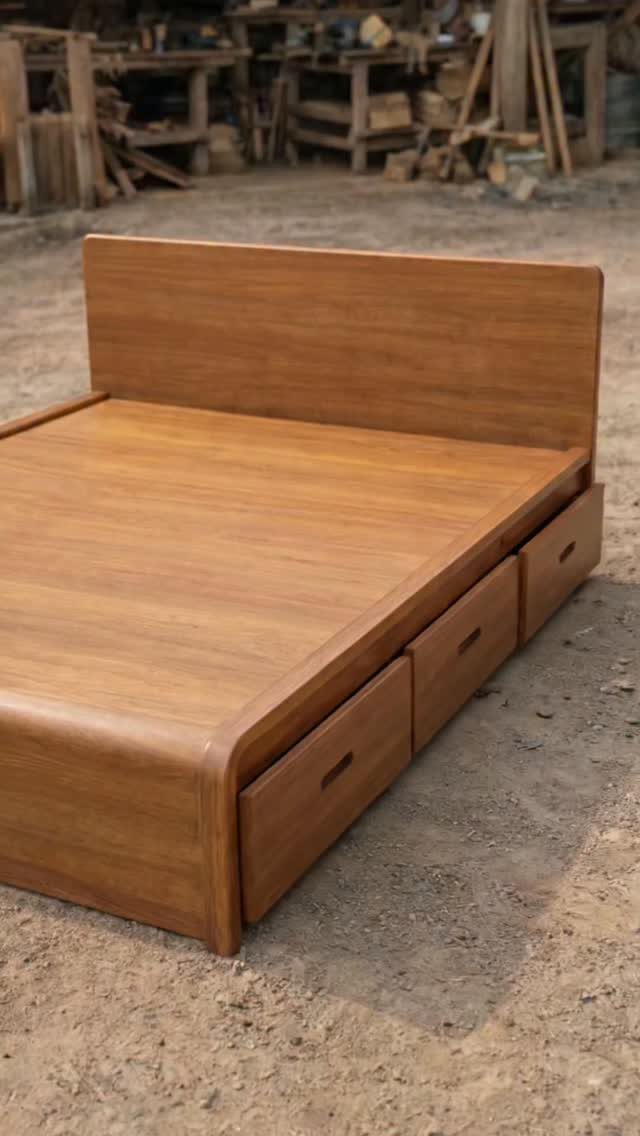
Drawers along the base turn dead space under the mattress into storage, which makes this the most useful build on the list. It is also the hardest, since each drawer box has to fit its opening.
Build the frame first, then size the drawers to the finished openings, leaving a small gap on each side so they slide freely.
3 drawers like these ask for patience more than special tools. If your skills are basic, start with one drawer and see how it runs.
6. Pine Slat Platform Base
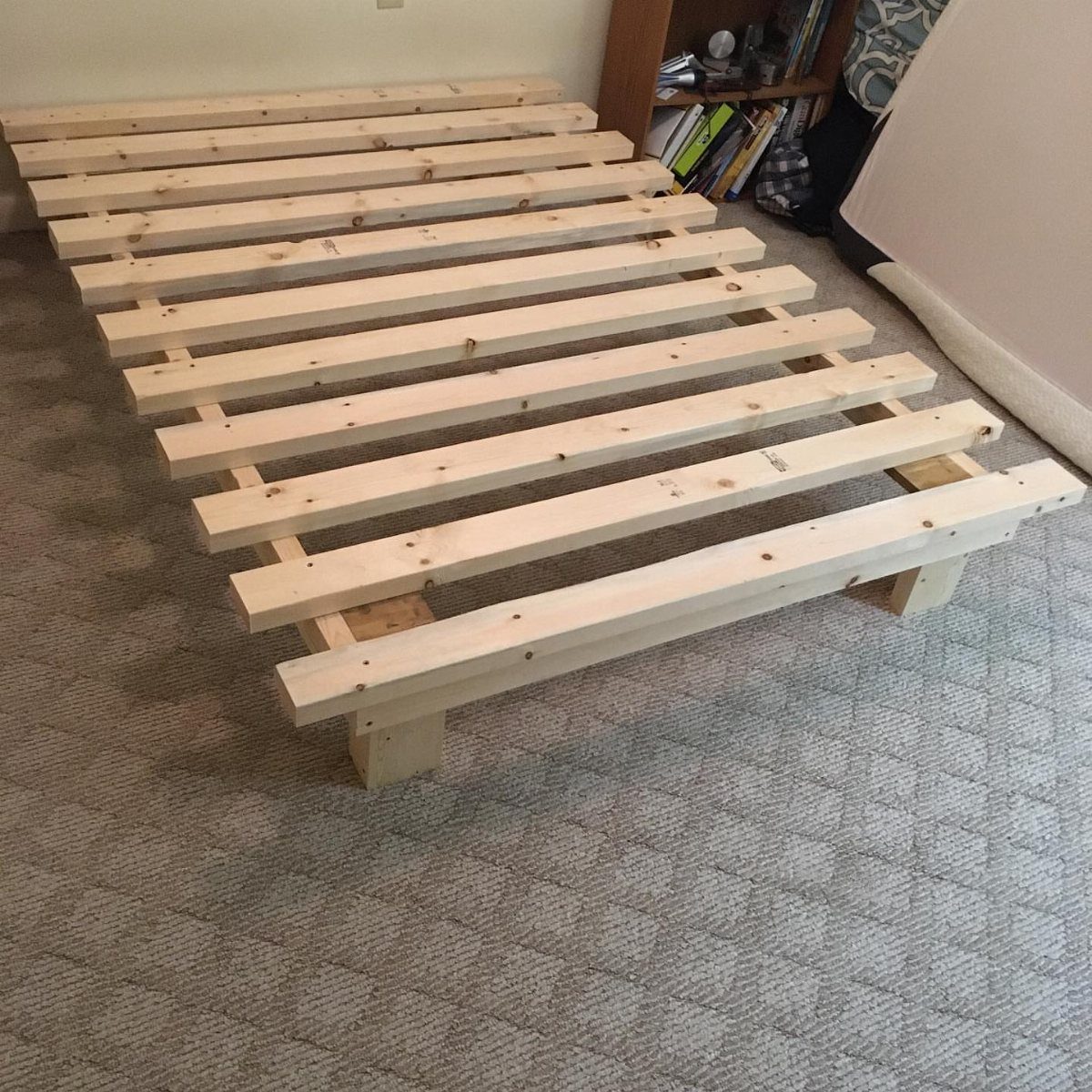
Pine beams and slats make the simplest platform base I know. Everything is straight cuts, so a saw, drill and sander cover it.
Build a rectangular frame from the beams, then lay the slats across it. Sand the pine smooth before assembly, because the soft wood dents easily if handled roughly.
Leave the pine light for a clean look, or add a clear coat to protect it. For a bed finished in a single afternoon, this one wins: the slats are simple cuts and the platform needs very little hardware.
7. Low-profile Dark Wood Platform Bed
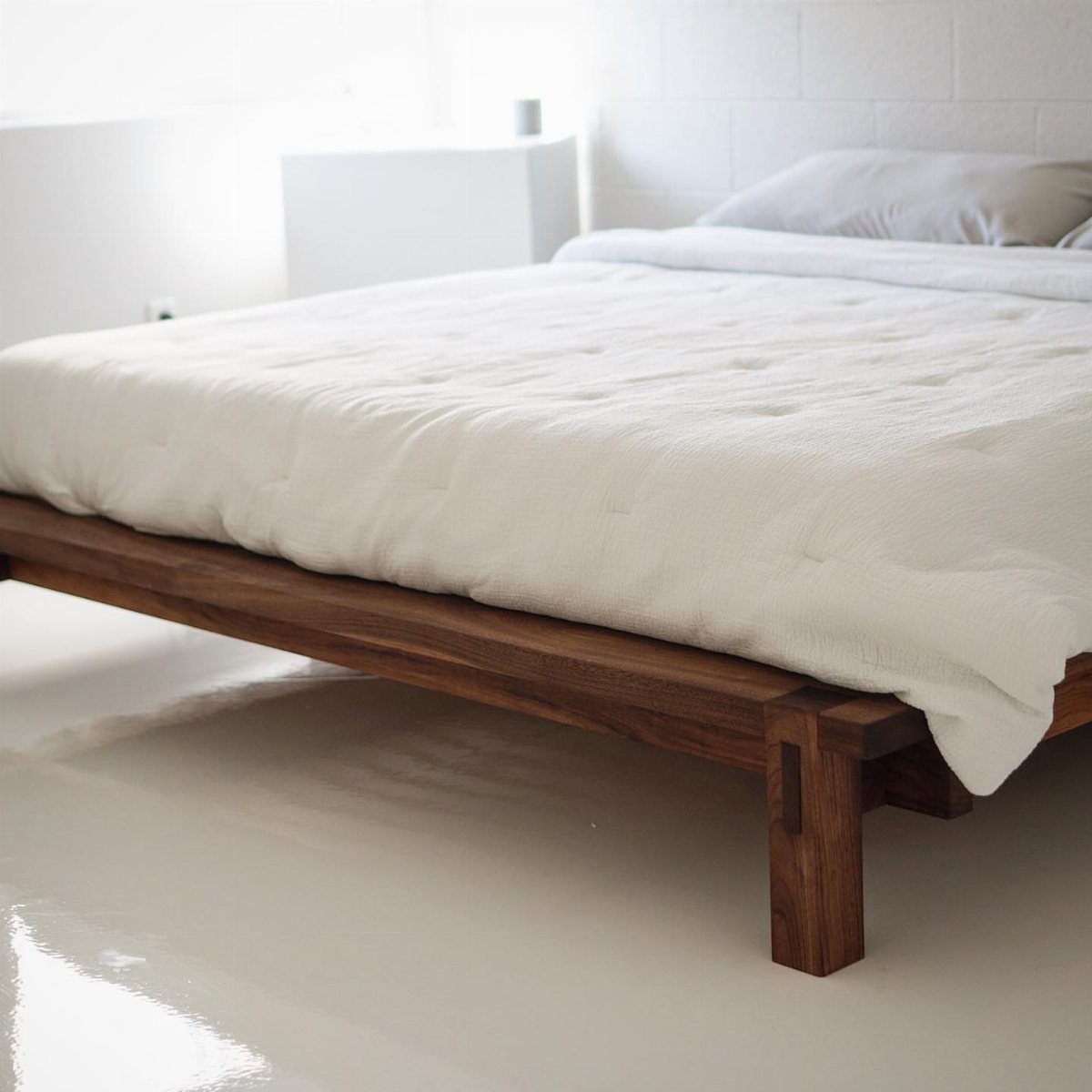
A dark finish on a low platform bed grounds a bright room, and the white bedding stands out against it. With no tall headboard, the frame’s plain lines do all the work.
Stain or finish the wood before assembly, since dark color shows every missed spot and sanding scratch.
Between coats, sand with 220-grit paper and wipe the surface with a tack cloth, because dust left behind shows up as rough specks under dark stain.
Keep the joinery simple and the profile low. Dark wood in a white room is a bold look, but it takes a few coats to look even.
8. Platform Bed with Under-bed Lighting
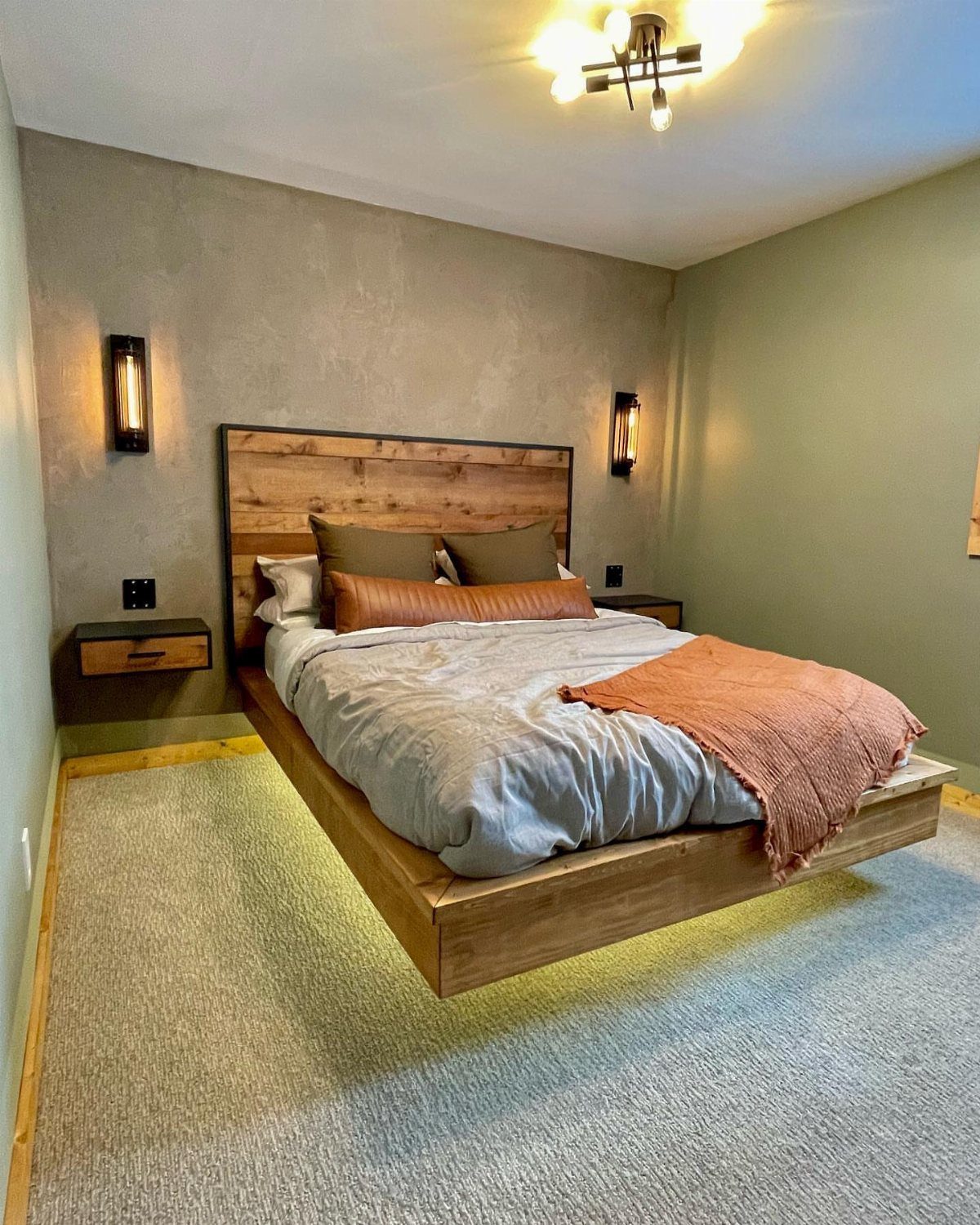
Warm light under the base makes a wooden platform bed look like it floats, and it doubles as a soft night light.
Building the headboard into the frame, rather than bolting it on later, gives you one continuous piece with no gap behind the mattress for the lighting to spill through.
Mount the lights along the underside of the rails, set back from the edge so you see the glow and not the fixture. Plan where the cord will run before you assemble, because it is hard to reach afterward.
Choose a warm tone rather than a cool one. It suits wood and keeps the bedroom calm.
9. Timber Loft Frame Over Storage
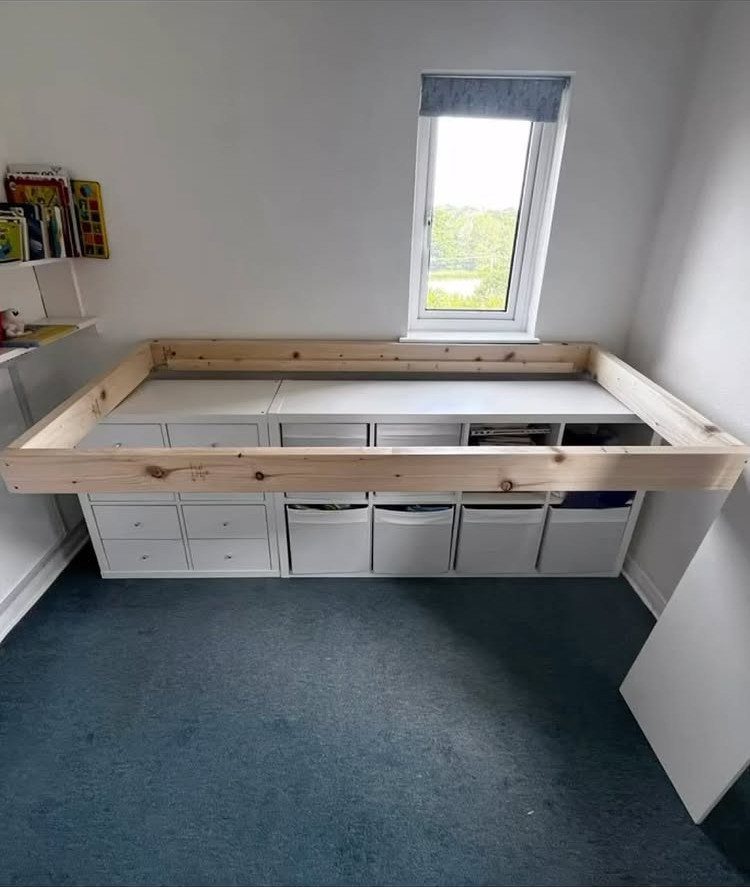
Raising a simple wood frame high enough to sit over drawers and bins gives you storage without building a single drawer box, which keeps this one friendly for basic skills.
Buy the storage first and measure it, then set the frame height to clear the tallest bin with a little room to slide it out. Make the legs or supports sturdy and the same length so the bed sits level.
I like this better than built-in drawers for a quick weekend build. Plain rectangular rails are all it needs.
10. Faceted Geometric Wood Bed Frame
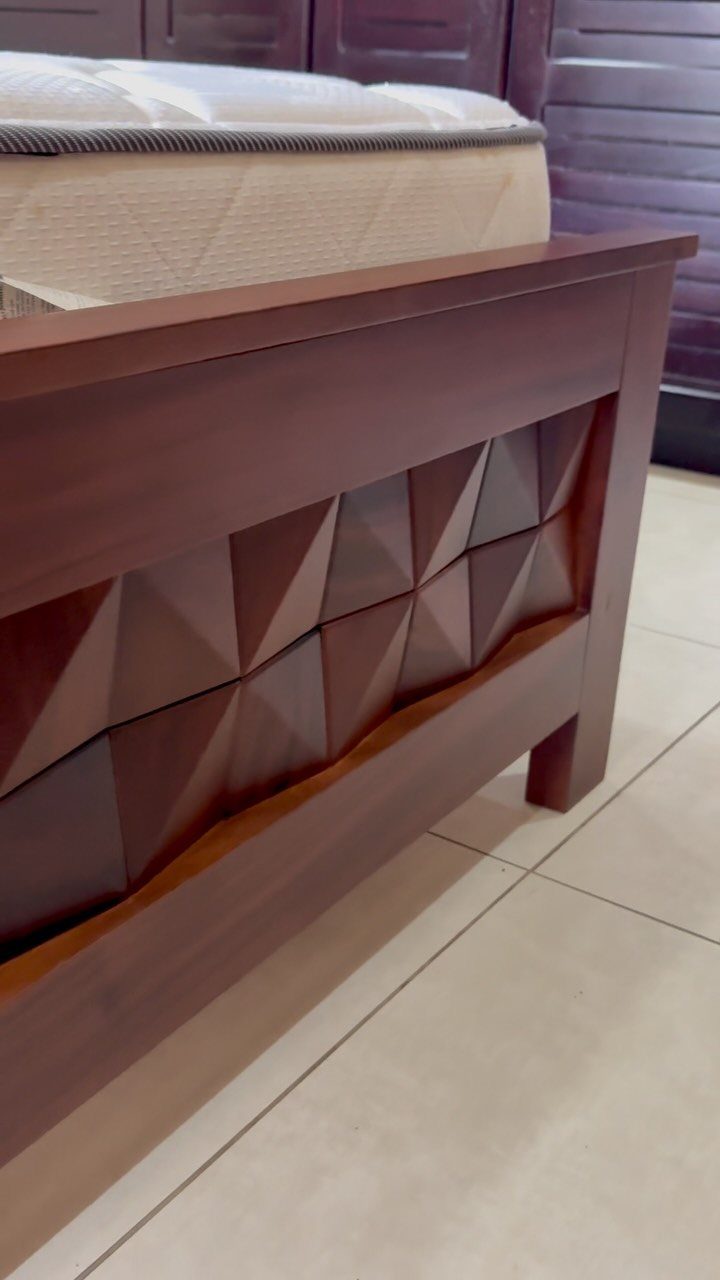
Faceted cuts along the side rail turn a plain dark frame into something that looks carved by a pro. The angled planes catch light differently across the board.
Mark the pattern on the rail with a pencil and ruler before any cutting, and practice on scrap first, since a wrong cut can’t be put back. Sharp chisels or a carving tool give cleaner facets than a dull one.
Stain after carving so the color settles into every angle. Expect this to be the slowest build on the list, and worth it if you enjoy detail work.
Tools Needed for Building
A drill, a saw, clamps and a pocket hole jig cover most bed frames.
Measuring comes first, so keep your 25-foot tape within reach the whole build. For the saw, a circular saw or a table saw both work, and a jig from Kreg is the pocket hole tool most people already know.
Quick-grip bar clamps hold boards square while you drive screws, and a right-angle clamp is a nice extra for corners. An electric sander is optional, but it saves a lot of hand work.
Pocket hole screws come in 1 1/4" and 2 1/2" lengths, and regular wood screws in the same two sizes. Run a bead of wood glue along every joint; the screws mostly clamp the pieces while the glue cures.
Gather everything before the first cut, so you are not stopping mid-build to hunt for a missing screw size.
Cost Considerations
Expect a homemade frame to land around $200–$400, depending on the materials you choose. Who the bed is for matters, since a child’s bed, an adult’s bed and a loft each need different amounts of lumber.
Dimensions and extras push the total up. Built-in shelves or added storage are the usual culprits, so settle on them before you shop.
Write a full cut list and price it at the lumber aisle before you commit. Sketching out the frame and writing a cut list before you buy anything does more for your budget than any coupon.
Scrap lumber from the garage, leftover boards, or a salvaged pallet can cover some of the cost, so check what you have before heading to the store. Reclaimed wood often costs far less than new boards.
Safety Precautions
Wear safety glasses and hearing protection whenever a saw, sander or drill is running. Fine wood dust is easy to inhale without noticing, so wear an N95 respirator when you sand.
Clamp your work down instead of holding it with one hand. A board that shifts under a circular saw is how most shop injuries start.
Keep the floor clear of offcuts, cords and sawdust. A clean workspace means you won’t trip while carrying a long board.
Unplug a tool before you change a blade or bit. Keep loose sleeves and long hair tied back away from anything spinning.
Frequently Asked Questions
What kind of wood should I use to make a bed frame?
Hardwoods like oak and maple are the usual picks for durability, and oak stays affordable while its grain looks good stained or natural.
Pine is the easy choice for a simple platform base, since it saws cleanly with basic tools and needs only light sanding, though the soft wood dents if handled roughly.
Big-box stores often stock little hardwood, so a local lumberyard may be your best bet.
Is 2×4 strong enough for a bed frame?
Yes, 2x4s are commonly used for bed frames, especially as internal bracing that holds the frame square and supports the mattress.
Pocket hole screws plus wood glue on every joint make the connections solid. Cut every leg and support to the same length, or the bed will rock and sit crooked.